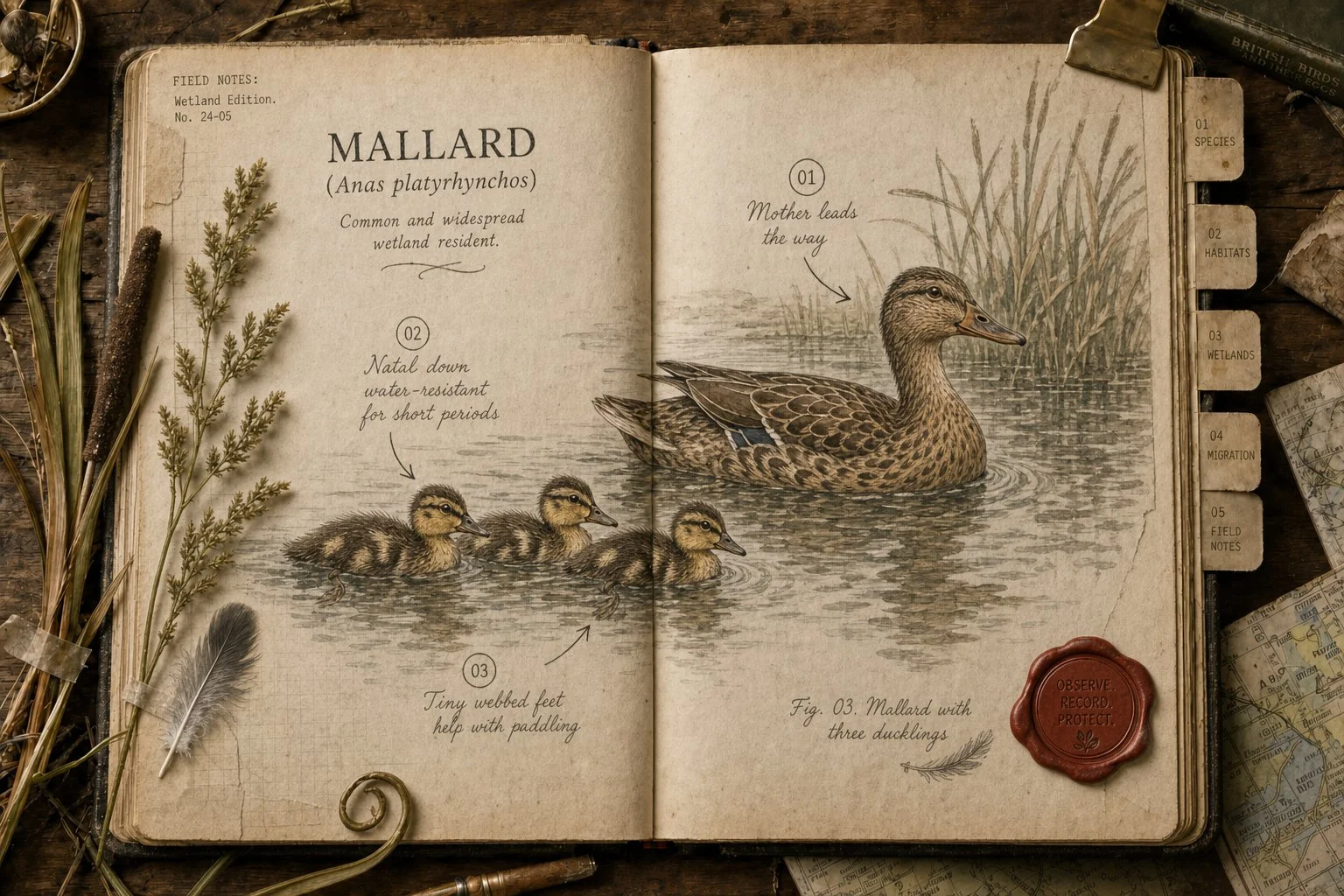
Day-old ducklings paddling behind a hen on a still pond.
Baby ducks can swim within 24 hours of hatching. Their webbed feet and natural buoyancy work from day one. The catch: their down isn’t fully waterproof yet, because they have no oil gland output of their own. They rely on the mother’s preen oil, transferred when they huddle under her, to stay water-resistant. Without her, or without somewhere warm to dry off, a duckling on water will chill quickly and can die within an hour.
Why the mother matters
A hen produces preen oil from a gland near the base of her tail. When she preens, she spreads it across her feathers. Ducklings absorb traces of this oil whenever they tuck under her breast or shoulder. That’s how their down stays water-resistant during their first 2-3 weeks before their own oil glands develop.
This is why orphaned ducklings on water are at risk. Without that transferred oil, their down becomes waterlogged, they lose buoyancy and body heat, and they drown or die of hypothermia.
How long ducklings can safely swim
With their mother present:
- Days 1-7 - short paddles, 5-15 minutes at a time, with frequent trips to shore to dry and warm under her.
- Weeks 2-3 - longer swims, 30-60 minutes, but still returning to dry off.
- Weeks 4-8 - extended swimming as their own oil glands begin producing.
- Week 9+ - full juvenile plumage and fully functional oil glands. They’re as water-capable as adults.
Without mother (rescued or orphaned), keep them out of swimming water until they’re at least 4 weeks old and producing their own preen oil. Provide a shallow dish (2-3cm deep) for splashing and drinking only.
What kind of water is safe
- Best: a shallow, calm pond with a gentle bank they can walk out of.
- Acceptable: a paddling pool with a sloped ramp or a brick at one side.
- Unsafe: anything with steep sides they can’t climb out of (most garden ponds, livestock troughs, swimming pools).
The single most common backyard duckling death is drowning in a steep-sided container they couldn’t escape. If you have ducklings near any water deeper than a few centimetres, give them a way out.
The "won't swim" duckling
A duckling that refuses water is either too cold, sick, or scared. Wild ducklings on first water are often pushed in by the hen. Once one goes, the rest follow. If you’re hand-rearing and yours won’t enter water, don’t force it. They’ll go when they’re ready, usually around day 5-7.
Sibley Field Guide East
Identify the hen, predict the brood.
Different duck species hatch ducklings with very different patterns and behaviours. A Mallard brood and a Wood Duck brood look and act distinctly. Sibley's plates separate them clearly, which matters if you're trying to identify orphans or work out which pair is breeding on a local pond.
- Covers 650+ species of eastern North America
- Duckling and juvenile plumage plates included
- Pocket-friendly format for field use
 Sibley · 2nd Ed.

As an Amazon Associate we earn from qualifying purchases.
The bottom line
Ducklings can swim from day one with their mother. Without her, they’re at risk of chilling within minutes because their down isn’t yet waterproof. Always provide an escape route from any water they can reach. Don’t put orphaned ducklings on swimming water until at least 4 weeks old.
For more, see what baby ducks are called and duck predators (because predation rather than drowning is the biggest threat to wild broods).