Mallards in flooded rice fields, Arkansas. Eating raw. Fine.
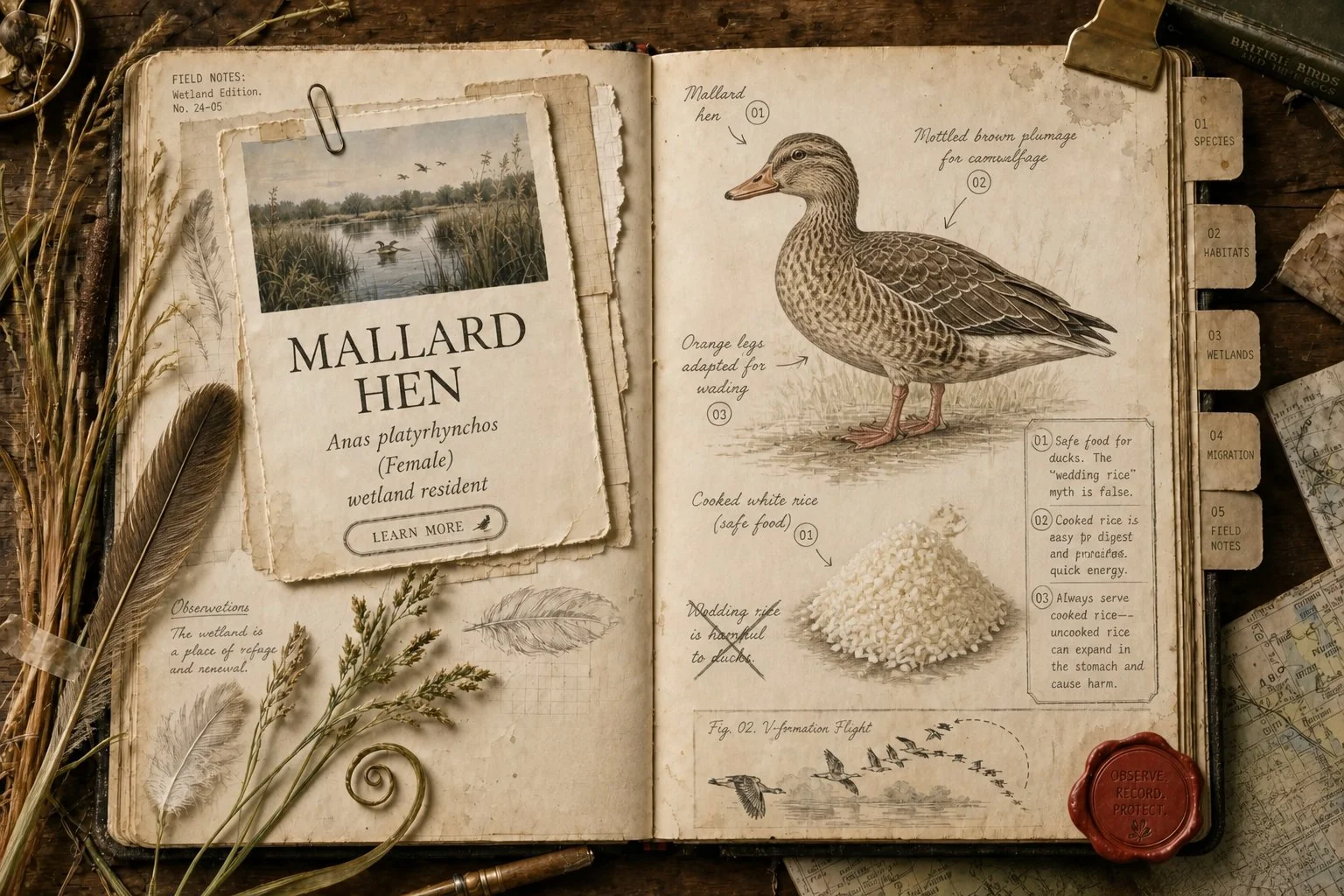
Ducks can eat rice safely in any form - raw, cooked, white, brown, wild. The persistent myth that uncooked rice will swell in a bird’s stomach and harm it has no scientific basis and was definitively debunked by Cornell Lab of Ornithology. In fact, wild ducks and geese routinely feed in flooded rice fields across the southern US, gleaning leftover rice grains as a staple winter food source. For backyard feeding, rice is a perfectly acceptable supplement - though cracked corn or oats are usually cheaper and more nutritious.
Where the myth came from
The “uncooked rice expands and kills birds” story spread widely from a 1985 anti-rice-at-weddings campaign by US state legislator Mae Schmidle of Connecticut. The claim: rice thrown at weddings would be eaten by birds, swell in their stomachs, and kill them. The story was repeated in advice columns, on TV, in school textbooks for years.
It is not true. Ornithological research found no evidence of any such mechanism. Birds eat raw rice all the time without harm. Cornell Lab and the National Audubon Society have both publicly debunked the myth.
Wedding venues banned rice anyway because it’s slippery and creates clean-up problems - which is a fair reason, just not the bird-safety one.
How ducks actually eat rice in the wild
The Mississippi Flyway carries millions of waterfowl through the rice-growing regions of Arkansas, Louisiana, Mississippi, and Texas every winter. Rice farmers flood their stubble fields after harvest, which has two effects:
- Decomposes the rice straw and stubble
- Provides ideal foraging habitat for migrating ducks
Ducks land on flooded fields, sift through the water and mud, and pick up leftover rice kernels along with the seeds, invertebrates, and aquatic plants that grow in the wet stubble. The flooded fields are now considered essential habitat for the Mississippi Flyway. Mallards, Pintails, Green-winged Teal, and Snow Geese use them in the millions.
If raw rice harmed ducks, this entire ecosystem would be a graveyard. It’s not.
What kinds of rice are fine
All of them:
- Raw white rice - safe, easy to eat, moderate nutrition.
- Raw brown rice - safe, more nutritious (germ and bran intact).
- Cooked white or brown rice - safe, easier to eat, no advantage over raw.
- Wild rice (technically a grass, not a true rice) - safe and historically a staple for waterfowl in upper Midwest.
- Rice cereals (puffed) - safe but low nutrition and not recommended as bulk food.
Avoid: rice cooked in butter, oil, salt, or with seasonings. Plain rice only. Mouldy rice (a real risk in damp conditions) is dangerous due to mycotoxins.
Is rice a good duck food, or just a safe one?
Safe, yes. Optimal, not really. For backyard feeding:
- Cracked corn - more carbohydrate per dollar, ducks prefer it.
- Oats - higher protein than rice.
- Layer pellets (for domestic ducks) - balanced complete nutrition.
- Lettuce, peas, leafy greens - mimic aquatic vegetation, hydrate, supply vitamins.
Rice can sit in your rotation as one of several options, but it’s not the first choice. If you have leftover plain rice, don’t feel bad feeding it - it just doesn’t beat the alternatives.
The bread comparison
The reason “can ducks eat X” questions exist is that bread (the historical default) genuinely does harm ducks (see our bread post). People worried about whether other staples are also dangerous. The good news: most plain grains and grain products are safe. Rice is fine. Oats are fine. Plain whole-grain cereal is fine. Just not bread.
One safety note
If you’re scattering uncooked rice on water for ducks, be aware that the rice will sink to the bottom. Ducks can dive or dabble for it but a lot will be lost. Cooked rice floats better but breaks down faster in water. The most efficient approach is to scatter rice on a dry feeding tray at the water’s edge.
CountryMax Cracked Corn 50 lb
Better value than rice, longer shelf life.
Rice is safe for ducks but cracked corn beats it on cost per kilo, nutritional value, and storage. A 50 lb bag of cracked corn lasts a small backyard flock about three weeks and ducks prefer it over plain rice. Use rice as a supplement; use corn as your staple.
- 50 lb bag, USA-grown corn
- Coarse-cracked grade suits all duck breeds
- Resealable bag liner keeps moisture out
 CountryMax · 50 lb

As an Amazon Associate we earn from qualifying purchases.
The bottom line
Ducks can eat rice safely - raw, cooked, white, brown, or wild. The “uncooked rice expands and kills birds” story is a 1985 myth, definitively debunked. Wild ducks feed in flooded rice fields throughout the Mississippi Flyway as a staple winter food. Rice is fine; cracked corn is usually a better choice.
For more, see can swans eat bread and what to feed ducks at the pond.