Note for the curious.
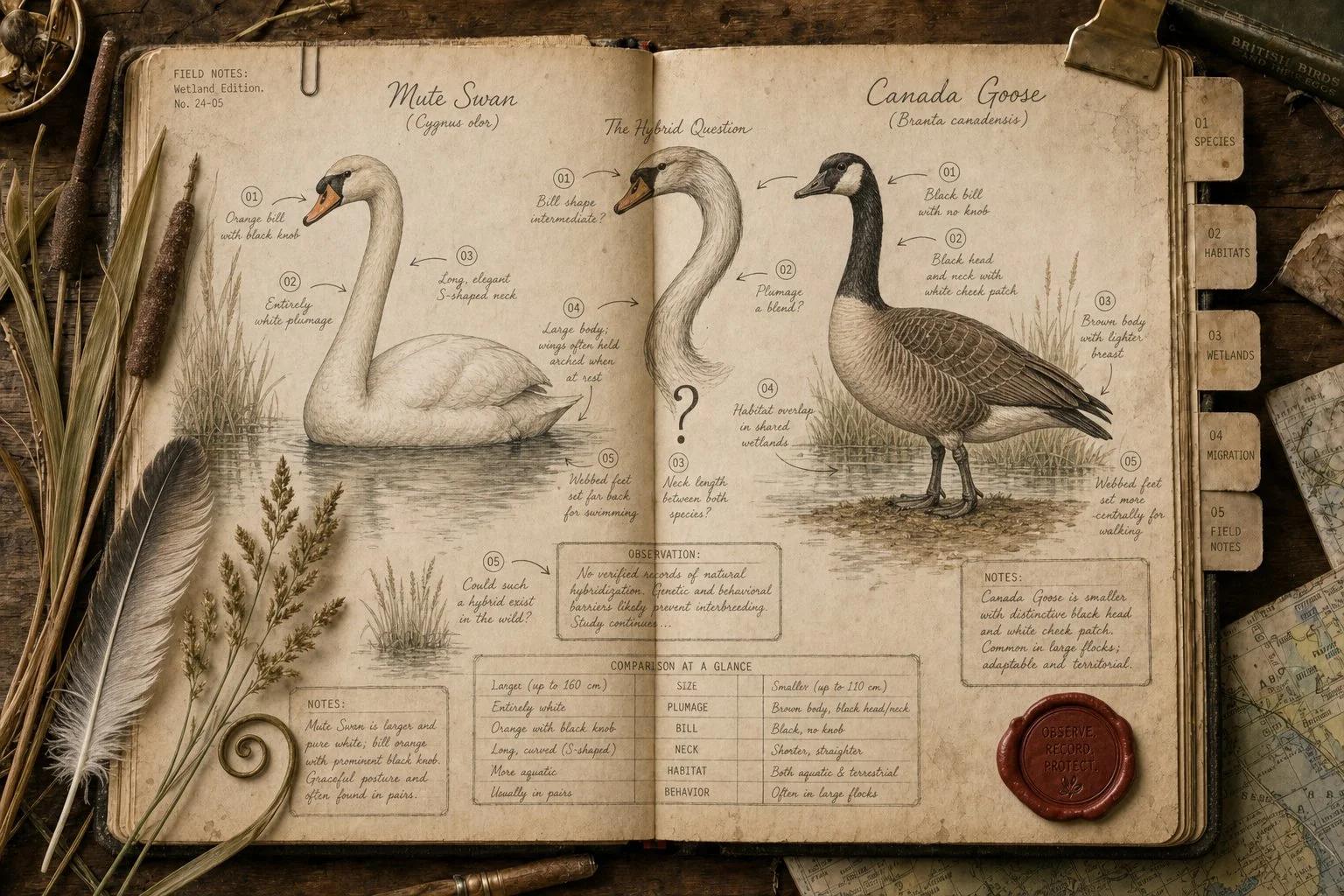
Geese and swans are different genera within the same family (Anatidae) and do not interbreed in the wild. They can occasionally pair-bond across species in captive settings - especially Mute Swan x Greylag Goose - but resulting eggs are almost always infertile. In nearly all documented cases the chicks either do not develop or do not survive to hatch. The behavioural and genetic barriers are real.
Why the question keeps coming up
The two birds look related - both white-ish (or large and brown-ish), both swimming, both honking-or-trumpeting, both pair-bonding for life. People watching a mixed park pond see them socialise and assume they could pair.
They can socialise, share territory, even feed alongside each other. But mating across the goose/swan boundary doesn’t happen in nature, and rarely succeeds in captivity.
The biology
Geese and swans split as separate genera roughly 10-15 million years ago. They share enough DNA to occasionally pair, but not enough for chromosomal compatibility in offspring.
In genetic terms:
- Within a genus (e.g., two species of true goose, Branta canadensis and Branta hutchinsii) - hybrids occur, sometimes fertile.
- Across genera (Cygnus swan x Branta or Anser goose) - hybrids are very rare, almost always sterile, and most don’t survive embryonic development.
The most-cited captive case is a Mute Swan x Greylag Goose pairing in a UK collection in the 1960s. The pair bonded, the female laid eggs, and one chick hatched. It survived briefly but was sterile.
Behavioural barriers
Even if the biology allowed it, geese and swans have very different courtship displays:
- Geese - extended neck “triumph” ceremony, mutual head-bobbing, paired flight.
- Swans - synchronised “heart” posture with bowed heads, breast-against-breast greeting.
These displays act as species-recognition filters. A swan trying a swan courtship to a goose gets blank stares, not bonding. The behavioural mismatch is, in practice, the main reason mixed pairing doesn’t happen.
What CAN cross-breed in waterfowl
Hybridisation is well-documented within genera:
- Mallard x American Black Duck - common in the eastern US, problematic for Black Duck conservation.
- Mallard x Pintail, Mallard x Gadwall - documented but rare.
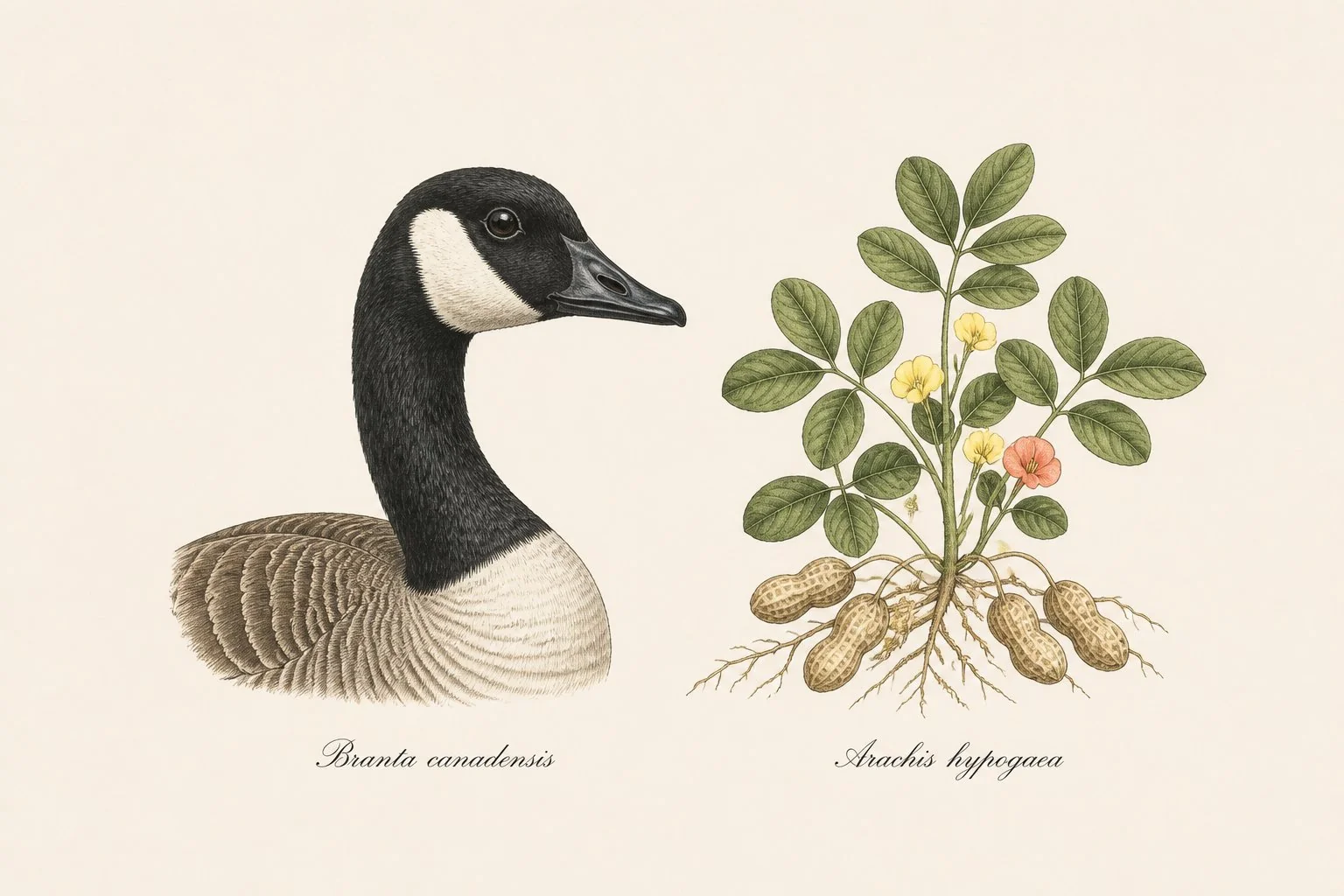
- Canada Goose x Cackling Goose - same genus Branta, hybrids documented.
- Snow Goose x Ross’s Goose - same genus Anser, hybrids occur.
- Mute Swan x Trumpeter Swan - same genus Cygnus, rare hybrids.
Within a genus is the rule. Across the goose/swan divide is the exception.
How to tell goose from swan in the field
For the puzzled observer at a park pond:
- Size: a Mute Swan is twice the body mass of a Canada Goose.
- Neck: a swan’s neck is longer than its body. A goose’s neck is shorter.
- Bill: swans have orange or yellow bills with a black base; geese have black bills with white cheek patches (Canada) or pink-and-black (Snow).
- Posture on water: swan glides with neck in elegant S-curve; goose holds neck straighter and lower.
If you see a goose-shaped bird being aggressive with a swan-shaped bird, they’re not courting - they’re disputing territory.
Sibley Field Guide Birds of Eastern North America
The book that splits the species.
The standard reference for North American birding. The waterfowl plates show every goose and every swan side-by-side at the same scale - exactly what you need to settle "is that bird a swan or a goose" questions. Updated 2014.
- All geese and swans on the same plate for comparison
- Hand-painted, accurate scale
- Range maps for every species
 Sibley · 2nd Ed.

As an Amazon Associate we earn from qualifying purchases.
The bottom line
Geese and swans don’t interbreed in the wild. The handful of captive cases produced sterile or non-viable offspring. The barriers are both behavioural (different courtship) and biological (different chromosome counts). The two birds occupy adjacent niches but separate gene pools.
For more on the species themselves, see North American geese and how swans actually vocalise.