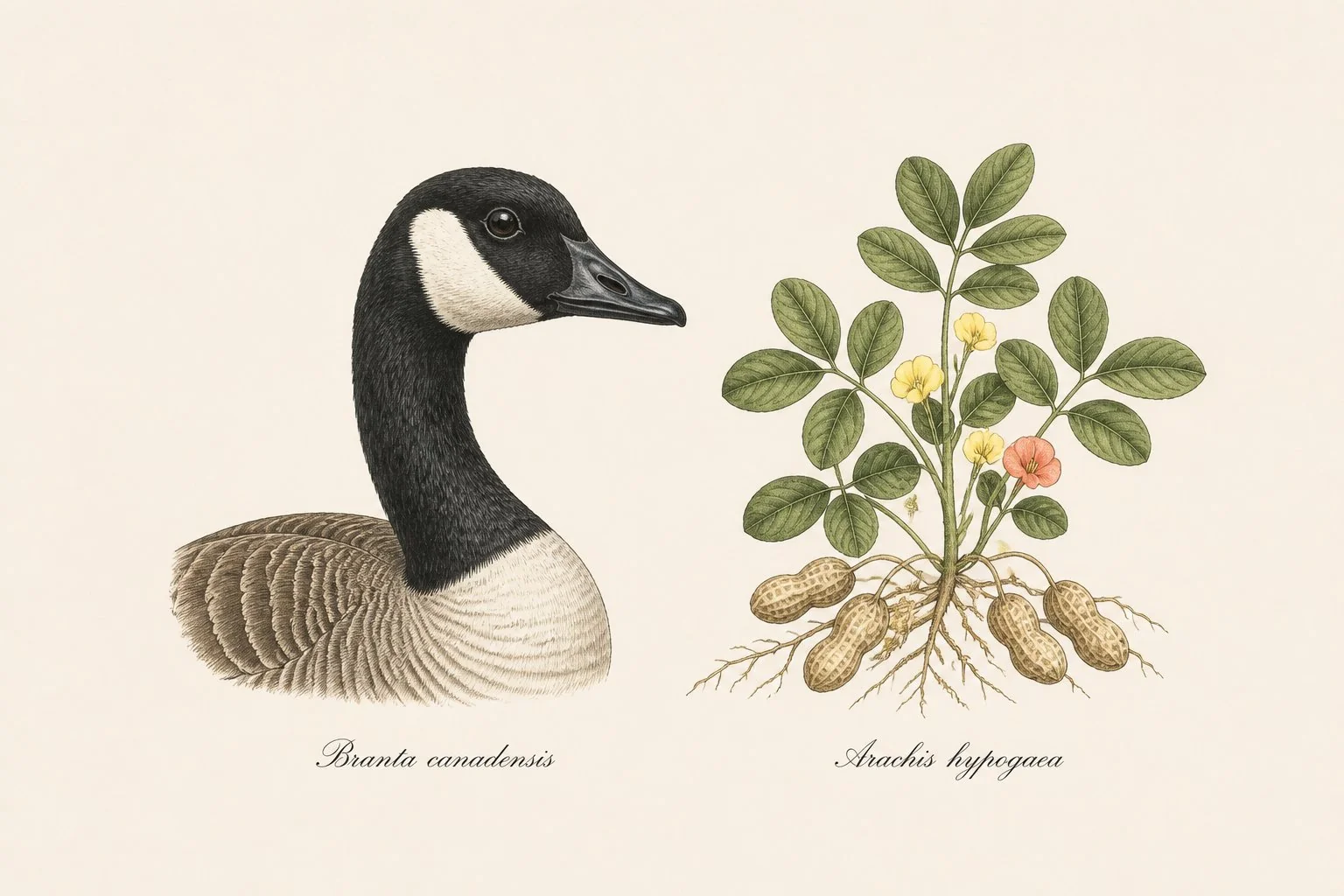
Field notes from a backyard where the cats and the geese share the patio, and the cat food bowl keeps getting raided.
Updated: 2026-05-20.
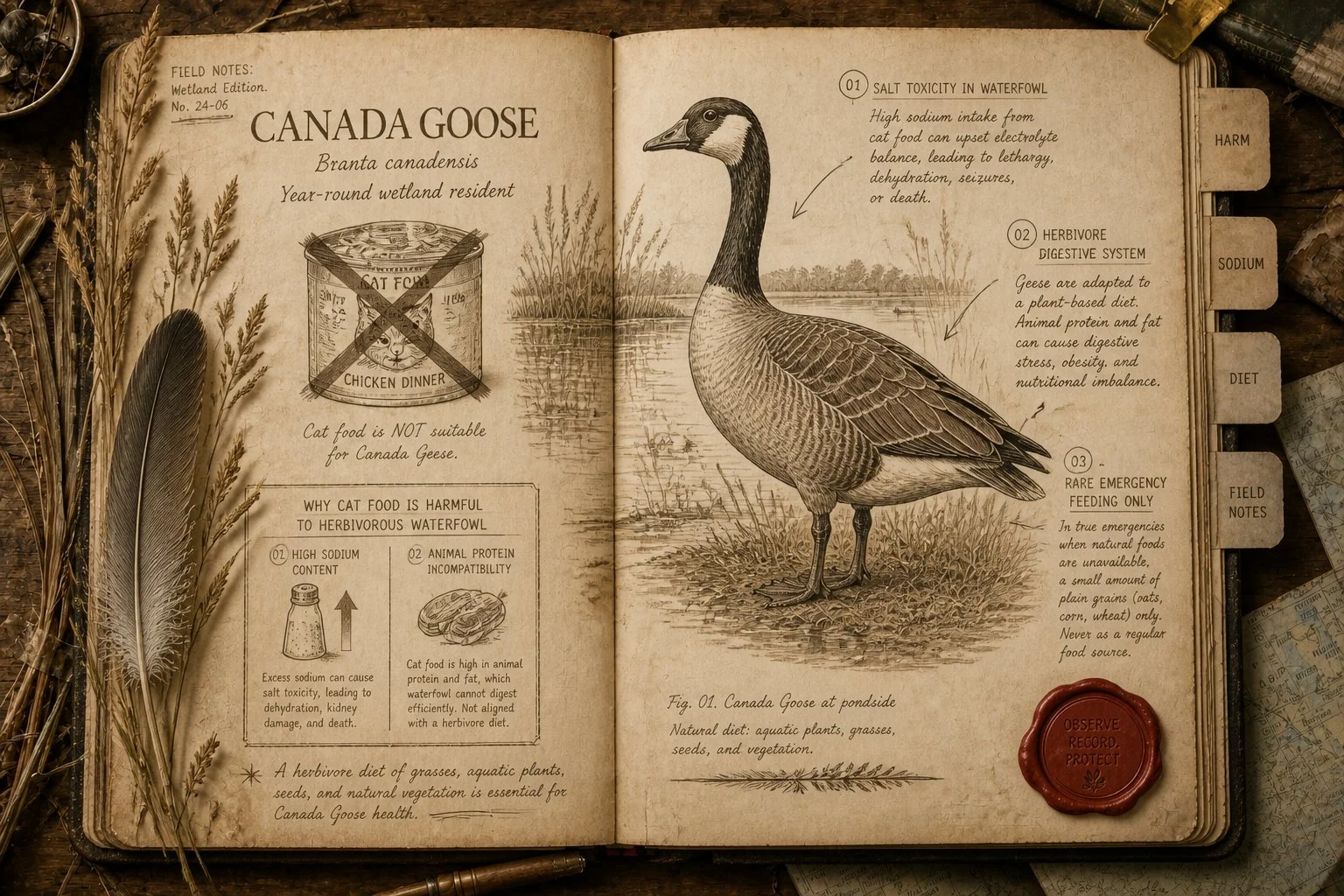
The short version: cat food is not poisonous to geese, but it’s nutritionally wrong. Cats are obligate carnivores; geese are herbivores. Cat food contains 30-40% protein (vs the 10-20% geese need), high sodium (toxic to waterfowl in quantity), low fibre, and high fat. A single mouthful won’t harm a goose, but regular access causes obesity, kidney stress, and liver dysfunction. If you keep cats and geese in the same garden, separate the food.
Why cat food is the wrong shape for a goose
The mismatch comes from how different cats and geese are as eaters:
- Cats are obligate carnivores. They evolved to eat almost entirely meat, get protein from animal sources, need taurine (synthesised only from meat), and tolerate high sodium intake. Their kidneys are built for animal-protein metabolism. EveryCat Health Foundation notes that cats have higher dietary sodium tolerance than most mammals.
- Geese are herbivores. They evolved to eat grass, grain, leafy plants, and occasionally invertebrates. Their kidneys are not built for high-protein meaty diets. Their gizzards expect fibrous plant material to grind.
Specifically:
| Nutrient | Cat food typical | Goose dietary need |
|---|---|---|
| Protein | 30-40% | 10-20% |
| Fibre | 1-5% | 15-25% |
| Fat | 15-25% | 4-6% |
| Sodium | 0.3-0.7% | <0.2% |
Source: The Open Sanctuary Project’s guide to daily diet for geese and standard cat-food nutritional analyses from veterinary references.
The mismatch is across multiple axes, not just one. A goose eating cat food regularly:
- Stresses the kidneys. Excess protein has to be excreted as uric acid; the kidneys are doing 2-3x normal work.
- Gains weight. Fat content is far higher than herbivorous diet provides. Domestic geese become overweight; wild geese gain enough fat to affect flight.
- Lacks fibre. Reduced gut motility and possible impaction.
- Risks sodium toxicity. Avian medicine literature consistently identifies sodium as one of the most dangerous nutrients for waterfowl - their kidneys lack the concentrating ability of mammalian kidneys.
What happens if a goose eats some
A single mouthful, even a regular small theft, isn’t catastrophic. The acute response curve is mild:
- One bite: no observable effect.
- A handful regularly: soft droppings, possible mild weight gain.
- Daily regular access (10g+ per goose): kidney stress over weeks. Visible weight gain. Reduced laying in hens.
- Sustained heavy intake: documented hepatic lipidosis (fatty liver disease), kidney damage.
So a goose that occasionally steals a few pieces of dry cat food won’t suffer. A goose with constant unrestricted access will.
What to do if you keep both
The practical fix in a multi-species backyard:
- Feed cats indoors or in a covered, raised location geese can’t reach.
- Don’t leave cat food bowls outdoors overnight.
- Geese-proof the cat-feeding area with a low fence or covered feeding station.
- Feed cats and geese on a schedule so neither lingers near the other’s bowl.
If a goose has been raiding the cat food regularly, withdraw the access and observe for a fortnight. Soft droppings should normalise, weight should stabilise.
What CAN geese eat for protein?
Geese do need some protein - just not at cat-food levels. The appropriate sources:
- Waterfowl pellets - formulated with 14-16% protein, the right ratio for geese.
- Insects and aquatic invertebrates - what they eat in the wild.
- Dried mealworms (rehydrated) - good occasional protein supplement for backyard flocks.
- Hard-boiled eggs (chopped, in moderation) - useful spring/summer treat.
For the broader goose feeding framework, see best food to feed ducks and geese and what to feed wild ducks - the principles apply to geese.
What about dog food?
Dog food is closer to right for geese than cat food (lower protein, lower fat) but still wrong. Dogs are omnivores; the formulations contain plant ingredients. But protein levels still typically run 20-30%, salt is still high, and the kibble texture is hard to digest.
Same advice: not a regular food. If a goose snatches a piece, no harm done. If you’re feeding dog food daily as a substitute for waterfowl pellets, you’re causing chronic harm.
The salt issue specifically
Salt toxicity is one of the genuinely dangerous things in waterfowl care. The progression:
- Mild excess: increased water consumption, possible diarrhoea.
- Moderate excess: lethargy, weakness, neurological signs.
- Severe excess: seizures, kidney failure, death.
Cat food is high enough in sodium that consistent feeding pushes geese toward the mild-to-moderate range. The chronic exposure is the issue.
For the broader case on what’s toxic vs harmful vs fine:
- Toxic (don’t feed any): avocado, see can ducks eat avocado.
- Harmful at quantity: bread, see can ducks eat bread; milk, see can ducks drink milk; cat food (this post); salted nuts/processed foods.
- Safe in moderation: most fresh fruits and vegetables, formulated waterfowl pellets, cracked corn.
The everyday goose diet
What you SHOULD feed a backyard goose, year-round:
- Pasture - the natural food. Geese graze grass and are highly efficient at it.
- Waterfowl pellets - the formulated supplement.
- Cracked corn - calorie supplement, especially in winter.
- Fresh chopped greens - kale, lettuce, peas.
- Occasional fruit - safe varieties (mango, kiwi, berries) in moderation.
- Clean water in a deep enough dish to dip the entire bill.
CountryMax Cracked Corn 50 lb
The appropriate calorie supplement - the opposite of cat food, nutritionally.
A 50 lb sack of cracked corn - the right shape of calorie supplement for backyard geese. Low protein (~9%), low fat, no added sodium. The everyday treat that doesn't stress kidneys or cause obesity the way cat food does.
- 50 lb sack - a season's supply
- Cracked to the right size for geese
- Low protein, low fat - appropriate for herbivore waterfowl
- Stores stably in a sealed metal bin
 CountryMax · 50 lb

As an Amazon Associate we earn from qualifying purchases. Linked products are ones we actually use.
The bottom line
Cat food isn’t toxic to geese, but it’s a chronic nutritional mismatch - too much protein, too much fat, too much salt, too little fibre. A single bite is irrelevant; daily access causes documented kidney and liver problems over time. If you keep cats and geese, feed the cats inside or out of reach. The right calorie supplement for geese is cracked corn and waterfowl pellets, not pet food formulated for a different species.
Sources
- The Open Sanctuary Project: Daily Diet, Treats and Supplements for Geese
- EveryCat Health Foundation: Sodium Nutritional Needs for Cats
- Grange Co-op: What to Feed Geese
- Merck Veterinary Manual: Feeding Waterfowl