Hen, no drake, full clutch of 12 in the run by Wednesday.
Yes, female ducks lay unfertilised eggs the same way hens do. A drake isn’t required for the cycle. A healthy female duck produces an egg every 24-36 hours through her laying season, and those eggs are unfertilised unless she has mated within the previous 7-14 days. Wild ducks that lose their mate, captive females kept without a drake, and young domestic ducks coming into lay for the first time will all produce unfertilised clutches. The eggs are perfectly edible.
How duck egg laying actually works
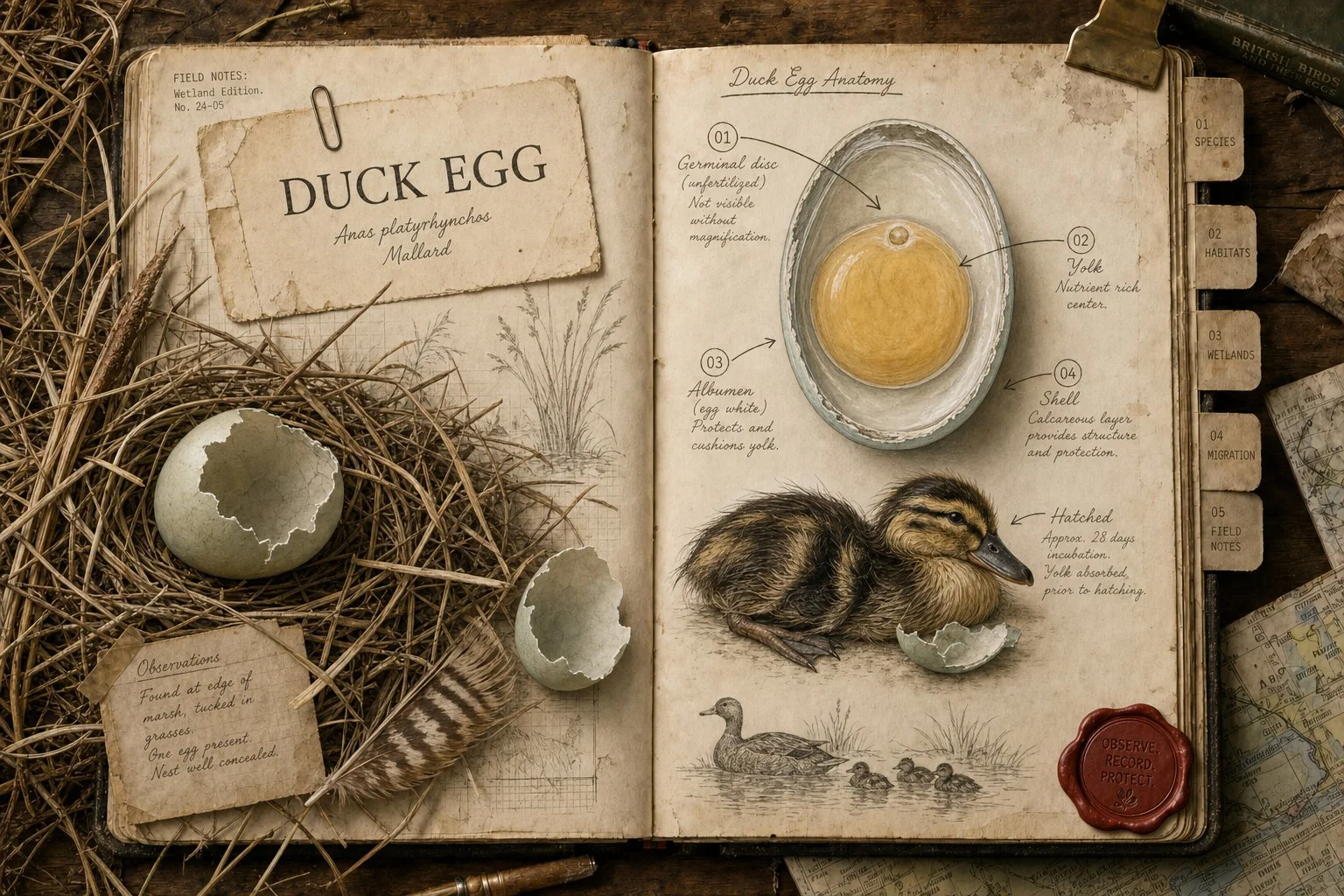
A female duck’s reproductive cycle is hormone-driven, not mate-driven. Increasing daylight in late winter triggers the ovary to release a yolk. The yolk travels down the oviduct, picks up albumen, then shell membrane, then shell, and finally an outer waxy bloom. The whole journey takes 24-26 hours.
If a drake mated with her in the past 7-14 days, sperm stored in special crypts at the top of her oviduct fertilises the yolk before it gets wrapped. If no sperm is present, the egg goes through the same pipeline anyway and emerges unfertilised.
Why a hen keeps laying without a drake
Three reasons:
- Hormones override mate presence - the laying cycle is triggered by daylight, not by behaviour.
- Backup clutches - in the wild, hens often lose nests to predators and need to be ready to re-lay quickly. Continuous laying is the default.
- Selection in domestic breeds - Khaki Campbells, Welsh Harlequins, and Indian Runners have been bred to lay 250-340 eggs a year, far above wild rates. They lay almost continuously.
A wild hen typically lays 8-15 eggs per clutch and stops once the clutch is complete. Without successful incubation she may lay a second or third clutch in the same season.
How to tell if a duck egg is fertilised
You can’t tell from the outside. After 3-4 days of warmth (38°C) you can candle the egg with a bright torch in a dark room:
- Fertilised - a small dark spot with thin red veins radiating outward (the developing embryo and blood vessels).
- Unfertilised - the yolk shadow appears uniform with no veining.
- Early dead - a single dark ring with no veins (an embryo that started but stopped).
If you’re collecting eggs for eating, refrigerate within a few hours and they will not develop further regardless.
What unfertilised duck eggs are good for
- Eating - richer than chicken eggs, with more fat in the yolk. Excellent for baking. Slightly stronger flavour.
- Custards and ice cream - duck egg yolks make exceptionally smooth custards.
- Pasta - the fat content gives a richer dough.
- Selling - in many regions duck eggs sell for more than chicken eggs at the farm gate.
Unfertilised eggs in a wild nest, by contrast, get abandoned at the end of incubation. They won’t hatch and the hen will eventually leave them.
When to be concerned
A laying duck that suddenly stops without seasonal change may be:
- Egg-bound - an egg stuck in the oviduct. Medical emergency.
- Ill - watch for lethargy and ruffled feathers.
- Stressed - new predator, new flock member, change of housing.
- Moulting - normal annual pause, usually mid to late summer.
A healthy laying duck producing unfertilised eggs is doing exactly what evolution and selective breeding designed her to do.
Stovall 5H Cedar Duck Box
Right nest, right behaviour.
If you're keeping ducks and want them laying in one predictable spot rather than scattering eggs across the yard, a proper nest box matters. Cedar resists rot in the damp, the dimensions match wood duck and small domestic breeds, and the side-opening lid makes egg collection a 5-second job.
- Western Red Cedar construction
- Side-opening cleanout and inspection lid
- Right size for wood ducks, mergansers, small domestics
 Stovall · 5H Cedar

As an Amazon Associate we earn from qualifying purchases.
The bottom line
Ducks lay unfertilised eggs routinely. No drake is needed. Wild hens often produce them; domestic hens produce them almost continuously through their laying season. The eggs are edible and excellent for cooking. Concern is only warranted if a hen stops laying suddenly outside her moult.
For more, see what baby ducks are called and mallard diet.