Field notes, pondside.
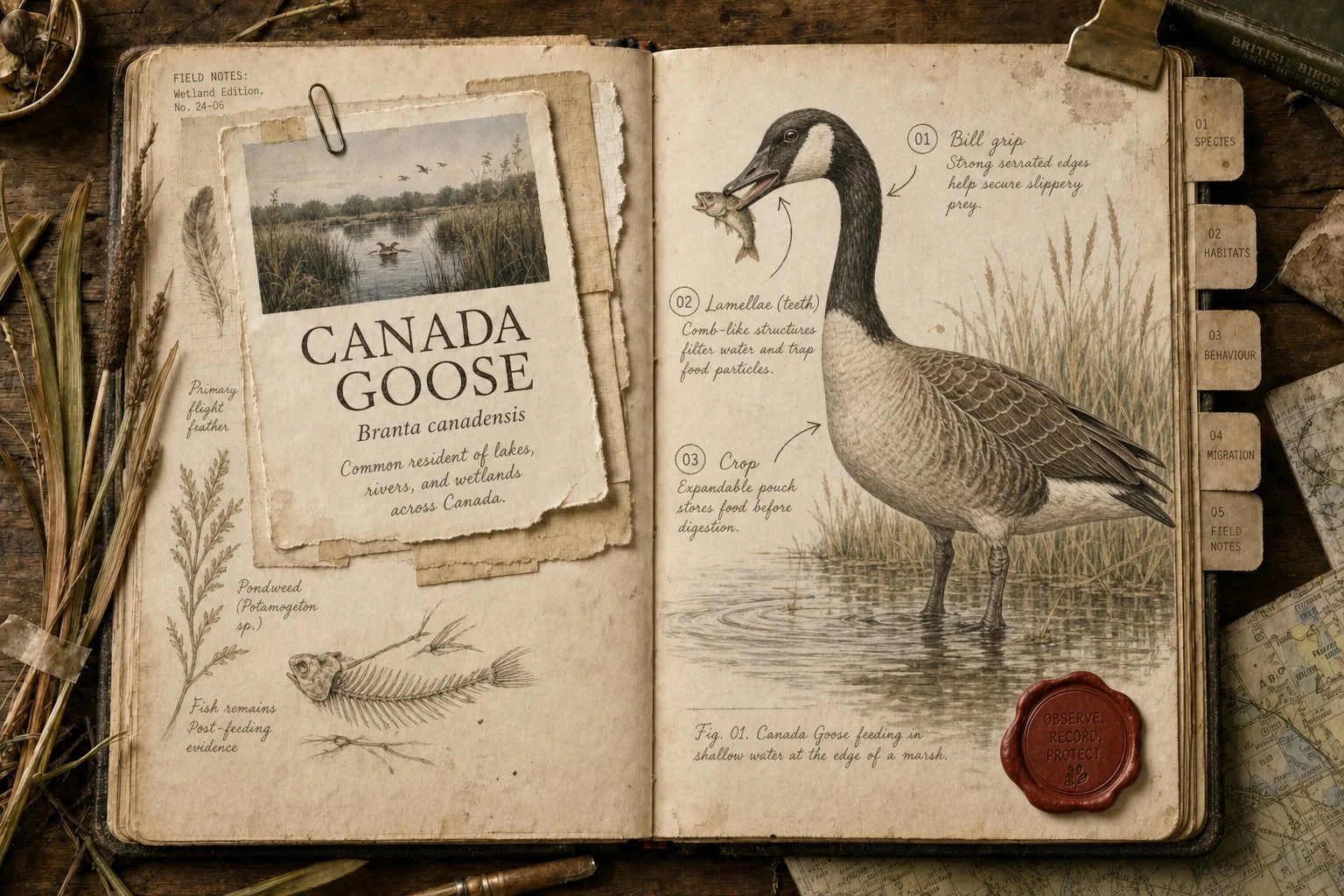
Geese are herbivorous by design and behaviour. They eat grass, aquatic plants, grains, and the occasional aquatic invertebrate. A goose will, very rarely, take a small fish - usually a minnow trapped in shallow water, or a struggling fingerling. But fish is not a meaningful part of any goose’s diet, and intentional fishing behaviour is essentially absent.
What geese actually eat
A wild Canada goose’s annual diet, by approximate volume:
- Grass and forbs - 70-80%. Year-round, but especially heavy in spring and summer.
- Grains and seeds - 15-20%. Especially during migration through farmland.
- Aquatic plants - 5-10%. Duckweed, pondweed, wild celery.
- Aquatic invertebrates - <5%. Mostly during breeding, especially for laying hens.
- Fish and small vertebrates - effectively trace. Opportunistic, not sought out.
The geese you see on a lawn or in a park spend nearly all their feeding time grazing. They are biologically equipped for this: a serrated bill for cropping grass, a long gut for fermenting cellulose, and behaviour built around steady grazing through the day.
Why geese don't fish
Three reasons fish isn’t a goose food:
- No fish-catching anatomy. Geese don’t have hooked bills or spear bills. Their flat, blunt bills are built for cropping plants, not gripping fish.
- No diving. Canada geese dabble at most - tipping bottom-up in shallow water. They don’t pursue prey underwater the way mergansers, cormorants, or loons do.
- No need. Their plant-based diet meets their energy and protein requirements through most of the year.
The rare cases where a goose takes a fish are accidents of geography - a minnow trapped in a puddle, a wounded fish surfacing - not active hunting.
Will a goose ever eat a fish?
Documented cases exist but they are rare. The pattern looks like:
- Stranded minnows in shrinking summer pools. The goose is dabbling for plants, finds a fish, eats it.
- Wounded or dying fish at the surface. Opportunism.
- Captive geese offered fish by humans will sometimes eat it, especially fingerling-sized and dead.
What you will NOT see: a Canada goose chasing a fish through open water, or fishing the way a heron does.
How geese feed on water (when they're not fishing)
What looks like fishing is almost always one of these behaviours:
- Dabbling - tipping forward so the rear end sticks up, feeding on aquatic plants below.
- Skimming - bill moving along the surface to filter floating duckweed.
- Up-ending - longer, deeper dabbling, sometimes mistaken for a dive.
If you see a goose with its head underwater, it’s pulling at vegetation, not chasing a fish.
Nikon Prostaff P3 8x42 Binoculars
For watching the dabble, not the catch.
Sorting "the goose is dabbling for plants" from "the goose is doing something else" takes optics. The Prostaff P3 is the standard entry birding binocular - 8x magnification, 42 mm objective, waterproof, fogproof - clear enough at distance to read bill movement on a pondside goose.
- 8x42 - the canonical birding magnification
- Waterproof and fogproof
- Rubber-armoured, light enough for all-day field use
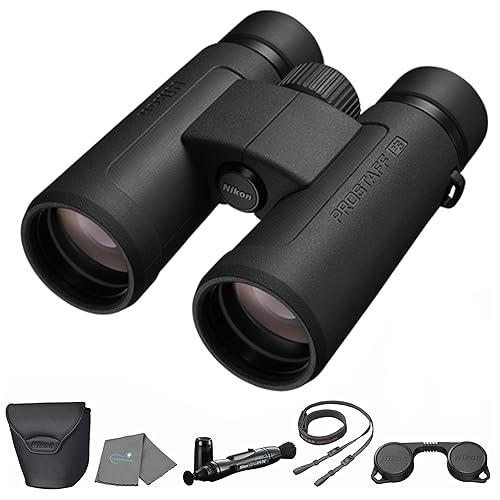 Nikon · Prostaff P3

As an Amazon Associate we earn from qualifying purchases.
The bottom line
Geese are not fish-eaters. The very occasional minnow is opportunistic, not a foraging strategy. If a goose is in the water with its head down, it is pulling pondweed, not chasing fish.
For broader notes on goose feeding, see why bread is wrong and whether ducks eat snakes.