Smallholder notes.
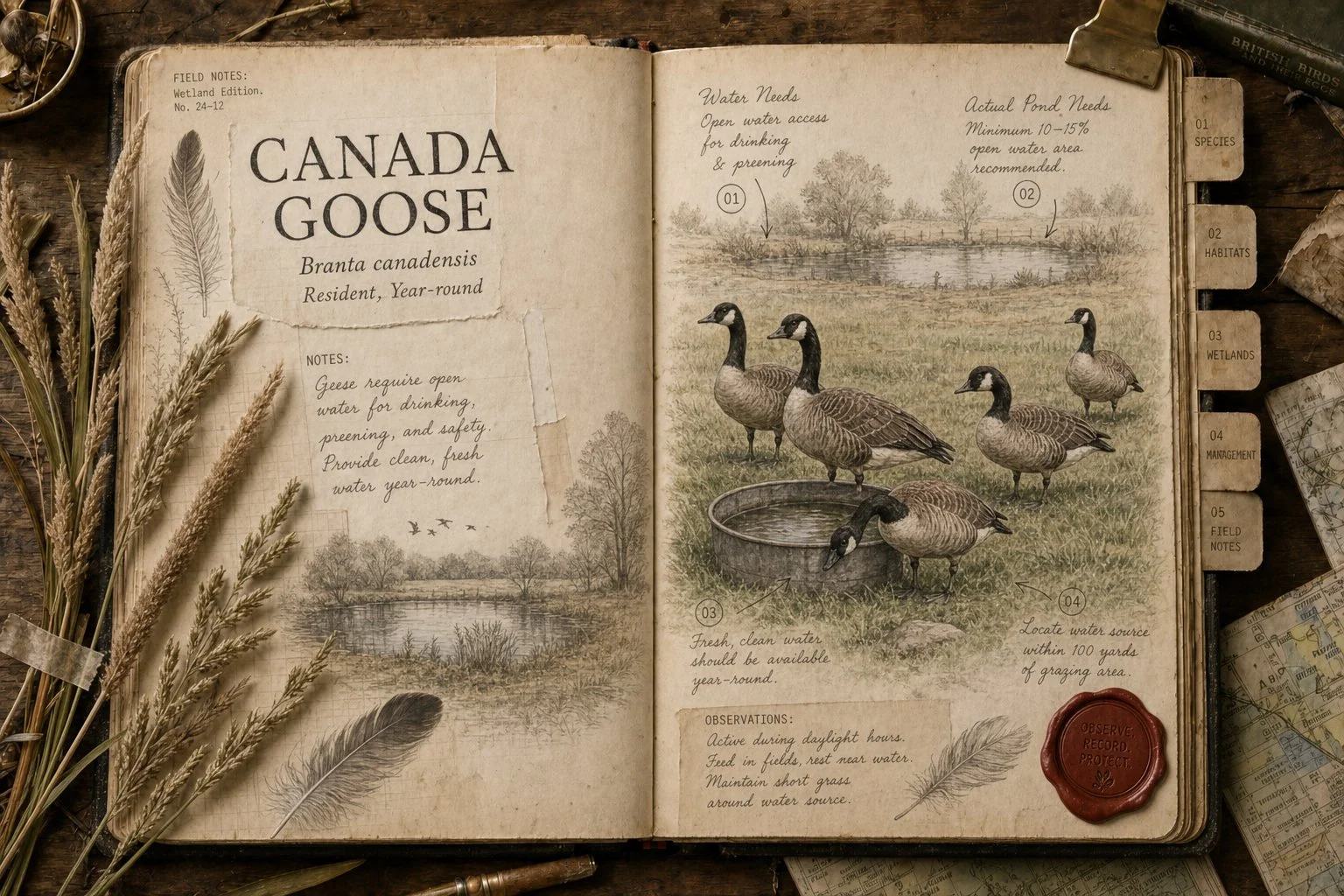
Geese don’t need a pond. They need drinking water deep enough to dip their bills past their nostrils, and water deep enough to bathe (about 30 cm), but a kiddie pool, a stock tank, or even a deep bucket meets the requirement. A pond is a bonus. The widespread “geese need water” belief is true; “geese need a pond” is the wrong takeaway.
What geese actually need
Three water-related needs, in order:
- Drinking water - clean, daily-refreshed, deep enough to dunk the bill (~10 cm depth).
- Bathing water - deep enough to submerge the head and partially the body. About 30 cm minimum.
- Foot-soaking - prevents bumblefoot and other foot infections. Anything where they can stand in water briefly.
A 60-litre stock tank, a galvanised tub, or a child’s paddling pool all meet the requirements. A backyard pond is the premium version but not the only option.
What a pond does add
If you do have a pond:
- Natural food (pondweed, duckweed, invertebrates) - reduces feed costs.
- Heat regulation in summer - geese cool by paddling in cool water.
- Sleeping security - geese feel safest sleeping on water where predators can’t easily approach.
- Behaviour - they swim, preen, socialise; broader natural repertoire than dry-land birds.
Geese kept without a pond are healthy and content; geese kept with one are slightly happier.
The practical minimum
For a small backyard flock (2-6 geese):
- Water container - 1 minimum, ideally 2 (drinking + bathing separate).
- Drinking container - at least 10 litres, refreshed daily.
- Bathing container - at least 60 litres, depth 30 cm. A kiddie pool works.
- Refresh schedule - drinking water daily; bathing water every 2-3 days unless visibly fouled.
In winter, heated waterers or daily manual refresh become important. Geese will not eat without water nearby; if their water freezes solid, they’ll starve.
What about pond sanitation?
A small pond with a few geese stays balanced. A small pond with too many geese turns brown within weeks - geese produce a lot of nitrogen-rich droppings that drive algal blooms.
The rule of thumb: 1 goose per 100 square metres of pond surface for a self-sustaining pond. Beyond that, regular water changes or filtration becomes necessary.
What about wild geese?
For wild Canada geese, a pond is even less essential. Wild geese spend most of their time on land grazing; they use ponds for night roosting, drinking, and bathing. A small water source nearby is enough; a pond is preferred but not required.
Cedar Goose House
For the shelter that matters more than the pond.
Geese can manage without a pond. They cannot manage without a dry, predator-proof shelter. A solid cedar nest-and-shelter unit is the priority purchase for a small backyard flock.
- Solid cedar, weather-rated for years
- Hinged roof for cleaning
- Mountable or floor-standing
 Stovall · 5H Cedar

As an Amazon Associate we earn from qualifying purchases.
The bottom line
Geese need water - bill-deep for drinking, knee-deep for bathing. They do not need a pond. A bucket and a stock tank cover the basics for a small flock.
For more, see housing for geese and cold-weather duck breeds.