
Continent-wide field notes.
North America hosts roughly 40 regularly-occurring duck species across four functional groups: dabbling ducks (feed at the surface), diving ducks (feed underwater on inland water), sea ducks (feed underwater on salt water), and perching ducks (Wood Duck and the like, nesting in tree cavities). Learning these four groups first makes the species-level work much easier.
The four functional groups
- Dabbling ducks - feed by tipping bottom-up in shallow water. Mallards, teals, wigeons, pintails, shovelers, gadwalls.
- Diving ducks - dive completely underwater on freshwater lakes. Canvasback, redheads, scaups, ring-necks, ruddies.
- Sea ducks - dive in salt water. Scoters, eiders, mergansers, goldeneyes, long-tailed ducks, harlequins.
- Perching ducks - dabble at surface but nest in tree cavities. Wood Duck (the only common North American example).
The split matters because the four groups behave differently in the field, prefer different habitats, and ID is easier when you’ve narrowed it to a group first.
The dabbling ducks (10 species you'll commonly see)
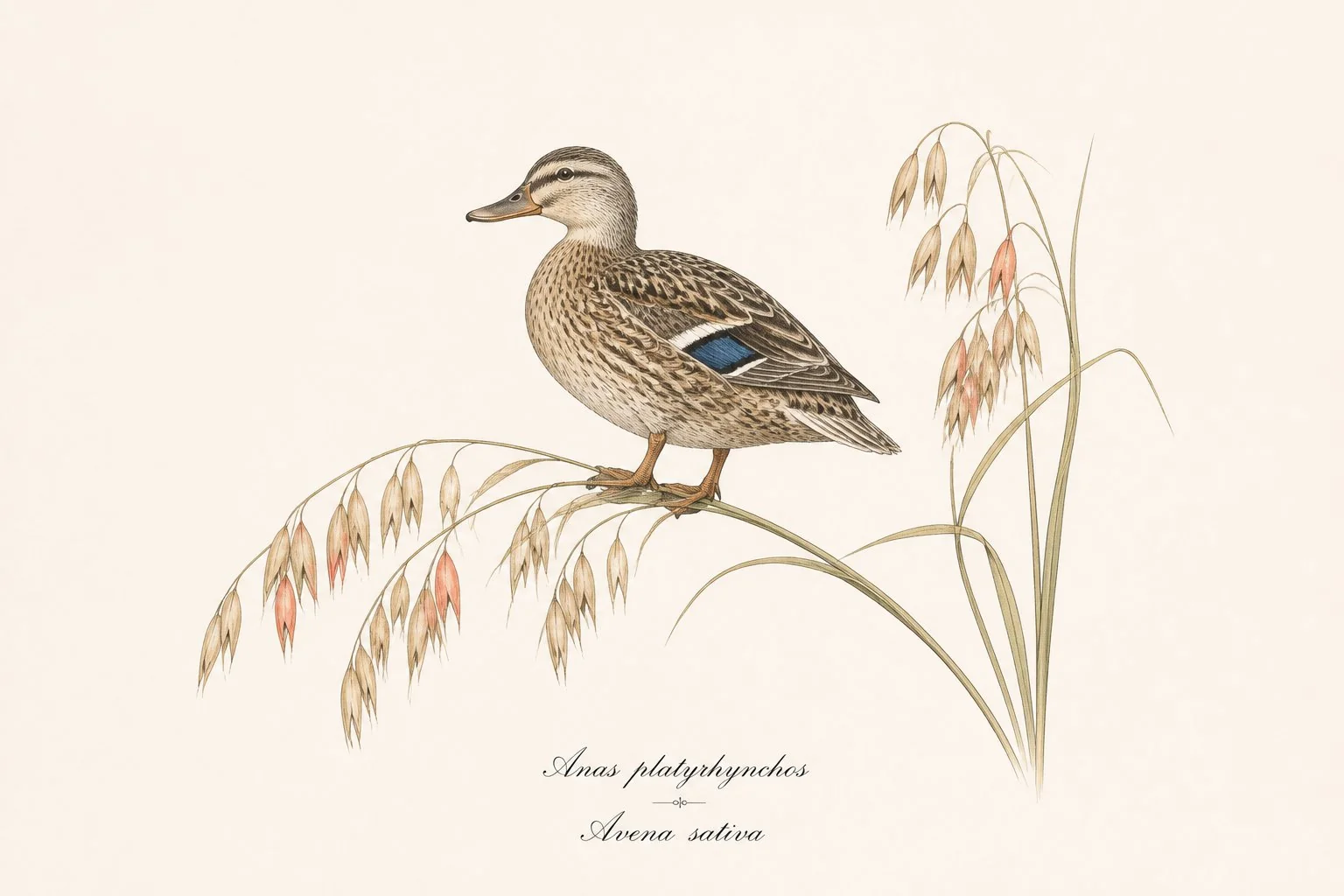
- Mallard - the universal duck. Year-round across the continent.
- American Black Duck - east coast and inland east; mallard-like but darker.
- Northern Pintail - the elegant one, long pointed tail on males.
- Northern Shoveler - oversized spatulate bill.
- American Wigeon - the whistler, common winter dabbler.
- Gadwall - subtle grey-and-black duck, often overlooked.
- Green-winged Teal - smallest dabbling duck; chestnut head on male.
- Blue-winged Teal - summer breeder, blue wing patch.
- Cinnamon Teal - all-over rusty male; western US.
- Mottled Duck - resident on Gulf coast, mallard-like.
The diving ducks (8 common species)
- Canvasback - sloping head profile, copper-headed males.
- Redhead - rounder profile, reddish head.
- Greater Scaup, Lesser Scaup - the “bluebills”.
- Ring-necked Duck - common in freshwater.
- Ruddy Duck - tiny, stiff-tailed, often holds tail vertical.
- Hooded Merganser - small merganser with a black-and-white crest.
- Bufflehead - smallest diving duck; black-and-white males.
The sea ducks (10 species)
Mostly coastal in winter, breeding in the Arctic or boreal forest:
- Common Eider, King Eider - large saltwater divers.
- Surf Scoter, White-winged Scoter, Black Scoter - dark sea ducks.
- Long-tailed Duck - winter at sea; elegant long tail.
- Harlequin Duck - the painted duck of rocky coasts.
- Common Goldeneye, Barrow’s Goldeneye - winter on rivers and bays.
- Common Merganser, Red-breasted Merganser - fish-eating divers.
The perching ducks
- Wood Duck - the only widespread North American perching duck. Cavity-nesting, ornate male plumage, forest swamps.
The Wood Duck is the most photographed duck in North America for good reason - the male in spring plumage is one of the most spectacularly patterned birds on the continent.
How to ID a duck in the field
The fast path:
- What’s the habitat? Open ocean = probably sea duck. Pond = dabbler or freshwater diver. Forest swamp = Wood Duck.
- How does it feed? Tipping bottom-up = dabbler. Diving fully under = diver or sea duck.
- What’s the head shape? Sloping (Canvasback), rounded (most others), crested (mergansers, Hooded).
- What’s the bill shape? Spatulate (Shoveler), long-and-thin (mergansers), short-and-wide (most others).
Once you’ve narrowed the group, the field guide does the rest.
National Audubon Society Birds of North America
The single-volume reference covering every duck.
The 2021 Audubon guide covers all 40+ regularly-occurring North American ducks, with photographs showing seasonal plumage, range maps, and behavioural notes. Best single-volume reference for sorting the whole continental list.
- All 40+ regularly-occurring duck species
- Photographs of male and female plumage
- Range maps with breeding and wintering distribution
 Audubon · 2021 Ed.

As an Amazon Associate we earn from qualifying purchases.
The bottom line
Forty-plus duck species, four functional groups, one essential reference book. Learn the groups first, then the species. The Pacific Flyway in winter is the densest single experience; the Eastern hardwood swamps give the most diverse breeding-season list.
For state-level detail, see our notes on ducks in Oregon and water birds in Florida.