Marbled Godwit - Bob Gress
 
Home About Subscribe Archives Contact Feedback
 
 
Sponsors

NewsLink is grateful to the following sponsors for their support:


Association of State
Wetland Managers


International Affairs, Office of U.S Fish & Wildlife Service


U.S. National Ramsar Committee


95477


#295477


#295477


April 2008

This bimonthly newsletter includes news from February & March 2008.

Note from the Editor

Dear Friends:

A few days ago, The New York Times offered an op-ed entitled “Did Your Shopping List Kill a Songbird?” Migratory birds were referred to as "modern-day canaries in the coal mine." According to recent findings the birds are poisoned by highly toxic pesticides on their wintering grounds. Reflecting on this disturbing news, and what it also means for human beings, reminded me of this quote from Paul Ehrlich:  “Few problems are less recognized, but more important than, the accelerating disappearance of the earth’s biological resources.  In pushing other species to extinction, humanity is busy sawing off the limb on which it is perched.”   

It’s a heavy statement for April Fool's Day but it is important. Isn't it our collective responsibility, especially those of us who work in the field of conservation, to always be thinking of creative ways to share that message with others who don’t make that connection as easily?.  As a reader of this newsletter, it is always my hope that you will happen upon a news story or resource that empowers your work in a way you weren’t expecting.

Best wishes until June.

Heidi

Heidi Luquer, Editor
Migratory Bird & Wetlands NewsLink


Contents

News from Friends


Migratory Bird & Wetland News


Resources on
the Web


Opportunities

International Calendar for 2008 & Beyond


News from Sponsors


News from the U.S. National Ramsar Committee

May 10: Ceremony to Recognize Francis Beidler Forest as the 23rd U.S. Ramsar site
An on-site event is planned on May 10, which is International Migratory Bird Day, to celebrate the pending listing of the Francis Beidler Forest as the newest Ramsar site in the United States. The site is owned by Audubon South Carolina and The Nature Conservancy of South Carolina.

May 30 (morning): Congressional Briefing on the Ramsar Convention for the House Wildlife Refuge Caucus. Presentations will be made by representatives of the U.S. Fish and Wildlife Service and the U.S. National Ramsar Committee. For more information, please contact Royal Gardner at: gardner[AT]law.stetson.edu.

May 30 (afternoon): U.S. National Ramsar Committee Annual Meeting.
The meeting will be hosted by the Association of Fish and Wildlife Agencies and held in conjunction with the Society of Wetland Scientists Conference in Washington, DC. Guests are welcome, but please rsvp to Royal Gardner at: gardner[AT]law.stetson.edu, as space is limited.


News from Friends
in alphabetical order...

Association of State Wetland Managers (ASWM)

ASWM, the Pacific Northwest Chapter of the Society of Wetland Scientists, the U.S. Environmental Protection Agency and the Oregon Department of State Lands invite paper submissions for Wetlands 2008 until April 11, 2008. Click here. .htm The conference seeks to help wetland professionals gain a better understanding of the challenges created by climate change and identify discrete activities and actions to take to reduce and mitigate impacts on wetlands and water resources.

Environmental Law Institute
Seven Wetland Stewards Win 2008 National Wetlands Awards. Click here for the list of those recipients.

News from Korea
To learn about the Korean Grand Canal Project click here. As Nials Moores writes "it would take too many superlatives to try to describe fully the scale and anticipated impacts of this project on South Korea's major riversand river-dependent birdlife and biodiversity..." To help by signing a petition click here. For more information contact Nials at N.MooresATbirdskorea.org


Contents
News from Friends

Migratory Bird & Wetland News

Resources on the Web

Opportunities

International Calendar for 2008 & Beyond


The Izaak Walton League of America Invites You to Join in Celebrating American Wetlands Month 2008
Sign up now to receive the Izaak Walton League of America's fourth volume of its interactive e-newsletter Wetland Sights and Sounds, free. To sign up click here. To go to the League's American Wetlands Month homepage click here.

Ramsar News
New Ramsar Sites
- Argentina adds its 16th Ramsar site: the Reserva Natural Otamendi
- Estonia adds its 12th Ramsar site: "Sookuninga Nature Reserve"
- Hungary adds 2 new sites: Borsodi-Mezoség and Montág-puszta
- Mauritius has designated Blue Bay Marine Park
- Mexico will designate 45 new Wetlands to celebrate World Wetlands Day 2008
- Nigeria names a new portion of Lake Chad

Wetlands International
New Website for Wetlands Itnernational Black Sea Office

Western Hemisphere Shorebird Reserve Network [WHSRN]
Paraguay’s first site Bahía de Asunción – an Important Bird Area wetland just north of Paraguay’s capital city Asunción - has been identified as a key site for the Near Threatened Buff-breasted Sandpiper Tryngites subruficollis. Thanks to the efforts of Guyra Paraguay, BirdLife Partner in Paraguay.


Migratory Bird & Wetland News

in the news - from around the globe  
most recent news listed first

Making Biodiversity Conservation Pay Off
31 March 2008, Environment News Service - As the world wakes up to the accelerating loss of biological diversity, businesses are increasingly viewing biodiversity conservation as a potential profit center, says a new collaborative report from one of the world's largest conservation organizations and one of the world's largest international oil, gas and chemicals companies. The report from the IUCN-International Union for Conservation of Nature and Shell International Ltd. calls for policy reforms to increase the commercial rewards for conserving biodiversity.

Did Your Shopping List Kill a Songbird?

30 March 2008, New York Times, by Bridget Stutchbury - Since the 1980s, pesticide use has increasedfivefold in Latin America as countries have expanded their production of nontraditional crops to fuel the demand for fresh produce during winter in North America and Europe. What should you put on your bird-friendly grocery list? Organic coffee, and bananas. Most mass-produced coffee is grown in open fields heavily treated with fertilizers, herbicides, fungicides and insecticides. Bananas are typically grown with one of the highest pesticide loads of any tropical crop.

Mother Nature is Taking Care of Business [Global]
30 March 2008, Great Falls Tribune - What lessons can managers and CEOs apply from grizzly bears,
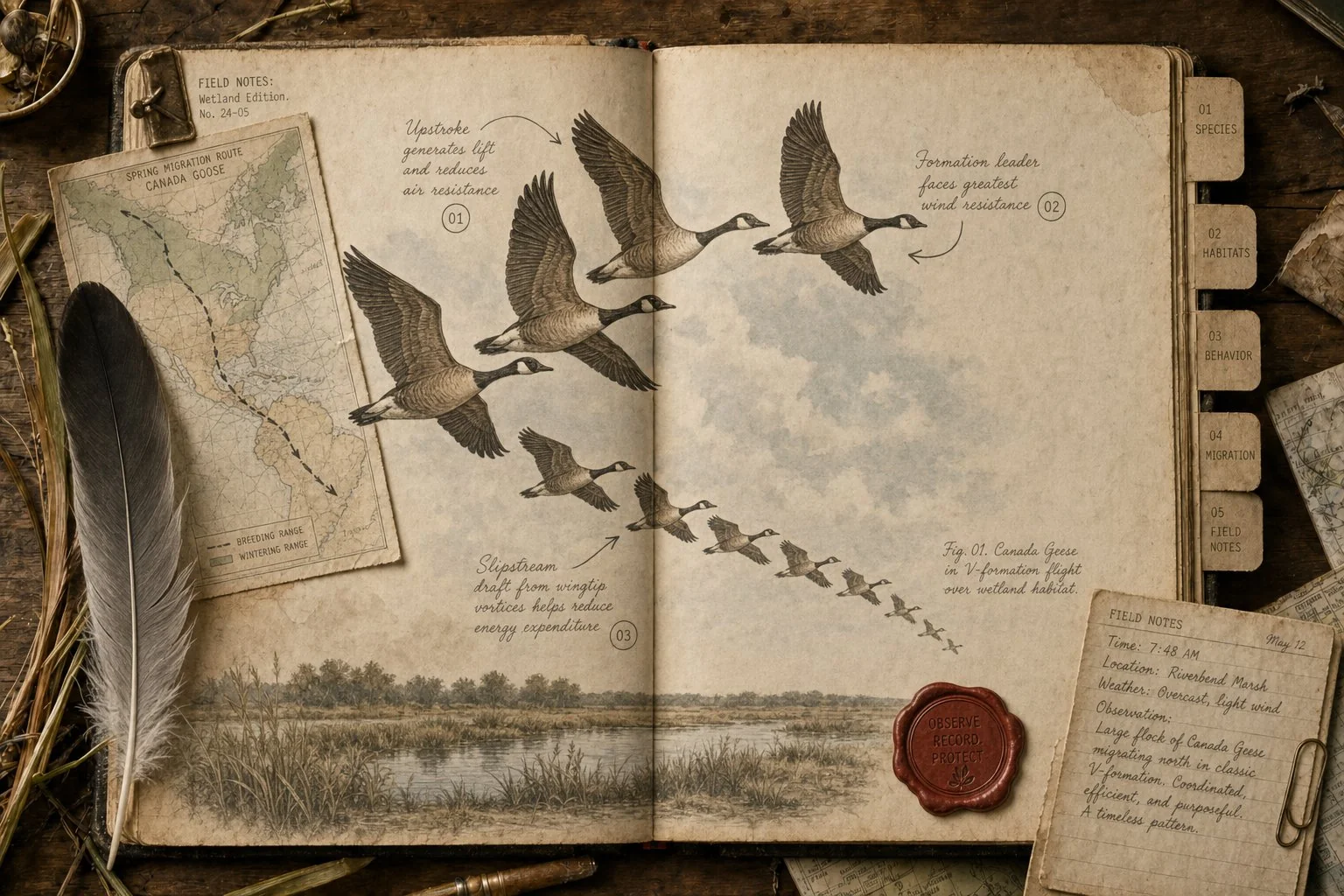
butterflies, and migratory birds to better their businesses? Migratory birds flying in V-shaped flock formation can travel 70 percent farther than birds flying individually. "The trailing bird is surfing on the swirling vortex of the wing tip of the bird in front of it," Benyus explains in the piece. "The lead bird doesn't have that advantage, so what the birds do is that they take turns." Businesses are doing the same, disassembling rigid hierarchies and instead "The leadership position rotates so that everybody shares in the risks and the awards and the responsibility," Benyus said.

Albatross Task Force ‘Spreads its Wings’ to Cover More Countries
28 March 2008, BirdLife International Press Release - Fighting to save the albatross from extinction, BirdLife International and the RSPB (BirdLife in the UK) are doubling the number of countries – from three to six - in which they work. New research from Namibia, Uruguay and Argentina highlights these iconic seabirds are dying in large numbers within their waters.

Birds to Listen and Look for in Your Backyard [USA - East Coast]
28 March 2008, National Public Radio - As the weather warms, what kinds of birds do you hope to spot? Birding experts talk about the signs of spring in the avian world, from migrations, to nesting, to birdsong. They weigh in on some threatened birds that enthusiasts should make a special effort to see this spring. [Audio - 42 min 41 sec.]

Audubon and Toyota Announce Five-Year Alliance to Promote Conservation Action and Grow Leaders of Tomorrow [USA]
26 March 2008, World-wire - The National Audubon Society and Toyota today launched TogetherGreen, a nationwide Audubon program to fund conservation projects, train environmental leaders, and offervolunteer opportunities to significantly benefit the environment. A $20 million Toyota grant—the largest Audubon has received in its 103-year history—will fund TogetherGreen for five years, enabling Audubon to expand the scope and reach of its internationally-known conservation programs.

Why Do Birds Sing? It's All in the Brain
19 March 2008, Reuters - Birds start singing in the spring because of a biological response to longer days, researchers said on Wednesday. When birds are exposed to light for longer periods, certain brain cells trigger a series of hormonal reactions telling them to find a mating partner, which they do by singing, a team of Japanese and British researchers reported in the journal Nature.

The Song Doesn't Remain the Same in Fragmented Bird Populations
18 March 2008, EurekAlert - The song of passerine birds is a conspicuous and exaggerated display
shaped by sexual selection in the context of male-male competition or mate attraction. Paola Laiolo
and colleagues at the Spanish Council of Research (CSIC) studied the metapopulation system of the
Dupont’s lark in north-eastern Spain...

Bermuda Petrel Returns to Nonsuch Island (Bermuda) After 400 Years
17 March 2008, BirdLife News Alert - Three Endangered Bermuda Petrels (Pterodroma cahow – also known
as the Cahow), translocated to Nonsuch Island before fledging in 2005, have returned to the island,
and been observed entering artificial nesting burrows constructed for them. Jeremy Madeiros says the
recapture of translocated birds back on Nonsuch and the courtship and nest prospecting activity are
important milestones. But the project will not be considered a success until nesting occurs. “If this activity follows the pattern already observed at the original breeding islets, this could happen as early as 2009–2010.”

World Sanitation Goals Slip; Nature Can Help
17 March 2008, Reuters, by Alister Doyle (Oslo, Norway) - "The history of men is reflected in the history of sewers," French 19th century author Victor Hugo wrote in Les Miserables. "The sewer is the conscience of the city ... A sewer is a cynic. It tells everything." Judged by its sewers, the world is not doing well. Only 3 in 10 people now have a connection to a public sewerage system. Experts say a part of the solution, especially to cut water-borne diseases for the rural poor, may lie in renewed and smarter exploitation of nature -- for example through plants or soil bacteria that feed on waste. Novel schemes include a plan to build an artificial wetland at a jail in Mombasa, Kenya, to process sewage from 4,000 inmates that now flows untreated into a creek, or ponds in South Africa where algae purify waste and are then used as fertiliser.

Wetland Squatters Chase the National Environment Management Authority (NEMA) Staff [Uganda]
16 March 2008, Kampala International University, by Gerald Tenywa - A mob, armed with stones, attacked a team of environmental officials from NEMA that was sent to evict encroachers from Kinawataka wetland in Kampala. Kinawataka wetland is fed by five streams. Its catchment areas include Ntinda, Naguru hill, Kiwatule, Kyambogo, Kireka, Mbuya and Mutungo. The swamp, which flows into Lake Victoria at Butabika, is heavily encroached upon.

Paddle Round the Wetlands [England]
17 March 2008, Gazette Internet Edition, by Emily Thwaite - A canoe safari at the Wildfowl & Wetlands Trust Centre at Slimbridge, England is being launched. Part of the aim of the Splash! project is to give visitors a chance to experience wildlife from a new perspective.

Biological Compass Aids Migrating Birds
16 March 16 2008, KnoxNews.com, by Marcia Davis - The bodies of some birds, like the white homing
pigeon, and many migratory birds have the ability to detect information from the Earth’s geomagnetic
field that may help the birds fly in the correct direction, pinpoint their location and navigate to their final destination. You almost have to be a biophysicist to grasp all of this. But basically scientists think the cryptochrome in the eye may work like a compass that indicates direction. The magnetite crystals in the beak may be like a GPS that allows a bird to pinpoint its position by equator or between one geographic location and another.

Migratory Birds in Gharana Wetland Pose Problem for Residents [India]14 March 2008, Thandia News - It is spring and the migratory birds have flocked to Gharana in Jammu and Kashmir. They are a beautiful sight, but the residents are not happy and complain that the birds destroy their standing crops.

The Impending Coastal Crisis [USA]
13 March 2008, ENN, American Geological Institute – Coastlines are the most dynamic feature on the
planet. In the March issue, Geotimes magazine looks into the risks of increased development along our coastlines and what that means for erosion, flooding and future development. As coastal communities grow, so does the call for human-made structures to prevent local beach erosion.

But Rivers Great and Small Can Fight Pollution, if Given Chance [USA]
12 March 2008, EurekAlert, Michigan State University — Big rivers typically get the credit for being powerful and mighty, but a national study released today shows that when it comes to pollution control, even little streams can pack a punch. “This study presents a picture of unprecedented detail of the extent to which streams can remove nitrate,” Hamilton said. “We also now have a better idea of what makes one stream more efficient at nitrate removal than another.”

Nutria, A Rat-like Pest Ravaging Gulf Coast Wetlands, Can Be Lured With New Substance [USA]
10 March 2008, Science Daily — A 10-pound rodent pest called nutria ravaging southern wetlands in the US, which has been especially damaging to the marshland ecology in the Mississippi Delta following Hurricanes Rita and Katrina, may have finally met its match thanks to molecular science that includes the work of Professor Athula B. Attygalle, an expert in molecular chemistry and mass-spectrometry based at Stevens Institute of Technology in Hoboken, New Jersey, and a team of scientists from Cornell University and University of Iowa.

Wandering Albatrosses Follow Their Nose
6 March 2008, EurekAlert - The first study of how individual wandering albatrosses find food shows that the birds rely heavily on their sense of smell. The birds can pick up a scent from several miles away, U.S. and French researchers have found. "This is the first time anyone has looked at the odor-tracking behavior of individual birds in the wild using remote techniques," said Gabrielle Nevitt, professor of neurobiology, physiology and behavior at UC Davis. The study is published online by the journal Proceedings of the National Academy of Sciences.

Animal Magnetism Provides a Sense of Direction
26 February 2008, EurekAlert - They may not be on most people’s list of most attractive species, but bats definitely have animal magnetism. Researchers from the Universities of Leeds and Princeton have discovered that bats use a magnetic substance in their body called magnetite as an ‘internal compass’ to help them navigate.

Support for a Theory as to Why Land Sinks Along the Gulf Coast
19 February 2008, New York Times, by Henry Fountain - Climate change may be causing sea levels to rise, but in some coastal areas the problem is worsened because the land is sinking as well. That’s the case in Louisiana, where subsidence has caused erosion and loss of wetlands. Without wetlands to act as buffers, the devastation of storms like Katrina is even greater.

Tropical Winter Habitat Drives Natal Dispersal of Young Migratory Birds [Americas]
19 February 2008, Smithsonian Press Release - A new study by scientists at the Migratory Bird Center at the Smithsonian's National Zoo shows that the factors determining where birds settle and nest in the first breeding season depends on the habitat they used during their first winter in the tropics. The determining factor in where a bird settles for its first breeding season relative to its hatching site-also known as natal dispersal-was previously unknown.

Government Moves to Protect Boracay Wetlands [Phillipines]
18 February 2008, The News Today (Boracay Island, Malay, Aklan) - The Department of Environment and Natural Resources (DENR) recently issued a cease and desist order to a resort hotel ongoing construction in Boracay Island in a move to protect wetlands in Boracay Island which is an important component of the paradise island's ecosystem.

Once Reviled, Wetlands Awaken to Preservation's Touch [Delaware, USA]
17 February 2008, The News Journal, by Molly Murray - Millions in private investment dollars going into restoring Delaware's maligned habitats.

Biologists Visit Yukon Shorebird in South Pacific
15 February 2008, Tundra Drums, by Suzanne Chutaro - A team studying the migratory pattern on of the
bristle-thighed curlew bird, known in the Marshall Islands as the kowak, arrived in Majuro last week to track down a tagged curlew that had migrated from Alaska to spend its winter at Maloelap Atoll. (Editor’s note: This story first appeared in the Marshall Islands Journal on Dec. 14.)

11th Hour Politics Could Threaten Millions of Birds
The EPA Considers Reversing Ban of Toxic Pesticide Furadan
11 February 2008, TheDailyGreen.com - “The evidence is clear: carbofuran is toxic to wildlife and
people. EPA should not fold to political pressures and allow this dangerous pesticide back on the market,” said Rodger Schlickeisen, president of Defenders of Wildlife. “In 2006, more than 20,000 of our members and activists asked EPA to take carbofuran off the market. EPA made the right decision in 2006 and they should stick by that decision now.”

Vote Expected on Horseshoe Crab Fishing Ban to Protect Birds
10 February 2008, Newsday.com, by Rebecca Santana - A battle is brewing between environmentalists
trying to protect threatened migratory birds that feed on horseshoe crab eggs and fishermen who have
harvested the crabs along the Delaware Bay for years.

China Aims to Effectively Protect Half of its Wetlands by 2010
9 February 2008, Xinhua News Agency - ... According to Jia Zhibang, State Forestry Administration (SFA) director. By 2010 the shrinking trend in the wetland area will be initially reversed and a wetland protection network will be formed..."

Botswana's Chobe River Threatened, African Wildlife Foundation and Other Experts Say
7 February 2007, Environmental News Network - Pollution, unchecked development, and uncontrolled
fishing are endangering the ecological health of the Chobe River, Located in northwestern Botswana,
Chobe National Park is home to one of the largest concentrations of megafauna in Africa.

Uganda: Fighting for Kampala's Wetlands Could Be a Lost Cause [Uganda]
3 February 2008, allafrica.com, Geraly Tenywa - When ambassador Matthias Lubega retired... he got this rude shock when he attempted to save Nyanama, one of Kampala's wetlands located on Entebbe Road.

Mexico Adds Wetlands to World Registry as Environmentalists Warn Against Development
2 February 2008, International Herald Tribune (Mazatlan) - Mexico has added 45 wetlands to an international registry even as environmentalists warn wetlands remain poorly protected in Mexico. They raise the total area of protected wetlands to 19.8 million acres.

Herons in Chicago Wetlands Survive Exposure to Banned Toxics [USA]
2 February 2, 2008, Environment News Service - Black-crowned night-herons nesting in the wetlands of
southeast Chicago are still being exposed to chemicals banned in the United States in the 1970s, but
the chemicals do not appear to be affecting the birds' reproductive success.


Resources on the Web 


Open-Access Journal to Provide Educators with Resources to Teach Biodiversity Conservation
From the American Museum of Natural History's Center for Biodiversity Conservation
The new online journal, Lessons in Conservation (LinC) wil be published semi-annually. It offers up-to-date resources and thinking in biodiversity conservation. It is the official publication of the Network of Conservation Educators and Practitioners (NCEP) a collaborative project. The teaching modules presented in LinC include synthesis documents summarizing a wide range of conservation-related topics, field or laboratory exercises. Click here for the inaugural issue of LinC. Click here for the download, free-of-charge.

Film Peatlands Alert: Peatland Loss Fuels Climate Change
In this short film, Wetlands International alerts the world to the crucial problem of peatlands leading to huge CO2 emissions. The film highlights the work of the Central Kalimantan Peatland Project.


Contents

News from Friends

Migratory Bird & Wetland News

Resources on the Web


Opportunities

International Calendar for 2008 & Beyond


Proceedings from the 5th Australian Stream Management Conference are on the web
[Held 21 - 25 May 2007] They are available in pdf from the Institute for Land, Water and Society at Charles Sturt University, Albury, Australia. Hardcopies are no longer available. Click here. [Courtesy of Max Finlayson]

Okavango Delta Management Plan [Botswana]
From the Botswana Department of Environmental Affairs, this 216-page resource constitutes a Management Plan for the Okavango Delta which is largely based on the Government of Botswana planning system and complemented by elements from the New Guidelines for Management Planning for Ramsar Sites
and the Ecosystem Approach. It is available on-line in PDF fomrat (2.8MB) Click here.

Mangrove Guidebook for Southeast Asia
B
y Wim Giesen, Stephan Wulffraat, Max Zieren and Liesbeth Scholten.
This book marks the first attempt to cover all mangrove plant species in Southeast Asia. Produced by Wetlands International in Indonesia in partnership with FAO, this 534-page manuscript can be downloaded from the FAO web site in 12 sections. Click here.

Action for Culture in Mediterranean Wetlands
by Thymio Papayannis
The Mediterranean Institute on Nature and Anthropos/ Med-INA offers culture-related activities relating to 22 wetland sites in the Mediterranean. A main conclusion is that nature and culture are two interdependent elements and therefore "we cannot understand and manage the 'natural' environment unless we understand the human culture that shaped it". For PDF versions in English and in French click here. For the print publication, inquiries can be made to Med-INA: afoutri[AT]med-ina.org.

No Way Home: The Decline of the World's Great Animal Migrations
By David S. Wilcove.
E.O. Wilson writes: "In this important and exceptionally well written book, a leading wildlife biologist shows how human activity is not just erasing species and ecosystems but also cutting the ancient natural highways that make possible Earth''s greatest wildlife spectacles." Island Press. 256 pages. Hardcover.


Opportunities

Equator Prize (biennial)
sponsored by UNDP with support from a number of other organizations. The Equator Initiative Web page is at http://www.equatorinitiative.org/. The prizes for this year will be awarded at the IUCN World Conservation Congress in Barcelona in October 2008.

GEF/UNDP Yellow Sea Project Small Grant Opportunity
7 April 2008 Deadline
Grants of up to US$10,000 will be awarded to projects whose activities stimulate the development and
adoption of management schemes that improve protection of the marine environment and sustainable resource use in the Yellow Sea. Click here for grant criteria and guidelines

Klamath Bird Observatory Education Intern: May-October 2008

Duties will include teaching school programs in the classroom and the field, interpreting for the public at bird banding stations, leading bird walks and much more.

Contents

News from Friends

Migratory Bird & Wetland News

Resources on the Web

Opportunities

International Calendar for 2008 & Beyond


Training

Wetlands International under its Wetlands and Poverty Reduction Project has several training opportunities:
4th Wetlands & Poverty Reduction Practioners Anglophone Training: 18th - 30th August 2008, Entebbe,Uganda (English) Click here for more details.


International Calendar

for 2008 & beyond...

2008

April

7 - 11 April
4th Global Conference on Oceans, Coasts and Islands:
Advancing ecosystem
management by 2010 and integrated coastal and ocean management
Hanoi, Vietnam


New
7 - 25 April

International Training of Trainers on Wetland Management
Moldova
A course focusing on the facilitation of multi-stakeholder processes and curriculum development(ICWM-TOT) . This course is organised by Wageningen International and ECOTIRAS (Moldova) in cooperation with the WetCap Partnership, the Ramsar Secretariat, and the Dutch Ministry of Agriculture, Nature and Food Quality.

17 - 20 April
The Wilson Ornithological Society and the Association of Field Ornithologists Annual Meetings

Hattiesburg, Mississippi, USA, at the University of Southern Mississippi.

Contents

  News from Friends
  Migratory Bird & Wetland News
  Books & Resources on the Web
  Opportunities
 
  International Calendar for 2008 & Beyond


May

New
3 - 7 May
6th Ramsar European Regional Meeting
Stockholm, Sweden

10 May
International Migratory Bird Day
The conservation theme this year is Tundra to Tropics: Connecting Birds, Habitats and People.

Updated
11 - 16 May
10th International Conference on Salt Lake Research
Salt Lake City, Utah, USA.
Hosted by The International Society of Salt Lake Research (ISSLR). Co-sponsors include FRIENDS of Great Salt Lake, Utah State University, The University of Utah, and U.S. Geological Survey.


June

9 – 15 June
13th International Peat Congress After Wise Use: The Future of Peatlands
Tullamore, Ireland.

14 June - 14 September 2008
Expo Zaragoza 2008: Water and Sustainable Development
Zaragoza, Spain. For more informat about this three-month public event, featuring a specially-constructed “Water Tower.”

16 - 19 June
61st Annual CWRA National Conference, Managing the Health of Canada's Lakes and Rivers
Gimli, Manitoba.

Updated
22 - 25 June 2008

Asian Wetland Symposium 2008: Wetlands -The Heart of Asia
Hanoi, Vietnam
A symposium to reflect on the importance of wetlands to the daily life
of people in Asia and to look into the progress and challenges in wetlands management and conservation.

July

13 - 17 July

22nd Annual Meeting of the Society for Conservation Biology
Chattanooga, Tennessee, USA. Hosted by the University of Tennessee at Chattanooga’s Department of Biological and Environmental Sciences. To be held at the Chattanooga Convention Center.

22 - 25 July
3rd Western Hemisphere Migratory Species Initiative (WHMSI) Conference
Asuncion, at the Yacht & Golf Paraguay, Paraguay.
For more information contact Marina Sansostri Ratchford, Chief, Branch of Latin America & the Caribbean Division of International Conservation: marina_ratchford[AT]fws.gov. Please respond by April 15 2008 to Alberto Yanosky (yanosky[AT]guyra.org.py) and cc. Cristina Morales: cristinam[AT]guyra.org.py) to confirm your participation. Wildlife Directors from government agencies in all 35 countries of the Western Hemisphere; representatives from non-governmental organizations and international conventions interested in migratory species conservation in the hemisphere will be present.

August

4 - 9 August
The American Ornithologists' Union, Cooper Ornithological Society, and Society of Canadian Ornithologists
Portland, Oregon, USA.

September

New
23 - 27 September
11th North American Crane Workshop
Wisconsin Dells, Wisconsin, Glacier Canyon Lodge Convention Center, USA.
The workshop is sponsored by the North American Crane Working Group. Deadline for submission of abstracts for oral presentations and posters is 20 June 2008. For more information contact Jane Austin: jane_austin[AT]usgs.gov; Tel: (701) 253-5510


October


October 28 - November 4
10th Conference of the Parties to the Ramsar Convention
Changwon, Republic of Korea.

November

New
1 - 7 November
Wetland 2008: 11th International Conference on Wetland Systems for Water Pollution Control
Indore, India.
Organised by International Water Association (IWA) and Institute of Environment Management and Plant
Sciences, Vikram University (India).

5 - 8 November
32nd Annual Meeting of the Waterbird Society
South Padre Island, Texas.


2009

March 2009

New
2 - 5 March 2009
7th Mangrove Forest Ecology, Management and Restoration Training Workshop
Hollywood, Florida, USA.

March (tentative)
The Wilson Ornithological Society and the Association of Field Ornithologists annual meetings.
Pittsburgh, Pennsylvania, USA.


2010

August 2010

22 - 28 August
The 25th International Ornithological Congress
Campos do Jordão, Brazil.

The End
1 April 2008