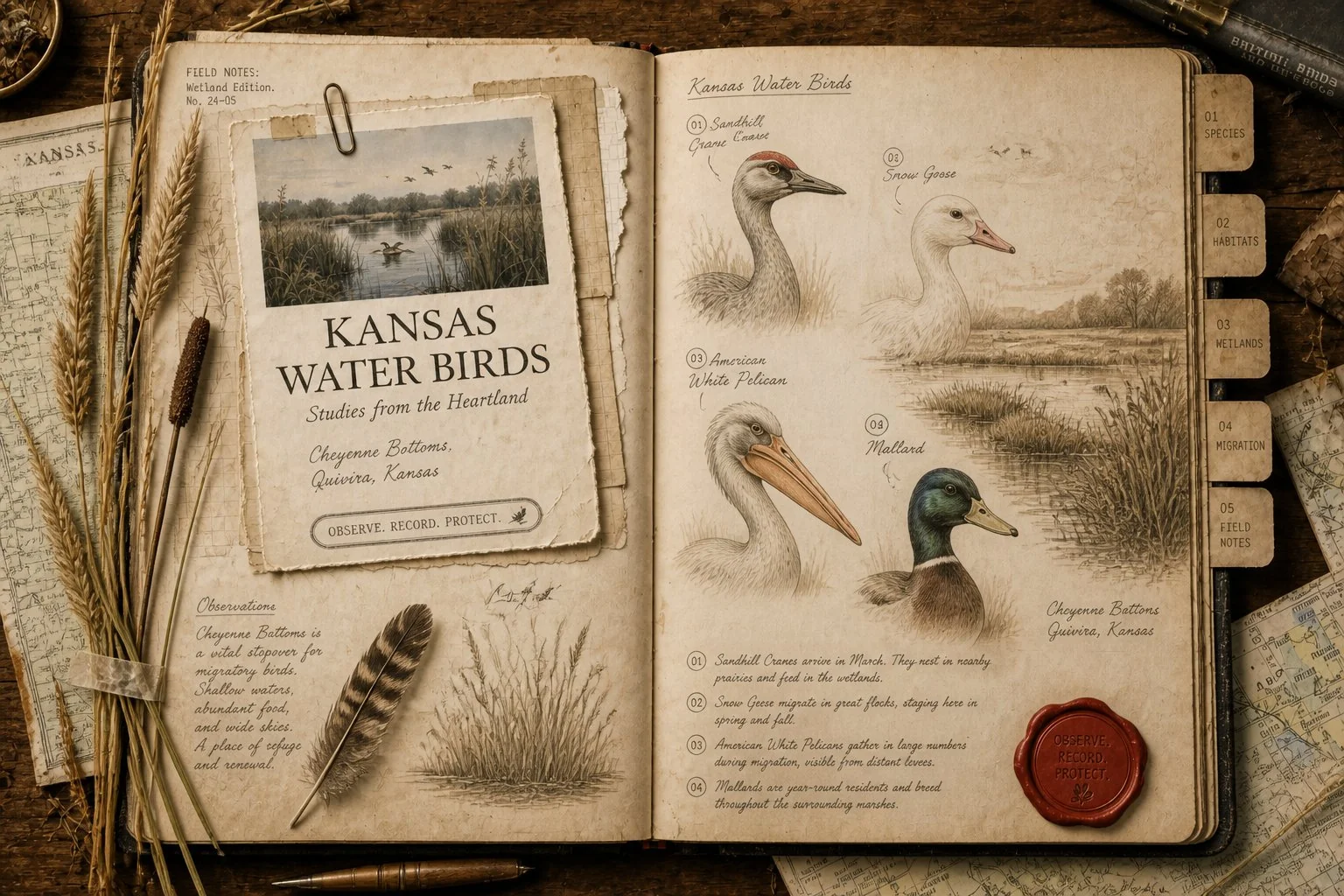
Cheyenne Bottoms, October. 30,000 Sandhill Cranes at sunset.
Kansas sits squarely on the Central Flyway, the migration funnel that runs from the Arctic to South America through the heart of the Great Plains. Twenty-seven regular waterbird species use the state’s wetlands - most notably Cheyenne Bottoms (the largest wetland in the central US) and Quivira National Wildlife Refuge, two adjacent ponds-and-playas that together host millions of migrating shorebirds and waterfowl every spring and autumn. For a state most people assume is dry prairie, the waterbird viewing is exceptional.
The 27 regular species
Ducks and geese:
- Mallard - statewide, year-round.
- Northern Pintail - migrant in massive spring concentrations.
- Blue-winged Teal - common breeder and migrant.
- Green-winged Teal - migrant.
- Northern Shoveler - winter and migrant.
- American Wigeon - migrant.
- Gadwall - migrant and small breeder.
- Wood Duck - river bottoms.
- Canvasback - migrant on larger lakes.
- Redhead - migrant and small breeder.
- Ring-necked Duck - migrant.
- Lesser Scaup - common migrant.
- Bufflehead - winter migrant.
- Common Goldeneye - winter.
- Hooded Merganser - migrant on wooded waters.
- Snow Goose - massive spring flocks at Quivira and DeSoto NWR.
- Greater White-fronted Goose - migrant.
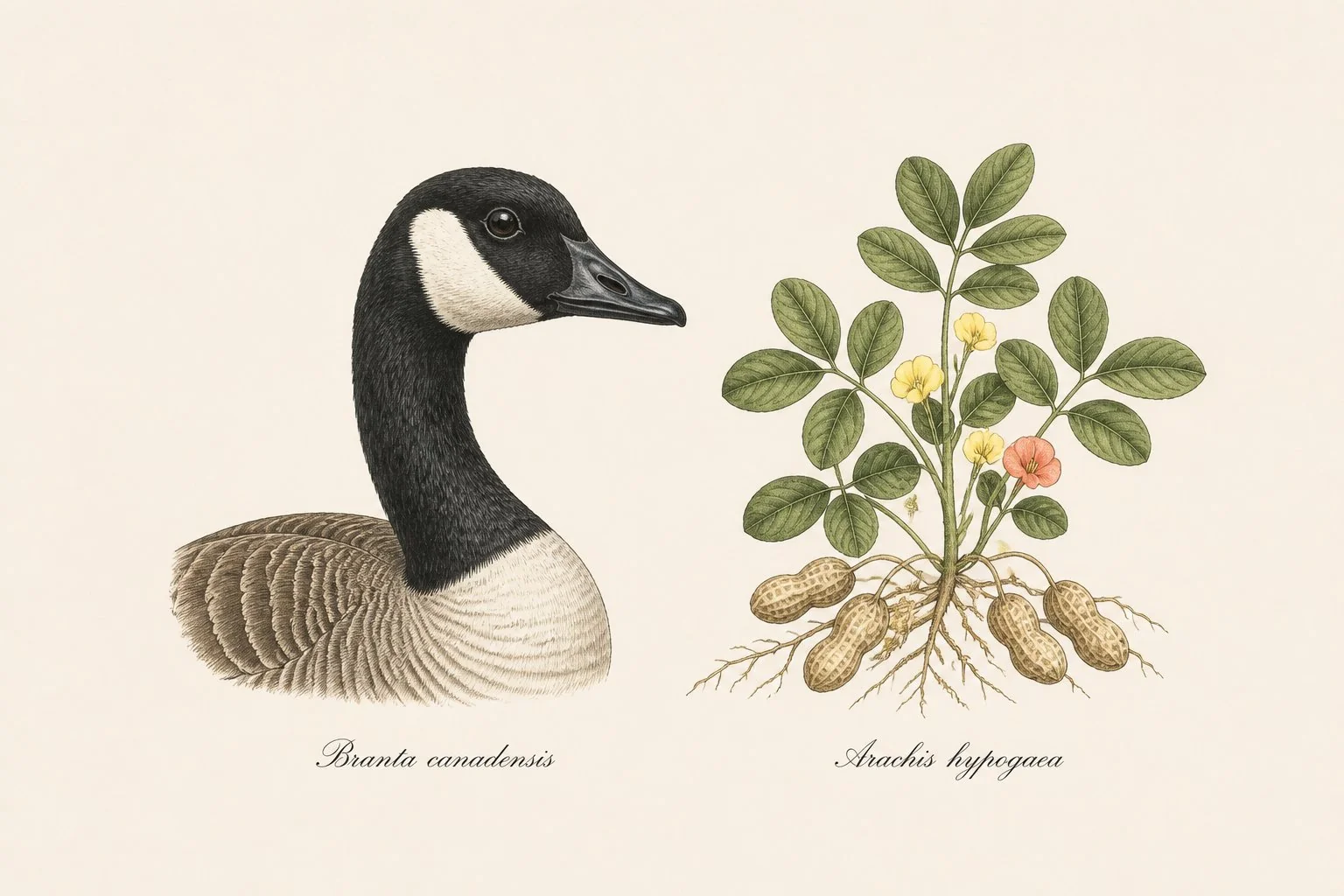
- Canada Goose - statewide year-round.
Cranes, pelicans, and waders:
- Sandhill Crane - massive autumn staging at Cheyenne Bottoms (Oct-Nov).
- Whooping Crane - critically endangered; small numbers pass through Cheyenne Bottoms.
- American White Pelican - migrant on Kansas reservoirs.
- Great Blue Heron - statewide breeder.
- Great Egret - increasing breeder.
- Snowy Egret - breeder in wet years.
- Black-crowned Night-Heron - colonial breeder.
- White-faced Ibis - irregular but increasing.
- Double-crested Cormorant - statewide on water.
(Shorebirds at Cheyenne Bottoms add ~30 more migrant species in spring, but those aren’t classified as waterbirds proper.)
Cheyenne Bottoms - the centrepiece
Cheyenne Bottoms in central Kansas is the largest interior marsh in the United States: 41,000 acres of shallow water and mudflats in a natural lake basin. It is the single most important stopover for migrating shorebirds in the Western Hemisphere - estimated 45% of the North American shorebird population uses it each spring. Spring migration peaks late April through mid-May with hundreds of thousands of shorebirds; autumn shorebird movement runs August through September.
Sandhill Cranes peak in late October through mid-November, when 20,000-30,000+ birds use Cheyenne Bottoms for staging. The endangered Whooping Crane passes through in small numbers; sightings of 2-6 birds together are realistic during peak crane periods.
Quivira NWR - the second pillar
Quivira National Wildlife Refuge, 30 miles south of Cheyenne Bottoms, covers 22,000 acres of salt marsh and sand prairie. The complementary saltwater habitat draws a different shorebird mix and is a major Snow Goose wintering site (peak numbers December-February). The Wildlife Drive at Quivira is one of the best birding road loops in the central US.
Other Kansas sites worth knowing
- Kirwin NWR (north-central) - reservoir and marsh; pelicans, ducks.
- Marais des Cygnes NWR (eastern KS) - bottomland forest and marsh.
- DeSoto NWR (technically just over the Missouri border) - massive Snow Goose flocks November-March.
- Perry Lake / Clinton Lake / Milford Lake - reservoirs with autumn waterfowl.
- Tuttle Creek Lake - migration concentration site.
Seasonal timing
- March-May - peak northward migration. Snow Goose mid-March. Pintails and teal late March. Shorebirds late April through mid-May.
- June-July - breeders settle: Black-crowned Night-Heron colonies, Pied-billed Grebe, Wood Duck broods.
- August-September - shorebird migration south. Mudflat exposure depends on rainfall.
- October-November - Sandhill Crane staging peak at Cheyenne Bottoms. Whooping Crane sightings most likely.
- December-February - Snow Goose wintering. Bald Eagle concentrations on reservoirs.
What to wear
Kansas wetlands are alkaline and the mud is sticky. Knee-high waterproof boots are useful. Wind exposure on the open plains is significant year-round. A windproof jacket and sun protection matter more here than in most US wetland regions.
Sibley Field Guide East
Covers Kansas with the Central Flyway in mind.
Most Kansas waterbirds are Eastern North American species at the western edge of their range, so the Sibley East volume covers them. Shorebird and waterfowl plates are detailed enough to sort tricky species (e.g., the various Calidris sandpipers at Cheyenne Bottoms in spring).
- Covers 650+ species of eastern North America
- Shorebird and waterfowl plates in multiple plumages
- Pocket-friendly format for field use
 Sibley · 2nd Ed.

As an Amazon Associate we earn from qualifying purchases.
The bottom line
Kansas hosts 27 regular waterbird species and is one of the most important migration stopovers in North America. Cheyenne Bottoms and Quivira NWR are the unmissable sites. Shorebird peak is late April-May; Sandhill Crane peak is late October-November; Snow Goose peak is December-February.
For more, see water birds in Indiana and predator-prey relationships.