Eider flock at the harbour entrance, Loon yodelling on the lake. Same morning.
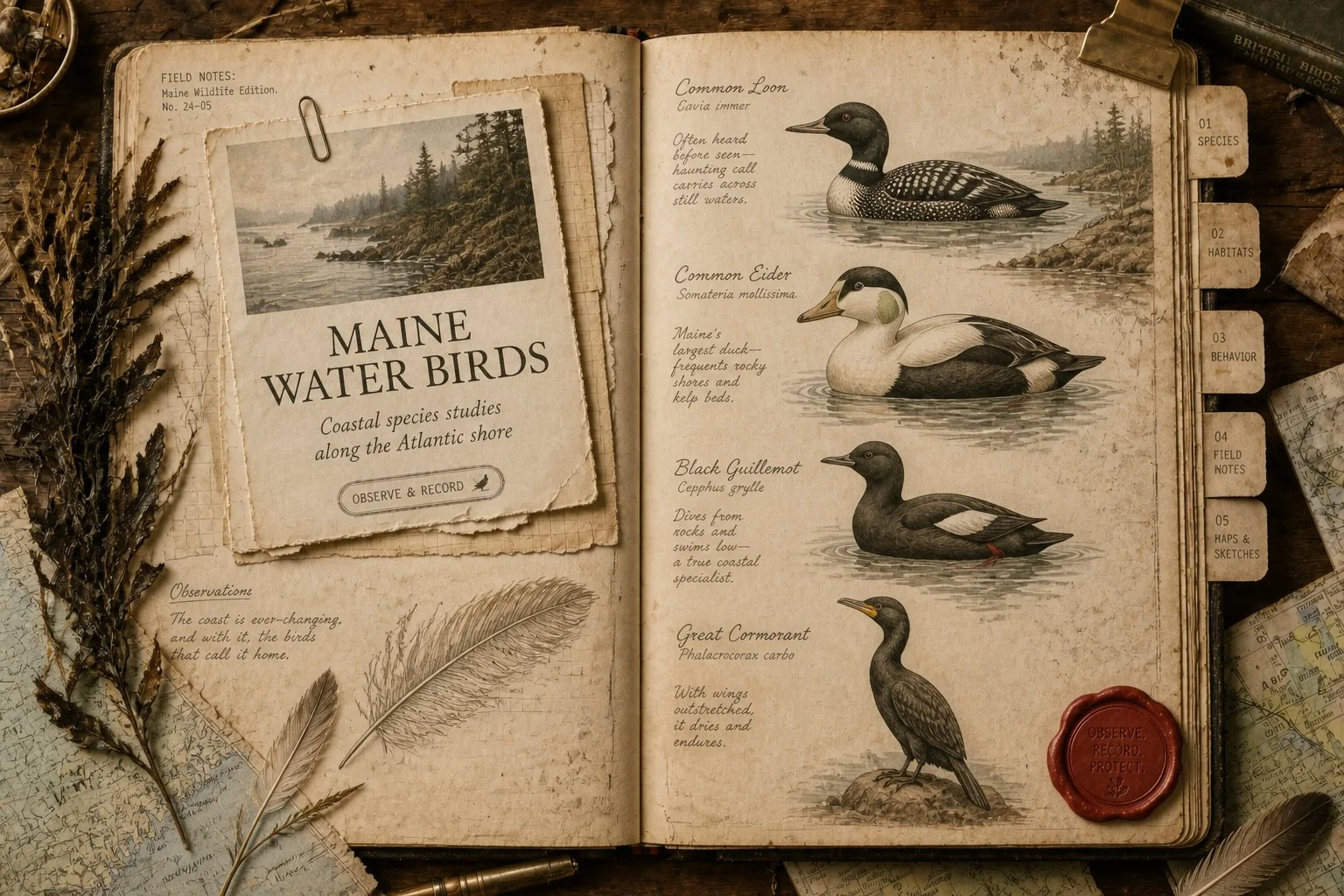
Maine’s combination of rocky North Atlantic coastline and pristine inland lakes supports a unique mix of waterbirds: roughly 24 regular species, weighted heavily toward sea ducks and northern boreal species absent from most of the lower US. The Common Loon is the inland icon; the Common Eider is the coastal one; together they’re the bookends of a state where you can watch puffins from a boat off Machias in the morning and loons on a Belgrade lake by afternoon.
The 24 regular species
Coastal and sea ducks:
- Common Eider - large rafts year-round along the entire coast. Iconic.
- Long-tailed Duck - winter visitor, deep dives, distinctive yodel-bark call.
- Surf Scoter - winter rafts on coastal waters.
- White-winged Scoter - winter, often mixed with Surf Scoters.
- Black Scoter - winter visitor.
- Harlequin Duck - winter at exposed rocky coasts (Schoodic Point reliable).
- Common Goldeneye - winter open water, both coast and inland.
- Bufflehead - winter on protected coastal water.
- Red-breasted Merganser - coastal year-round.
Inland ducks and loons:
- Common Loon - the state’s iconic breeder. Inland lakes May-October.
- Red-throated Loon - migrant only, coastal in autumn.
- Wood Duck - wooded ponds and slow streams statewide.
- Mallard - everywhere, year-round.
- American Black Duck - resident and abundant in coastal salt marsh.
- Hooded Merganser - small wooded ponds.
- Common Merganser - large rivers and lakes.
- Ring-necked Duck - typical northern lakes.
Geese, herons, cormorants:
- Canada Goose - statewide year-round.
- Brant - migrant on coastal flats.
- Great Blue Heron - statewide rookeries.
- Snowy Egret - increasing northward, coastal in summer.
- Double-crested Cormorant - coastal and inland breeder.
- Great Cormorant - winter on rocky coast.
- Black Guillemot - rocky coast year-round, especially Mount Desert Island.
(Atlantic Puffin and Razorbill are nesting alcids best seen from boat trips out of Machias and Cutler in summer; technically seabirds rather than “water birds” but worth the trip.)
Where to find them
- Acadia National Park / Mount Desert Island - Black Guillemot, Common Eider, Harlequin Duck (Schoodic Point in winter).
- Petit Manan / Cutler boat trips - puffin and seabird colonies, Atlantic Puffin June-August.
- Belgrade Lakes / Moosehead Lake - Common Loon breeding, Bald Eagle.
- Scarborough Marsh (Portland area) - waders, rails, salt marsh ducks.
- Merrymeeting Bay (Kennebec/Androscoggin confluence) - autumn waterfowl staging.
- Quoddy Head State Park (Lubec) - Common Eider, scoters, Black Guillemot from cliff trails.
- Sebago Lake - winter goldeneye on open ice-free water.
Seasonal timing
- May-June - Common Loon breeding, peak inland viewing. Look for chicks riding on adult backs by mid-June.
- July-August - puffin colonies active; coastal seabird boat trips run.
- September-October - massive scoter and eider raft formation along the coast. Sea-watching peak.
- November-March - sea duck winter peak. Harlequin Duck at Schoodic. Long-tailed Duck on coastal bays.
- April - return of inland breeders; loons back on lakes by ice-out.
Winter coastal viewing is harsh but rewarding. Layer up; the wind off the North Atlantic is uncompromising.
Loon-specific notes
Maine has one of the largest Common Loon breeding populations in the lower 48. Loons return to inland lakes within days of ice-out (typically late April). Chicks hatch mid-June; you’ll see them riding on a parent’s back for the first 2-3 weeks. Loon yodel calls peak at dawn and dusk through July. By October, loons have moved to coastal waters for the winter.
Loon-protection rules apply to boating: stay 100m from any loon on the water, especially during breeding season.
Sibley Field Guide East
Sorts the sea ducks at a glance.
The hardest ID in Maine is separating three scoter species in a winter raft a quarter-mile out. Sibley's scoter plates show the diagnostic head and bill marks for each, which speeds the call when you only have seconds of clear scope view.
- Covers 650+ species of eastern North America
- Sea duck plates with breeding and eclipse plumages
- Pocket-friendly format for field use
 Sibley · 2nd Ed.

As an Amazon Associate we earn from qualifying purchases.
The bottom line
Maine offers 24 regular waterbirds across coast and inland lakes. Common Loon is the inland icon; Common Eider is the coastal one. Winter brings the sea duck spectacle; summer brings loons, puffins, and breeding waders. Acadia, Schoodic, Belgrade Lakes, and the Cutler boat trips are the highest-value sites.
For more, see water birds in Connecticut and water birds in Florida.