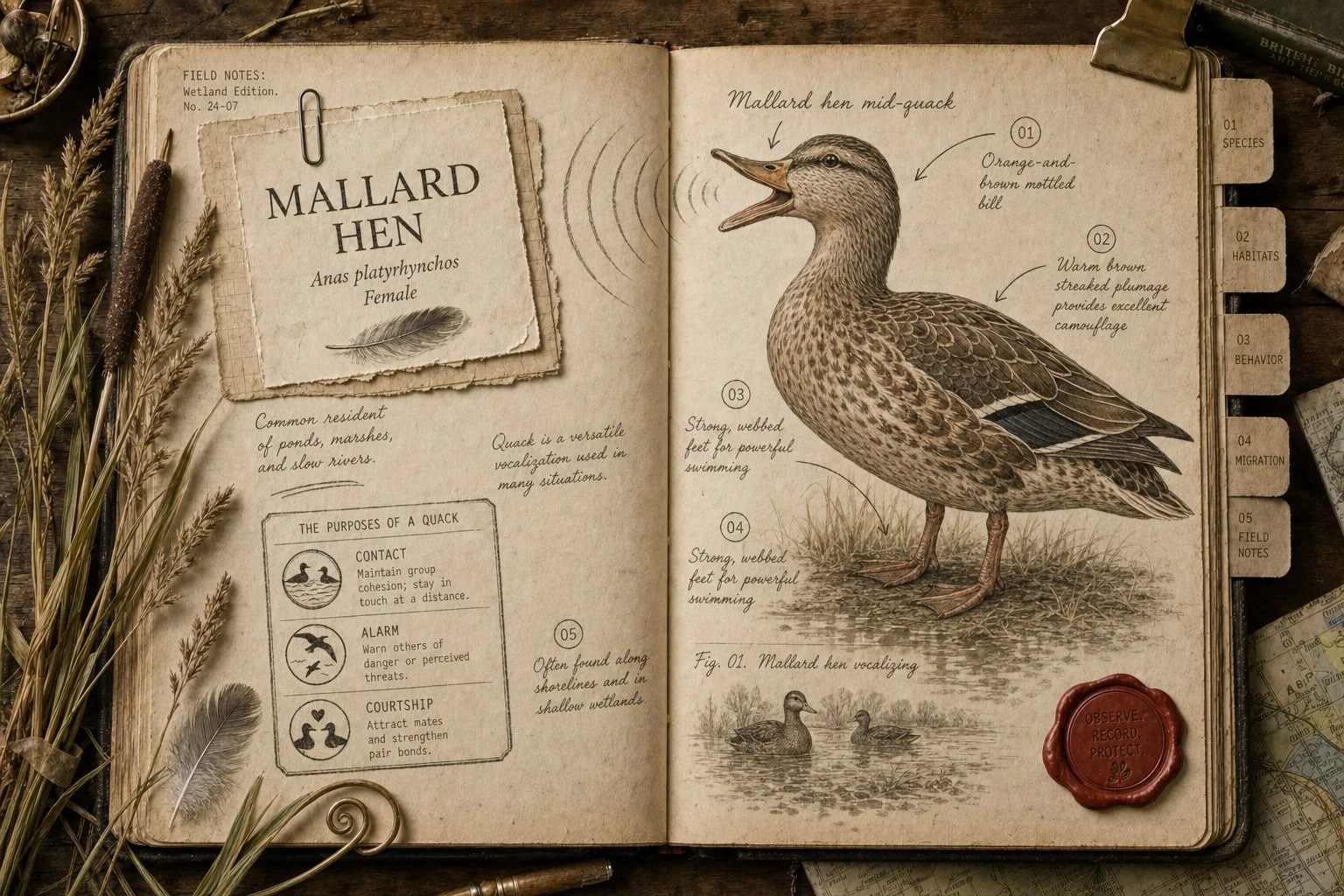
The classic quack is a female mallard. The male does not quack.
The loud “quack” most people associate with ducks is almost always a female mallard. Males produce a quieter, raspy two-note call instead. Across all duck species, quacking is a context-specific signal: contact (where are you), alarm (predator), location (here I am), and courtship (interest). Each one sounds different. Once you learn the four, you can read a pond without watching.
The four basic quack types
- Contact quack - 1-3 notes, mid-volume, repeated every few seconds. A hen looking for her brood or a mate.
- Decrescendo call - the classic loud “quack-quack-quack-quack” that fades, often 4-10 notes descending in volume. Used to announce location to other ducks.
- Alarm call - sharp, harsh, often a single explosive note followed by silence as the bird watches.
- Courtship call - a softer, more nasal quack from the female, paired with head bobs (see head bobbing).
The decrescendo call is the loudest and most recognisable. It carries over 100 metres on calm water.
Why males don't quack
Male mallards have an enlarged syrinx (the bird voice box) with a bony chamber that resonates lower frequencies. The structure produces a raspy “raeb” rather than a clean quack. The evolutionary trade-off was probably about not drawing predators to the breeding pair while the hen is on eggs: the drake’s softer call carries less.
Other species split it differently. Both male and female wood ducks whistle. Gadwalls grunt. Pintails whistle. The word “quack” really applies cleanly only to mallards and their close relatives.
Quack volume and weather
Quacking is loudest at:
- Dawn and dusk - peak feeding and movement times.
- Pre-storm - many ducks call more urgently when barometric pressure drops.
- Migration arrival - newly-arrived flocks announce themselves to local birds.
Mid-morning and afternoon, you’ll often see ducks loafing in silence. That’s normal. Quiet doesn’t mean nothing’s happening.
Captive vs wild quacking
Domestic ducks (Pekin, Khaki Campbell, Welsh Harlequin) quack more frequently and louder than their wild ancestors. Selection for noisy birds and the absence of predators removed the cost of being loud. If your neighbourhood pond is full of noisy ducks, they’re probably domestic or feral, not wild mallards.
Nikon Prostaff P3 8x42
See who's calling, not just what.
Half of learning duck vocalisations is matching the sound to the bird. With binoculars you can confirm the decrescendo call is coming from the hen you're watching, not another bird across the pond. Builds the auditory pattern faster than guessing.
- 8x magnification, 42mm objective
- Wide field of view for pond and wetland watching
- Waterproof and fog-proof for dawn outings
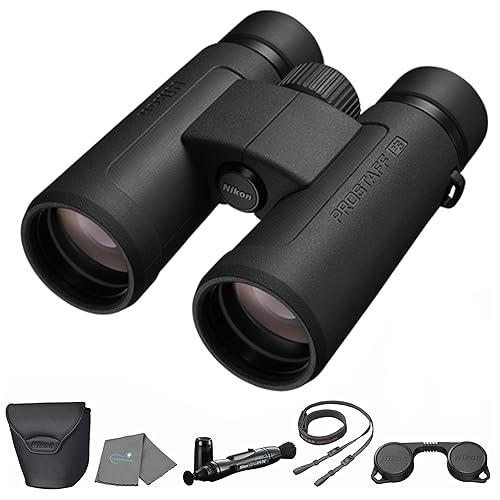 Nikon · Prostaff P3

As an Amazon Associate we earn from qualifying purchases.
The bottom line
The iconic loud quack is a female mallard, usually doing a decrescendo call. Drakes rasp. Other duck species whistle or grunt instead. Once you separate the four quack types, the pond starts to read like a conversation.
For more, see duck head bobbing and duck predators for what alarm calls are usually responding to.