Field notes from a May weekend at Cherry Creek and Barr Lake, watching the spring waterfowl push through.
The short version: Colorado’s water birds split between high-altitude reservoirs and lakes (Western Grebe, Common Loon migration), prairie wetlands of the Eastern Plains (American Avocet, Wilson’s Phalarope, Eared Grebe), and the riparian corridors along the South Platte and Arkansas (Mallard, Wood Duck, Snowy Egret, Great Blue Heron). Fourteen species cover ~80% of field sightings; the rest are seasonal specialties or rare migrants.
The 14 reliable Colorado water birds
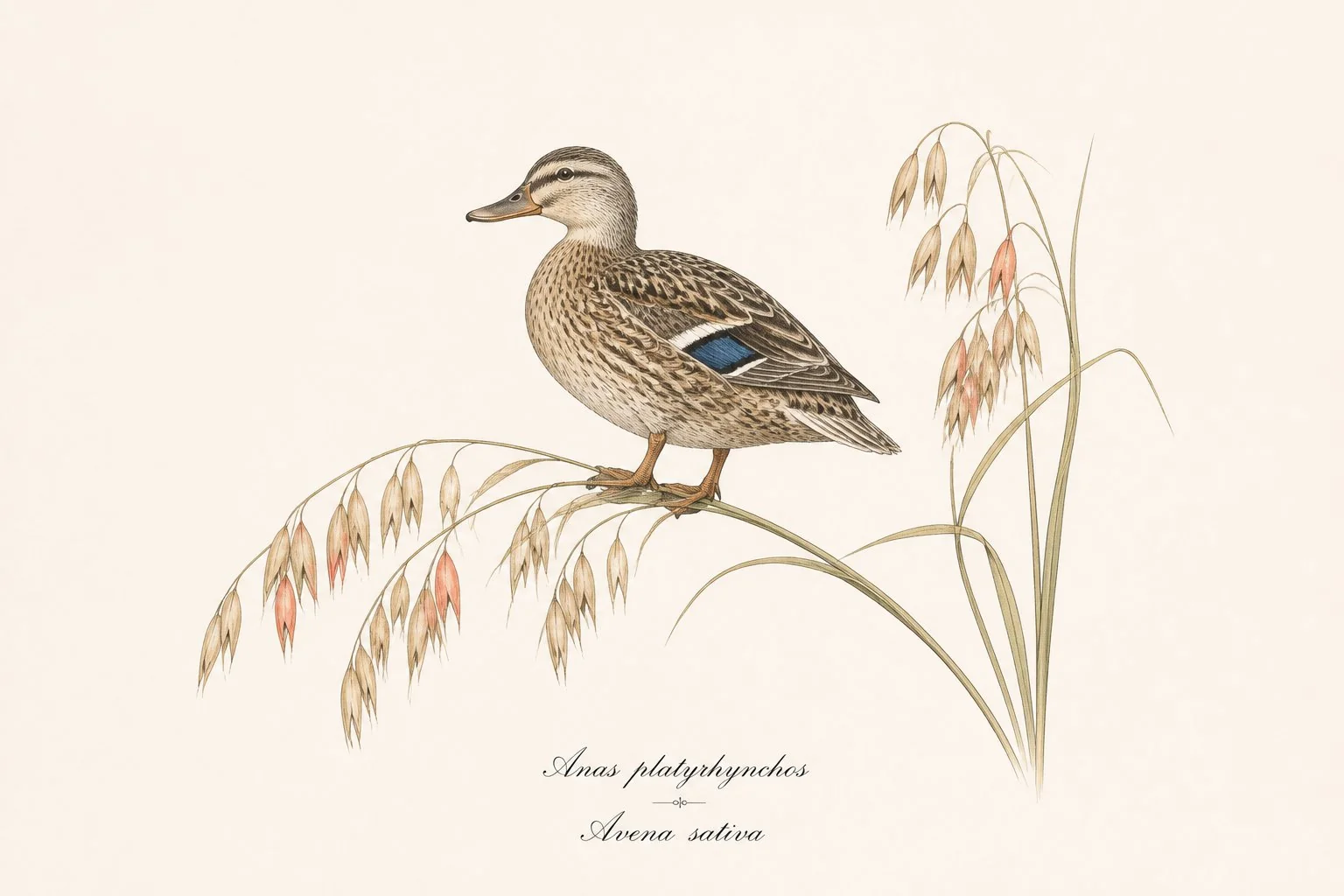
1. Mallard (Anas platyrhynchos)
Year-round, everywhere. The default duck across CO. Reservoirs, urban ponds, irrigation ditches, river backwaters.
2. American Wigeon (Mareca americana)
Common winter visitor. Drake with the white crown stripe. Grazes lawn-and-water edges on Front Range reservoirs.
3. Northern Shoveler (Spatula clypeata)
Spring and autumn migrant, some summer breeders. Drake with the huge spatulate bill, green head, white breast, chestnut sides. Eastern plains wetlands.
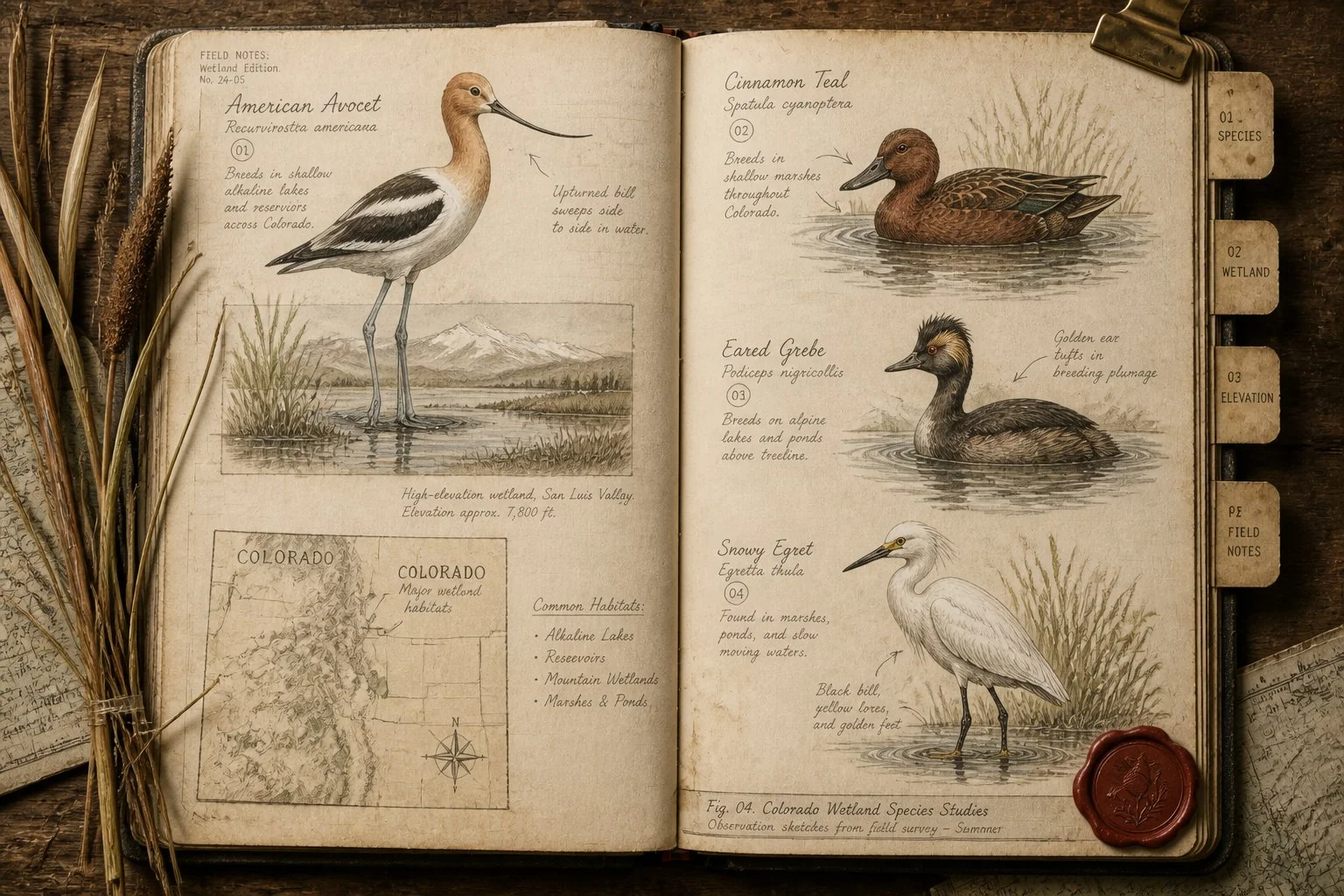
4. Cinnamon Teal (Spatula cyanoptera)
Western specialty - brighter than the other teals. Breeds in Colorado’s marshes and beaver-pond complexes April-September. Drake is a striking cinnamon-red.
5. American Avocet (Recurvirostra americana)
Long-legged, upturned bill, black-and-white plumage with cinnamon head in breeding plumage. Eastern plains alkali wetlands. Iconic Colorado shorebird.
6. Wilson’s Phalarope (Phalaropus tricolor)
Spinning-in-circles foraging behaviour - a small shorebird that swims while feeding. Eastern plains wetlands April-October. Females are brighter than males (unusual sex reversal in plumage).
7. Eared Grebe (Podiceps nigricollis)
Breeds on prairie lakes; staging flocks on saline lakes in autumn. Black head with golden ear-tufts in breeding plumage.
8. Western Grebe (Aechmophorus occidentalis)
Large, black-and-white, with the famous “rushing” courtship display where pairs run across water. Reservoirs and large lakes.
9. Great Blue Heron (Ardea herodias)
Year-round, statewide. Wading. Hunts fish, frogs, and small mammals along river banks.
10. Snowy Egret (Egretta thula)
Smaller than Great Egret, with the famous “golden slipper” yellow feet. Eastern plains wetlands April-September.
11. Black-crowned Night-Heron (Nycticorax nycticorax)
Stocky, short-necked, mostly active at night. Roosts in trees by day. Common in reservoirs around the Front Range and eastern plains.
12. Double-crested Cormorant (Nannopteryx auritus)
Black diving bird with hooked bill. Common on reservoirs statewide.
13. American White Pelican (Pelecanus erythrorhynchos)
Massive white bird with bright yellow bill. Breeds on a few isolated lakes; common as migrant on Front Range reservoirs.
14. Common Loon (Gavia immer)
Migrant through CO twice a year. Black-and-white spotted breeding plumage; grey winter plumage. Larger reservoirs (Cherry Creek, Chatfield, Boulder Reservoir).

The seasonal and high-elevation specialties
Worth knowing but you have to work for them:
- Trumpeter Swan and Tundra Swan - winter visitors on the eastern plains.
- Pacific Loon, Red-throated Loon - rare migrants on big reservoirs.
- Yellow-headed Blackbird - breeds in marshes; spectacular in spring.
- Wood Duck - localised, riparian woods, scarcer in CO than in eastern states.
- Sandhill Crane - massive spring migration through the San Luis Valley.
- Ruddy Duck - winter on Front Range reservoirs.
- Common Merganser - winter on rivers.
Where to look, by region
Front Range (Denver, Boulder, Fort Collins):
- Cherry Creek Reservoir for migrating loons, Western Grebes, all common dabblers.
- Barr Lake for shorebirds, herons, breeding waterfowl.
- Boulder Reservoir for migration concentrations.
Eastern plains:
- Bonny Reservoir, Pawnee Grasslands for prairie wetland specialists.
- Pueblo Reservoir for diving ducks and migrating waterbirds.
San Luis Valley:
- Monte Vista NWR for Sandhill Crane migration (March-April peak).
- Alamosa NWR for breeding ducks and shorebirds.
Western Slope:
- Highline Lake for diving ducks.
- Grand Junction river corridors for Mergansers and herons.
High mountains:
- Limited water bird diversity; some Common Loons on migration.
- Pine grosbeak-tier alpine specialties dominate other than water birds.
The west-east field guide question
Colorado sits at the meeting of eastern and western avifauna. The Sibley Western guide covers most of what you’ll see, though the very eastern plains do bring some species (notably some shorebirds) that need the Eastern guide for full detail.
Sibley Field Guide to Birds of Western North America
The right pocket guide for the Front Range and Western Slope.
David Sibley's Western guide covers Cinnamon Teal, Western Grebe, the avocet, the phalaropes, and every other CO specialty. The plumage plates separate confusing pairs like Western and Clark's Grebe properly. Pocket-sized softcover.
- All Western North American species, including Colorado specialties
- Multiple plumages per species
- Flight silhouettes for distant ID
- Pocket-sized softcover
 Sibley · Western

As an Amazon Associate we earn from qualifying purchases. Linked products are ones we actually use.
For pond and habitat builders
If you want to build a duck pond in CO, see how to attract ducks to your pond and best plants for ducks. For pondside feeding etiquette, best food to feed ducks and geese.
For the wider US picture, see our state-by-state breakdowns including water birds in Florida and (for the East-Coast / Gulf comparison) water birds in Texas and water birds in Michigan.
The bottom line
Fourteen species cover most water-bird sightings across CO. The Front Range reservoirs deliver the most in a weekend; the eastern plains marshes deliver the specialties; the San Luis Valley delivers the spring crane migration. CO is mid-tier for raw water-bird diversity but excellent for specific specialists like American Avocet and Wilson’s Phalarope.