Ducks eat with their feet on the ground or their bill in the water. Build around that.
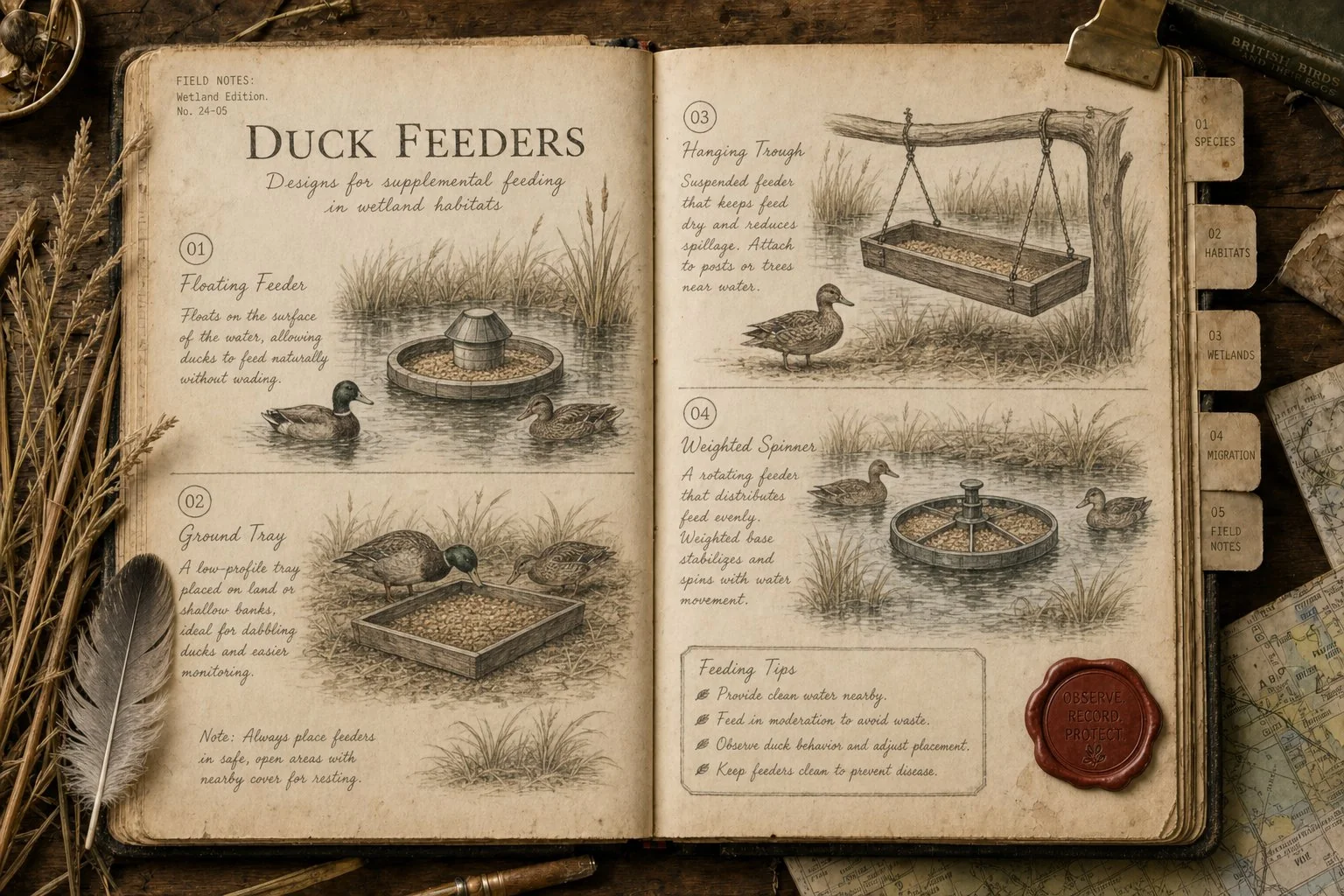
The best feeders for ducks are low, open, and easy to access. Ducks won’t perch, can’t cling, and won’t reach into tube feeders meant for songbirds. The four formats that actually work: ground trays for backyard flocks, floating feeders for pond use, hanging troughs for muddy yards, and weighted spinners to keep raccoons off the seed. Pick by your setting, not by what’s at the garden centre.
The four formats, and when each one fits
- Ground tray - a shallow rubber tray (45-60cm wide, 5-8cm deep). Best for a small flock of domestic ducks in a fenced yard. Hose it out daily.
- Floating pond feeder - a buoyant ring with a central tray that sits on the water surface. Best for wild ducks visiting a backyard pond. They feed naturally without ground contamination.
- Hanging trough - a long open trough on chains, hung at duck-head height (25-30cm off the ground). Best for muddy yards where ground trays fill with mud.
- Weighted spinner - a poultry-grade feeder with a sensitive treadle that closes the lid when raccoons step on it. Best where raccoons and rats are a problem.
The tube and hopper feeders sold for songbirds will not work for ducks. Their bills are too wide for the small ports.
What to put in the feeder
Cracked corn is the staple. Whole oats or barley work well. Layer pellets for domestic ducks. Avoid bread (low nutrition, swells in the crop), mouldy seed, and anything with mycotoxins. For wild waterfowl, the best plan is to plant edible aquatics rather than feeding at all - see our pond planting guide.
Placement matters more than feeder model
A great feeder placed badly will sit empty. A mediocre one placed well will draw a flock. Rules:
- Within 3 metres of cover - a hedge, fence, or shrub for predator escape.
- Out of standing water - to keep mould and bacteria down.
- Visible from the air - ducks find feeders from overhead, not from ground level.
- Sheltered from wind - prevents the lighter grains blowing out.
If raccoons find a feeder before the ducks do, they’ll empty it nightly. Hang it on a baffle pole or bring it indoors overnight.
Hygiene rule
A duck feeder needs daily attention in summer and every-other-day in winter. Wet grain ferments fast and causes botulism in waterfowl. If the feeder smells sour, it’s already a problem. Empty, scrub with vinegar water, refill fresh.
CountryMax Cracked Corn 50 lb
The honest staple.
Cracked corn is what every duck feeder should start with. A 50 lb bag feeds a small backyard flock for about three weeks. Cracked, not whole - it's easier for ducks to pick up and digest, and it spreads evenly across a tray.
- 50 lb bag, USA-grown corn
- Coarse-cracked grade suits all duck breeds
- Resealable bag liner keeps moisture out
 CountryMax · 50 lb

As an Amazon Associate we earn from qualifying purchases.
The bottom line
Match the feeder format to your setting (ground tray, floating, hanging trough, or spinner). Use cracked corn or oats. Place near cover, away from standing water, and clean it daily in warm months. That’s most of what makes a feeder work.
For more, see what to feed wild ducks and pond feeding.