Field notes from twelve winters of trial-and-error feeder filling.
The short version: skip cheap mixed seed. Most of what’s in a £15 bag of “wild bird mix” is cracked corn and red milo, both of which most garden birds kick on the ground for rats to find. Buy single-ingredient bags - black-oil sunflower, sunflower hearts, nyjer, suet, and (sometimes) white millet. Those five cover 95% of the species you’ll see in a back garden.
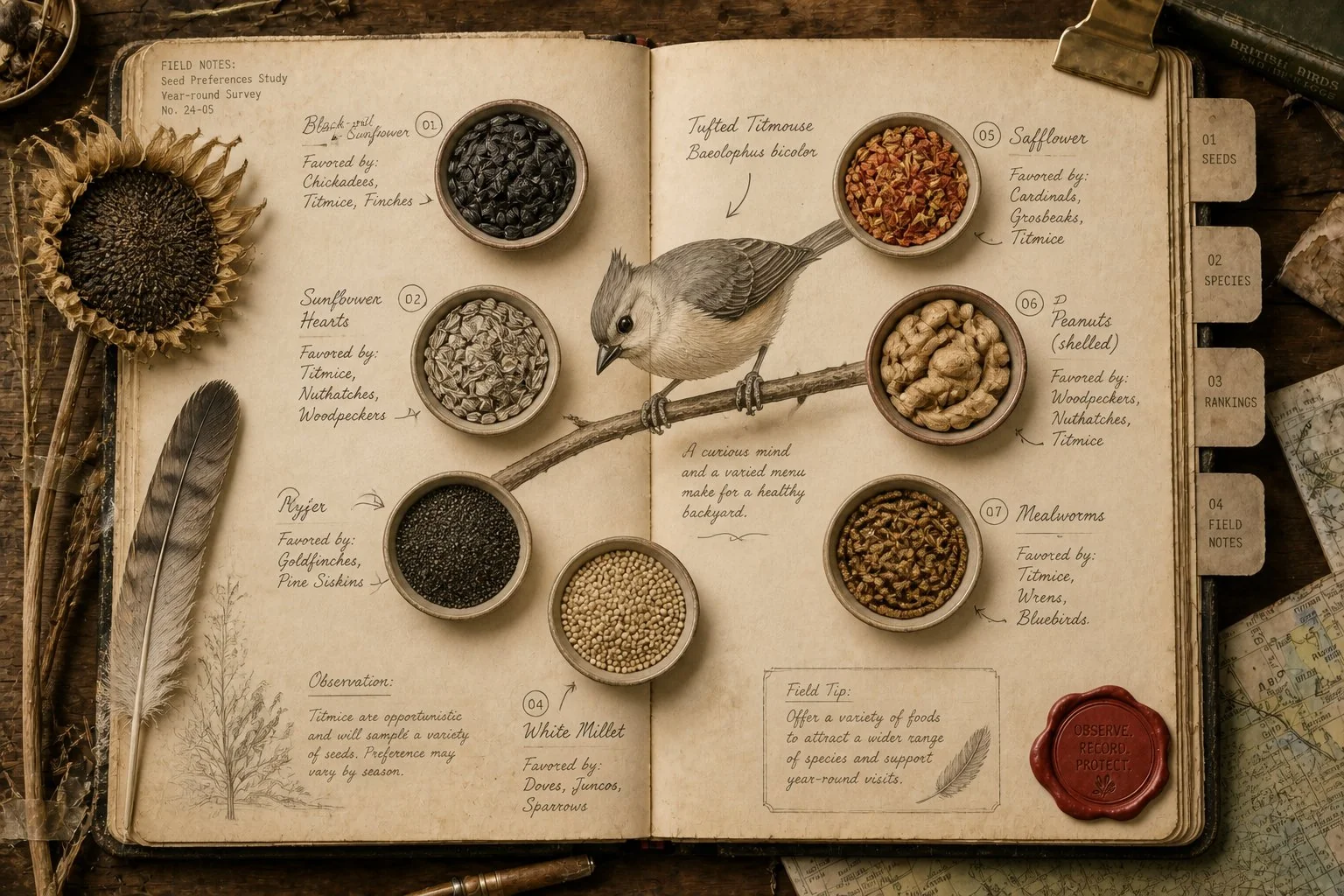
The seven seeds that actually work
Ranked roughly by usefulness. The top two are the only ones we’d insist on; the rest are useful additions for specific species.
1. Black-oil sunflower seed - the universal seed
The single bag every back garden needs. Higher oil content than striped sunflower, thinner shell, more calories per gram. Eaten by chickadees, finches, sparrows, nuthatches, cardinals, woodpeckers, jays, juncos - the full small-to-medium songbird guild.
In a tube feeder, hopper, or scattered on a platform tray. Two pounds runs one feeder a week in winter; a 20 lb bag is a winter’s supply for an average garden.
2. Sunflower hearts (shelled sunflower)
The same seed as #1 but already cracked. Two advantages: no shell mess on the ground, and small finches (goldfinches, siskins) can eat them without effort. Costs roughly twice as much per kg as whole sunflower. Worth the premium in tidy gardens or if you have goldfinch traffic.
3. Nyjer (also called thistle)
A tiny black seed, technically Guizotia abyssinica. Sterilised before sale so it can’t germinate. The favourite of goldfinches, pine siskins, and common redpolls. Use a fine-port tube or a mesh sock; sparrows can’t reliably crack it. See how to attract American Goldfinches for the full goldfinch setup.
4. Suet (rendered beef fat, often with seed or fruit mixed in)
Not technically a seed but functionally the calorie equivalent. Woodpeckers, nuthatches, chickadees, wrens. Use in a vertical cage or drilled log feeder. Skip “no-melt” suet in summer (stretched with cornmeal); skip suet entirely above 25°C - it goes rancid.
For the homemade peanut butter version that fills the same niche, see feeding birds peanut butter.
5. White proso millet
The native sparrow seed. Eaten by white-throated sparrows, juncos, towhees, mourning doves, and almost all ground-feeding species. Scattered on a platform tray or directly on the ground (don’t pile it - mould). Avoid red milo, which is bigger and most birds reject. A pure white millet bag is harder to find than a milo-heavy “wild bird mix” but worth seeking out.
6. Peanut pieces or whole peanuts in shell
Blue jays love whole peanuts in shell. Smaller birds (titmice, woodpeckers, nuthatches) take peanut pieces. Avoid salted, dry-roasted, or anything human-flavoured. Whole shelled peanuts can be a choking hazard for the smallest songbirds - peanut pieces are safer.
7. Mealworms (dried)
Live mealworms work best in spring when birds are feeding chicks; dried mealworms keep year-round and bluebirds, robins and wrens take them eagerly. Soak dried ones in warm water for 10 minutes before serving - rehydrated, they’re closer to live.

What to actively avoid
The stuff that fills cheap mixed-seed bags but most birds reject:
- Red milo (red sorghum). Big, hard, bitter. House Sparrows and pigeons eat it; almost nothing else does. Often the largest single ingredient by weight in cheap mixed seed.
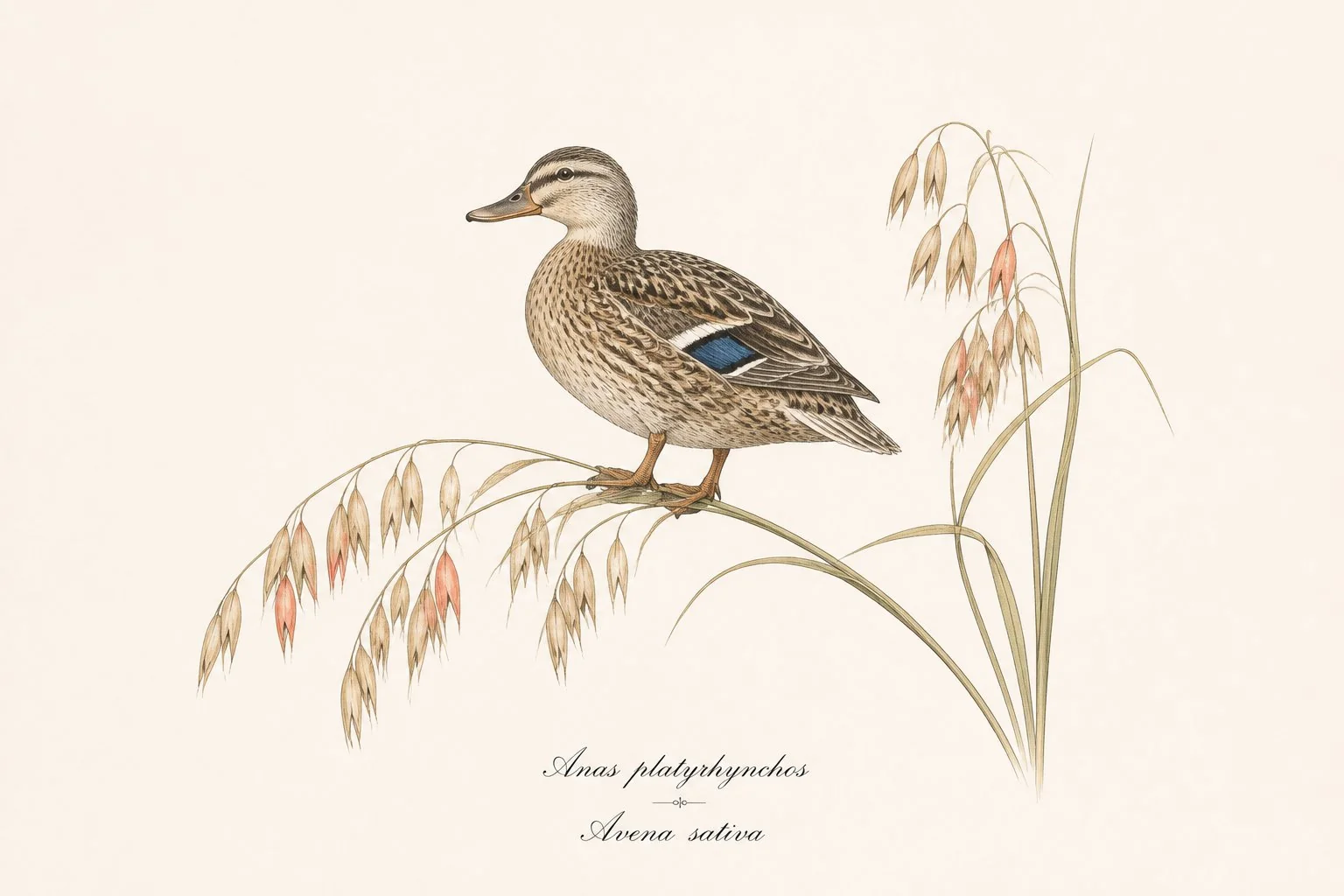
- Wheat and oats (whole grain). Pigeons and doves take it; songbirds kick it off. Attracts rats.
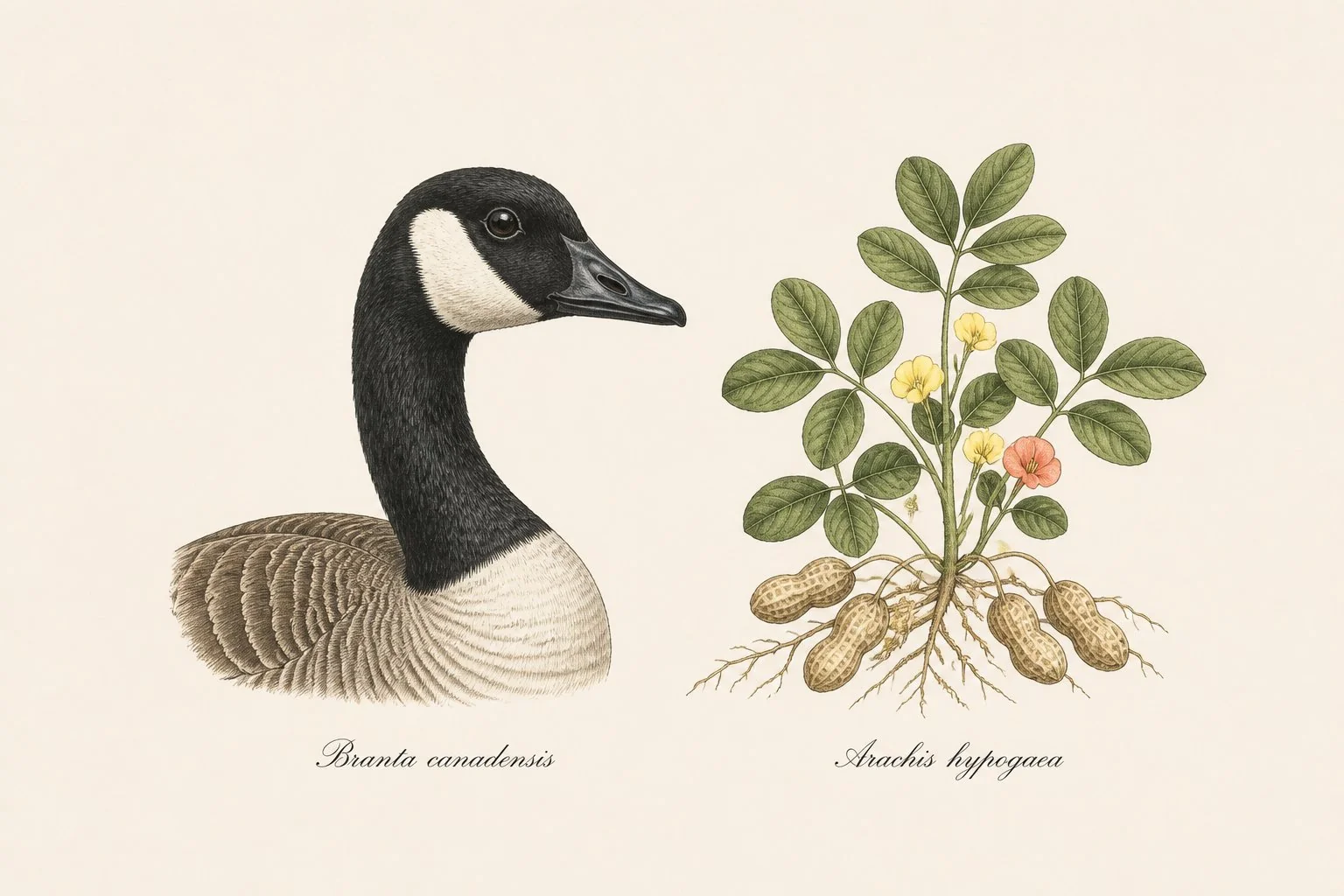
- Cracked corn. Useful for ducks and geese on a pond (see below) but on a garden feeder it sits, gets wet, and grows mould.
- Bread. Don’t. The same case we make for geese and bread applies to back garden birds - it’s calorie-empty and harmful.
- Anything human-flavoured. Salted peanuts, sweetened breakfast cereal, leftover popcorn. Salt is genuinely dangerous to small passerines.
If the ingredient list on a wild bird mix bag starts with “milo,” “cracked corn,” or “wheat,” it’s a filler bag.
The two bags we'd buy first
If you’re starting from nothing and want the simplest possible setup, buy these two and ignore everything else for a season.
Wagner's Black-Oil Sunflower 20 lb
The single seed every garden bird actually eats.
Black-oil sunflower outperforms every mixed seed because almost every garden species takes it - chickadees, finches, sparrows, cardinals, even woodpeckers. A 20 lb bag runs one hopper feeder roughly four months in winter. Higher oil content than striped sunflower means more calories per gram.
- Single ingredient: black-oil sunflower (no filler)
- Thin shell that small finches can crack
- 20 lb resealable bag - one winter's supply
- Stocked in nearly every garden centre
 Wagner's · 20 lb

Amzey Dried Mealworms 1 lb
The spring and bluebird supplement that pays off.
A 1 lb bag of dried mealworms, oven-baked and shelf-stable. Bluebirds, robins, wrens and chickadees all take them. Soak for 10 minutes in warm water before serving to rehydrate; birds prefer them that way. A small dish on a platform tray works fine.
- 1 lb resealable bag - lasts a season
- Oven-baked, no preservatives
- Soak before serving for best uptake
- Bluebirds, wrens, robins, chickadees, nuthatches all take them
 Amzey · Mealworms

As an Amazon Associate we earn from qualifying purchases. Linked products are ones we actually use.
What to feed at a pond, not a feeder
If you’re feeding ducks and geese - a separate problem to garden feeders - the seed list is different. Cracked corn, oats, and frozen peas, never bread. See best food to feed ducks and geese for the full pondside breakdown, and what to feed wild ducks for the why.
Storage matters
Sunflower seed bought in autumn and stored in a damp shed can be mouldy by January. Store in a sealed metal bin (rodents chew through plastic) somewhere dry. See bird seed shelf life for the rancidity, mould, and pantry-moth problem in detail.
The bottom line
Two bags - black-oil sunflower and dried mealworms - get you 95% of the way to a working back garden feeder. Add nyjer if you want goldfinches and white millet if you want native sparrows. Skip everything sold as “premium wild bird mix” with milo at the top of the ingredient list. The birds know what’s filler even if the packaging doesn’t.
For where to actually put the feeder and how to keep squirrels off it, see best place for a bird feeder, best squirrel-proof bird feeders, and the broader case in are bird feeders bad.