Welcome to the verdant state of Kentucky, an ornithological wonder known for its remarkable array of geese. Whether you’re a seasoned bird watcher or a curious novice, exploring the presence of these fascinating waterfowl in the Bluegrass State is an adventure like no other.
With a multitude of habitats ranging from serene wetlands to bustling urban parks, Kentucky provides a nurturing home for both resident and migratory geese. Join us as we embark on this thrilling journey to uncover the five spectacular species of geese that grace the Kentucky landscape.
What Geese Are in Kentucky?
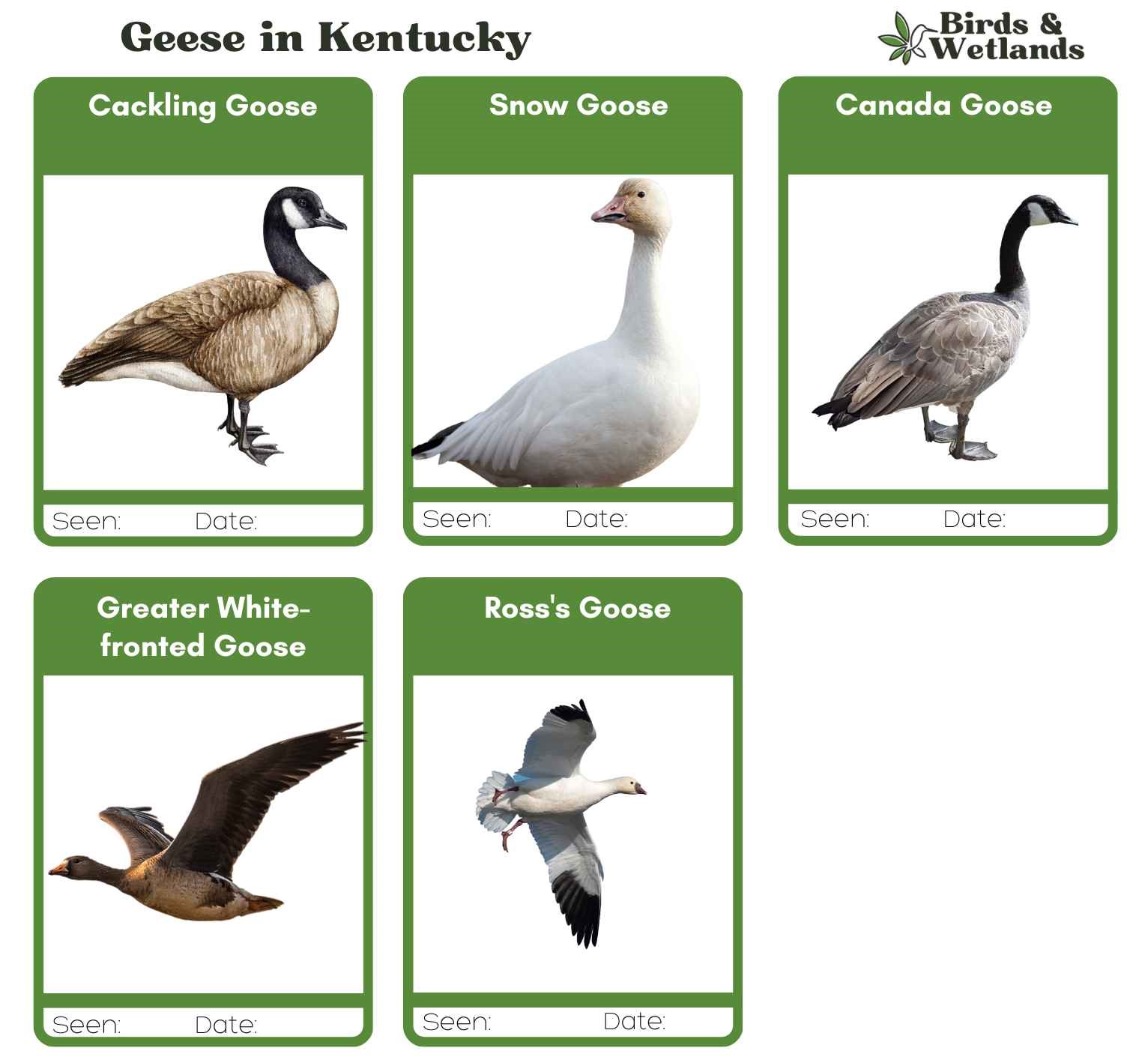
Kentucky is the home to 5 goose species and 2 swan species.
| Goose | Frequency in Kentucky | Resident Population | Specific Locations in Kentucky |
|---|---|---|---|
| Canada Goose | Common | Yes | Cave Run Lake, Land Between the Lakes National Recreation Area |
| Snow Goose | Seasonal (Winter, Spring migration) | No | Ballard Wildlife Management Area, Sloughs Wildlife Management Area |
| Ross’s Goose | Seasonal (Winter, Spring migration) | No | Peabody Wildlife Management Area, Lake Barkley |
| Cackling Goose | Seasonal (Winter, Spring migration) | No | Barren River Lake, Minor Clark Fish Hatchery |
| Greater White-fronted Goose | Seasonal (Winter, Spring migration) | No | Yatesville Lake, Green River Lake |
DOWNLOAD GEESE IN KENTUCKY ID CHART
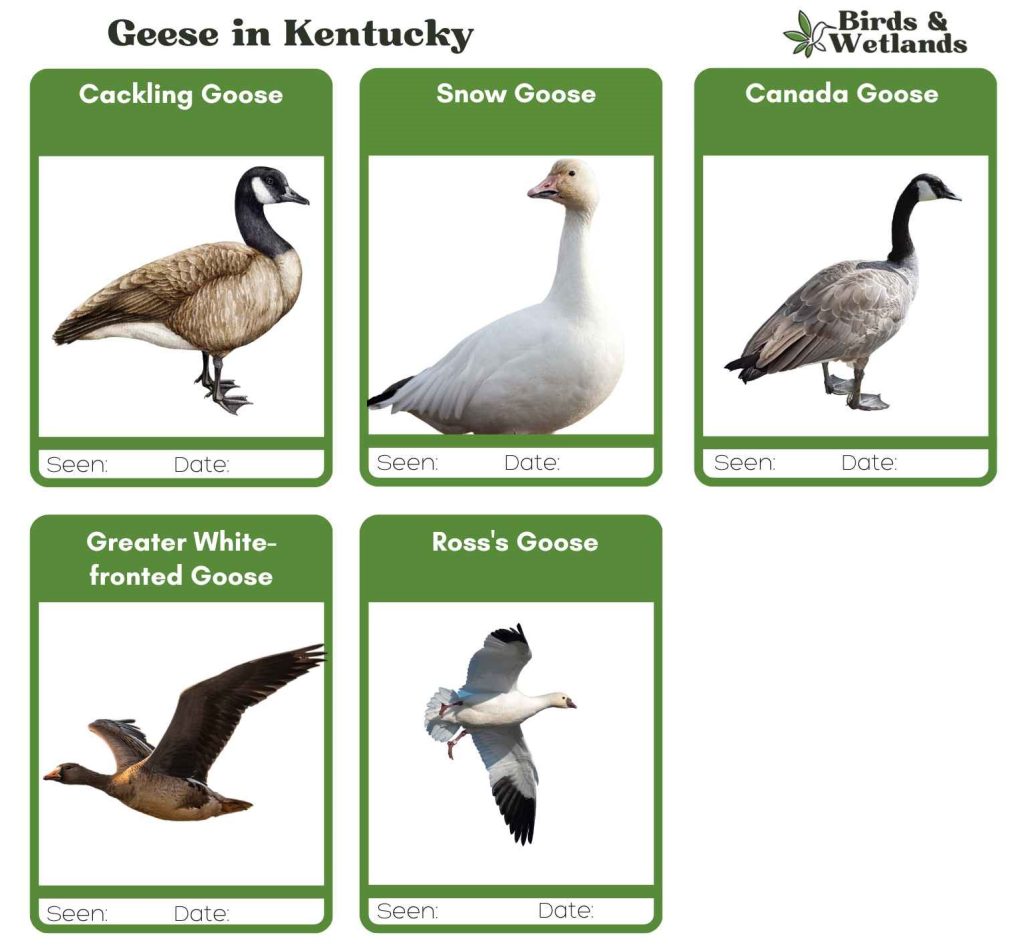
Geese Species Found in Kentucky
Where to Spot Kentucky’s Geese
Sloughs Wildlife Management Area: Located in Henderson County, this area provides a vast array of habitats that attract all sorts of waterfowl including various species of geese. It is well-known for its diverse and plentiful birdlife.
Barren River Lake State Resort Park: This state park in Lucas is a haven for waterfowl. With the park encompassing a large water body, it’s a fantastic place to see Canada Geese and other species in their natural habitat.
Lake Barkley: Near Cadiz, this large lake and its surrounding areas provide excellent conditions for geese. It is particularly popular during migration seasons.
Goose Pond Fish and Wildlife Area: Located in Greene County, this vast wetland area provides ample habitat for a diverse range of waterfowl species, including geese.
Minor Clark Fish Hatchery: Located near the Licking River in Rowan County, this hatchery provides a unique opportunity to see geese along with a variety of other bird species.
| Neighboring State | Best Spots to See Geese |
|---|---|
| Illinois Geese | 1. Emiquon National Wildlife Refuge 2. Chautauqua National Wildlife Refuge 3. Montrose Harbor in Chicago |
| Indiana Geese | 1. Eagle Creek Park, Indianapolis 2. Patoka River National Wildlife Refuge 3. Goose Pond Fish and Wildlife Area |
| Missouri Geese | 1. Loess Bluffs National Wildlife Refuge 2. Eagle Bluffs Conservation Area 3. Squaw Creek National Wildlife Refuge |
| Ohio Geese | 1. Ottawa National Wildlife Refuge 2. Hoover Reservoir in Westerville 3. Magee Marsh Wildlife Area |
| Tennessee Geese | 1. Reelfoot Lake 2. Great Smoky Mountains National Park 3. Radnor Lake State Park |
| Virginia Geese | 1. Chincoteague National Wildlife Refuge 2. Huntley Meadows Park 3. Back Bay National Wildlife Refuge |
| West Virginia Geese | 1. Ohio River Islands National Wildlife Refuge 2. Canaan Valley National Wildlife Refuge 3. Bluestone Wildlife Management Area |
In Central Kentucky and Western Kentucky, golf courses and farm ponds have become a preferred site for abundant populations of geese, leading to an increase in goose droppings and making goose control a priority.
Large lakes like Kentucky Lake and Lake Barkley, known for their wild and serene beauty, attract large numbers of permanent resident geese as well as migratory species such as Sandhill Cranes and even ducks like the wood duck. These bodies of water also provide a haven for the stunning Wood Ducks.
However, as fall turns into winter and snow cover increases, the availability of food may cause these wild geese to concentrate in the same areas as humans, with some even resorting to attacking people for food as they become permanent residents.
Notably, the Kentucky Department of Wildlife Resources is focused on managing these interactions and maintaining these natural habitats, including areas around the Barkley Dam.
Most people are fascinated by the spectacle of these birds, including the sight of their wings in flight and the texture of their feathers. Although geese are considered pest birds due to their large numbers and average weight (they are the largest birds), their presence remains a vital part of Kentucky’s diverse wildlife.
Are There Any Resident Flocks of Geese In Kentucky?
Canada geese are a familiar sight in Kentucky, where they can be found both in urban areas and in rural wildlife areas.
While Canada geese are not native to Kentucky, they have become well-established in the state, with a resident population of several thousand birds.
Hunting Geese in Kentucky
Hunting geese can be a great way to enjoy the outdoors and fill your freezer with delicious, healthy meat.
But before you head out into the field, it’s important to make sure that you’re complying with all state and federal regulations.
In Kentucky, anyone who wants to hunt geese must obtain a hunting license and a Kentucky Migratory Bird/Waterfowl Permit.
Can You Shoot a Goose in Kentucky?
Yes, you can shoot geese in Kentucky if you follow the regulations set forth by the U.S. Fish and Wildlife Service. One of those regulations is that you must use nontoxic shots no larger than size “T”.
Here’s the Kentucky daily bag and possession limit:
| Daily Bag | Possession | |
| September Canada Goose (all zones) | 5 | 15 |
| Canada/Cackling Goose, White-Fronted Goose & Brant | 5 combined; 3 Canada geese, 2 white-fronted geese and 1 brant | Triple the daily bag limit |
| Snow Goose (including Ross' Goose) | 20 | none |
| Snow Goose Conservation Order | none | none |
Where Can I Hunt Geese in State?
Ballard WMA is a great place to hunt geese in Kentucky.
The area is known for its large concentrations of birds, making it a perfect spot for serious hunters. In addition, the terrain is relatively flat, making it easy to walk and set up decoys.
Is There a Goose Hunting Season in Kentucky?
Yes, the hunting season in Kentucky is usually from September to March.