A literary footnote.
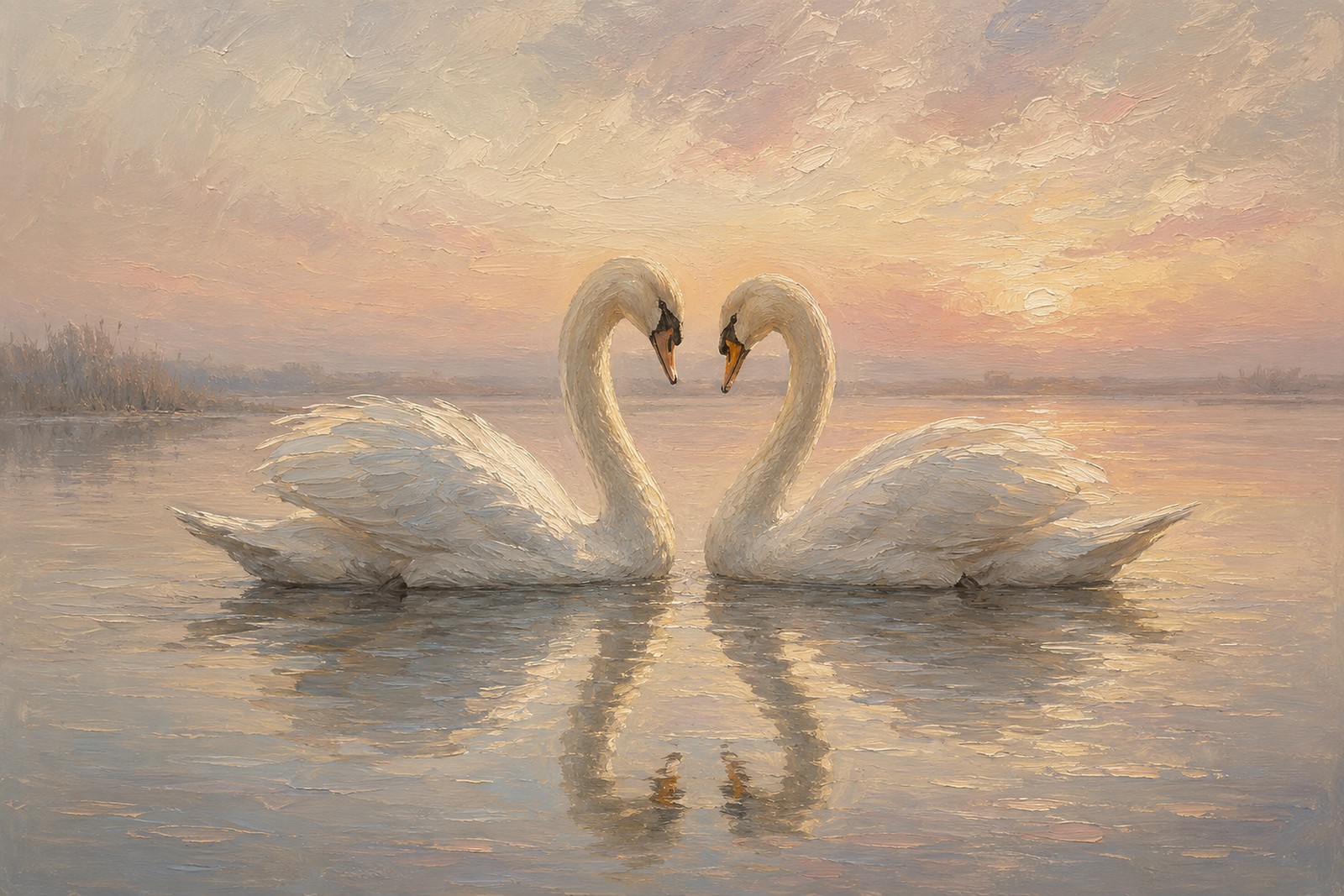
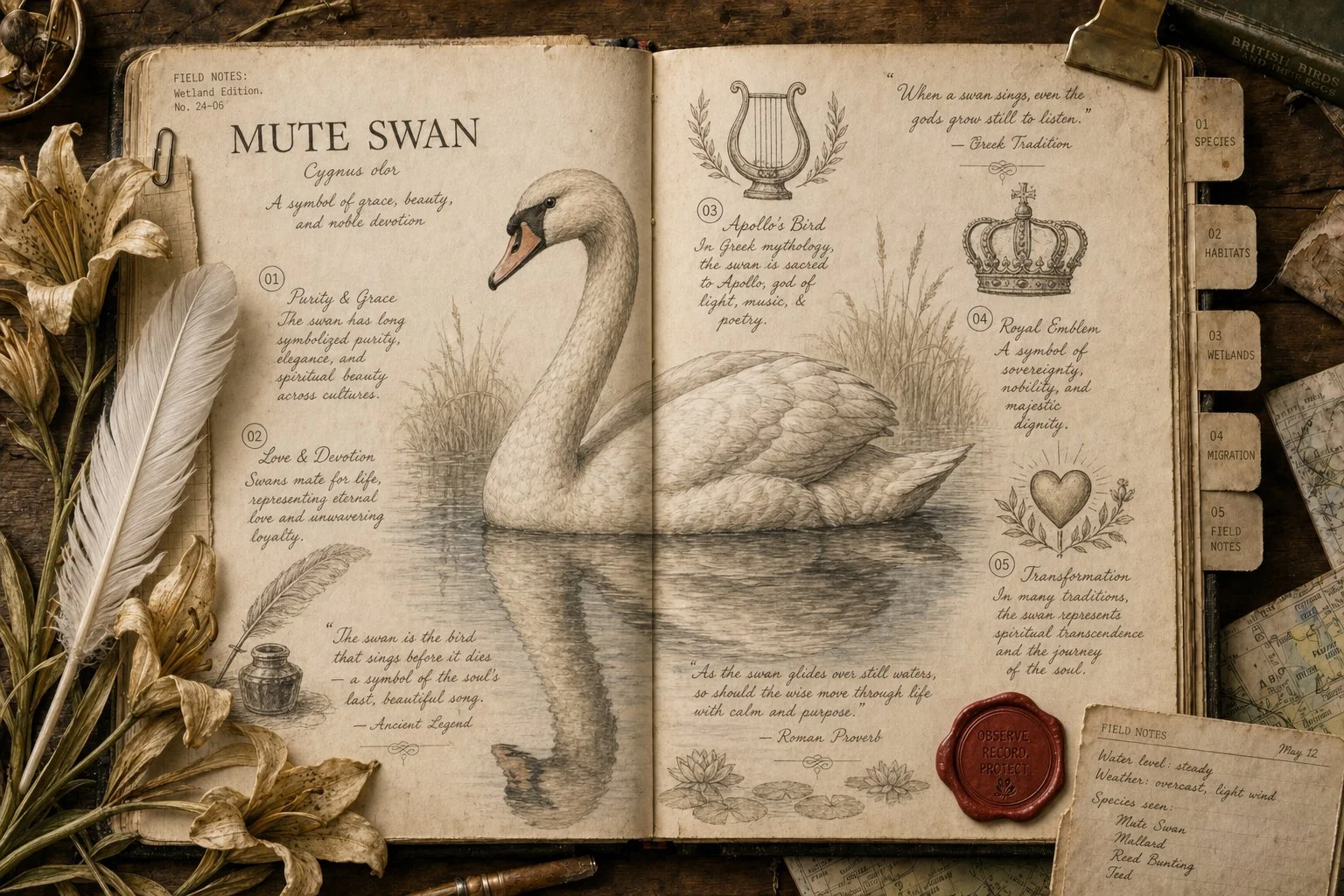
The swan has carried roughly four symbolic meanings in Western culture for nearly three thousand years: transformation (Greek myth), fidelity (medieval literature and natural history), grace and divinity (Christian and Romantic art), and death (the “swansong” - the supposed last song before dying). All four still echo in modern usage. The bird that supports all this symbolism is one of the loudest, most aggressive, most physically powerful waterbirds in the world.
Greek myth: transformation
The foundational swan-myth is Zeus seducing Leda by taking the form of a swan - a story that has launched paintings by Leonardo, Michelangelo, Cézanne, and a famous poem by Yeats (“A sudden blow: the great wings beating still / Above the staggering girl…”). The myth gave the swan an early association with desire, divine intervention, and shape-shifting.
A separate Greek myth links the swan to Apollo, god of music and prophecy - the source of the “swansong” idea: that swans sing only once, at the moment of death, with supernatural beauty.
Medieval Europe: fidelity
By the Middle Ages, the swan had picked up an association with lifelong pair-bonding. This is biologically accurate - Mute and Trumpeter Swans really do pair for life - and the medieval bestiaries ran with it.
A “swan-knight” was a noble figure whose loyalty was unimpeachable; the badge of the swan was used by several European royal houses to signal honour and fidelity. The Cygnus of the Cygnus knights of the Holy Roman Empire is the same bird.
Christian and Romantic art: grace and divinity
In Christian iconography the swan was sometimes used as a symbol of Christ or the Virgin Mary - purity, transcendence, white and unmarked. By the Romantic period (early 19th century) the swan had become the prime symbol of natural grace, particularly in ballet (Swan Lake premiered 1877) and lyric poetry.
The image of the swan gliding effortlessly on water - while paddling furiously underneath - became a cultural shorthand for poised hidden effort that survives in modern English.
"Swansong" and death
The myth that swans sing only at the moment of dying is mentioned by Aristotle, Plato, Cicero, and is essentially universal in Western literature. There is no factual basis for it - swans vocalise throughout life - but the phrase “swansong” entered every European language and survives as a metaphor for a final great act.
Royal protection and the English crown
In Britain, swans have been royal property since the 12th century - the Crown owns all unmarked Mute Swans on open water. This legal status is still enforced; the annual “Swan Upping” ceremony on the Thames still counts the Queen’s swans every July. The bird symbolises British royalty as much as it does Greek myth.
The bird underneath the symbolism
What’s worth knowing as a naturalist is that the swan was given all these dignified meanings while being, biologically, one of the most aggressive birds in the wetland. A breeding Mute Swan cob will attack swimmers, kayakers, and small dogs. The wingbone strike is hard enough to break a human bone. The bird that the poets called “grace” is also the bird that has killed humans (a kayaker death in Chicago in 2012, attributed to a swan attack).
The dignity and the aggression are the same bird. The symbolism only ever captured half of it.
National Audubon Society Birds of North America
The reference that covers every American swan.
The 2021 National Audubon Society Birds of North America is the comprehensive single-volume guide to every bird species north of Mexico. The swan plates show all three regularly-occurring American species (Mute, Trumpeter, Tundra) at scale, with population status, range, and history.
- 800+ photographs, every regularly-occurring species
- Detailed life-history notes (including swan symbolism context)
- Updated 2021 edition
 Audubon · 2021 Ed.

As an Amazon Associate we earn from qualifying purchases.
The bottom line
The swan has stood for love, divinity, grace, transformation, and death across three thousand years of Western culture - all of it built on a bird that, in person, will chase you off the riverbank. The most accurate symbolism would probably be a hybrid of the dignified poet’s swan and the territorial bird that put a kayaker in the water. Most people only meet one of those.
For more swan biology, see cygnet care and swan predators.