Field notes from the kitchen, the day the asparagus stems went to the duck pen instead of the bin.
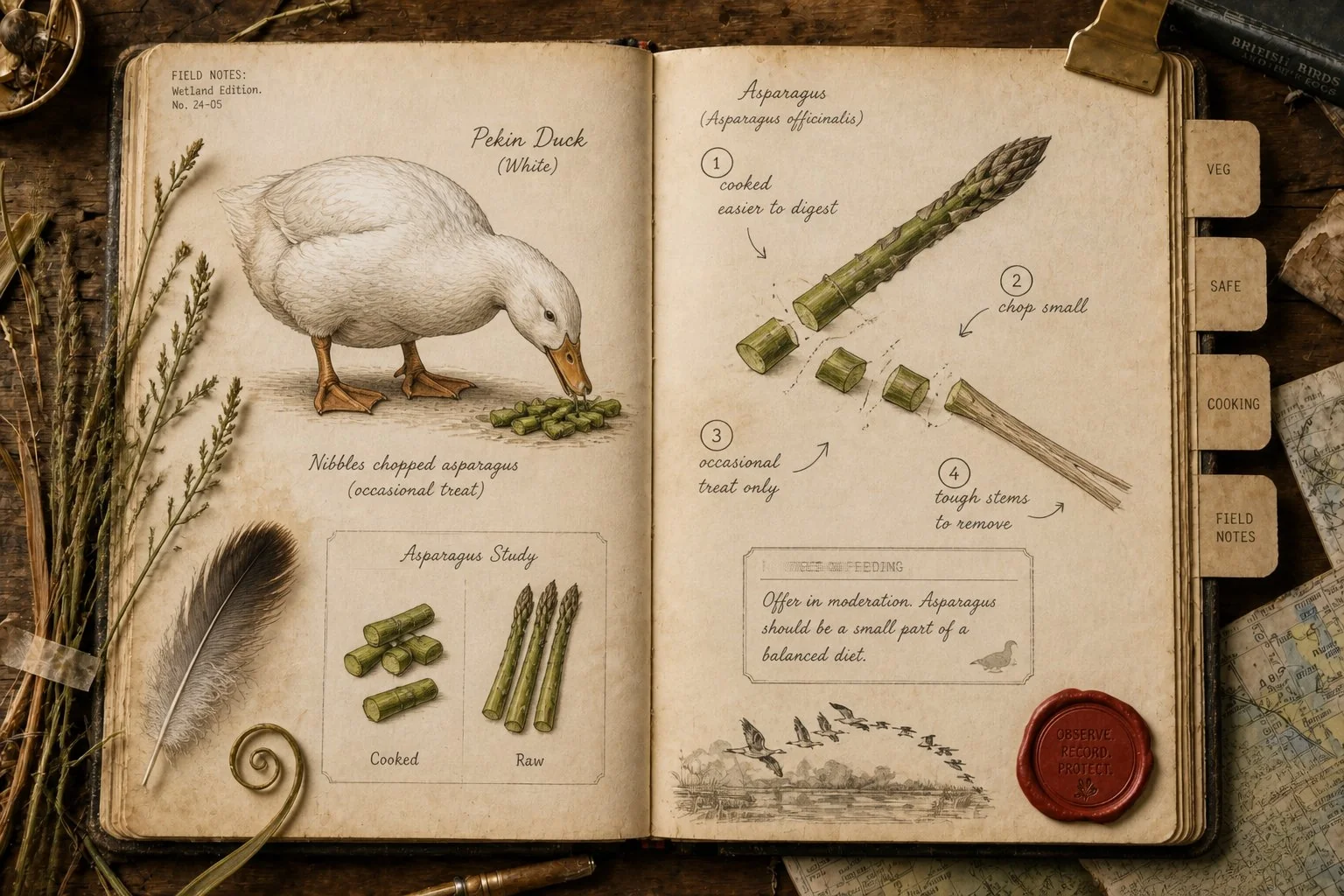
The short version: yes, ducks can eat asparagus, and it’s nutritionally a good treat - high in folate, vitamin K, and antioxidants. But raw asparagus stems are tough and fibrous, and most ducks pick at them and walk away. Cooked, chopped into 5-10 mm pieces, with the woody bases removed, is the version that actually gets eaten. Offer 1-2 times a week as enrichment.
What ducks get from asparagus
Asparagus is unusually nutrient-dense for a vegetable - per 100 g it carries:
- Folate (good for cell development, important in egg-laying hens).
- Vitamin K (clotting and bone health).
- Vitamin A precursors (carotenoids - good for plumage).
- Vitamin C (less important for birds than mammals, but useful).
- Soluble fibre (gut health in moderation).
For a backyard duck that mostly eats waterfowl pellets and the occasional treat, asparagus is one of the better “good for them” veg options - alongside leafy greens, peas, and chopped courgette.
The trick: cook it
The reason most ducks ignore raw asparagus is the fibre. The stems are tough; ducks lack teeth and grind everything in the gizzard, but the long parallel fibres of raw asparagus don’t break down efficiently. The result is a duck that pecks once, decides it’s too much work, and moves on.
Cooked asparagus is a different food. Steaming or boiling for 3-5 minutes softens the fibres enough that ducks happily eat it. Chop the cooked stems into 5-10 mm pieces and they’ll be gone in seconds.
The method:
- Wash the asparagus.
- Trim off the woody bases (the bottom 1-2 inches that even humans don’t eat).
- Steam or boil 3-5 minutes until tender but not mushy.
- Cool to room temperature.
- Chop into pea-sized pieces.
- Offer in a shallow dish.
The asparagus you’d otherwise compost - the trimmed-off woody ends from your own kitchen prep - is the bit ducks won’t eat. The tender top portion you’d serve to humans is the bit they will.
How much, how often
The general veg-treat guideline:
- Per duck per day: about a tablespoon of chopped cooked veg.
- Per week: total treats under 10% of diet.
- Frequency: 1-2 times a week for any one veg, to keep variety.
A bunch of asparagus shared between 4-5 ducks is fine; daily asparagus is unnecessary.
Raw asparagus - safe but uneaten
Raw asparagus is safe (not toxic), just unpopular. If you scatter raw chopped asparagus and the ducks ignore it, that’s normal. Pick the uneaten bits up before they rot in the pen.
A few ducks - especially Muscovies and Indian Runners - will eat raw asparagus if it’s chopped fine enough. Pekins and Khaki Campbells usually need it cooked.
Asparagus pee?
In humans, asparagus causes the famous metabolic byproduct (asparagusic acid → methanethiol → distinctive urine smell). Ducks process asparagus differently and the smell doesn’t carry through to their droppings.
What else from the veg drawer
The wider vegetable safe-list for backyard ducks:
- Leafy greens (lettuce, kale, spinach, watercress): chop fine; avoid iceberg lettuce.
- Peas (fresh or thawed frozen): great treat, ducks love them.
- Cucumber: high water content, palatable, scatter chopped.
- Courgette / zucchini: safe raw or cooked, chopped.
- Bell peppers: safe, no seeds, chopped.
- Carrots: better cooked (raw is too hard); grated raw works.
- Sweet potato: cooked only, chopped.
- Broccoli: cooked or raw, chopped.
- Brussels sprouts: cooked, halved.
The vegetables to avoid:
- Onions, garlic, leeks: toxic (haemolytic anaemia from thiosulfates).
- Raw potato: contains solanine. Cooked potato is fine.
- Iceberg lettuce: mostly water, near-zero nutrition, can cause diarrhoea in quantity.
- Avocado: TOXIC at any quantity. See can ducks eat avocado.
For the broader picture on what ducks should and shouldn’t eat, see what to feed wild ducks and best food to feed ducks and geese.
The pond version
If you’re at a park pond feeding wild ducks, skip asparagus. Cracked corn, oats, and thawed peas are the working pondside list - see what can I feed ducks at the pond. Asparagus floats, gets pecked at briefly, then sinks and rots. Not a useful pondside food.
The bag that does the daily work
Asparagus is enrichment. The daily treat that ducks actually rely on - and that you can buy in bulk and store - is cracked corn. A 50 lb sack lasts a small flock months.
CountryMax Cracked Corn 50 lb
The base treat your asparagus complements, not replaces.
A 50 lb sack of cracked corn - the everyday duck treat for backyard flocks. Use as the base calorie supplement alongside seasonal veg like asparagus, peas and chopped greens. Stores months in a sealed bin; decant into smaller bags for pond visits or daily feeding.
- 50 lb sack - a season's supply
- Cracked to the right size for ducks and geese
- Pairs well with cooked veg and chopped greens
- Stores stably in a sealed metal bin
 CountryMax · 50 lb

As an Amazon Associate we earn from qualifying purchases. Linked products are ones we actually use.
The bottom line
Yes, ducks can eat asparagus. Cooked, chopped, woody ends removed - that’s the version they’ll actually eat. It’s nutritionally one of the better veg treats for backyard flocks. Save the kitchen-prep cooked stems instead of binning them, and the duck pen becomes a small zero-waste system.