Field notes from the back garden, October, the windfall apple month.
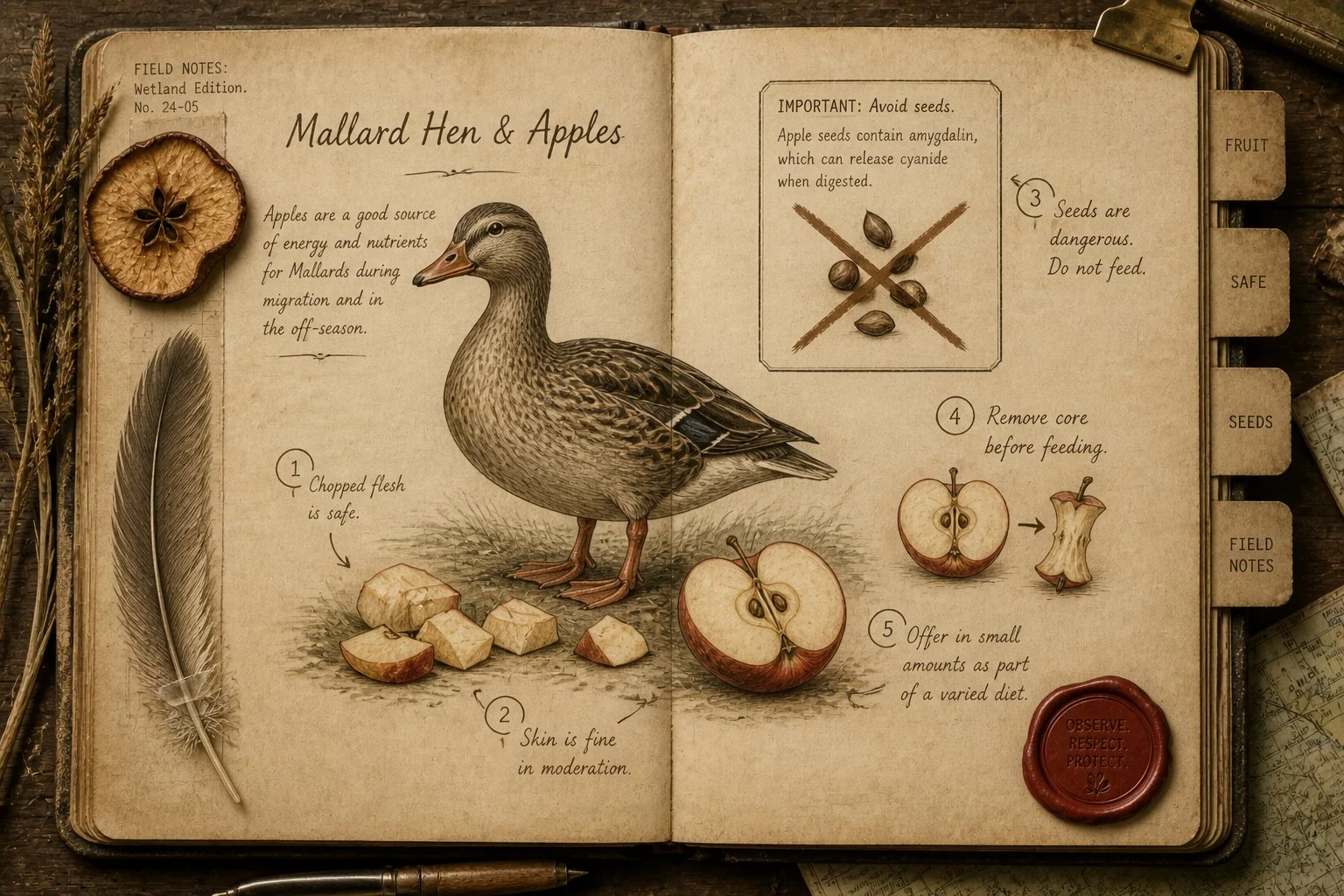
The short version: yes, ducks can eat apple flesh and skin in moderate amounts - it’s a hydrating, palatable, vitamin-rich treat. But the seeds contain amygdalin, which the gut breaks down into cyanide. A handful of apple seeds is genuinely dangerous to a duck. Always core the apple, chop it into pea-sized pieces, and offer as a treat alongside the regular waterfowl diet - not as a meal replacement.
What's safe and what's not
Safe: apple flesh (the fruit itself) and apple skin.
Not safe: the core, the seeds, the stem.
Apple seeds contain amygdalin, a cyanogenic glycoside. In the gut, amygdalin breaks down to hydrogen cyanide. A single apple has roughly 10-20 seeds; each seed contains a tiny amount of amygdalin. For a small bird, that quantity is genuinely a risk - not from one accidental seed swallowed, but from a duck working through fallen windfall apples and eating cores.
The cyanide affects cellular respiration. Symptoms in birds include rapid breathing, weakness, twitching, then sudden collapse. By the time symptoms are obvious, treatment options are limited.
The safe rule: always core the apple before offering it to ducks. Chop the flesh into pea-sized pieces; bin the core and stem.

Why apple is a good treat
Apple offers a few things that fit the duck diet well:
- High water content - hydrating, especially in summer.
- Soluble fibre (pectin) - good for gut function in moderation.
- Vitamins C and K, some B vitamins, potassium.
- Palatability - ducks take to apple eagerly. Easy to use as a treat in training or for tempting a sick bird to eat.
For backyard ducks, a chopped apple shared between three or four birds, two or three times a week, is a sensible enrichment.
How to prepare it
- Wash the apple (especially important if it’s been sprayed - pesticide residue can affect ducks).
- Cut in half, then quarters.
- Remove the core, seeds, and stem - cut a V into each quarter to take out the core entirely.
- Chop the flesh and skin into pea-sized pieces (5-10 mm).
- Scatter on a feeding tray or in a shallow dish.
Whole apples and apple halves are wrong: ducks can swallow chunks too large, choke, and they’re more likely to ingest core material.
The windfall question
If you have an apple tree and windfalls drop into the garden where ducks forage, this is the most common way ducks accidentally eat cores. The fix:
- Pick up windfalls daily during the drop season.
- Cut them open for the ducks - core out, chopped - if you want to feed them.
- Compost the cores and stems separately.
If your ducks have free range under an apple tree, the practical compromise is to accept some risk - ducks won’t eat enough cores to be a daily problem, and they’ll usually go for the flesh first - but be aware that a windfall-rich garden is not zero risk.
Cooked vs raw
Raw apple is fine. Cooked apple (stewed, baked) is also safe and easier to digest, but with no real nutritional advantage. Apple sauce from a jar usually contains sugar and sometimes preservatives - safer to skip.
What’s definitely not safe: anything from the human apple-product range:
- Apple pie (sugar, butter, possibly nutmeg)
- Apple juice (concentrated sugar)
- Caramel apples (sugar, coating)
- Apple cider (fermented; alcohol is toxic to birds)
- Apple-flavoured anything (artificial flavourings)
Plain raw or plain cooked apple flesh, chopped, no additions. That’s the rule.
How often, how much
The general fruit-treat guideline for backyard ducks:
- Per duck, per day: roughly a tablespoon of chopped fruit total (apple, berries, melon).
- Per week: treats make up under 10% of total diet by weight.
- Per meal: small enough that the ducks finish in 5-10 minutes and aren’t filling up on treats instead of pellets.
A whole large apple shared between 4-5 ducks is about right. More than that and you’re starting to substitute treat for nutrition.
Other fruit, briefly
For the wider fruit list:
- Berries (raspberries, blackberries, blueberries): safe, ducks love them.
- Melon (watermelon, cantaloupe): safe, hydrating, very popular in summer.
- Banana (peeled, mashed): safe in small amounts. See can ducks eat bananas.
- Grapes (halved or quartered): safe in small amounts, watch the choking hazard.
- Citrus (orange, lemon, lime): not recommended - the acid bothers their gut.
- Stone fruit (peach, plum, cherry, apricot): flesh fine, pits are TOXIC (same cyanide issue as apple seeds, much more concentrated). Always pit before offering.
- Avocado: TOXIC at any quantity. See can ducks eat avocado.
The treat bag we'd buy first
If you want a stable everyday treat that doesn’t have a fruit’s spoilage issues, cracked corn is the workhorse.
CountryMax Cracked Corn 50 lb
The everyday treat that pairs well with seasonal fruit.
A 50 lb sack of cracked corn - the everyday duck treat for backyard flocks and pond visits. Use alongside seasonal fruit and chopped greens; the corn provides reliable calorie support, the fruit adds vitamins and variety. Stores stably in a sealed bin for months.
- 50 lb sack - a season's supply
- Cracked to the right size for ducks and geese
- Pairs with chopped fruit and greens
- Stores stably in a sealed metal bin
 CountryMax · 50 lb

As an Amazon Associate we earn from qualifying purchases. Linked products are ones we actually use.
Wild ducks at the pond
If you’re feeding ducks at a park pond, apple is fine in small amounts but cracked corn or thawed peas is a cleaner choice - apple pieces sit on the water surface, get pecked at briefly, then sink and rot. See best food to feed ducks and geese and what can I feed ducks at the pond for the full pondside breakdown.
The bottom line
Yes, ducks can eat apples. The flesh and skin are fine; the seeds and core are toxic. Chop into small pieces, remove the core entirely, keep treats under 10% of total diet, and offer as enrichment rather than a meal. Apple is one of the easier and more popular treats for a backyard flock - just respect the seeds rule.