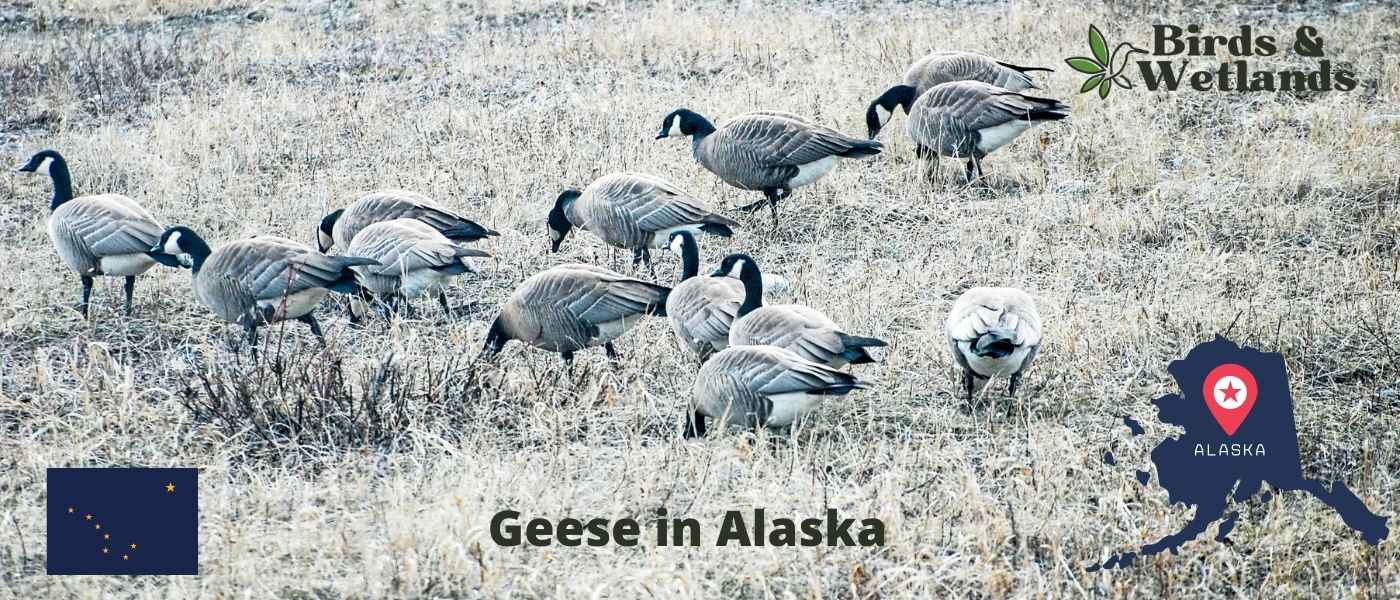
This comprehensive guide will teach you everything you need to know about Geese in Alaska from the types to their biology, behavior, and ecology. We will cover topics such as where to find them, what they eat, and how to identify different species. So if you’re interested in learning more about all the different geese in Alaska, read on!
Do geese live in Alaska?
There are six different species of North American geese that can be found in the state: Canada goose, white-fronted goose, brant, snow goose (or lesser snow goose), cackling goose and the emperor goose, according to the state department. Each species has a different appearance and range, but all can be found in Alaska.
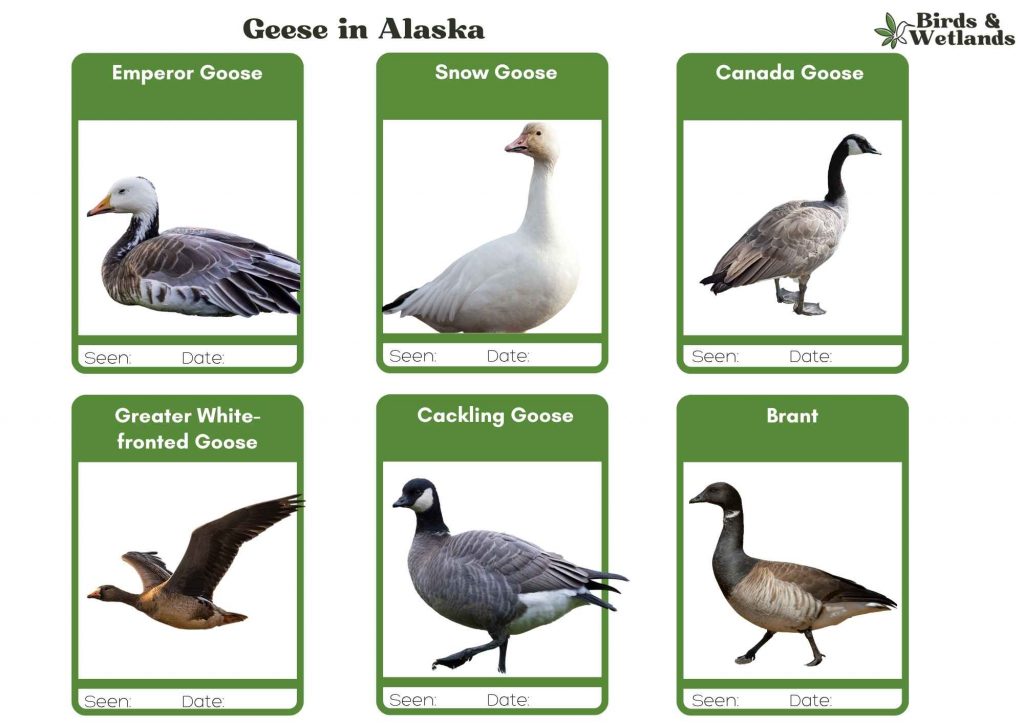 Geese in Alaska ID Chart
Brant in Alaska
The brant goose is a migratory bird that when it’s time to nest, Pacific brant fly south in colonies along the Yukon-Kuskokwim Delta Coast. These birds also spread out across other areas like Alaska and Canada while they’re here for six - nine weeks during fall season!
The population of Pacific brant geese in Alaska is carefully monitored and managed. Due to their dependence on specific breeding and wintering habitats, conservation efforts aim to protect these critical areas and ensure the long-term survival of the brant population.
Snow Geese in Alaska
Snow geese can be seen most at the Copper river delta, there are not many nesting pairs in Alaska, the few breeding birds are are on Howe Island, near Prudhoe Bay, the Spring migration starts in April, when large flocks start their journey south to their breeding grounds, often stopping off in the Matanuska valley.
The sheer volumes of Snow Geese in Alaska, is beginning to cause some issues, as they are growing with a 5-8% growth rate despite liberal hunting laws and no bag limits. This is leading to habitat degradation which will need to be addressed soon.
Do snow geese breed in Alaska?
No, the Snow Goose does not breed in Alaska. Snow Geese breed in the Arctic regions of Canada and Alaska’s neighboring state, Russia. During the breeding season, they nest in the tundra areas of the northern regions. However, Alaska serves as an important stopover and wintering ground for Snow Geese during their migration.
Emperor Geese nest in Alaska in a small area along the Yukon-Kuskokwim Delta coast or in early spring on Kodiak Island. They like the rocky beaches and brackish wetlands where they can feed on eelgrass and sea lettuce. Female emperor geese will have one partner throughout their life, unless that partner dies.
A sub species of the Canada goose is the Giant Canada Goose. The Canada Geese have very high resident flocks in Alaska, and the Alaska department of Fish and Game, in partnership with the US wildlife service have worked hard to reduce their numbers.
Where to Spot Alaska’s Geese
These locations in Alaska provide prime opportunities for spotting a wide range of geese species and other water birds in Alaska, amidst the state’s stunning natural landscapes and inland lakes.
Copper River Delta: Located on the Gulf of Alaska, the Copper River Delta is a vast and pristine wetland complex. It serves as a crucial stopover and breeding ground for a wide variety of waterfowl, including various species of geese.
Minto Flats State Game Refuge: Situated in the central part of the state, Minto Flats is a vast wetland area that attracts a rich assortment of birdlife. It is home to numerous waterfowl species, including several types of geese.
Kachemak Bay: Near Homer, Alaska, Kachemak Bay is a scenic coastal area renowned for its diverse bird populations. Geese, along with other waterfowl, frequent the bay’s wetlands, estuaries, and shorelines.
Kenai Peninsula: The Kenai Peninsula offers various habitats, including coastal areas, lakes, and rivers, which are favored by geese. Locations such as Kenai National Wildlife Refuge and the Kenai River provide excellent opportunities for observing a variety of geese species.
Yukon-Kuskokwim Delta: The Yukon-Kuskokwim Delta is a vast coastal plain in western Alaska. It is a significant breeding ground for waterfowl, including various geese species. The delta’s wetlands and tundra support a rich ecosystem that attracts diverse birdlife.
There is a healthy population of goose species and other water birds in Alaska, however both the snow Goose and Canada goose populations are causing some habitat issues. Even with no bag limits for hunters, these resident populations are growing in many areas.