Field notes from the back garden, after twelve winters of feeding.
The short version: bird feeders are not bad if you clean them. The three real risks - disease transmission at dirty feeders, window strikes from poorly placed feeders, and predation by ambush cats - are all solvable in an afternoon. The benefit, for cold-weather birds in particular, is calorie support at exactly the moment they need it. We feed year-round and we’d do it again.
The case against, taken seriously
The standard objections to garden feeders come from working ornithologists, not internet purists, and they deserve a straight answer.
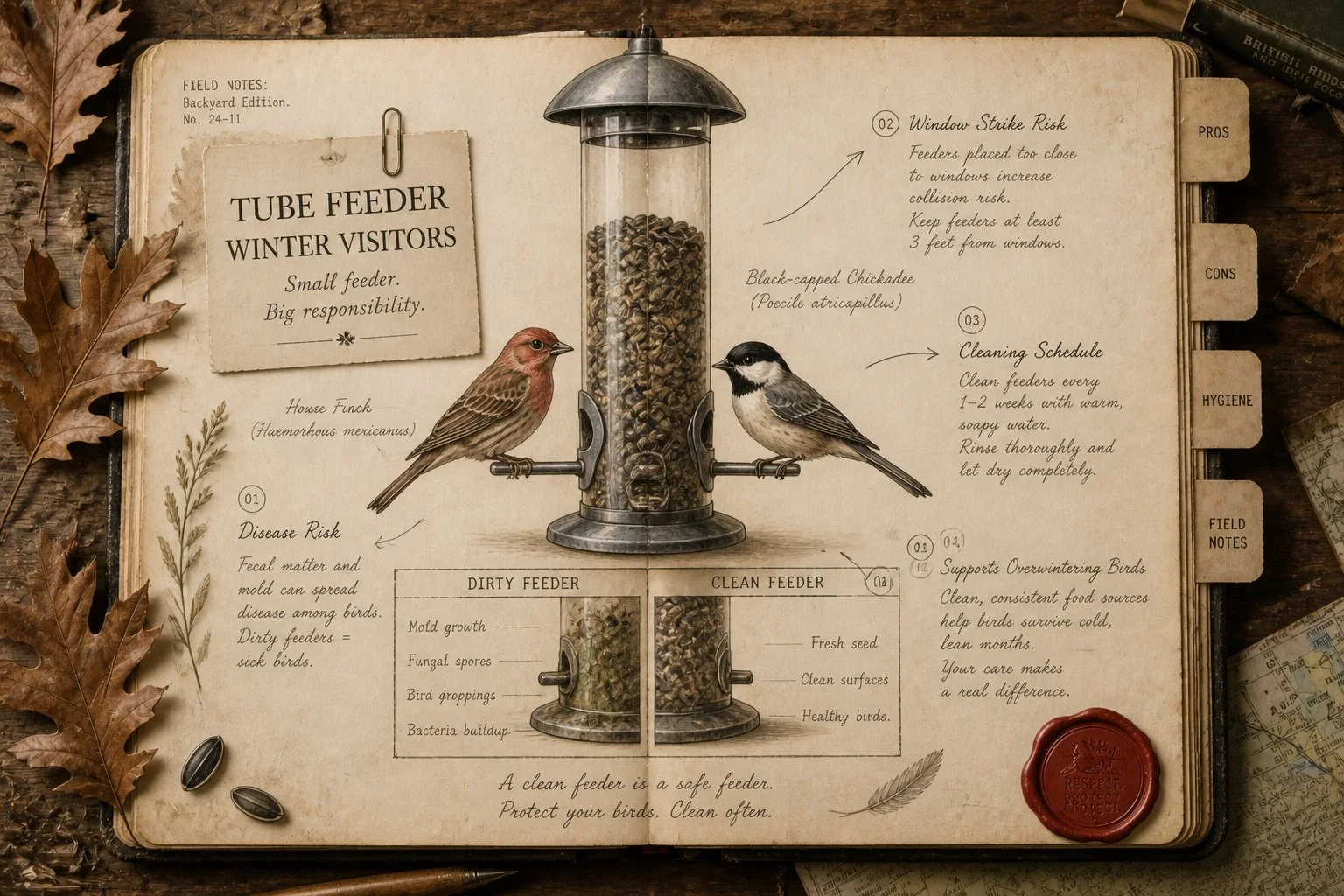
Disease. The single biggest documented risk. Trichomonosis crashed UK Greenfinch numbers in the late 2000s and is still spreading. Salmonellosis hits Pine Siskins in winter irruption years. Both are passed at feeders where birds defecate near food and saliva collects on damp seed. The British Trust for Ornithology’s recommendation, after a decade of monitoring, is straightforward: rotate feeders so they have a fortnight to dry between uses, and scrub them in hot soapy water every two weeks. Do that and the disease risk drops to background levels.
Window strikes. Roughly a billion birds die hitting glass in the US every year. A feeder placed three to ten feet from a window is the worst possible distance - close enough that birds startle into the glass before they can build up momentum, but not close enough to brush it harmlessly. Either put the feeder less than three feet from a window (so a startled bird can’t reach lethal speed) or more than ten feet away. Don’t park it in the middle.
Cat ambush. A feeder hung two feet off the ground, near a fence, is a buffet for any cat in the neighbourhood. Hang it five feet up, in the open, with no jump-off platform within six feet. That alone removes ninety percent of the cat risk.
Dependency. This one is largely a myth. Banding studies on Black-capped Chickadees show wild-fed birds get only 21 percent of their winter calories from feeders. The rest comes from natural foraging. Remove the feeder and they switch back within days. The exception is hummingbirds in autumn - some individuals do delay migration if nectar feeders stay full into October. The fix is simple: take them down by mid-September in cooler climates.

The case for, with numbers
A chickadee can lose ten percent of its body weight in a single sub-zero night. A tube of black-oil sunflower seed, refilled twice a week, restores that overnight loss reliably enough that survival rates for fed birds in a hard winter are measurably higher than for unfed populations. This isn’t backyard sentiment - it’s a 1992 study out of Wisconsin that’s been replicated several times since.
Beyond calories, feeders pull birds within fifteen feet of a kitchen window and that proximity does something almost nothing else can: it converts a curious neighbour into someone who cares. Every working RSPB or Audubon volunteer we’ve met got there through a feeder.
The feeder that fixes most of the problems
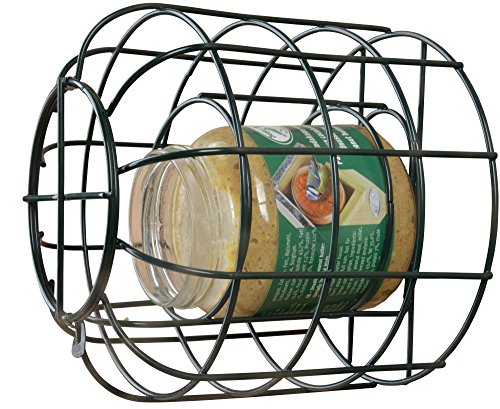
If a single product addresses the disease, cat, and squirrel risks at once, it’s a weight-sensitive, all-metal, easy-clean feeder. The Esschert squirrel-proof model below is our pick for back-garden use - the weight trigger keeps the bigger pests off, the powder-coated steel washes properly in hot water, and it takes a standard jar so you’re not paying for proprietary refills.
Squirrel-Proof Peanut Butter Feeder
Weight-triggered, dishwasher-safe, the one that lasted twelve winters.
A hinged jar holder with a weight-sensitive perch. Small birds feed; squirrels, magpies and jackdaws close the lid by their own weight. Steel, no batteries, no springs to fail. We swap in a fresh jar weekly and run the empty through the kitchen sink in hot water.
- Takes a standard 16 oz peanut butter jar
- Weight-triggered closure - no calibration needed
- All-metal, powder-coated, scrubs clean in hot soapy water
- No assembly - ships ready to hang
 Esschert Design · FB289

As an Amazon Associate we earn from qualifying purchases. Linked products are ones we actually use.
Our cleaning rhythm
We do it the same day we put the bins out. Once a fortnight in winter, once a month the rest of the year:
- Empty the feeder.
- Hot water, washing-up liquid, bottle brush, scrub all the perches and feeding ports.
- Soak ten minutes in a 1:9 vinegar-water solution. (Bleach works too at 1:32 but we prefer vinegar - safer round small birds and the smell goes faster.)
- Rinse, full air-dry overnight on a tea towel.
- Refill.
If any bird at your feeder looks fluffed, lethargic, with closed eyes or visible swellings round the face - take all your feeders down for two weeks, scrub everything, and start again. That’s how you stop trichomonosis spreading through a population.
What to fill it with
Most of what’s sold as “wild bird mix” is filler. Cracked corn and milo bulk out the bag and the birds kick them on the ground, where they attract rats. Our full breakdown is in what to put in a bird feeder - the short version is black-oil sunflower seed for almost everyone, suet or peanut butter for winter, and nyjer for goldfinches. Skip the rest.
For the small-songbird specific case - chickadees, nuthatches, tits, woodpeckers - the seasonal answer is peanut butter on bark in winter. It’s the single best calorie-per-gram supplement for a bird trying to survive a January night.
The trade-offs, ranked
After twelve years feeding through New England and Irish winters, the honest ranking:
- Net positive. Properly cleaned feeders, sensibly placed, in winter. Demonstrable benefit, low risk.
- Net neutral. Year-round feeding without regular cleaning. Birds adapt; the feeder becomes background.
- Net negative. Dirty feeder + window strike location + low-hung in a cat-rich garden. This is the only scenario where the original “are bird feeders bad” objection lands.
If you can clean every fortnight and pick the right spot, feed. If you can’t commit to either, plant a native hedge instead - birds in a garden earn their keep on insect control alone and don’t need you to maintain anything.
The bottom line
Bird feeders are bad if neglected, fine if maintained, and quietly excellent if maintained well. The whole question collapses into a fortnightly scrub in hot soapy water. Do that and you’re net-positive every winter you stay at it.
For squirrel-specific defence, see keeping squirrels out of an owl nest box - the principles transfer to feeder poles too.