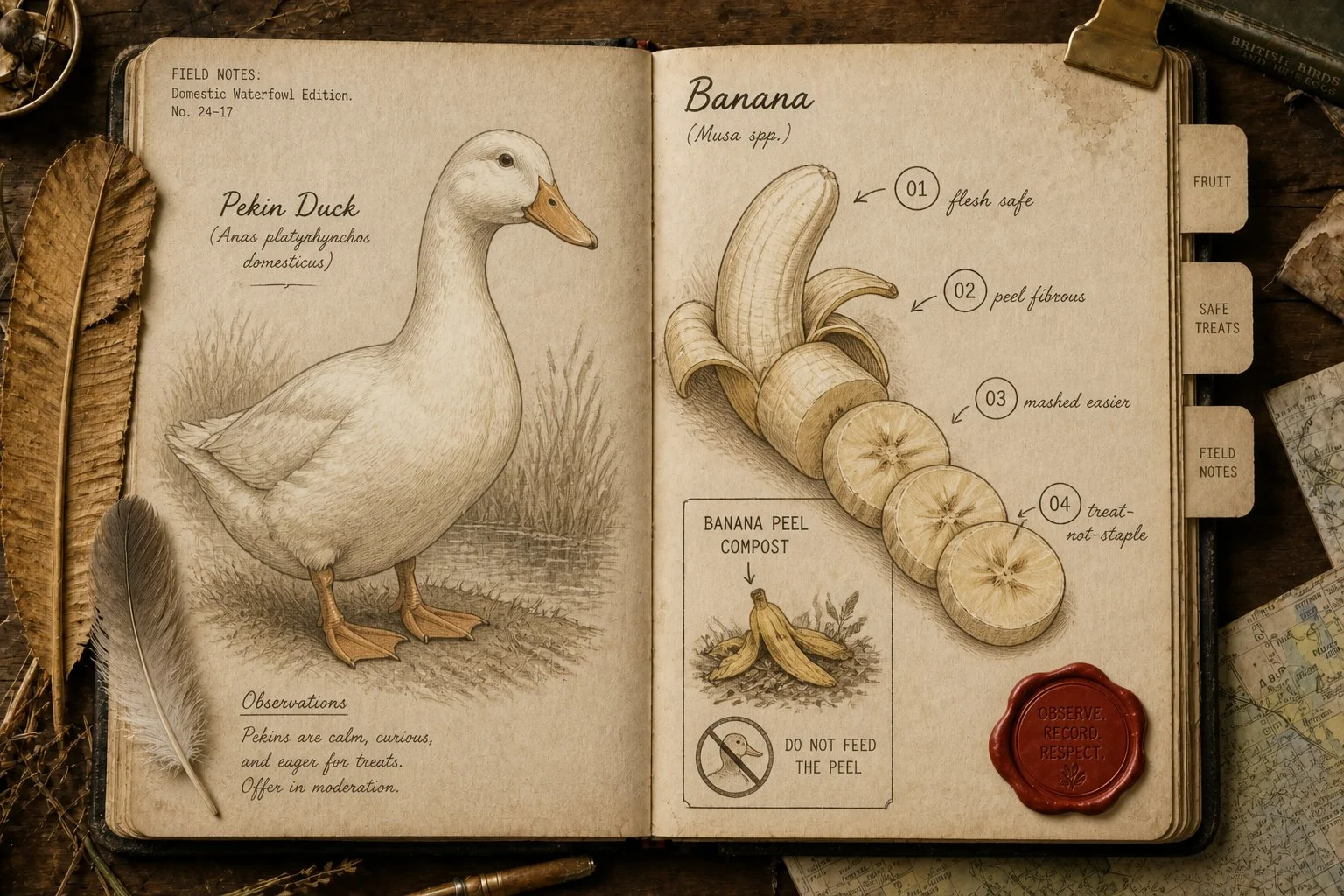
Field notes from the kitchen, the morning the over-ripe banana went to the duck pen.
The short version: yes, ducks can eat banana flesh - peeled and mashed or chopped into pea-sized pieces. It’s high in sugar so keep portions small; high in potassium and B vitamins, so it’s not nutritionally useless. The peel is technically non-toxic but the texture is wrong for ducks and most won’t eat it. Stick to flesh, treat as enrichment, 1-2 times a week is plenty.
What ducks get from banana
Banana flesh is one of the higher-sugar fruits, with useful trace nutrition:
- Potassium - important for heart and muscle function.
- Vitamin B6 - protein metabolism, immune function.
- Vitamin C - immune support (less critical for birds than mammals, but useful).
- Soluble fibre - gut health in moderation.
- Calories - 89 kcal per 100 g, mostly from sugar.
For backyard ducks that mostly eat waterfowl pellets and occasional treats, banana is fine alongside other fruits like apple, melon and berries. Not a daily food, but an acceptable rotation treat.
How to prepare it
Two working methods:
Method 1: peeled and chopped. Peel, slice into rounds about 5-10 mm thick, halve or quarter the rounds, scatter in a shallow dish or on a feeding tray. Works for most ducks.
Method 2: peeled and mashed. Especially good for ducklings or older ducks. Mash with a fork, offer in a shallow dish. Easier to eat, sticks to the bill less.
Either way, peel before offering. The peel is technically non-toxic but is stringy, tough, and ducks struggle with the texture. The few ducks that eat peel tend to be Indian Runners and Muscovies; most Pekins and Khaki Campbells ignore it.
Don’t offer:
- Whole unpeeled bananas. Ducks can’t get into them.
- Browning very over-ripe banana that smells fermented. The yeast and alcohol content is bad for ducks.
- Banana bread, banana chips, banana muffins. Sugar, fat, possibly chocolate or nuts.
- Dried banana / banana chips. Often sugar-coated.
How much, how often
The general treat-fruit guideline:
- Per duck per day: about a tablespoon of chopped fruit total.
- Per week: all treats combined should stay under 10% of diet.
- Frequency: 1-2 times a week for banana, alternating with apple, berries, melon.
A single banana shared between 4-5 ducks is about right. More than that and the sugar load starts to matter.
The sugar question
Banana has roughly 12 g of sugar per 100 g - higher than apple (10 g) or melon (6 g) but lower than grapes (16 g) or raisins (60 g). For a duck that’s mostly eating pellets and cracked corn, an occasional banana doesn’t move the dial. For a duck whose owner offers fruit and treats most days, banana adds up.
The signs of too-much-sugar in a backyard flock:
- Loose droppings (especially after a high-sugar treat day).
- Weight gain in older ducks.
- Reduced interest in pellet feed.
If any of those show up, scale the fruit treats back.
The peel - the answer most people are looking for
Banana peel is the question that splits keepers. The answer:
Technically safe - the peel contains no compounds harmful to ducks.
Practically ignored - the texture is wrong. Long fibres run through the peel; ducks struggle to break them down in the gizzard.
Possibly unsafe in volume - banana peels are often coated in pesticides at the supermarket level (and ducks can’t peel them). Wash thoroughly before offering, and consider organic if you’re going to feed peel.
The kindest approach: bin the peel, give the flesh. Compost the peel separately. Some ducks will work the peel; most won’t bother.
Other fruits and the broader treat list
For the wider duck treat picture:
- Apple flesh - safe, common favourite. Apple seeds are toxic - core first.
- Berries (blueberries, raspberries, blackberries) - safe, ducks love them.
- Melon (watermelon, cantaloupe) - hydrating, very popular in summer.
- Grapes - safe halved/quartered, watch choking hazard.
- Asparagus - cooked is fine. See can ducks eat asparagus.
- Almonds (raw, chopped, sweet variety) - safe in tiny amounts. See can ducks eat almonds.
- Avocado - TOXIC. See can ducks eat avocado.
- Milk - harmful via lactose intolerance. See can ducks drink milk.
- Bread - harmful, calorie-empty. See can geese eat bread.
The base diet that makes treats safe
Banana is enrichment. The base diet is a formulated waterfowl pellet, supplemented with cracked corn, fresh greens, and a clean water dish. The treats - banana, apple, berries, asparagus - sit on top of that base.
CountryMax Cracked Corn 50 lb
The everyday calorie supplement that banana complements.
A 50 lb sack of cracked corn - the everyday duck treat for backyard flocks. Pair with seasonal fruit (banana, apple, berries) for enrichment; the corn is the calorie base. Stores months in a sealed bin; decant into smaller bags for daily feeding or pond visits.
- 50 lb sack - a season's supply for a small flock
- Cracked to the right size for ducks and geese
- Pairs with chopped fruit and greens
- Stores stably in a sealed metal bin
 CountryMax · 50 lb

As an Amazon Associate we earn from qualifying purchases. Linked products are ones we actually use.
For wild ducks at a pond
Banana at a park pond is mostly wasted - it floats briefly, gets pecked at, then sinks and pulls the rest of the bank-feeding chaos along with it. Stick to cracked corn, thawed peas, and oats for pondside feeding. See best food to feed ducks and geese and what to feed wild ducks for the pondside breakdown.
The bottom line
Yes, ducks can eat bananas - peeled, mashed or chopped, in small amounts, 1-2 times a week. Bin the peel; most ducks won’t eat it. Like all fruit treats, keep portions modest and treat as enrichment on top of a complete waterfowl diet. If your duck ignores banana - some do - move on to apple or berries; the joy is theirs.