Field notes from a duck pond where a child once shared a peanut butter sandwich - everything that followed informed this post.
Updated: 2026-05-20.
The short version: ducks can eat unsalted natural peanut butter in tiny amounts, but the standard supermarket kind (with 150-200mg of salt per tablespoon) is genuinely harmful. Salt in even modest quantities causes kidney stress in waterfowl. And the sticky texture is hard for ducks to handle - it gums up the bill feathers and isn’t easy for them to swallow. For practical purposes, skip peanut butter; cracked corn does the same calorie-treat job without the risks.
The salt problem (this is the main one)
The vast majority of supermarket peanut butter contains added salt - typically 150-200mg of sodium per tablespoon. For ducks, this is the deal-breaker.
According to wild-bird feeding guides, salt is harmful to birds because their kidneys can’t process large sodium loads the way mammalian kidneys can. The avian medical literature (Merck Veterinary Manual) consistently identifies sodium toxicity as one of the easier-to-cause poisonings in pet and wild birds.
The progression in a duck eating salted peanut butter:
- Tiny amount (one peanut-butter-coated cracker): no acute effect. The duck flushes some sodium through urine.
- Repeated small amounts over days: kidney stress accumulates. Increased thirst.
- Larger quantity or daily exposure: weakness, dehydration despite drinking, possible seizures.
- Acute toxic dose: kidney failure.
The catch is that the salt threshold is much lower than people realise. A teaspoon of salted peanut butter is enough to cause measurable kidney stress in a 1.5kg duck.
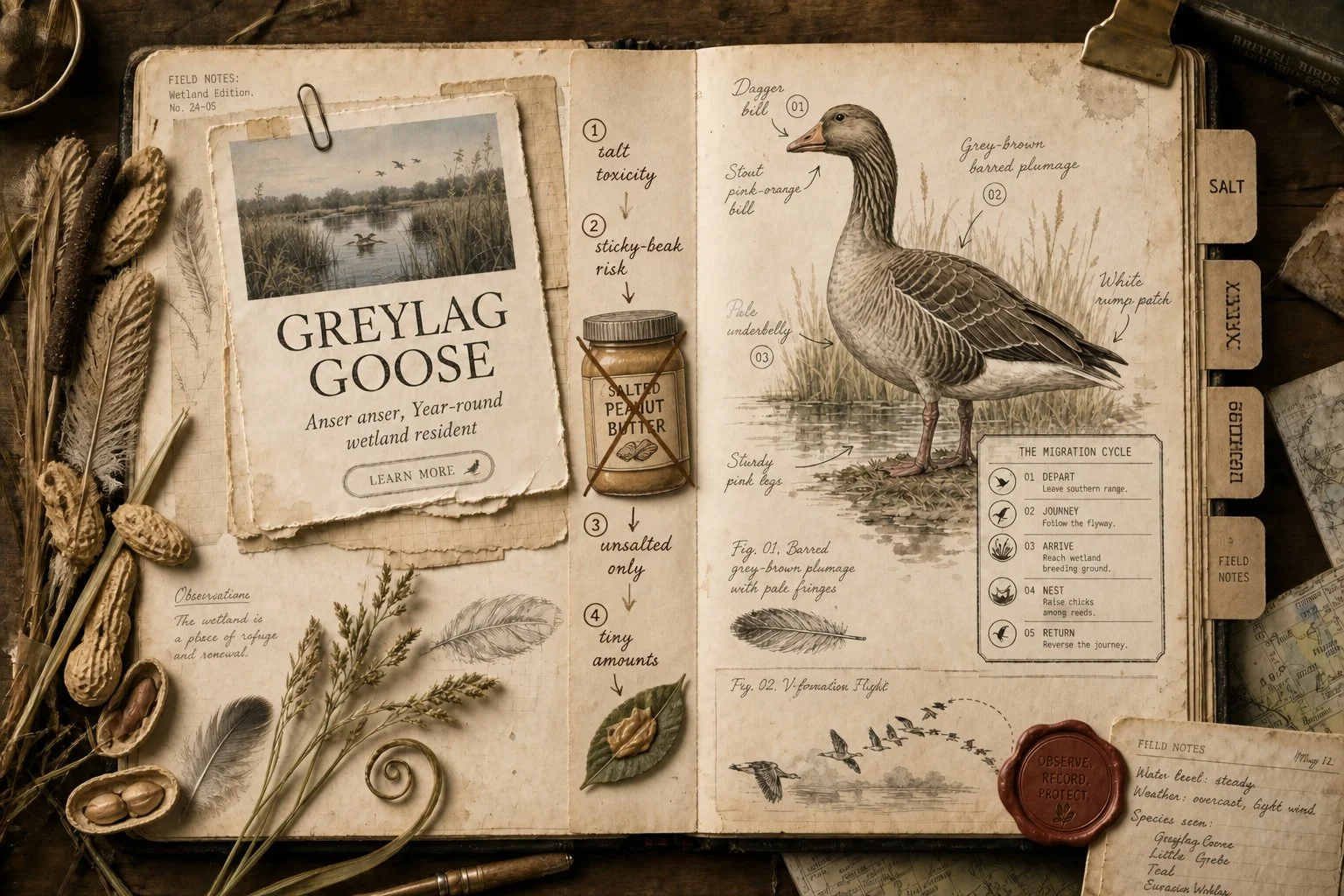
The sticky-beak problem (the secondary one)
Peanut butter is sticky, and ducks lack the hands and teeth to manage sticky food. Specific issues:
- Bill-feather gumming. Peanut butter sticks to the small feathers around the duck’s bill base. The bird preens to clear it, sometimes ineffectively.
- Swallowing difficulty. Without saliva production at the level mammals have, ducks rely on water to help swallow. Peanut butter is the worst case for this - sticks to the oesophagus.
- Choking risk in extreme cases, particularly for ducklings.
The bird-feeding community recommends mixing peanut butter with cornmeal or oats (4:1 cornmeal:peanut butter) to make a crumbly texture rather than a sticky one. For songbirds this works; for ducks it’s not really necessary because cracked corn alone is more appropriate.
What about natural unsalted peanut butter?
Natural, unsalted, additive-free peanut butter (single ingredient: peanuts) is technically safe for ducks in tiny amounts. Tasting Table’s guide on using unsalted peanut butter for birds notes that the natural variety - with no salt, no sugar, no xylitol - is the one bird-feeding traditions recommend.
For songbirds (chickadees, woodpeckers, nuthatches, wrens), unsalted peanut butter is genuinely useful as a high-calorie winter food. See feeding birds peanut butter for the full songbird-feeding case.
For ducks, even unsalted peanut butter:
- Provides calories the duck doesn’t need (ducks are bigger; calorie needs are met by grain and aquatic vegetation).
- Has the texture/sticky problem.
- Doesn’t fit the duck’s natural omnivorous-but-mostly-herbivorous diet.
The practical answer: there’s nothing peanut butter does for a duck that cracked corn doesn’t do better.
The acute warning: xylitol
Some “sugar-free” peanut butter brands contain xylitol, a sweetener that is acutely toxic to many animals (well-documented in dogs, less studied in birds but considered dangerous). The FDA warning on xylitol toxicity covers dogs specifically; for birds, the safe assumption is “treat it the same way.”
Always check the ingredient list. If “xylitol,” “birch sugar,” “wood sugar,” or any artificial sweetener is listed, the product should not be offered to any animal.
What ducks should eat as treats instead
The right treats for backyard ducks, in order of usefulness:
- Cracked corn - the everyday calorie supplement. See best food to feed ducks and geese.
- Frozen peas (thawed) - protein, palatable.
- Plain rolled oats - calorie-dense, no sticky problem.
- Chopped leafy greens - kale, lettuce, watercress.
- Occasional fresh fruit - apple, berries, melon, mango (peeled and pitted). See can ducks eat apples, can ducks eat blueberries.
- Dried mealworms (rehydrated) - protein supplement.
Almost everything peanut butter offers nutritionally (calories, fat, protein) is covered by these without the salt or sticky issues.
For backyard duck enrichment specifically
If you really want to give your backyard ducks a small treat that mimics the peanut butter idea, the safest approach:
- Use only natural unsalted peanut butter (single ingredient: peanuts).
- Mix with rolled oats and crumbled bread-free oat porridge at a 4:1 dry:peanut butter ratio.
- Offer a tablespoon-sized amount, no more than once a week.
- Provide plenty of fresh water alongside.
But honestly, the calorie load is unnecessary. The same enrichment value comes from a sprinkle of cracked corn or a handful of mealworms with much lower risk.
CountryMax Cracked Corn 50 lb
The everyday treat that replaces peanut butter, simpler and safer.
A 50 lb sack of cracked corn - the everyday calorie supplement for backyard ducks. Replaces peanut butter (and most "should I give them..." questions) with a single safe answer. Stores months in a sealed bin.
- 50 lb sack - a season's supply for a small flock
- Cracked to the right size for ducks and geese
- Low salt, low fat, appropriate calorie supplement
- Stores stably in a sealed metal bin
 CountryMax · 50 lb

As an Amazon Associate we earn from qualifying purchases. Linked products are ones we actually use.
The wider salt-toxicity case
Peanut butter is one of a cluster of “harmful at quantity” foods for ducks because of salt:
- Pickles - extreme salt and vinegar. See can ducks eat pickles.
- Salted nuts and snack foods - high sodium.
- Cat food - chronic salt issues. See can geese eat cat food.
- Bread products - the salt content is a secondary issue behind the calorie-empty problem. See can ducks eat bread.
The pattern: any food formulated for human or carnivore taste is too salty for a waterfowl.
The bottom line
Tiny amounts of natural unsalted peanut butter (single-ingredient peanuts only) are technically safe for ducks but offer nothing they need. Salted varieties are genuinely harmful, the sticky texture is awkward for ducks specifically, and xylitol-containing varieties are dangerous. Skip it - cracked corn does the calorie-treat job better. For songbirds, peanut butter is the right answer; for ducks, it’s the wrong tool.
Sources
- Humbirdy: Peanut Butter for Birds Safety Guide
- Tasting Table: Unsalted Peanut Butter Bird Feeder Recommendation
- FDA: Xylitol Toxicity Warning
- Merck Veterinary Manual: Feeding Waterfowl