Pondside notes, spring.
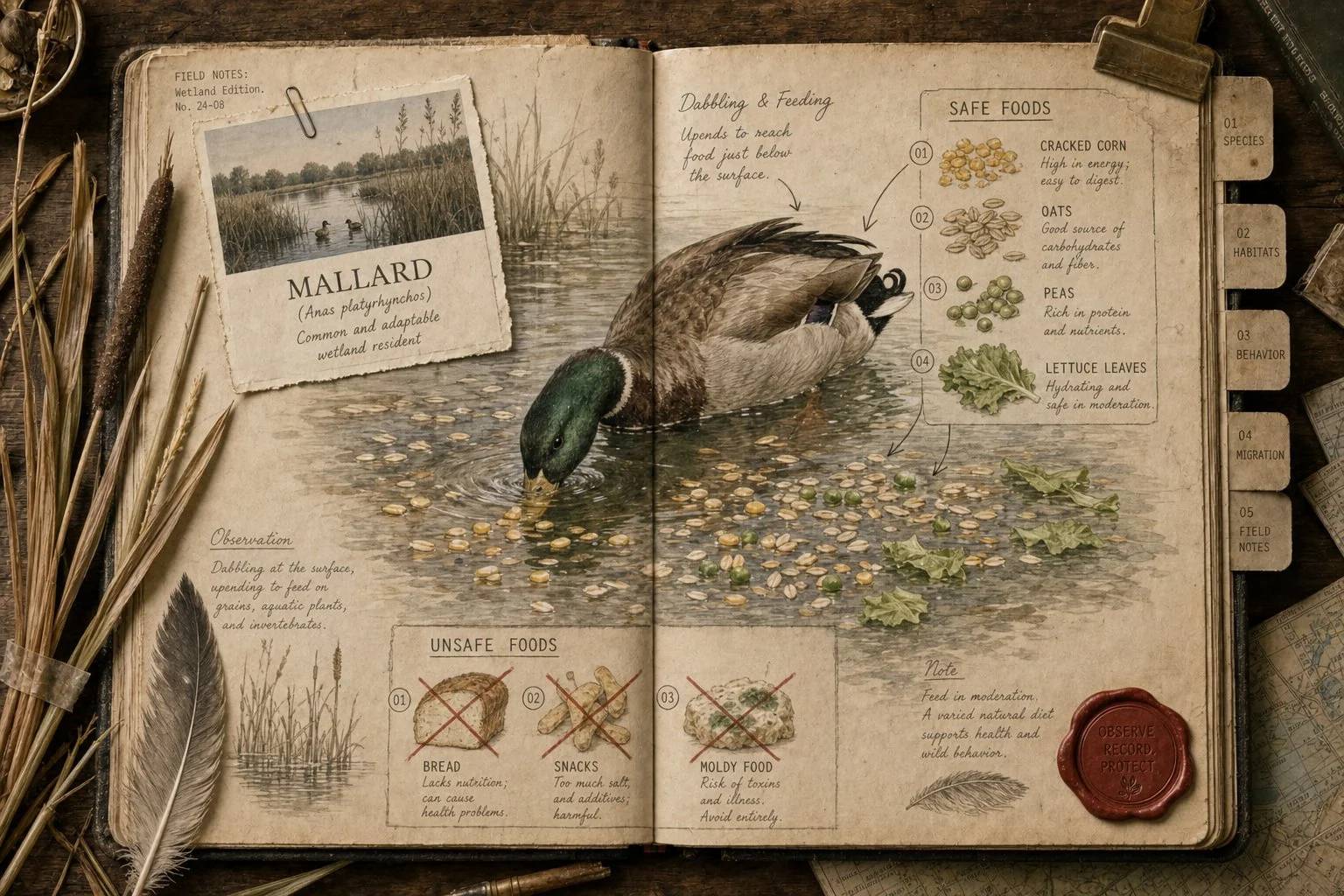
Wild ducks should not be fed bread, popcorn, crackers, or any salted food. The eight foods that genuinely help them are cracked corn, frozen peas, oats, lettuce, halved grapes, rice, mealworms, and birdseed. The single change that does the most good for a local duck population is stopping bread and switching to cracked corn.
Why what you feed actually matters
Bread, crackers, and processed human food cause a condition called “angel wing” in ducklings - the wing develops malformed and the bird never flies. Bread also lacks the protein and minerals a wild duck needs, fills the bird up without nourishing it, and rots in the water it falls into. Algal blooms at park ponds are almost always traceable to weeks of accumulated bread.
The good news is that the foods that DO help ducks are cheaper and more available than bread, and ducks prefer them.
The eight foods that are actually good for ducks
- Cracked corn - the staple. Cheap, high in carbohydrates, ducks adore it. Available in 20-50 lb bags at any farm-supply store.
- Frozen peas (thawed) - high in protein, low in salt, ducks chase them in water.
- Rolled oats - dry, unsweetened, the porridge kind. Floats briefly then sinks.
- Lettuce - torn into small pieces. Iceberg, romaine, or any leafy green.
- Halved grapes - cut in half so they don’t choke smaller ducks.
- Cooked rice - leftover plain rice from dinner, no salt, no butter. Brown or white.
- Mealworms (dried) - the protein hit. Particularly good in spring during nesting.
- Birdseed - black-oil sunflower, millet, mixed seed. Whatever you’d put in a feeder.
The general rule: if it’s something a wild duck might encounter near a pond in nature, it’s probably fine. If it’s processed for humans, it’s probably not.
The five things never to feed wild ducks
- Bread, crackers, cereal, popcorn - the textbook list. Causes angel wing, fouls water.
- Salted anything - chips, salted nuts, anything seasoned. Ducks can’t process salt.
- Avocado - actively toxic to birds. Don’t.
- Chocolate, citrus, onions - irritant or toxic. Same list as for parrots.
- Mouldy or old food - bird respiratory systems are fragile; mould spores can kill them.
How to feed them properly
Three rules:
- Scatter on water, not on the bank. Ducks evolved to forage on water surface. Bank-feeding teaches habituation that makes them aggressive toward dogs and children.
- Small amounts at a time. A handful, not a loaf. Wild ducks should be supplementing a natural diet, not replacing it.
- Only as a treat. Once or twice a week at most. Daily feeding creates dependence.
Cracked Corn 50 lb Bag
The duck food the experts actually recommend.
Cracked yellow corn, the staple wild-duck food. A 50 lb bag is enough for a season of feeding a small park population. Far cheaper per visit than the supermarket loaf of bread it replaces, and exponentially better for the birds.
- 50 lb bag, cracked into duck-bill-sized pieces
- Single-ingredient: corn, nothing added
- Use for ducks, geese, wild turkeys, deer
 CountryMax · 50 lb

As an Amazon Associate we earn from qualifying purchases. Linked products are ones we actually use.
The bottom line
Feed ducks if you want to, but feed them properly: cracked corn or peas, on the water, in small amounts, occasionally. The bread habit is the single biggest threat to backyard duck populations in the developed world. Easy to change once you know.
For broader notes on duck-friendly habitat, see our guide to planting a duck-friendly pond and our pond-feeding reference.