A historical footnote.
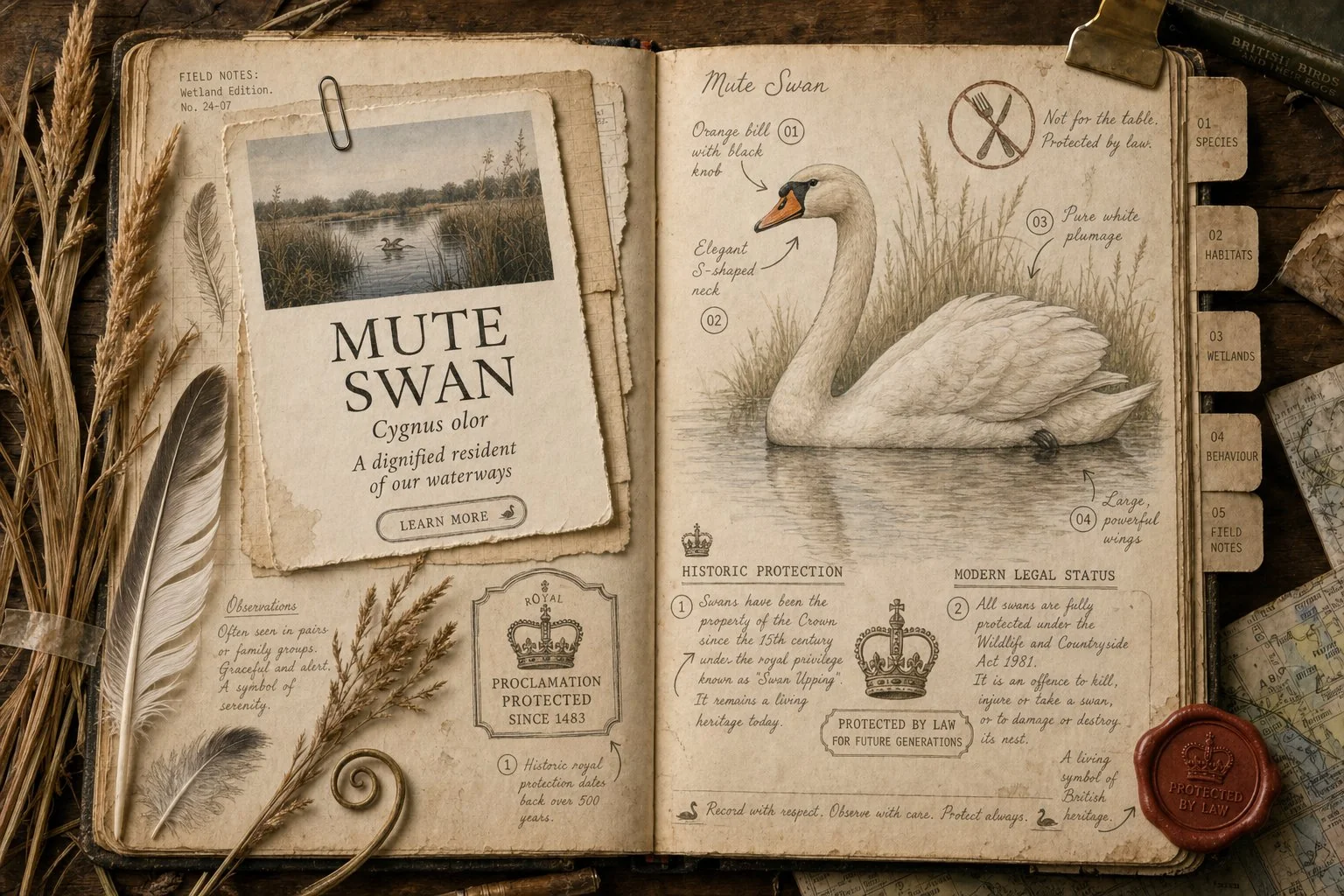
Eating swan is illegal in nearly every modern Western country. In the UK, all unmarked Mute Swans on open water belong to the Crown and have done since the 12th century. In the US, native swan species (Tundra, Trumpeter) are protected under the Migratory Bird Treaty Act. Historically, swan was a luxury feast bird for European royalty and is genuinely edible - dark, gamey, similar to a tough goose - but the law and the conservation status mean nobody serves it now.
The legal status, by region
- UK - Mute Swans on open water belong to the Crown unless marked with one of the two royal-livery marks (the Vintners’ Company or the Dyers’ Company). Killing or eating one without authorisation is a Wildlife and Countryside Act offence; fines and prison are real.
- US - Trumpeter and Tundra Swans are protected under the Migratory Bird Treaty Act. Mute Swans (introduced, invasive in some states) have variable status; some states permit removal of nests, very few permit consumption.
- EU - Mute Swans are protected under the Birds Directive. Hunting is broadly prohibited.
- Australia - Black Swans are native and protected.
The “Queen owns all the swans” idea is often joked about but legally real for British Mute Swans, going back to a 12th-century royal claim and reinforced by the modern Wildlife Act.
The historical use
In medieval Europe, swan was a luxury feast bird for royalty and high nobility. Records describe roasted swans at coronation banquets, sometimes served with their feathers re-attached for display. The bird was considered a status symbol more than a culinary peak; even its contemporaries described the meat as tough.
By the 18th century, swan had largely fallen out of fashion in Britain. Turkey, then a recent introduction, replaced it as the prestige bird, partly because turkey was easier to raise and tastier.
What it actually tastes like
Historical and very occasional modern accounts agree:
- Dark, very lean meat - more like venison than chicken.
- Strong, gamey flavour - especially in older birds.
- Tough texture - needs long slow cooking.
- Similar to wild goose but more concentrated.
It is genuinely edible and not unpleasant, but it is not exceptional. The legal protection makes the cuisine impossible to develop further.
The Swan Upping ceremony
A British curiosity worth knowing. Every July, the Crown’s swan markers and representatives of the Vintners’ and Dyers’ Companies undertake “Swan Upping” - a five-day ceremonial count of all Mute Swans on the Thames between Sunbury and Abingdon. Cygnets are caught, checked for health, ringed, and recorded. The ceremony is ancient (12th century) and still happens.
The point now is conservation and health monitoring; the legal residue of royal ownership is the reason the ceremony continues.
What about kept swans?
In Britain, some swans on enclosed estates or private waters can be raised privately, but eating them still requires specific licensing. In practice, no one does this commercially. There is no “swan farming” in any meaningful sense.
In other regions where swan-eating is legal (some hunters in regions where Mute Swan is invasive), the meat is generally used for stew or pasties; few people serve it as a main dish.
National Audubon Society Birds of North America
The book that tells the swan-status story.
The Audubon guide's swan entries include the historical and legal context - protected status of the natives, the messy invasive-Mute-Swan question, and population trends. The most thorough single-volume reference for understanding why these birds are legally complicated.
- All three regularly-occurring North American swans
- Status, range, and legal history
- 2021 edition, current population numbers
 Audubon · 2021 Ed.

As an Amazon Associate we earn from qualifying purchases.
The bottom line
Swans can be eaten in the same sense that any large bird can be eaten. They were a medieval royal feast dish. In the modern era, they are protected across nearly every Western country, and what limited consumption is legal happens almost nowhere. Eat goose instead.
For more swan content, see swan symbolism and swan predators.