Tested 6 deterrents on a flock at the office pond. Two worked. Four didn't.
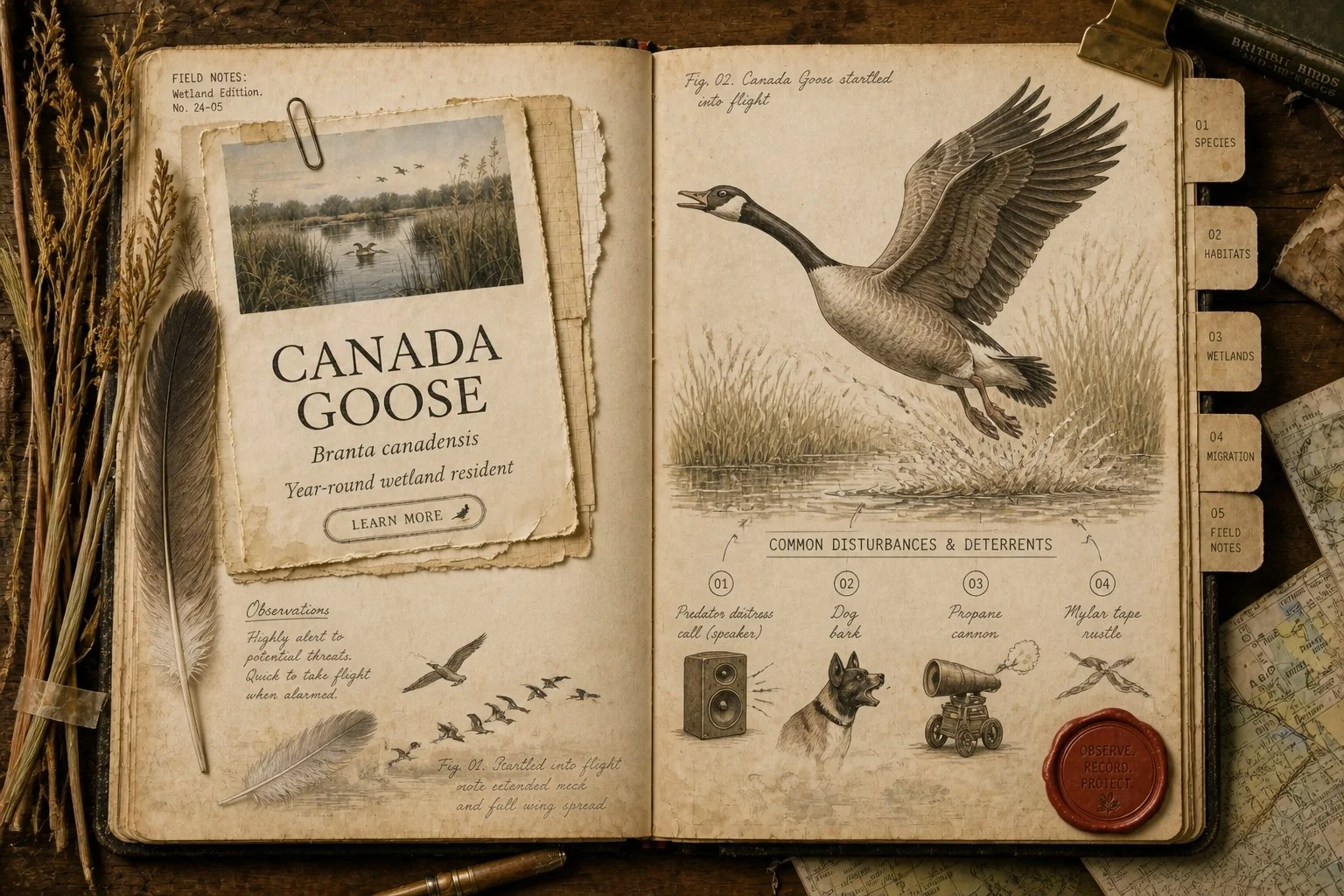
Geese can be deterred by sound, but only some sounds work and only when used intelligently. The two reliable categories are recorded predator distress calls (especially Canada Goose alarm calls, plus coyote and fox vocalisations) and live dog barking. Ultrasonics, wind chimes, white noise machines, and most “scare gadgets” sold for geese have no real effect. Even the working deterrents need rotation, because geese habituate fast: a sound that scared them for a week becomes background noise in a month.
What actually works
- Canada Goose distress calls - recorded alarm calls of their own species. Triggers innate flee response. Most effective.
- Coyote and fox calls - genuine predator vocalisations. Works because geese evolved to avoid these.
- Live dog barking - real dogs patrolling on lead. Trained “goose dogs” (Border Collies) are the gold standard for golf courses and parks.
- Propane cannons - loud unpredictable bangs at irregular intervals. Effective but illegal in many residential zones.
- Pyrotechnic bangers / screamers - one-off launches from a starter pistol. Works for emergency dispersal, not sustained control.
The common thread: real biological signals (predator presence, alarm calls) or sudden unpredictable noises.
What doesn't work (despite marketing)
- Ultrasonic deterrents - geese can’t hear ultrasonic frequencies. Pure marketing.
- Static buzzing or constant noise - geese habituate within hours.
- Wind chimes / windsocks - decorative, not functional.
- Owl decoys - geese learn within days that the owl doesn’t move.
- “Repellent” CDs of random animal noises - random noise without biological meaning is ignored.
- Mylar tape strips alone - visual deterrent, mild effect, easily ignored if anchored.
If a product claims to “humanely scare geese with sound” but doesn’t specify predator calls or distress calls, assume it doesn’t work.
The habituation problem
Geese are intelligent. Any single deterrent that doesn’t carry a real follow-up cost (i.e., actual predation) loses effectiveness within 1-4 weeks. The proven mitigation strategies:
- Rotate deterrents - alternate predator call type weekly.
- Pair sound with visual - a recorded coyote call combined with a moving silhouette is much more effective than either alone.
- Combine with physical exclusion - sound deterrents are far more effective when combined with grass-height management (geese prefer short grass), shore-line shrub planting, and netting on small water bodies.
- Bring in a goose dog - a trained Border Collie that genuinely chases (without catching) resets the entire flock’s perception of the site.
The legal limits
Canada Geese are protected under the Migratory Bird Treaty Act in the US. You can scare them but cannot:
- Harm or kill them outside an official hunting season with the correct permits.
- Disturb nests, eggs, or goslings.
- Trap and relocate without USDA permits.
Sound deterrents stay within legal limits as long as the geese aren’t physically injured.
For nuisance flocks at homes and businesses
The realistic deterrent stack:
- Phase 1 (immediate dispersal) - pyrotechnic bangers or propane cannon to break the flock’s site attachment.
- Phase 2 (sustained pressure) - rotating predator call recordings, twice daily for 2-3 weeks.
- Phase 3 (environmental management) - let grass grow long near water; plant native shrubs at the water’s edge; install temporary netting if it’s a small pond.
- Phase 4 (visual reinforcement) - solar predator-light units that flash at night, plus moving scarecrows or coyote silhouettes that are repositioned weekly.
The combination is what works. Single-tactic approaches almost always fail.
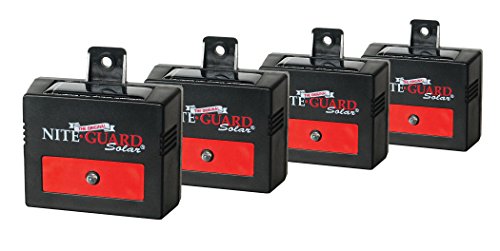
Nite Guard Solar Predator Control Light (4-pack)
Visual deterrent that runs itself.
Sound-only deterrents fade fast as geese habituate. Pairing sound with a flashing red eye at night reinforces the predator-presence signal. Nite Guard units mount on posts at goose-eye height around the pond and activate at dusk. Solar charged, so no wiring. Effective for raccoons, foxes, and goose flocks alike.
- 4 units, solar-charged, automatic dusk activation
- Flashing red LED simulates predator eye
- Effective range up to ½ mile line-of-sight
 Nite Guard Solar · 4-pack

As an Amazon Associate we earn from qualifying purchases.
The bottom line
Predator distress calls and dog barking scare geese; ultrasonics and gadgets don’t. Geese habituate to any single deterrent within weeks, so rotation and combination matter more than choice of tool. Sound plus visual plus habitat modification is the only approach that holds up.
For more, see do geese keep snakes away and goose aggression.