Willamette Valley field notes, November.
Oregon sits in the middle of the Pacific Flyway, the western migratory corridor that runs from Arctic Alaska to Mexico. Thirty-nine duck species occur regularly in the state across coastal, valley, and Cascade habitats. Twelve are year-round residents; the rest are migrants or winter visitors. Best birding is October-February, when wintering populations peak at the Klamath and Sauvie Island refuges.
Year-round Oregon ducks
The reliable residents you can find any month of the year:
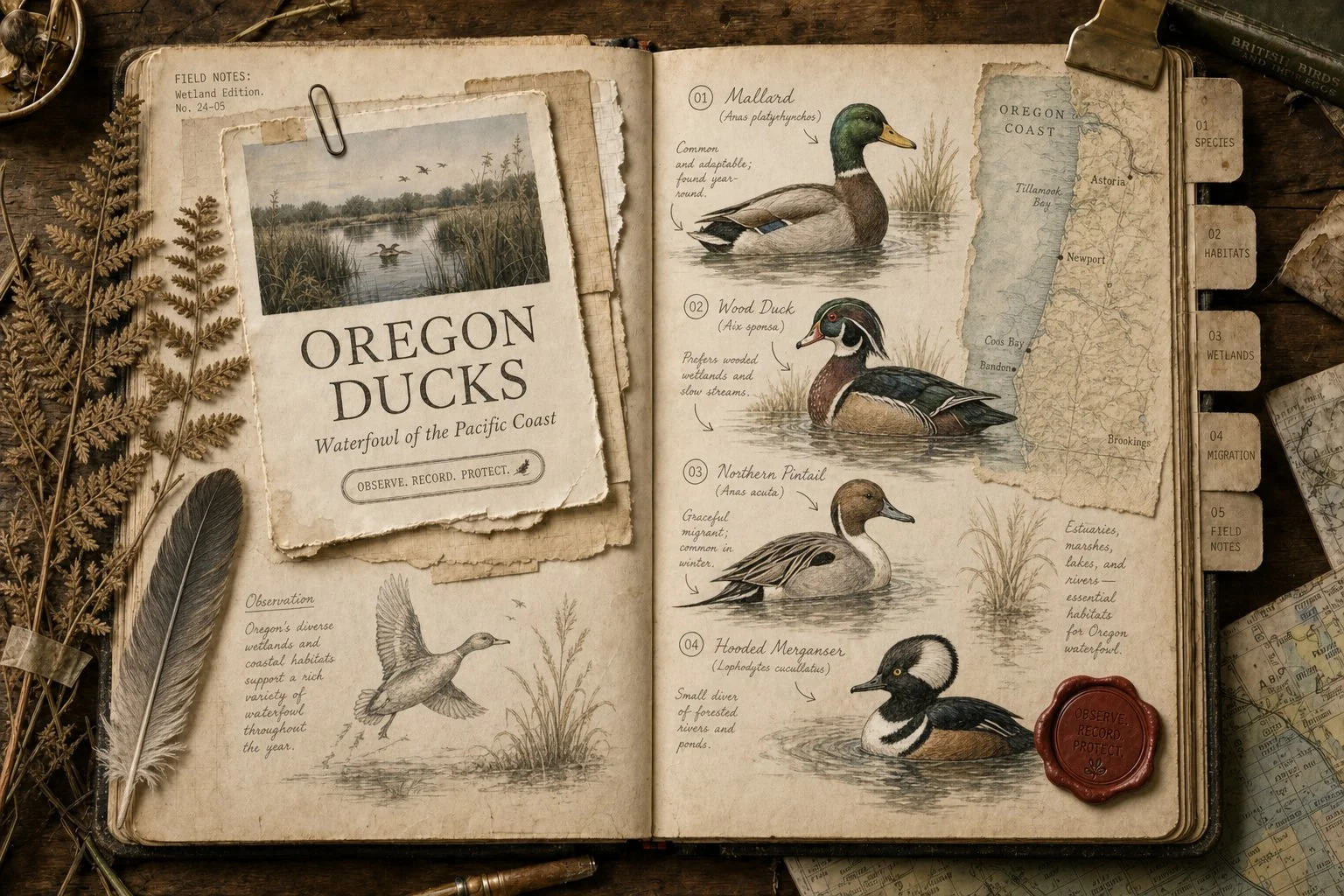
- Mallard - the universal duck.
- Wood Duck - Wood ducks in forested wetlands.
- Cinnamon Teal - mostly summer, but lingers.
- Northern Shoveler - common in winter.
- Gadwall - increasingly resident.
- Ruddy Duck - small, stiff-tailed, year-round.
- Common Merganser - rivers and large lakes.
- Hooded Merganser - smaller, forested water.
- Bufflehead - winter visitor for most of state.
- American Wigeon - winter dominant.
- Northern Pintail - winter.
- Green-winged Teal - winter; smallest dabbling duck.
Winter visitors from the Arctic
October through February brings:
- Canvasback - the diving duck with the long sloping bill.
- Redhead - rounder profile, copper head.
- Greater and Lesser Scaup - “bluebills”.
- Ring-necked Duck - common in freshwater.
- Long-tailed Duck - coastal in winter.
- Harlequin Duck - rocky coast, the painted duck.
- Common Goldeneye, Barrow’s Goldeneye - winter on rivers.
- Surf Scoter, White-winged Scoter, Black Scoter - coastal in winter.
Klamath Basin in winter holds the largest concentration of wintering waterfowl in the western US - often a million birds at peak.
The four Oregon locations to know
- Sauvie Island (Portland) - the easy in-town site. Wintering wigeon, pintail, Snow Geese, all the common species.
- Malheur NWR (southeast Oregon) - spring/autumn migration, summer breeders. Greater diversity, harder to reach.
- Klamath Basin NWR Complex (south Oregon) - winter peak. Sheer numbers; bald eagles hunting wintering waterfowl.
- Coastal Oregon (Yaquina Bay, Coos Bay) - sea ducks, scoters, Long-tailed, Harlequin in winter.
A long weekend can hit Sauvie Island + Klamath Basin in November and pick up nearly the full state list.
When to go
- October-November - migrant peak. Many species moving south.
- December-January - winter peak at Klamath, Sauvie, coast.
- February-March - early returning breeders + still-present wintering birds. Many people’s favourite window.
- April-May - summer breeders arrive; Cinnamon Teal in colour.
- June-August - quieter; mostly residents and post-breeding adults.
What to bring
The Oregon list is dominated by ducks that look similar at distance. Optics matter; a field guide matters. A scope is useful at Sauvie or Klamath where you’ll be glassing flocks at 500+ metres.
Sibley Field Guide Birds of Western North America
The book for an Oregon trip.
The Western volume of the Sibley series covers every Pacific Flyway species you'll see in Oregon, with hand-painted plates that show seasonal plumage variation (essential for sorting drake from hen on a winter Klamath flock). The standard reference for western birders.
- All Pacific Flyway waterfowl on comparison plates
- Range maps with seasonal breakdown
- Pocket size for car or field use
 Sibley · Western 2nd Ed.

As an Amazon Associate we earn from qualifying purchases.
The bottom line
Oregon is one of the densest duck states in the US, with 39 species, winter concentrations in the millions, and four refuges that cover the geographic spread. Best month is November or January; best book is the Sibley West.
For more, see our notes on North American ducks generally and planting a duck-friendly pond.