Indiana was 25% wetland in 1800. About 4% remains. Visit what's left.
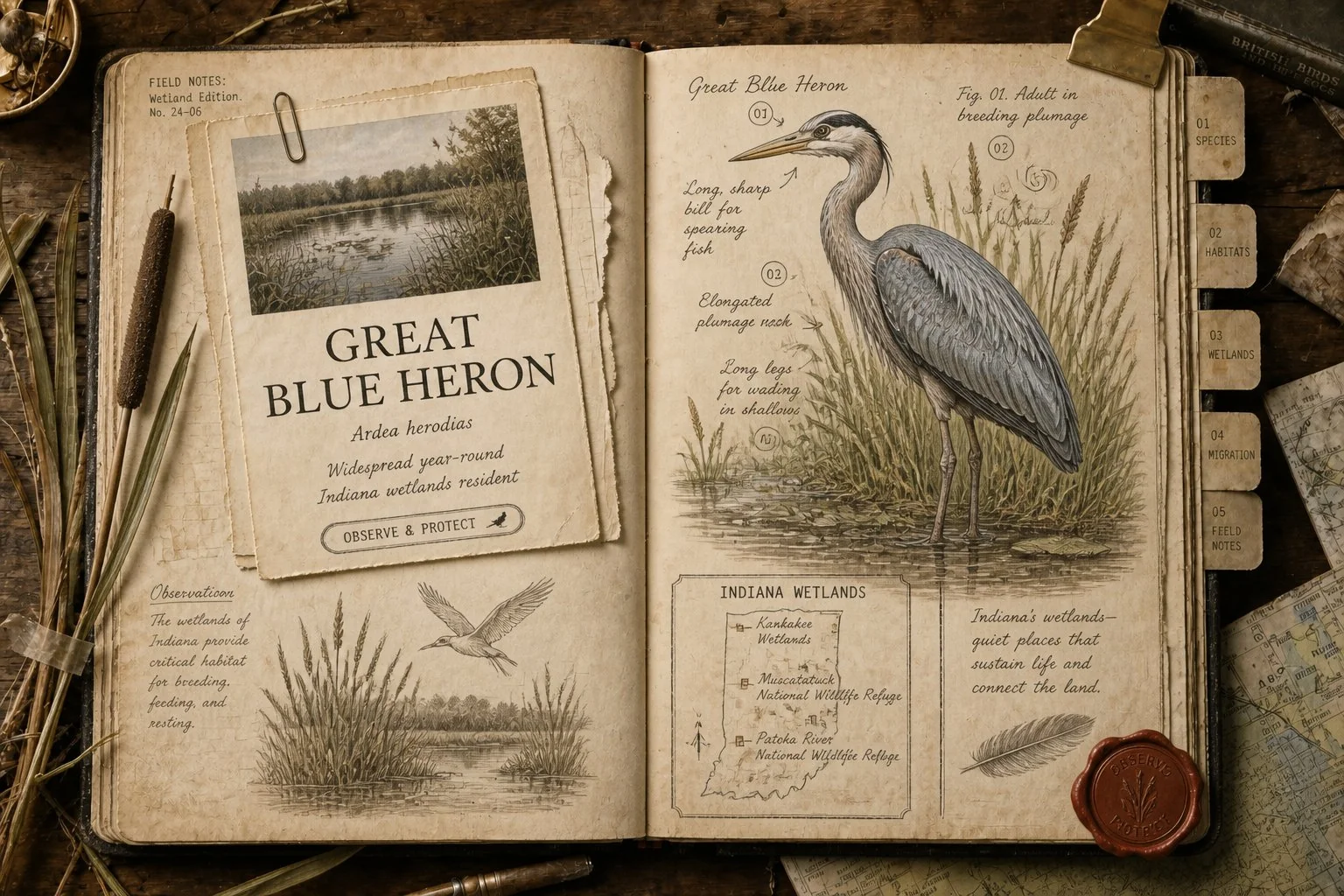
Indiana once held some of the Midwest’s most extensive wetlands - the Grand Kankakee Marsh covered nearly a million acres on its own. Drainage for agriculture between 1850 and 1920 eliminated roughly 85% of the state’s original wetland area. What remains is concentrated in a handful of federal refuges, state fish and wildlife areas, and the Indiana Dunes complex. For waterbird viewing, the highest-value sites are Patoka River NWR, Muscatatuck NWR, Goose Pond Fish and Wildlife Area, and the restored sections of the Kankakee.
The major wetland complexes worth visiting
- Muscatatuck National Wildlife Refuge (south-central Indiana) - 7,800 acres of bottomland hardwood and marsh. Best for Wood Duck, Sandhill Crane in migration, Bald Eagle.
- Patoka River National Wildlife Refuge (southwest Indiana) - 22,000 acres of bottomland and marsh restoration. Best for waterfowl, Bald Eagle nesting.
- Goose Pond Fish and Wildlife Area (Greene County) - 8,000 acres of restored prairie marsh. Premier site for Sandhill Crane, Yellow-headed Blackbird, and shorebirds.
- Kankakee Fish and Wildlife Area (northwest Indiana) - a remnant of the once-vast Grand Kankakee. Best for waterfowl in autumn.
- Indiana Dunes National Park and State Park (Lake Michigan shore) - dune swales, marshes, and Lake Michigan beach. Migration corridor for waders, shorebirds, and waterfowl.
- Pigeon River Fish and Wildlife Area (northeast Indiana) - kettle lakes and marshes. Sandhill Crane staging area.
- Limberlost State Historic Site (Geneva) - remnant of Limberlost Swamp made famous by Gene Stratton-Porter. Small but charming.
What you'll see by season
- March-April - peak northward migration. Sandhill Cranes at Goose Pond and Jasper-Pulaski. Mallard, Pintail, teal in big numbers.
- May-July - breeders settle in. Wood Duck broods at Muscatatuck. Yellow-headed Blackbird at Goose Pond. Marsh Wren and Sora in dense reeds.
- August-September - shorebird migration through mudflats at Goose Pond and the dune swales.
- October-November - Sandhill Cranes peak at Jasper-Pulaski (often 10,000+ at sunset roost in late October). Mass waterfowl arrival.
- December-February - reduced species count, but Bald Eagles concentrate on the Ohio and Wabash. Open water at refuges holds wintering ducks.
Jasper-Pulaski - the spectacle
Jasper-Pulaski Fish and Wildlife Area in northwest Indiana hosts one of the most spectacular wildlife events in the central US: the autumn Sandhill Crane gathering. Peak numbers (20,000-30,000+ birds) arrive late October to mid-November. Best viewing is from the observation tower at the Goose Pasture; arrive an hour before sunset for the evening fly-in.
What's been lost, and what's being restored
The Grand Kankakee Marsh was drained between 1880 and 1920 through an engineered channelisation that straightened the Kankakee River. The Limberlost Swamp was almost entirely drained by 1913. Today, restoration efforts at Goose Pond, Beanblossom Bottoms, and sections of the Kankakee corridor are slowly rebuilding wetland habitat. Goose Pond, restored from agricultural fields starting in 2005, is now one of the most productive bird sites in the Midwest.
The lesson: wetlands respond to restoration faster than most people expect. Bird use of restored sites often exceeds pre-drainage levels within a decade.
Muck Boot Chore Mid Waterproof
For Indiana mud, not for show.
Muscatatuck, Goose Pond, and Patoka all involve walking on soft, often submerged ground. A proper waterproof boot keeps your feet dry through the spring melt and the autumn mud. The Chore Mid is the standard work boot for state wildlife area staff - not coincidentally.
- 100% waterproof rubber and neoprene
- 15-inch height covers brackish water and mud
- Reinforced toe and heel for trail use
 Muck Boot · Chore Mid

As an Amazon Associate we earn from qualifying purchases.
The bottom line
Indiana has lost most of its wetlands but the remaining 15% holds some of the best waterbird sites in the Midwest. Goose Pond, Muscatatuck, Patoka, and Jasper-Pulaski (for the Sandhill Crane spectacle) are the high-value destinations. Spring and autumn migrations are peak; the Sandhill Crane gathering at Jasper-Pulaski in late October is unmissable.
For more, see water birds in Indiana and wetlands in South Carolina.