Indiana field notes, October.
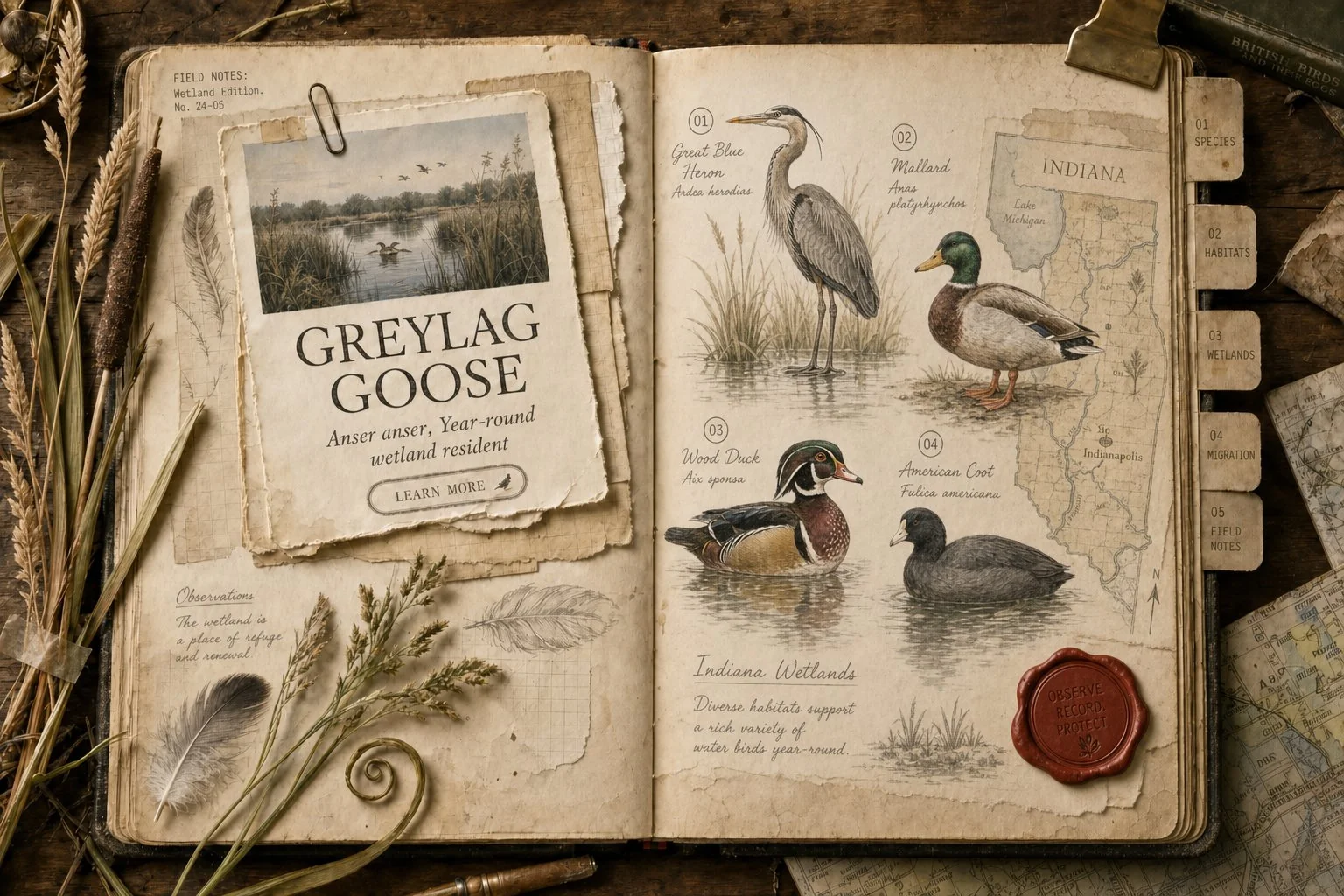
Indiana sits between the Atlantic and Mississippi flyways and hosts roughly 24 regularly-occurring water bird species, plus winter visitors from further north. Most are seeable at three refuges: Goose Pond Fish and Wildlife Area, Muscatatuck NWR, and the Lake Michigan dunes. Best season is October through April when migration peaks and winter waterfowl pile up.
The 24 species you'll see
Waders:
- Great Blue Heron
- Great Egret
- Green Heron
- Black-crowned Night-Heron
- Snowy Egret (rare, summer south)
Dabbling ducks:
- Mallard
- Wood Duck
- American Wigeon
- Northern Shoveler
- Gadwall
- Northern Pintail
- Blue-winged Teal
- Green-winged Teal
Diving ducks:
- Canvasback
- Redhead
- Ring-necked Duck
- Lesser Scaup
- Bufflehead
- Common Goldeneye
- Hooded Merganser
- Common Merganser
- Ruddy Duck
Other waterfowl:
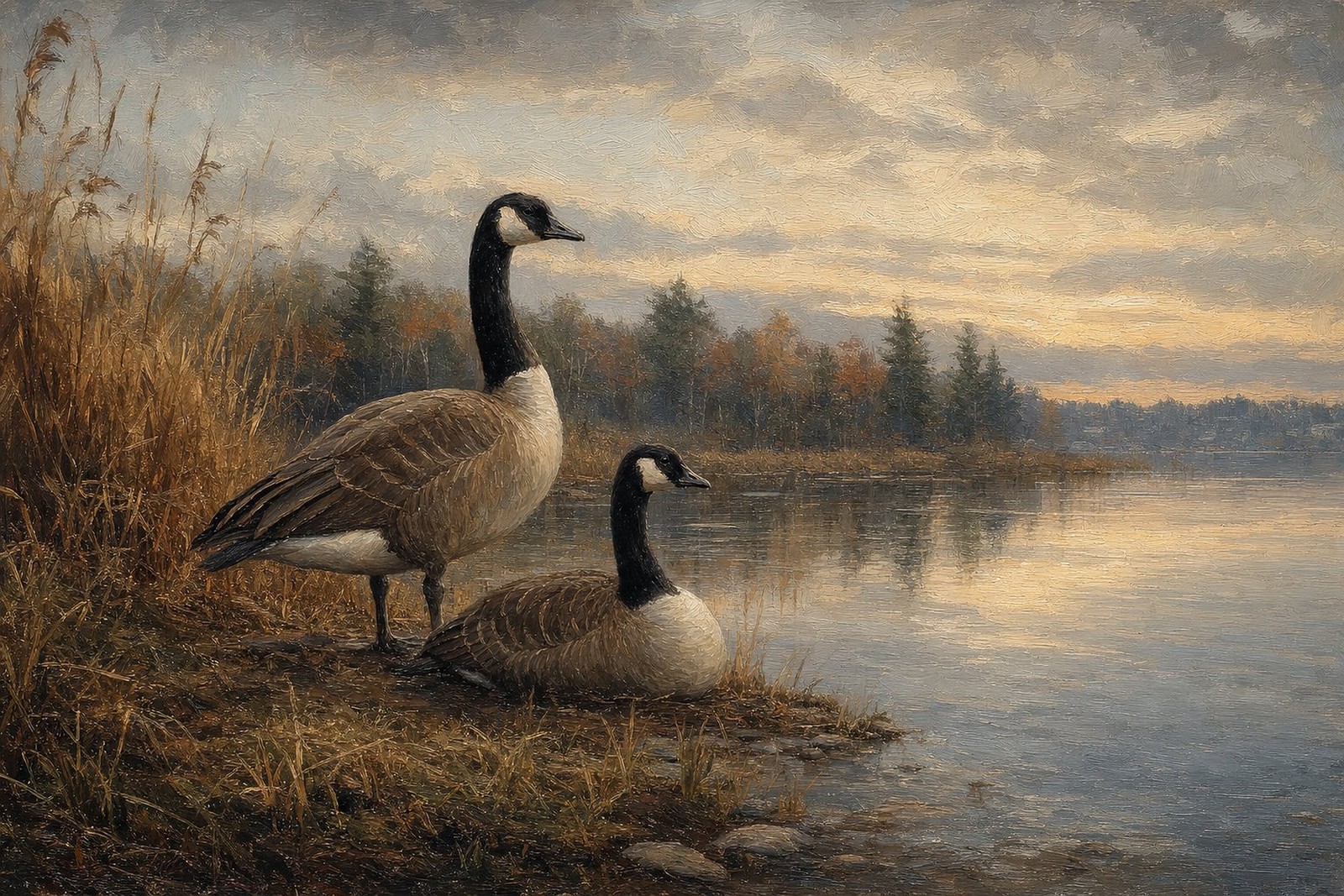
- Canada Goose
- Pied-billed Grebe
Where to see them
- Goose Pond Fish and Wildlife Area (southwest Indiana) - the state’s premier waterfowl site. October-March peaks at 20,000+ birds.
- Muscatatuck NWR (southern Indiana) - bottomland hardwood swamp; Wood Duck breeding strongholds.
- Indiana Dunes (Lake Michigan coast) - winter loons, scoters, occasional rare gulls.
- Patoka River NWR - waders and breeding Wood Ducks.
When to go
- October-November - peak migration, dabblers and waders concentrating.
- December-February - winter waterfowl on remaining open water.
- March - early returning breeders; Wood Ducks active on flooded forests.
- April-May - migration peak again; rare passage species.
- June-September - quieter; breeders only.
How to use this list
Most Indiana water birds break down by habitat:
- Open lake or pond - dabblers (Mallard, Wigeon), divers (Scaup, Ring-necked), Pied-billed Grebe.
- Forested swamp - Wood Duck, Hooded Merganser, Great Blue Heron, Green Heron.
- Marsh edge - Snowy Egret, Black-crowned Night-Heron, herons, teal.
- Open river - mergansers, Common Goldeneye in winter.
Identifying habitat first narrows the candidates.
Sibley Field Guide Birds of Eastern North America
For sorting Indiana's overlapping waterfowl.
Indiana's waterfowl species can be hard to sort at distance - Lesser Scaup vs Ring-necked Duck, Common vs Hooded Merganser. The Sibley East plates show every Eastern duck on comparison spreads, with key field marks highlighted.
- All Eastern water bird species at scale
- Hand-painted plates with key field marks
- Range maps and seasonal information
 Sibley · 2nd Ed.

As an Amazon Associate we earn from qualifying purchases.
The bottom line
Indiana is solid water-bird territory, especially October-March at Goose Pond. Three refuges cover most of the species list. Bring a Sibley and binoculars.
For comparison, see our notes on Florida, Minnesota, and South Carolina.