Field notes from a backyard flock, after the green kiwi flesh disappeared in under a minute.
Updated: 2026-05-20.
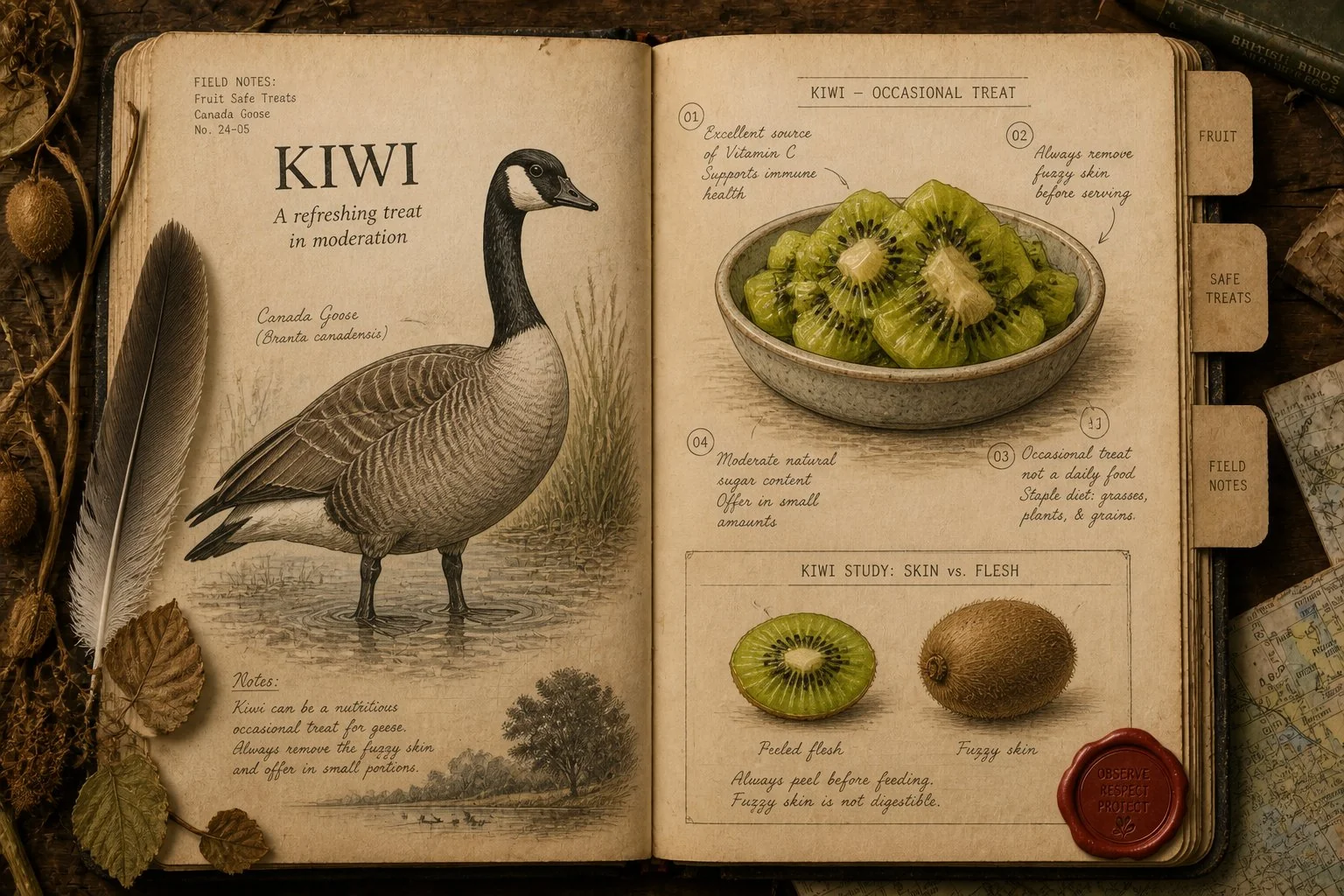
The short version: yes, geese can eat kiwi. The flesh is safe and unusually high in vitamin C - more than oranges per gram. Peel before serving (the fuzzy skin is technically edible but unappealing and contains higher oxalate levels than the flesh), dice the green flesh into pea-sized chunks, and offer 1-2 times a week as enrichment. Like all sweet fruit, it’s a treat - the sugar load means it shouldn’t be a daily food.
What's in kiwi
Kiwi (Actinidia deliciosa) is a small berry-like fruit with a fuzzy brown skin and bright green flesh. Nutritionally it’s a powerhouse for size. Per 100g, according to the USDA FoodData Central database:
- Vitamin C: 92.7 mg per 100g - higher than oranges (53 mg) per gram. The standout nutrient.
- Vitamin K: 40.3 mcg - useful for bone and clotting health.
- Vitamin E: 1.46 mg - antioxidant.
- Folate, vitamin B6 in modest amounts.
- Fibre: 3g per 100g - good gut support.
- Sugar: 9g per 100g - moderate, lower than mango or banana.
The vitamin C content is the standout. Birds synthesise their own vitamin C in the liver (unlike humans), so the dietary intake isn’t critical, but it does provide useful antioxidant support during stress (moulting, breeding, illness recovery).
Peel or leave the skin on?
The skin question is the most-asked. Two reasons to peel:
- Texture. Kiwi skin is fibrous and fuzzy. Geese strip it inefficiently with their bill plates and most of it ends up uneaten on the ground.
- Higher oxalate content. According to the Cleveland Clinic, kiwi skin contains a higher concentration of calcium oxalate crystals than the flesh. In humans these can irritate the mouth and throat in sensitive individuals; the same chemistry applies (in proportion) to birds.
The skin is not toxic - it’s just less palatable and less digestible. For geese, the workflow is simple: peel and bin the skin.
If you want to leave the skin on for ducklings or smaller bird species, mash the fruit first so the skin is broken up.
How to prepare it
- Wash the kiwi thoroughly. Pesticide residue on fuzzy fruit is real.
- Peel. A vegetable peeler works; the easier method is to slice off the ends and use a spoon to scoop the flesh out of the skin.
- Dice into pea-sized cubes (5-10 mm). The black seeds embedded in the flesh are tiny and safe - no need to remove.
- Offer in a shallow dish or scatter on the feeding tray.
Don’t:
- Serve frozen kiwi (too cold).
- Offer kiwi mixed with anything containing salt or sugar.
- Feed unripe (rock-hard) kiwi.
How much, how often
The standard fruit-treat guideline:
- Per goose per day: about a tablespoon of chopped flesh.
- Per week: kiwi 1-2 times. Rotate with other fruits.
- As percentage of diet: under 5% by weight.
A single kiwi shared between 3-4 geese is a reasonable treat meal.
What about goslings?
Goslings under 4 weeks can have kiwi but in mashed form, not chunks. Their crops aren’t yet able to handle pieces effectively. For the full duckling/gosling raising rules, see baby ducks - the principles apply across waterfowl.
The same caution about high-sugar fruits and digestive upset in young birds applies to kiwi as to mango. Small portions, mashed.
The wider safe-fruits picture
Kiwi fits into a cluster of safe fruits for backyard geese and ducks:
- Apple flesh (cored) - see can ducks eat apples.
- Banana (peeled) - see can ducks eat bananas.
- Blueberries - see can ducks eat blueberries.
- Cantaloupe (flesh only) - see can ducks eat cantaloupe.
- Cherries (pitted) - see can ducks eat cherries.
- Mango (peeled, pitted) - see can geese eat mango.
- Pears, peaches, plums (cored/pitted).
- Strawberries, raspberries, blackberries.
The fruits to avoid:
- Avocado - acutely toxic (persin). See can ducks eat avocado.
- Citrus in any amount - too acidic for waterfowl digestion.
- Bread, cake, sweet baked goods - not fruit, but worth avoiding. See can ducks eat bread.
What ripe vs unripe kiwi looks like
A ripe kiwi gives slightly to gentle pressure - similar firmness to a ripe peach. Unripe kiwi is hard, sour, and high in actinidin (a protein-digesting enzyme that can cause mouth irritation in humans and probably birds). Let kiwi ripen at room temperature for 3-5 days before feeding.
If your kiwi is overripe (soft, fermented, smelling sweet), bin it. Geese can develop mild alcohol toxicity from fermented fruit.
The base diet
Kiwi is enrichment. The everyday food remains grass, formulated waterfowl pellets, and cracked corn or oats.
CountryMax Cracked Corn 50 lb
The everyday calorie treat that pairs with seasonal fruit.
A 50 lb sack of cracked corn - the everyday calorie supplement for backyard geese. The calorie base; kiwi and other fruit treats sit on top as enrichment. Stores months in a sealed bin.
- 50 lb sack - a season's supply for a small flock
- Cracked to the right size for geese
- Pairs with seasonal fruit treats
- Stores stably in a sealed metal bin
 CountryMax · 50 lb

As an Amazon Associate we earn from qualifying purchases. Linked products are ones we actually use.
The bottom line
Yes to kiwi for geese - peeled, diced, moderate amounts, 1-2 times a week. The vitamin C content is the standout nutritional contribution. The skin is technically edible but practically wasted; bin it. Like all sweet fruit, treat-grade not staple.
Sources
- USDA FoodData Central: Raw Kiwi Nutritional Profile
- Cleveland Clinic: Can You Eat Kiwi Skin?
- Healthline: Kiwi Skin Nutrition and Safety