Field notes from a winter visit to Slimbridge, where a member of the public asked about the bag of peanuts they were about to share.
Updated: 2026-05-20.
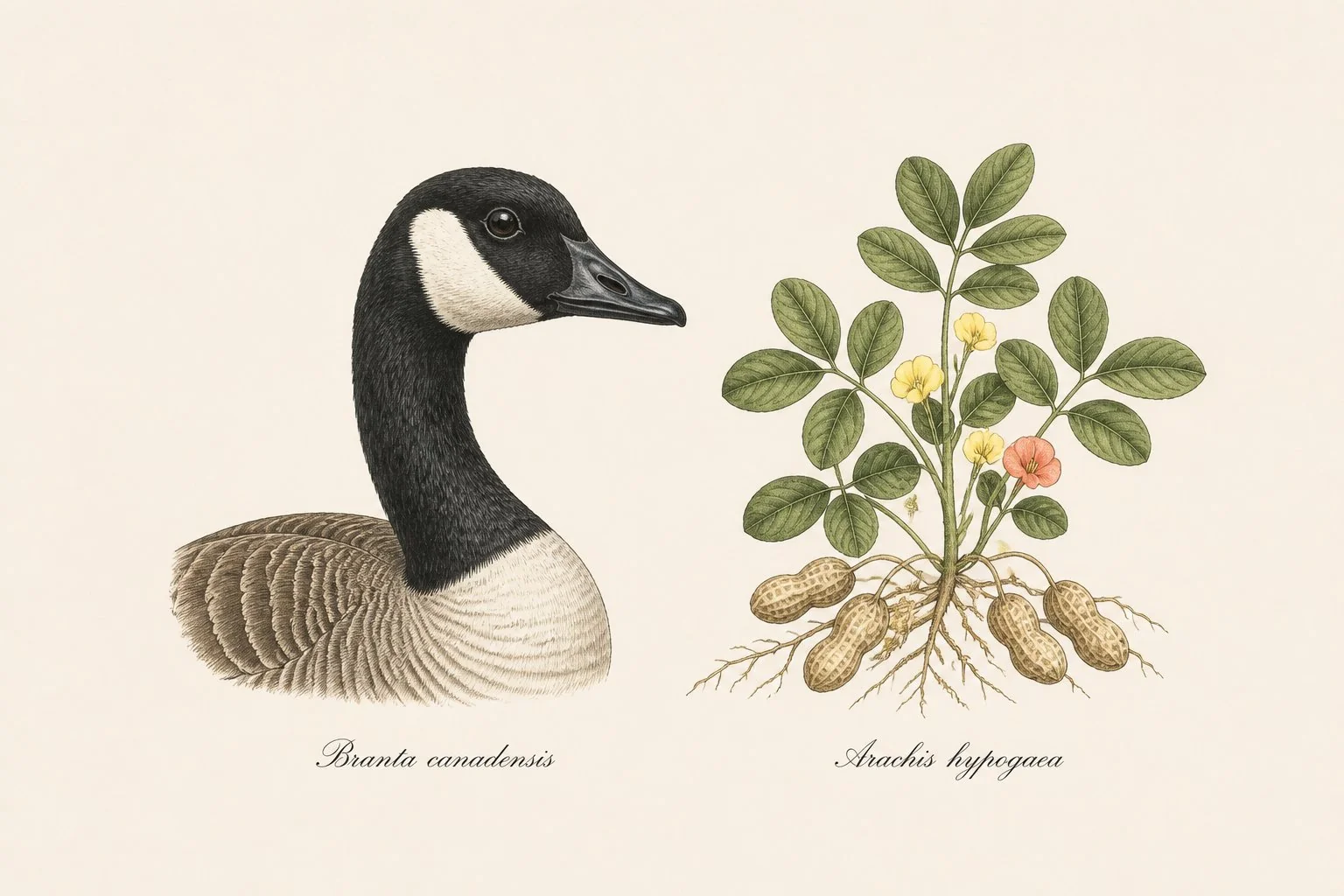
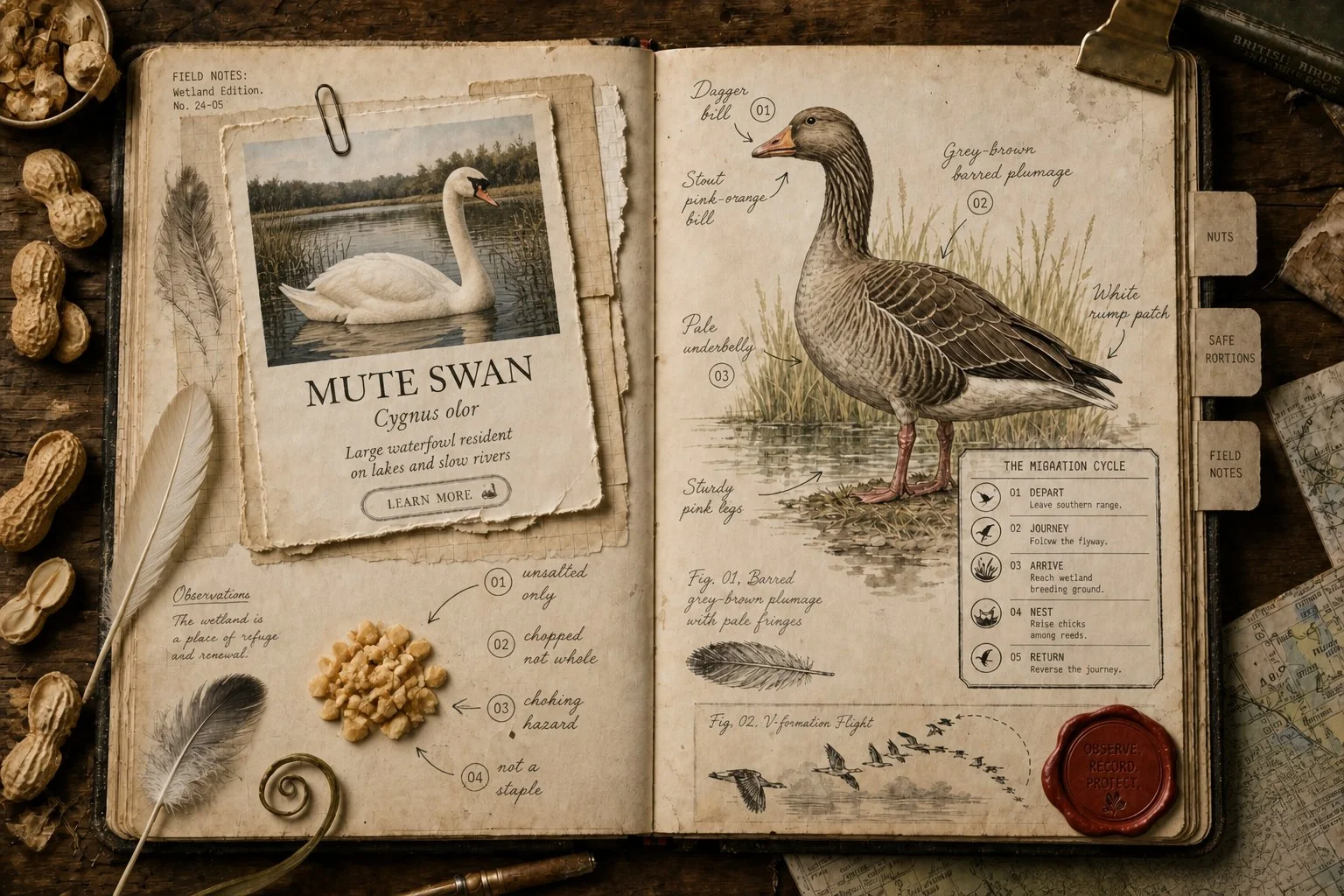
The short version: yes, swans can eat peanuts, but the rules are strict. Unsalted only - salted peanuts carry enough sodium to cause real kidney damage. Chopped or peanut pieces only - whole peanuts in shell are a choking risk for some swans. A tiny amount as an occasional treat is fine; daily peanut consumption causes obesity and fatty-liver issues. For park-pond visits, skip peanuts entirely; cracked corn is the right food.
The salt rule (the main one)
Standard supermarket peanuts are salted. Bird-feeding guides consistently flag salt as a major risk for waterfowl because their kidneys can’t process sodium loads efficiently. The Merck Veterinary Manual’s section on waterfowl nutrition notes that sodium toxicity is one of the more easily caused avian poisonings.
The general rule for waterfowl:
- Salted peanuts: never. The sodium content is genuinely harmful.
- Honey-roasted, flavoured, smoked peanuts: never. Sugar plus salt plus often added oils.
- Dry-roasted-no-salt peanuts: safe.
- Raw shelled peanuts: safe (and often the cheapest).
- Peanuts in shell: safe for adult swans; choking hazard for cygnets.
If you’re at a supermarket and the only peanuts available are salted, walk away from the snack aisle and find something else. The bag isn’t worth the risk.
The choking rule
Whole peanuts in shell are about 18mm wide - close to the gape limit for adult Mute Swans. Most adult swans can swallow them, but:
- Cygnets and juveniles struggle and risk choking.
- Older or weakened swans can struggle too.
- Swans that gulp food fast (typical when competing in a flock) risk impaction.
The safer option is peanut pieces - chopped peanuts sold for bird feeding, typically 3-5mm pieces. The RSPB’s guide on safe food for garden birds recommends peanut pieces specifically over whole peanuts for this reason - the wider safety advice applies to waterfowl too.
If you’re using whole peanuts, chop them yourself before offering.
How much, how often
The nut-treat guideline for swans:
- Per swan per day: about a tablespoon of chopped peanuts.
- Per week: 1-2 times. Rotate with other treats.
- As percentage of diet: under 5% by weight.
A small handful (40-60g) shared between 2-3 swans is a reasonable treat meal. More than that and you’re substituting high-fat treat for the herbivorous diet they evolved on.
What swans actually eat
Swans are predominantly herbivorous. According to Cornell Lab All About Birds, the Mute Swan’s diet is “submerged aquatic vegetation that they reach by tipping up” - sago pondweed, pondweed, wild celery, hornwort. Supplemented with grain in agricultural settings.
Peanuts, like all nuts, are calorie-dense and protein-rich relative to what swans evolved on. A peanut-heavy diet causes:
- Weight gain.
- Fatty-liver issues.
- Reduced muscle tone and flight readiness.
For the broader swan diet, see do swans eat fish and swan symbolism for the cultural side.
The wider treat list
If you want to treat swans at a backyard pond, the safer and more nutritionally appropriate options:
- Cracked corn - the everyday treat. See best food to feed ducks and geese.
- Thawed frozen peas - protein, low-fat, palatable.
- Plain rolled oats - calorie-dense, no allergens.
- Chopped leafy greens - kale, lettuce.
- Occasional safe fruit - apple flesh (cored), berries, melon.
The pattern: peanuts aren’t bad, they’re just not as good as the everyday alternatives.
For park-pond swans
Skip peanuts at a park pond. Even unsalted, peanuts attract rats to the bank as the dropped pieces sit overnight. They’re harder to disperse evenly than corn or oats. And they don’t fit the swan’s natural diet.
Bring cracked corn instead. See what can I feed ducks at the pond for the pondside framework.
And as always - never bread. See can swans eat bread for the case against.
The base diet
For backyard swans, peanuts are a once-a-fortnight treat at most. The everyday food is grain and aquatic vegetation.
CountryMax Cracked Corn 50 lb
The everyday treat that replaces nuts as the safer default.
A 50 lb sack of cracked corn - the everyday calorie supplement for backyard swans, ducks and geese. Lower fat, lower salt risk, and appropriate for the herbivorous diet swans evolved on. Replaces nuts as the safer everyday treat.
- 50 lb sack - a season's supply
- Cracked to the right size for swans and other waterfowl
- Low fat, no added salt - appropriate for herbivore waterfowl
- Stores stably in a sealed metal bin
 CountryMax · 50 lb

As an Amazon Associate we earn from qualifying purchases. Linked products are ones we actually use.
The bottom line
Yes, swans can eat peanuts - but only unsalted, only chopped, and only in small amounts as an occasional treat. The salted snack variety is genuinely harmful. Even the safe form is less appropriate than cracked corn for everyday feeding. For park-pond swans, skip peanuts entirely. For a backyard swan, treat them as the rare enrichment they should be.
Sources
- Cornell Lab All About Birds: Mute Swan Diet and Life History
- RSPB: Safe Food for Garden Birds
- Merck Veterinary Manual: Feeding Waterfowl
- Humbirdy: Peanut Butter and Peanuts for Birds