The wall above the fireplace is the most-looked-at surface in the house. Every seat in the room points at it, every guest’s eye lands on it within seconds of walking in, and it is also, reliably, the wall people get most wrong. The mistake is almost never the choice of picture. It is the size. A too-small piece floating over a mantel makes the whole room read as unfinished, no matter what the piece cost, and it is such a common error that fixing it is the single highest-return decorating move most homeowners have available.
The good news is that sizing art over a fireplace is close to arithmetic. There are two numbers, a height rule, and one honest question about heat. This guide covers all four, then makes the case for why a landscape-format print is the shape that mantels have always wanted.
The two-thirds rule
Art above a fireplace should span between two-thirds and three-quarters of the width of the mantel below it. Under two-thirds, the piece looks marooned; at or beyond the full width, it looks like it is sliding off. Everything else in this guide is refinement, but this is the rule that rescues the wall.
Run the numbers on your own mantel:
- A 4-foot mantel (48 inches) wants roughly 32 to 36 inches of art. A single 20x30 print, which spans two and a half feet before the frame and slightly more after it, lands exactly in that zone.
- A 5-foot mantel (60 inches) wants about 40 to 45 inches. One framed 20x30 sits at the minimum; a pair of 12x18 prints hung with a hand’s width between them fills the zone with more rhythm.
- A 6-foot mantel (72 inches) wants around 48 to 54 inches, which is pair territory: two 16x24 prints with a 4 to 6 inch gap between them span roughly four and a half feet and carry a wide chimney breast the way no affordable single piece can.
The same fractions apply to a fireplace without a mantel shelf: measure the width of the firebox surround and use two-thirds to three-quarters of that.
How high should art hang above a mantel?
Lower than instinct says. The standard gallery rule, centre of the artwork at 57 to 60 inches from the floor, does not apply above a fireplace because the mantel raises the base. Instead, hang the piece so its bottom edge sits 4 to 8 inches above the mantel shelf. Any lower and the frame visually crowds whatever stands on the mantel; much higher and the art divorces itself from the fireplace and starts belonging to the ceiling.
If you keep objects on the mantel, candlesticks, a clock, found things from outside, let the art overlap behind them slightly rather than clearing them entirely. The overlap layers the wall and connects art, shelf, and hearth into one composed unit, which is precisely the trick decorators use to make a mantel look accumulated rather than staged.
Is heat a problem for art above a fireplace?
An honest question that deserves an honest answer: usually no, occasionally yes, and the test is simple.
A mantel shelf exists partly to do this job. It projects into the room and deflects rising heat forward, away from the wall above, which is why generations of paintings have hung safely over working fireplaces. A gas insert or a fireplace with a proper lined flue typically leaves the chimney breast near room temperature.
The exception is a heavy-use wood burner with a shallow mantel, or no mantel at all. So run the test: after a full evening’s fire, put your palm flat on the wall where the art would hang. Comfortable is fine. Noticeably warm means heat and dry air will cycle against whatever hangs there, season after season, and that wall is better suited to a mirror or left bare, with the art moved to the flanking wall. No print, ours included, enjoys being slowly kiln-dried.
Soot is the lesser concern and mostly a maintenance one: a fireplace that draws properly sends its smoke up the flue, not up the wall.
Why landscape formats win over mantels
A mantel is a horizontal line. A firebox is a horizontal block. A landscape-format print repeats and reinforces those lines, which is why the combination reads as calm and inevitable, while a tall portrait-format piece fights the architecture, pulling the eye up the chimney breast and making low ceilings feel lower.
This is also where the 3:2 ratio specifically earns its place. It is wider relative to its height than the 4:3 and square formats that dominate mass-market art, so it covers mantel width without climbing the wall, exactly the proportions the two-thirds rule keeps asking for. Every print in our range is a 3:2 landscape, printed edge to edge with no mat, which means the full purchased width is image, and the image is doing the wall-covering work.
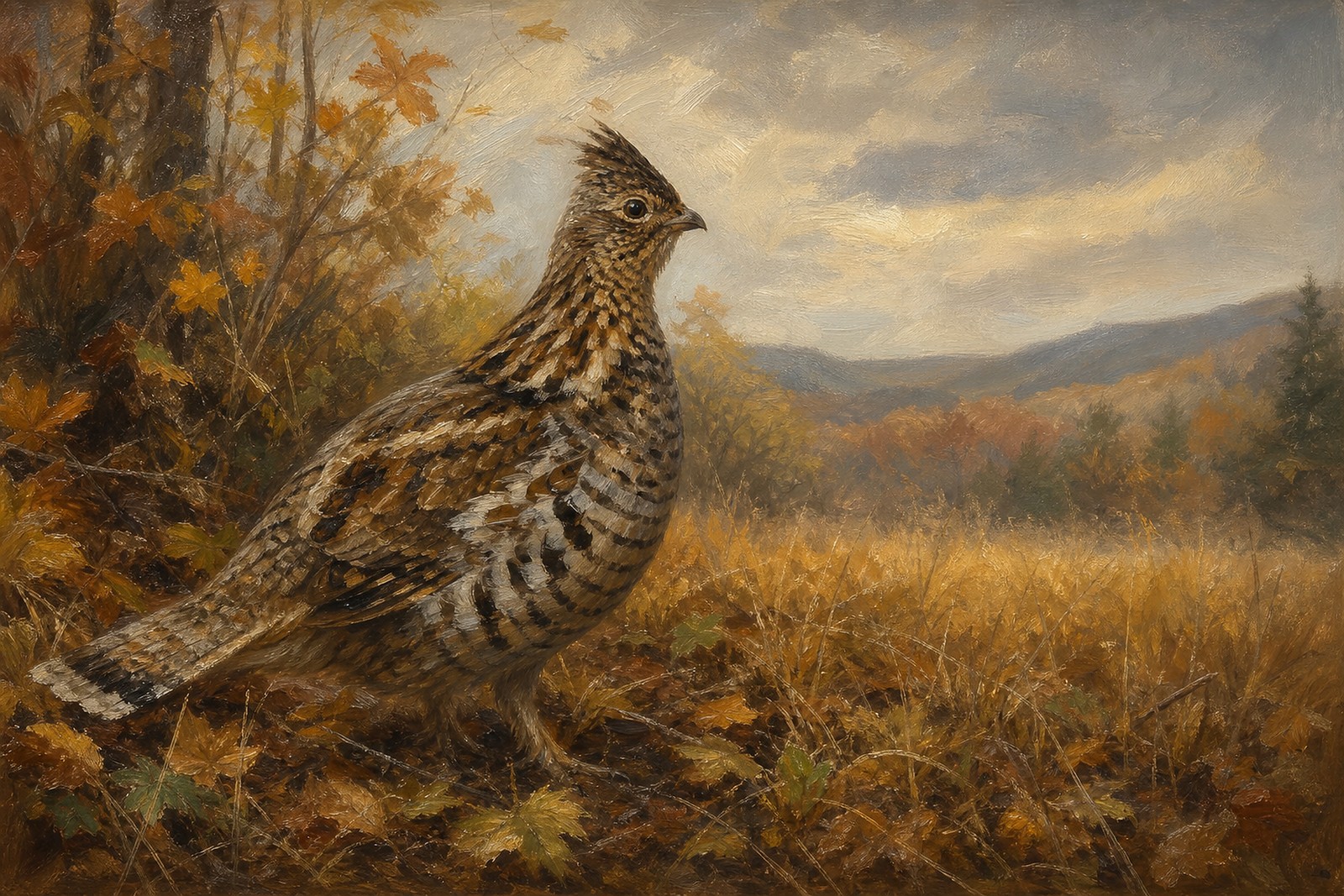
As for the subject, firelight decides it. The wall above a fireplace spends its evenings in warm, moving, low light, and art with a warm ground glows in it where cool minimal pieces go grey. An oil-painting-style print is at its best in exactly these conditions. Something like Ruffed Grouse in Golden Woodland Edge, all amber and umber to begin with, behaves in firelight the way the room wants it to: it deepens.
One large print, or a pair?
Both obey the two-thirds rule; they just suit different rooms.
One large print is the calm option, right for mantels up to about five feet and for rooms where the fireplace wall is already busy with stone or brick texture. A single framed 20x30 at $329, or $119 unframed if you have a frame waiting, is the whole solution.
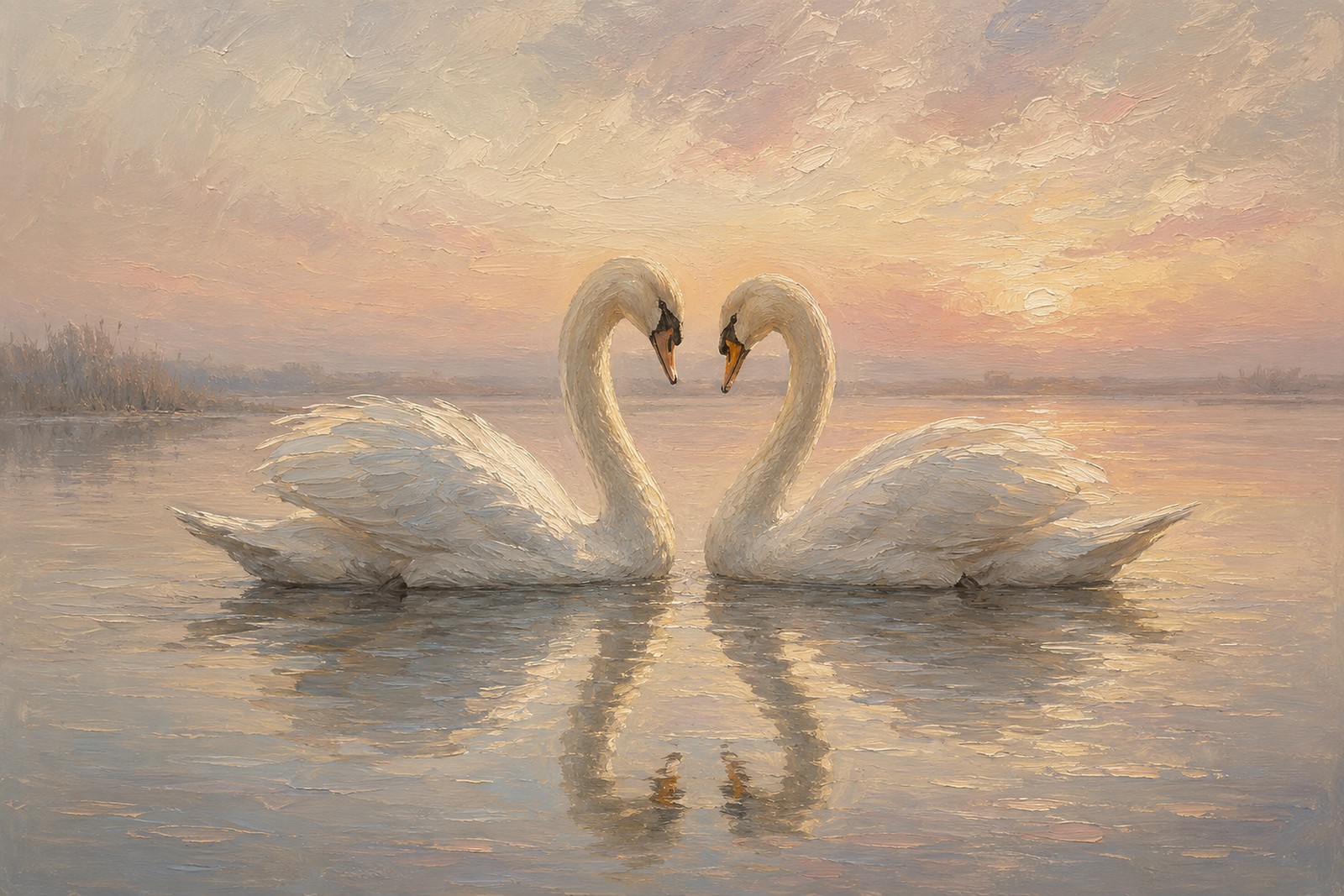
A pair suits wide mantels and symmetrical rooms, two 16x24s ($89 each unframed, $259 framed) or two 12x18s ($59 and $189) hung level, with a consistent gap of four to six inches. Matched subjects facing inward toward each other is the classic arrangement, the same symmetry logic covered in our heron print pairing guide, and it makes a chimney breast read formal with very little effort.
Whichever route you take, keep the frames identical in a pair, black, brown, or gold, matched to the room’s existing metals and wood rather than to the print.
Getting it done
Measure the mantel, take two-thirds of it, and pick the size that lands in the zone: 12x18, 16x24, or 20x30, from $59 unframed and $189 framed, each made to order, dispatched in 2 to 5 business days, and shipped free to the US, Canada, the UK, Europe, Australia, and New Zealand, with a 30-day replacement or refund if anything arrives damaged, defective, or wrong. The lodge collection’s landscape-format prints were built with exactly this wall in mind, wide skies, warm grounds, and proportions that fit over a mantel without a tape-measure argument.
Frequently asked questions
What size art goes above a fireplace?
Two-thirds to three-quarters of the mantel’s width. For a typical 4 to 5 foot mantel that means a single 20x30 landscape print; for a 6-foot mantel, a pair of 16x24 prints with a small gap between them. Undersizing is the mistake to avoid, art narrower than two-thirds of the mantel reads as an afterthought.
How far above the mantel should a picture hang?
Bottom edge 4 to 8 inches above the shelf. Ignore the usual 57-inch eye-level rule over a fireplace; the mantel resets the geometry. If objects stand on the mantel, let the frame overlap slightly behind them rather than clearing them completely.
Will heat from the fireplace damage a print?
Over most fireplaces, no: the mantel deflects rising heat and a lined flue keeps the chimney breast close to room temperature. Test after a long fire by putting your palm on the wall. If it feels noticeably warm rather than merely comfortable, hang a mirror there instead and move the art to a flanking wall.
Is landscape or portrait orientation better over a fireplace?
Landscape, almost without exception. It repeats the horizontal lines of the mantel and firebox, covers width the way the two-thirds rule demands, and keeps the eye at seated height instead of dragging it up the chimney breast. Portrait formats over mantels tend to make ceilings feel lower.