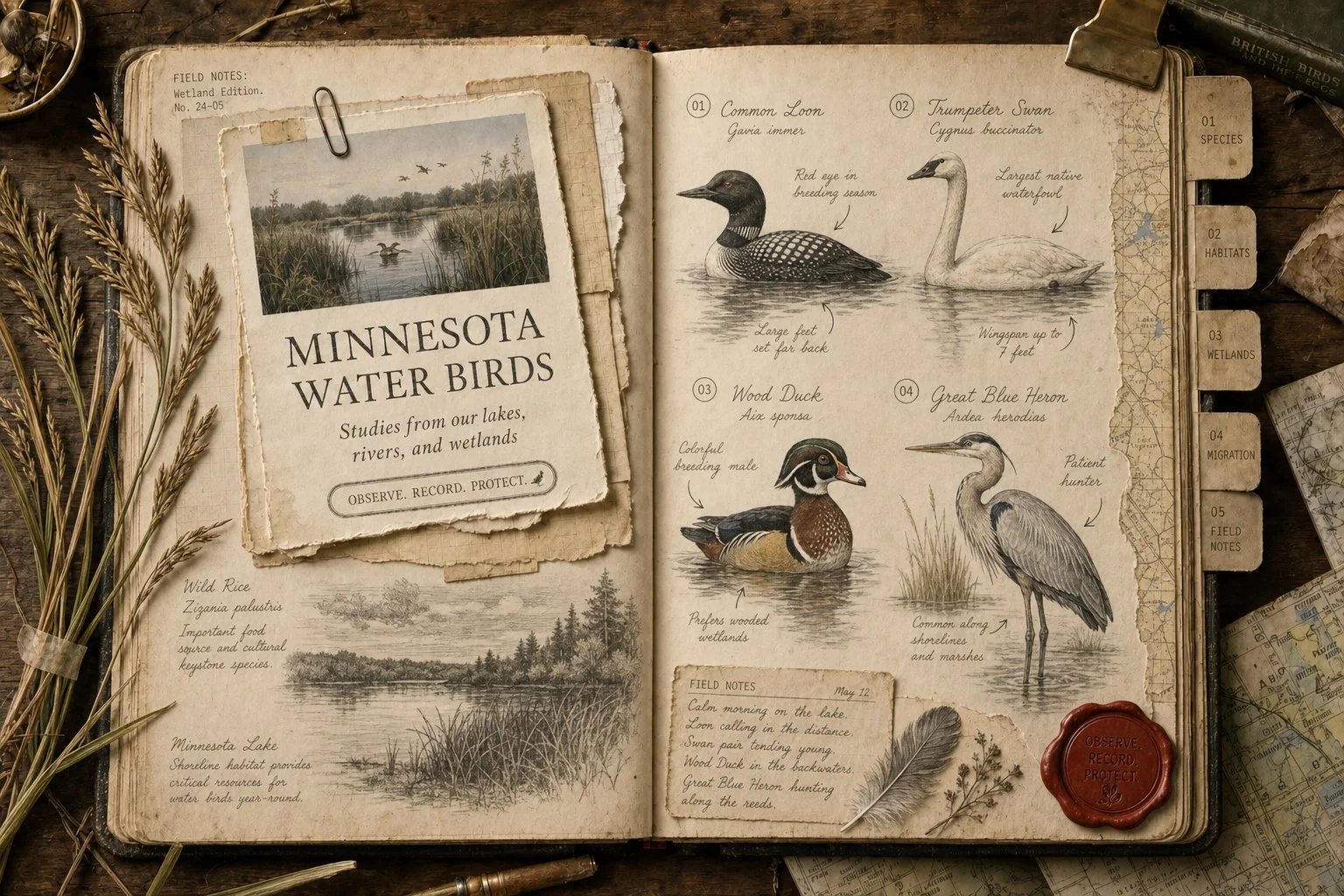
Wetlands are among the most threatened habitats on earth, and their birds with them. These dispatches cover the losses and the recoveries: what endangers a species, what has brought some back, and the people doing the slow work of keeping wetlands wet.
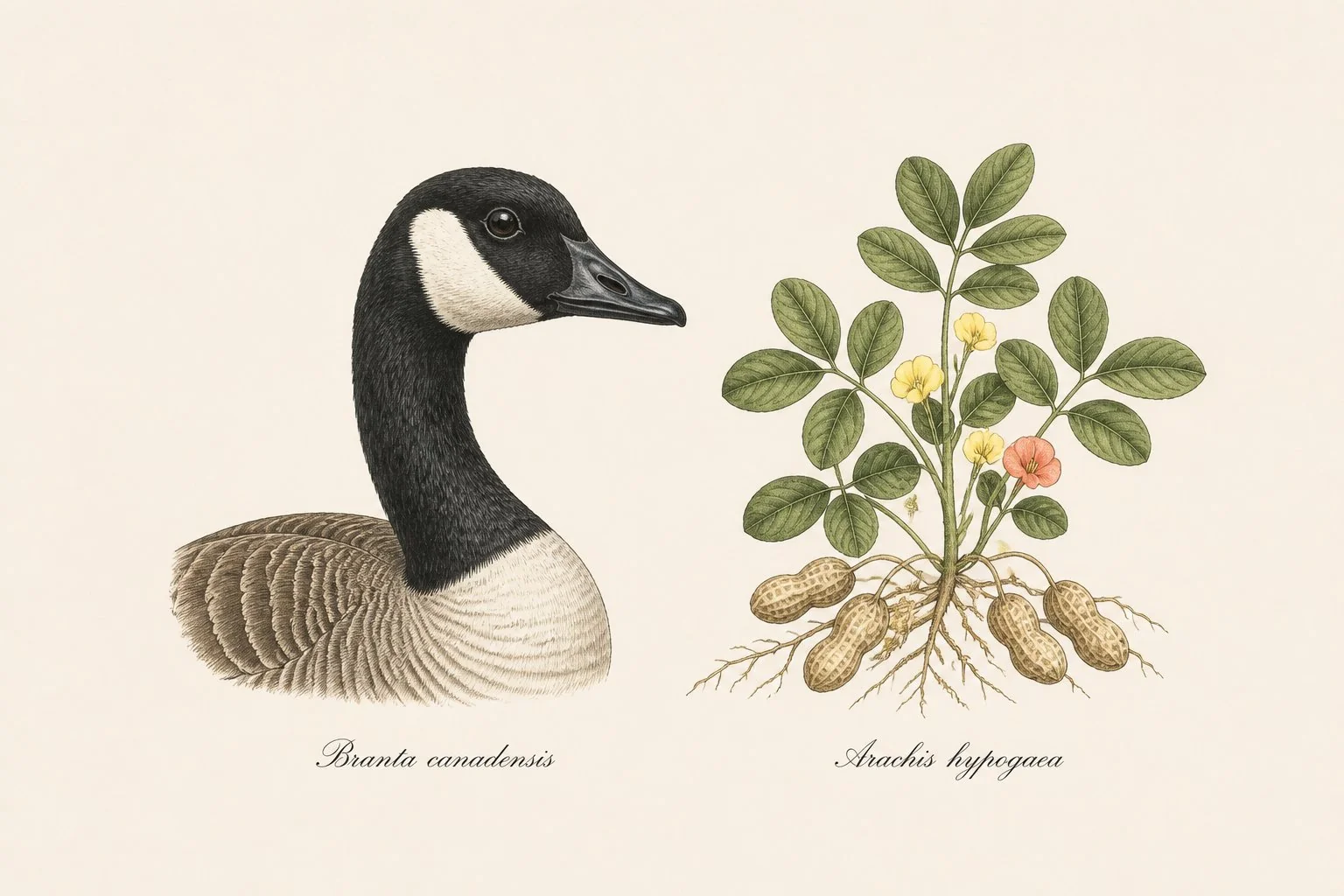
Geese can safely eat raw unsalted nuts in small quantities. Peanuts, almonds, walnuts and pecans are all fine when chopped fine and offered as treats. Salted, smoked, or flavoured nuts are not. Bitter almonds and macadamias should be avoided entirely.
Geese have better low-light vision than humans but aren't truly nocturnal. They're crepuscular - active at dawn and dusk - and migrate at night using a combination of magnetic, celestial and visual cues. In genuine darkness they roost on water and rely on hearing for threat detection.
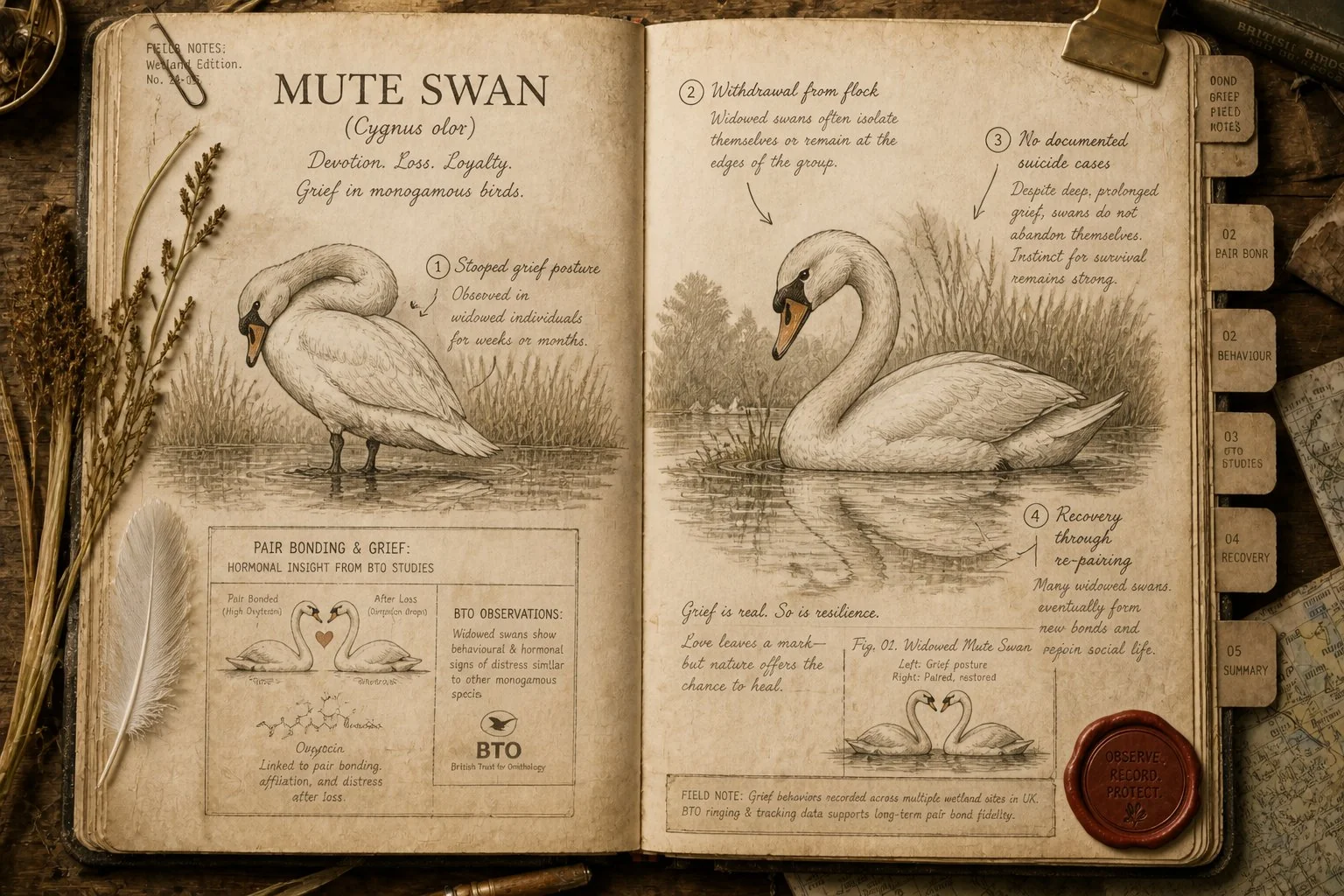
Swans don't take their own lives - the folklore that they do is romantic projection. But the RSPB confirms genuine grieving behaviour after a mate dies, and weakened older swans can decline and die from grief-related stress. The 'broken heart' story is half-true.
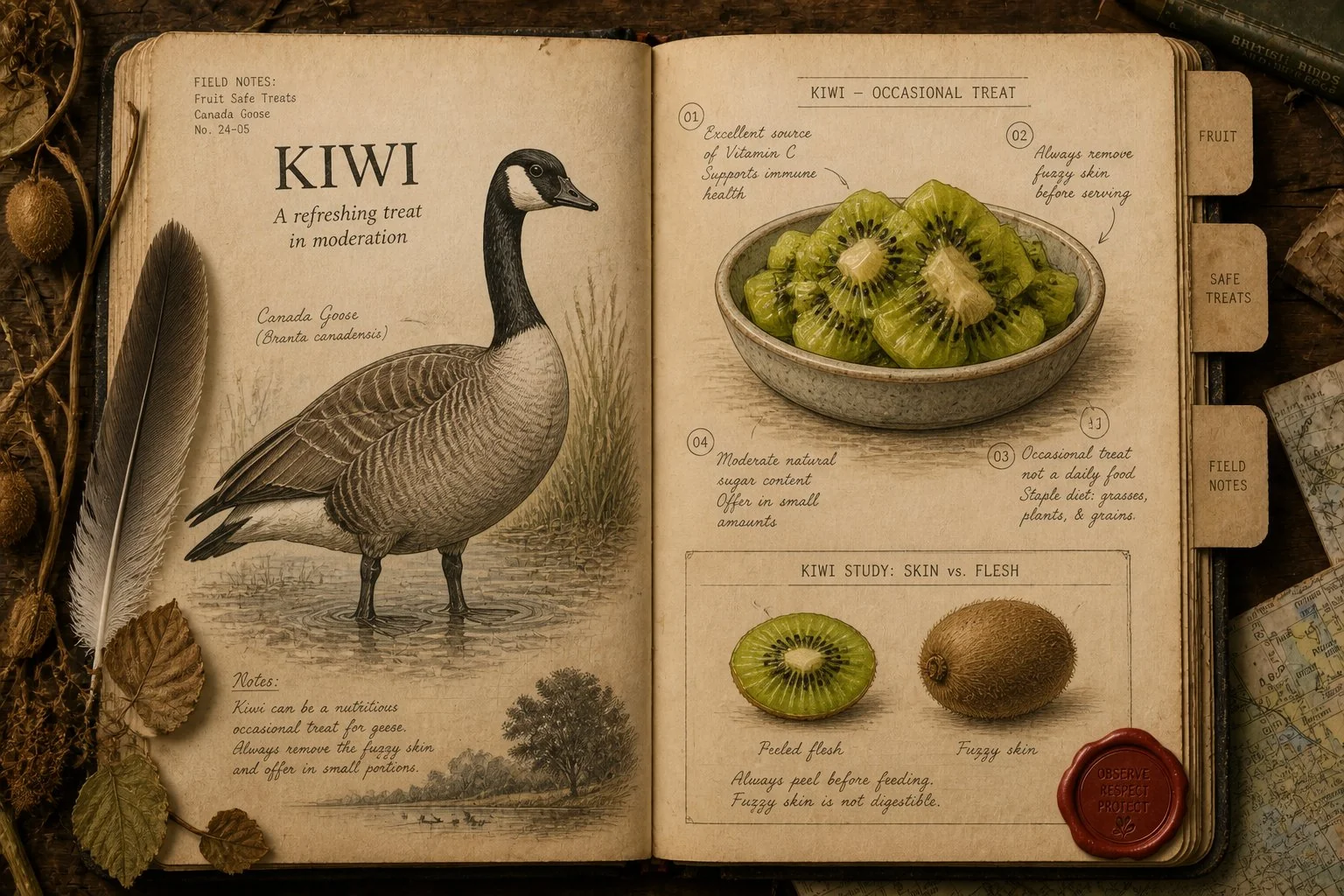
Kiwi flesh is safe for geese and high in vitamin C. The fuzzy skin and the calcium-oxalate content are minor concerns - peel it, dice it, treat as an occasional fruit, no more than 1-2 times a week.
Geese can safely eat ripe mango flesh in moderation. The pit contains amygdalin (cyanogenic, like apple seeds and cherry pits) and the skin contains urushiol - both should be removed. Chop into pea-sized pieces; treat as an occasional fruit treat, not a staple.
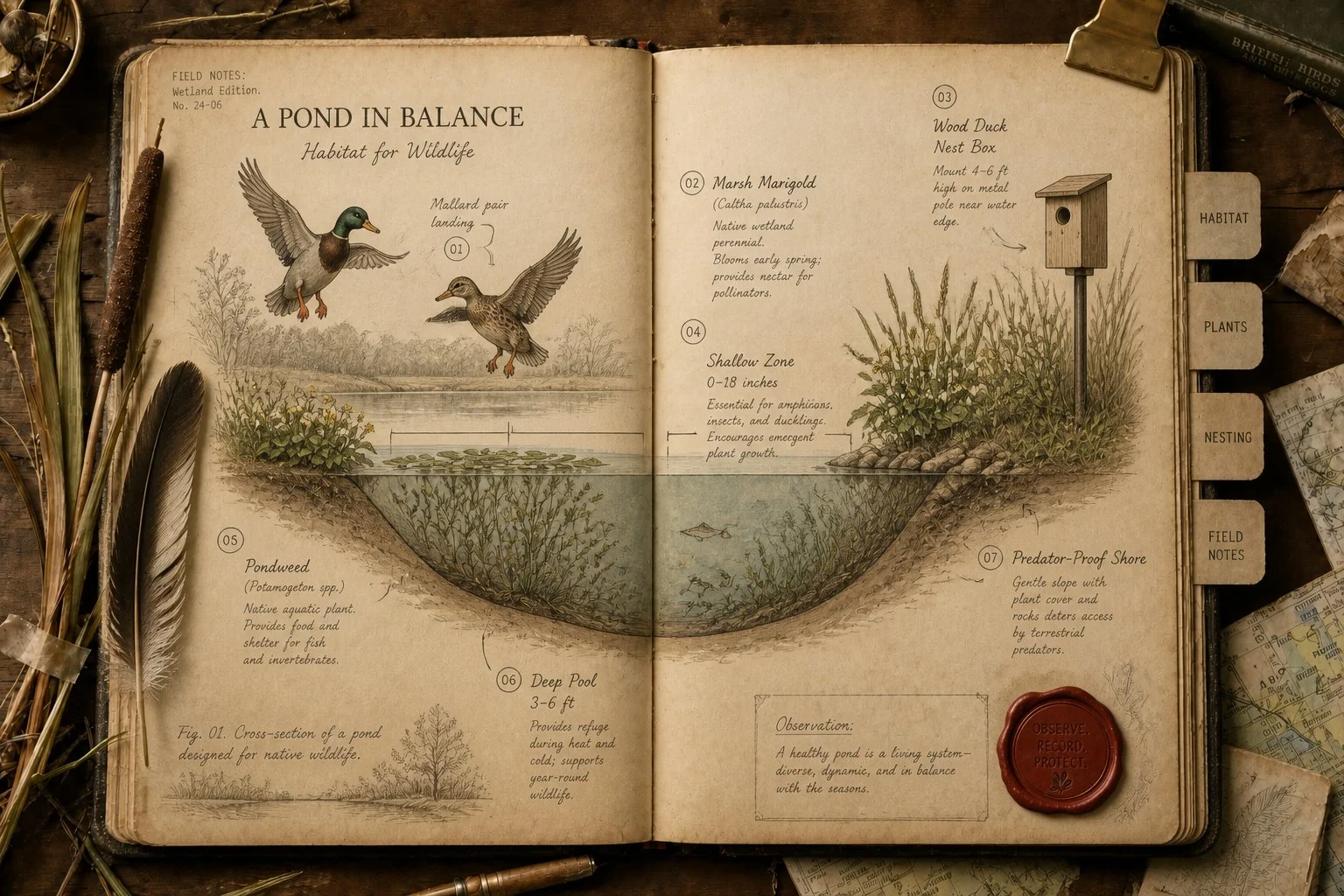
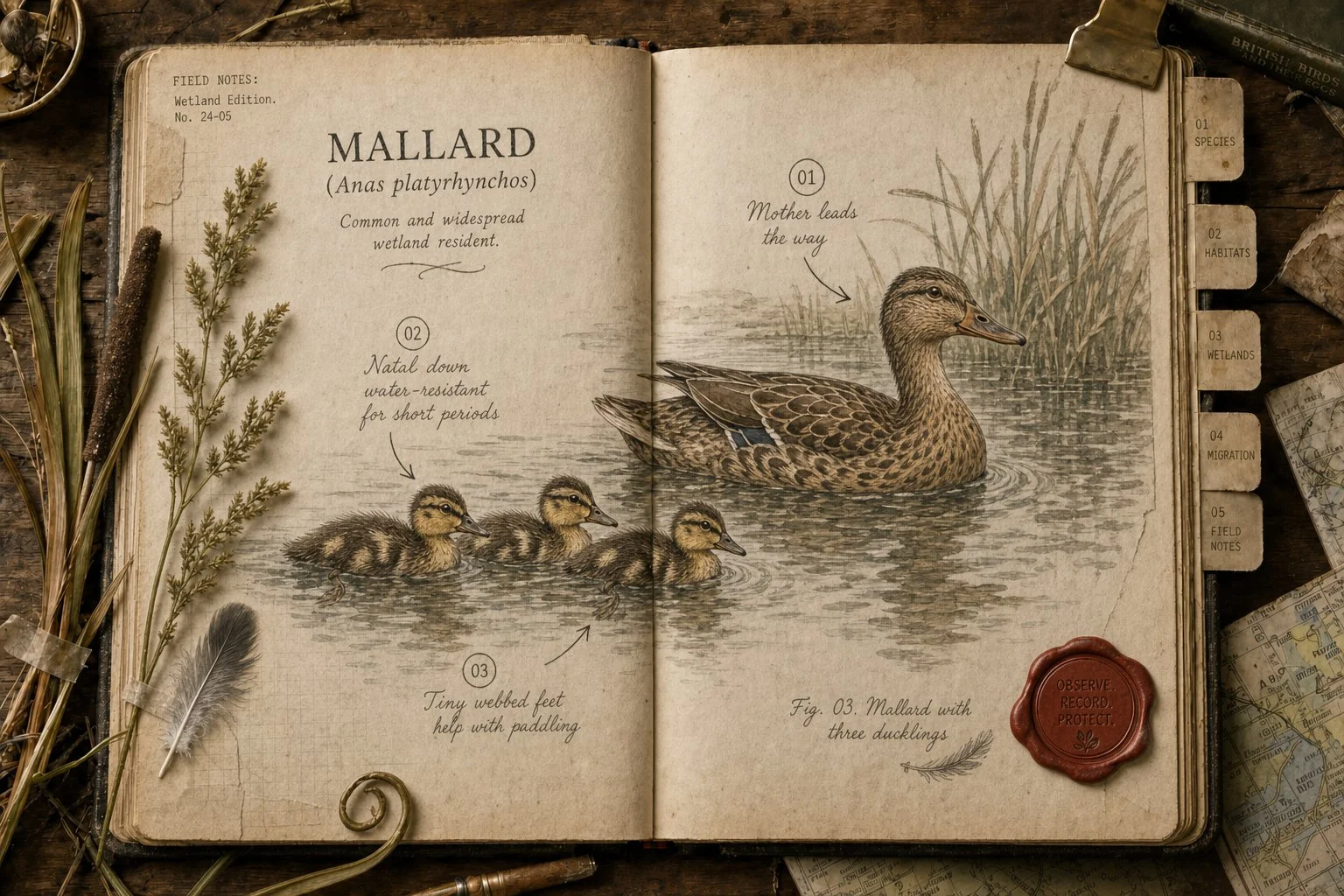
Wild ducks need four things: shallow margins for dabbling, submerged food plants, predator-proof cover, and nest cavities. Get those four into a one-acre pond and you'll have Mallards, Wood Ducks, and Hooded Mergansers within a single season.
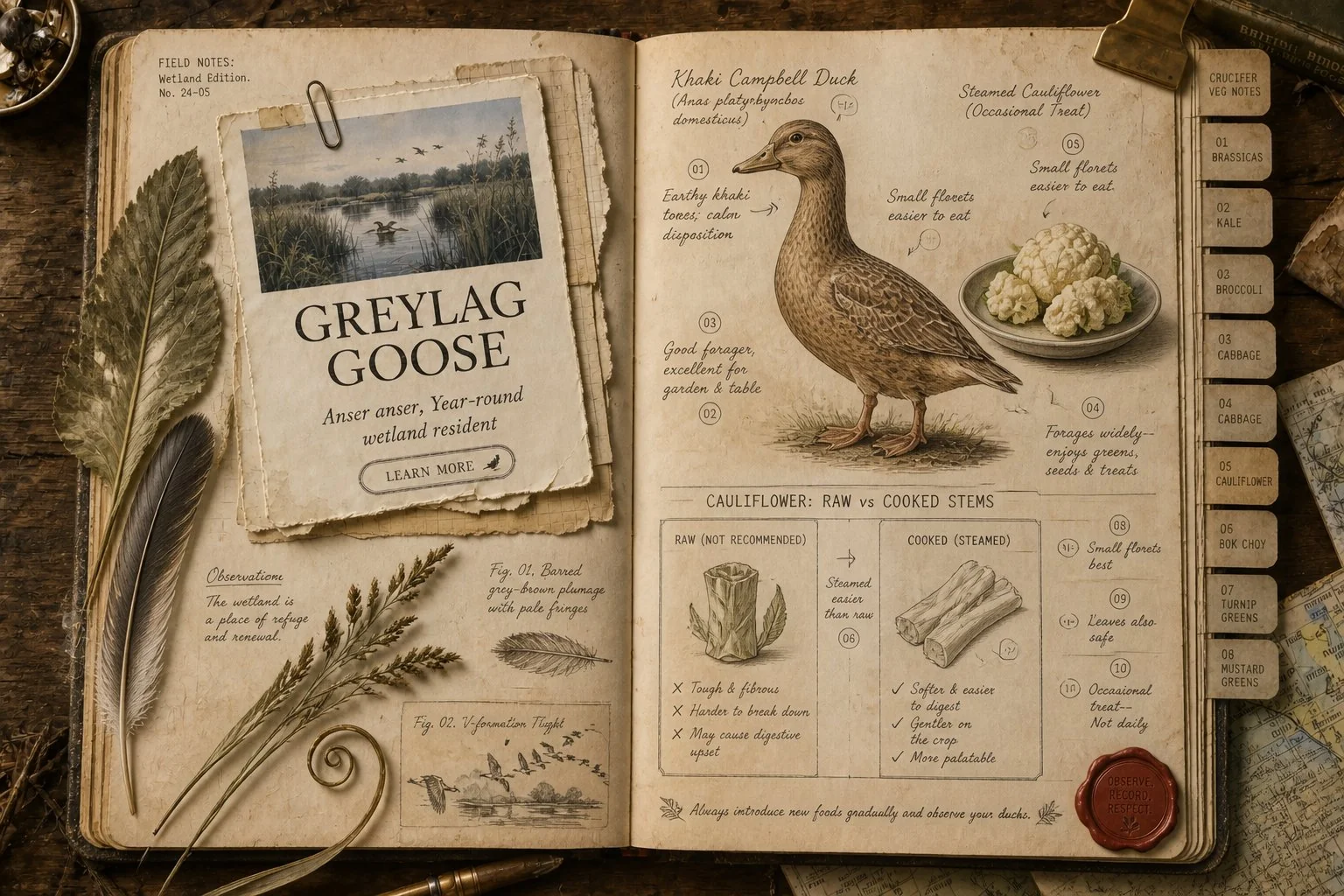
Cauliflower is safe for ducks - florets, stems, and the outer leaves are all edible. Steamed briefly is easier to digest than raw. As with all brassicas, feed in moderation to avoid loose droppings. The outer leaves alone are a useful free treat from kitchen prep.
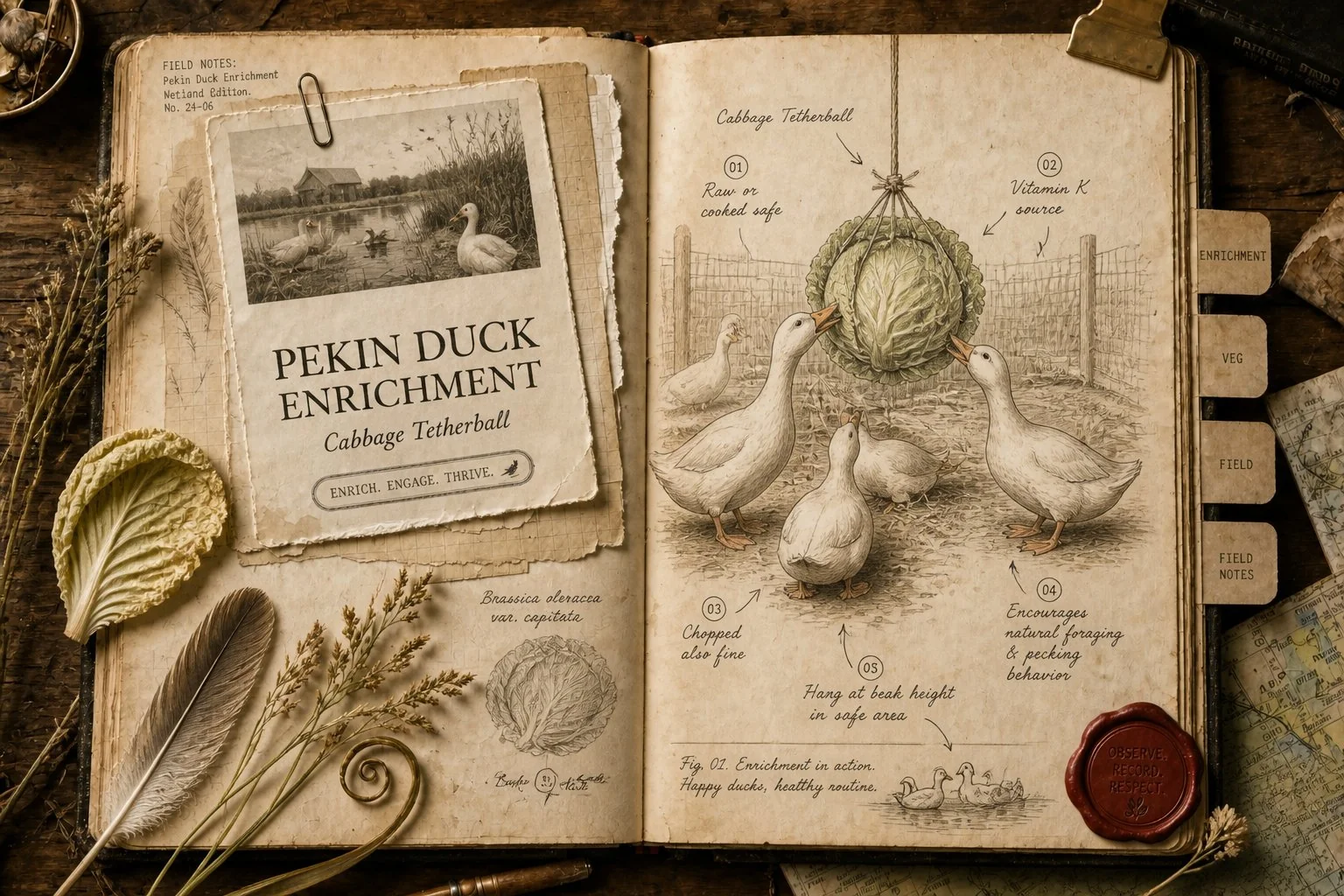
Cabbage is safe and excellent for ducks - raw or cooked, chopped or whole (hung on a string as a tetherball game). Green, red, savoy, all fine. The single best winter enrichment for a confined flock.
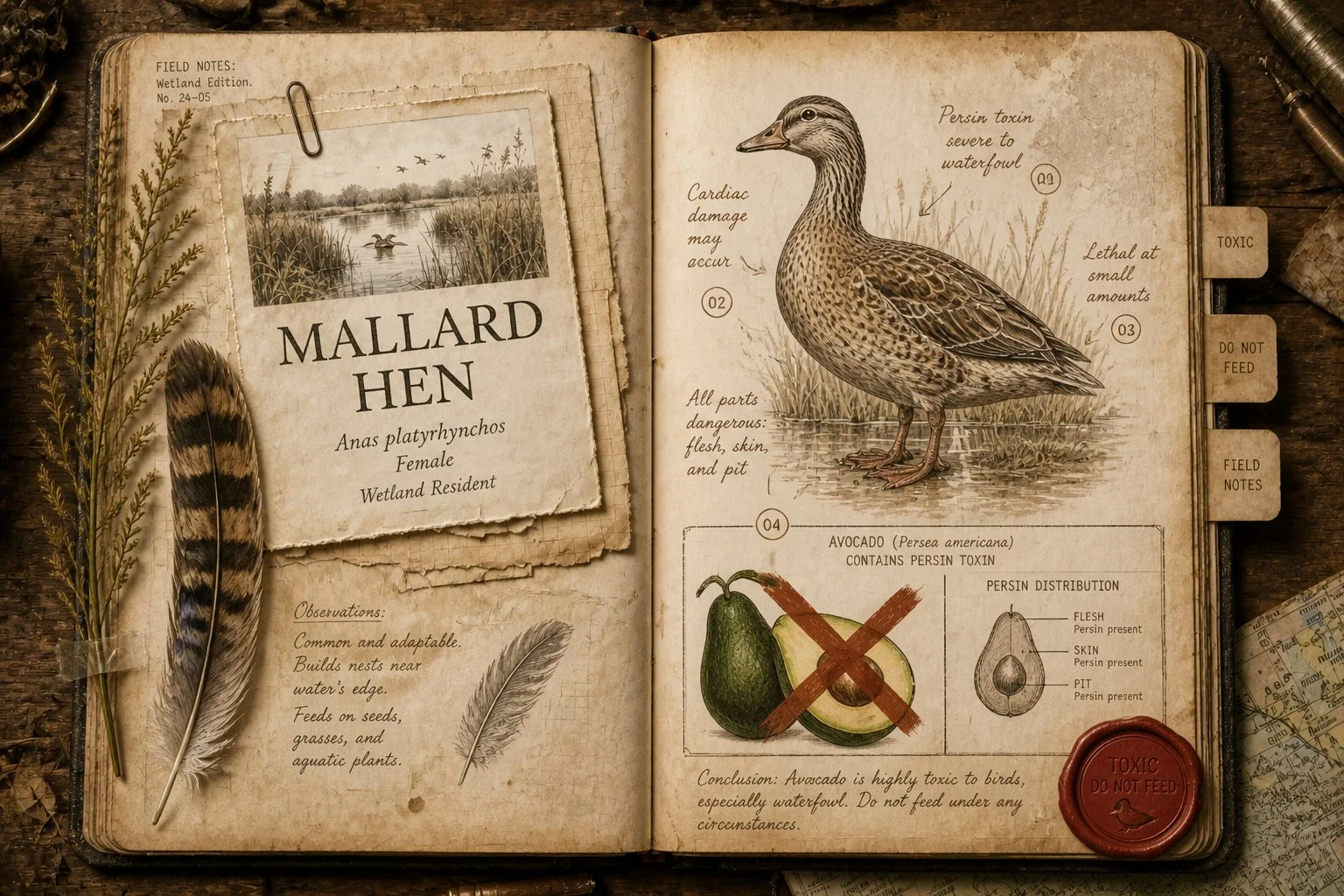
Avocado contains persin, a fungicidal toxin that damages avian heart muscle. All parts (flesh, skin, pit, leaves) carry it. Documented bird deaths come from amounts as small as a teaspoon. There is no safe quantity for any duck.
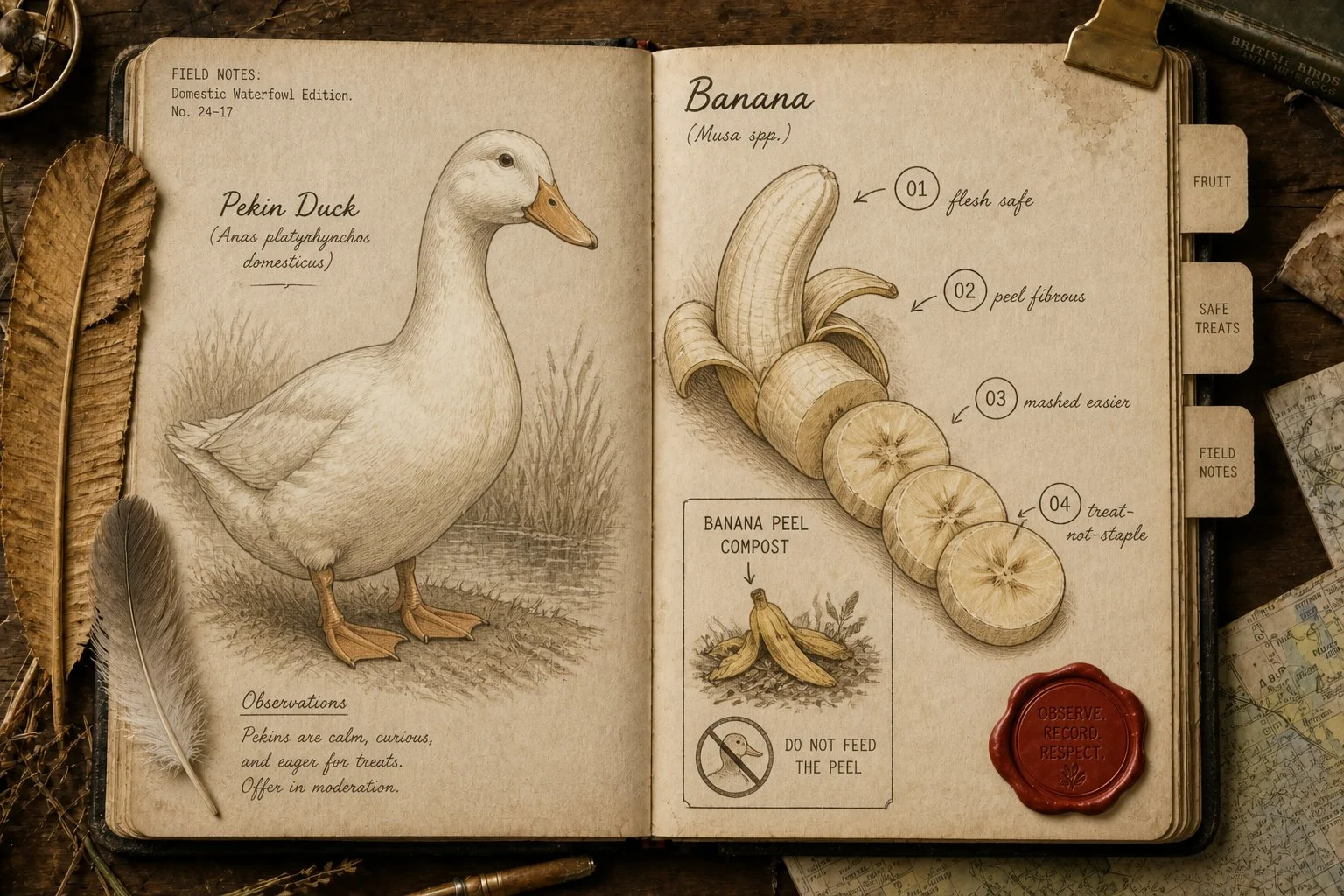
Banana flesh is safe and palatable for ducks. The peel is technically safe but stringy and fibrous - most ducks won't eat it. Mash or chop into small pieces, offer as a treat 1-2 times a week, and skip if your ducks ignore it.
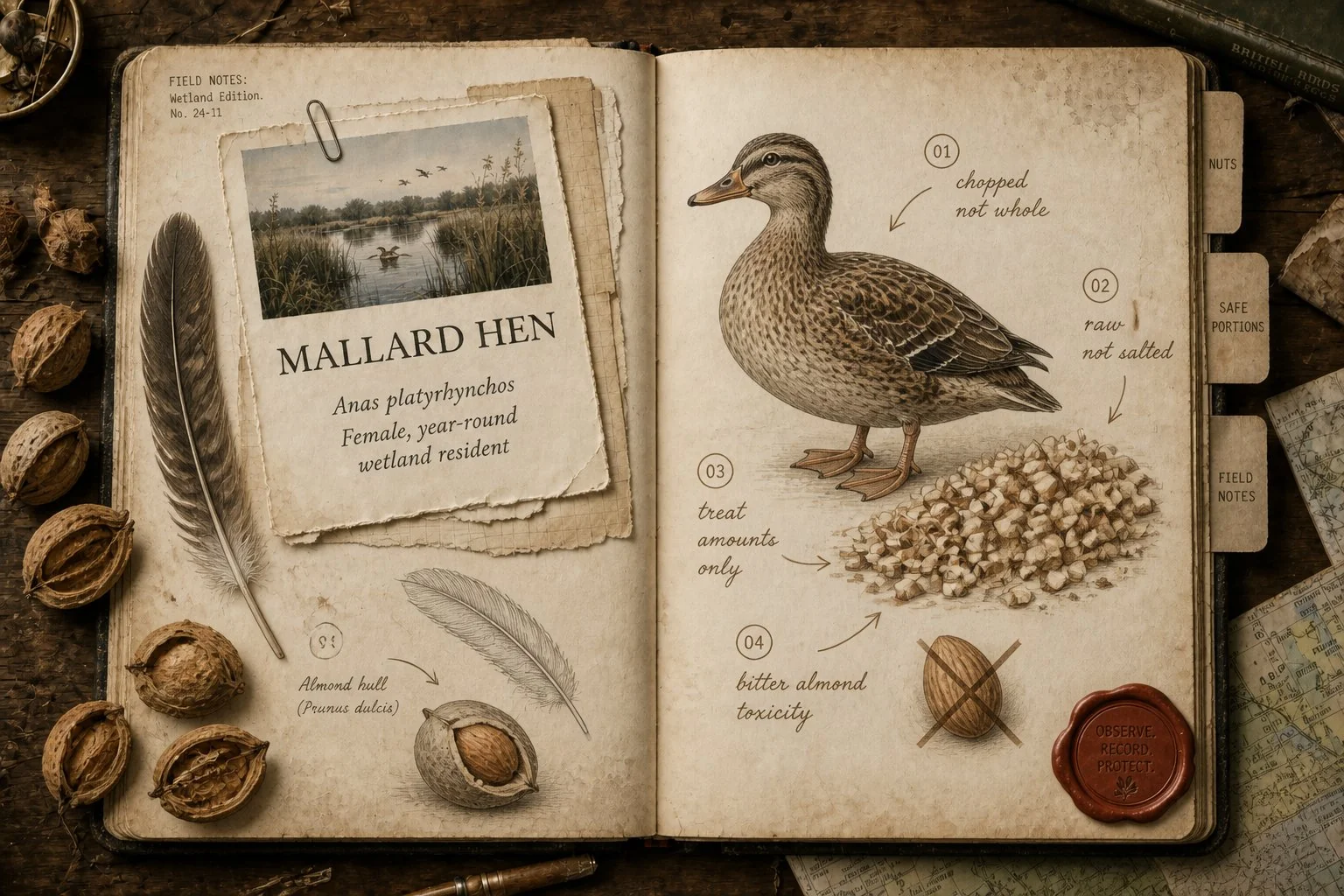
Ducks can eat almonds in small amounts but the rules are stricter than most fruit and veg. They must be raw, unsalted, chopped fine, and a treat not a staple. Bitter almonds are toxic. Here's the safe-feeding breakdown.
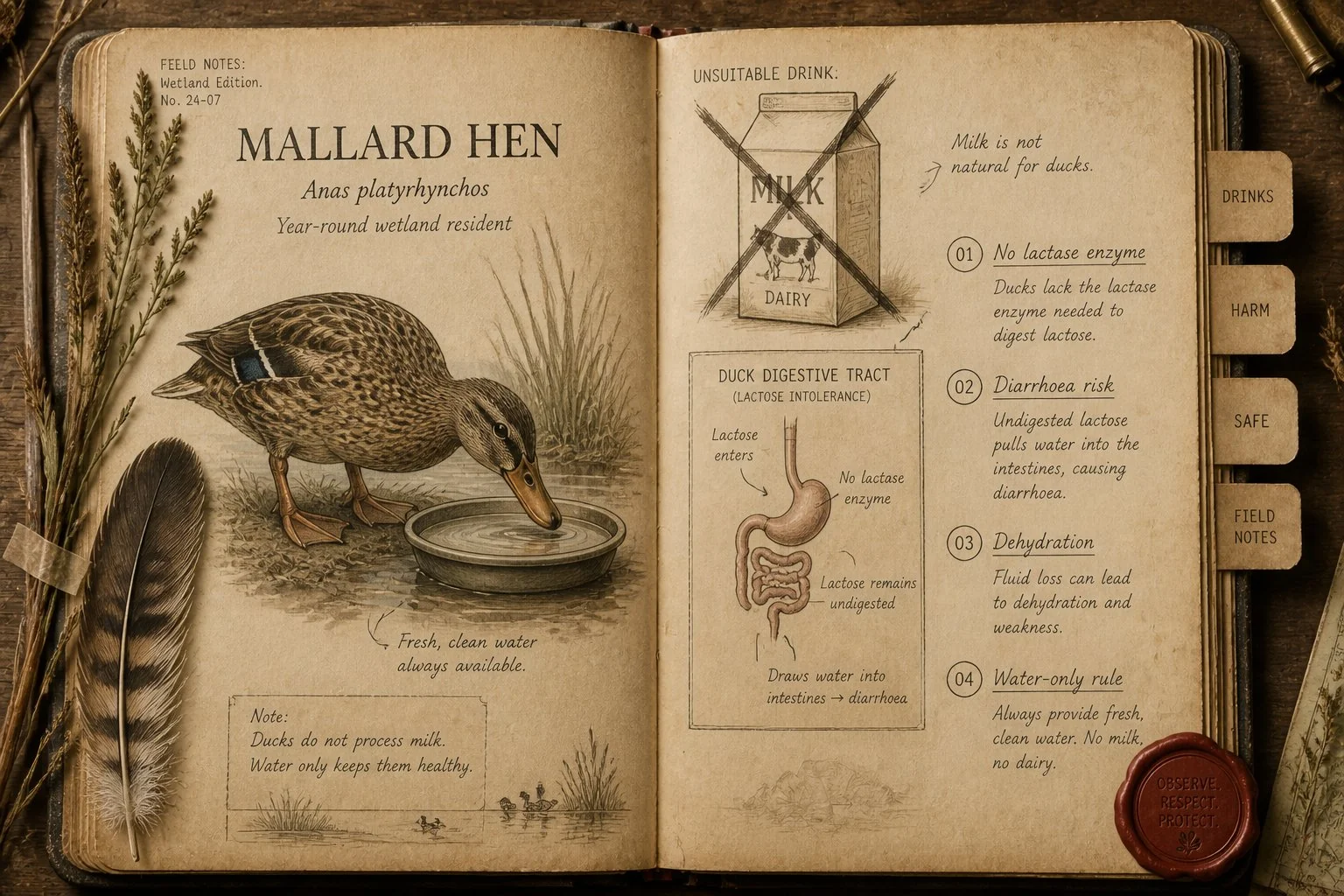
Ducks have no lactase enzyme. Milk passes through them undigested and causes diarrhoea, which in turn causes dehydration. A duck given milk instead of water can decline quickly. Stick to plain fresh water - the only drink ducks should ever get.
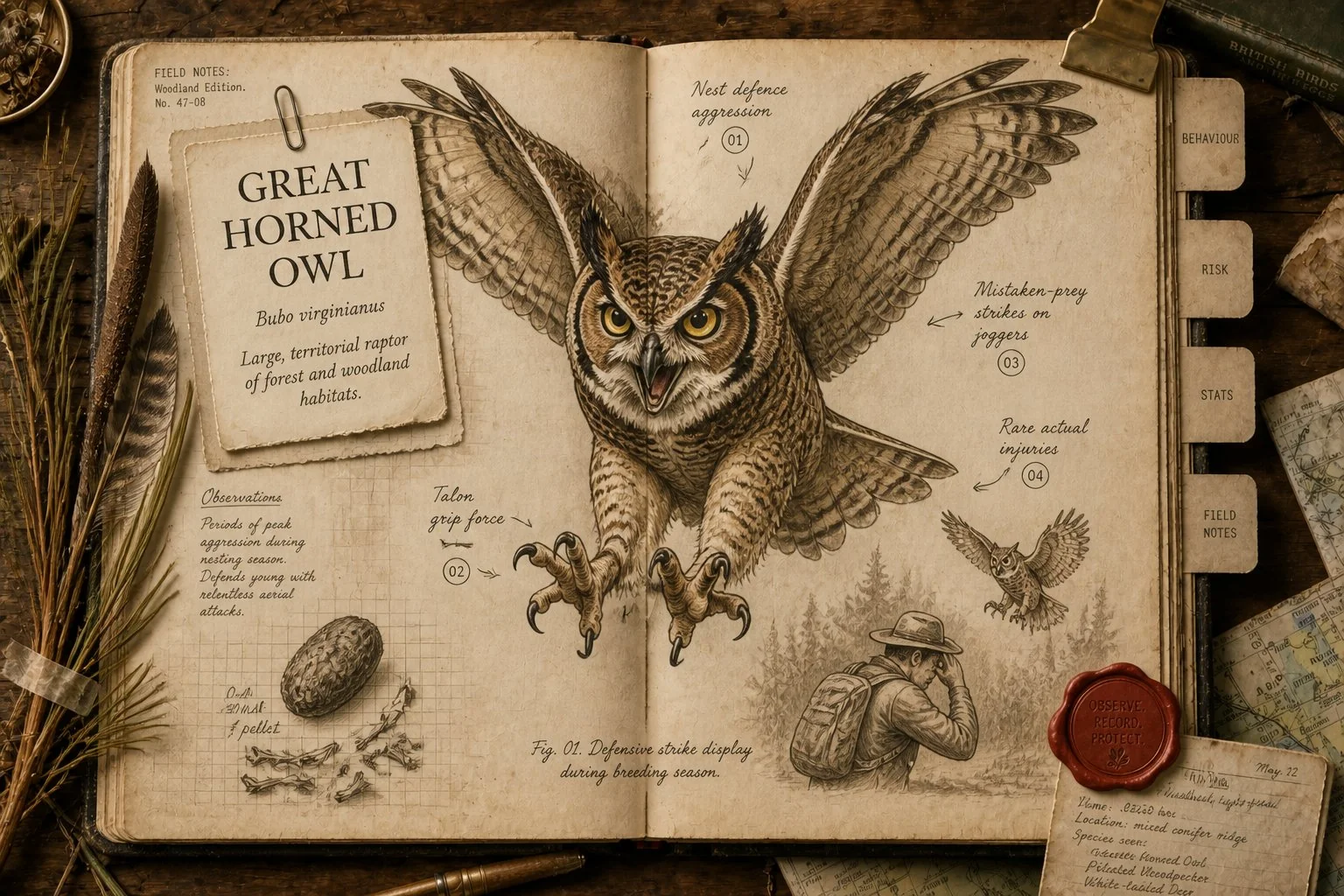
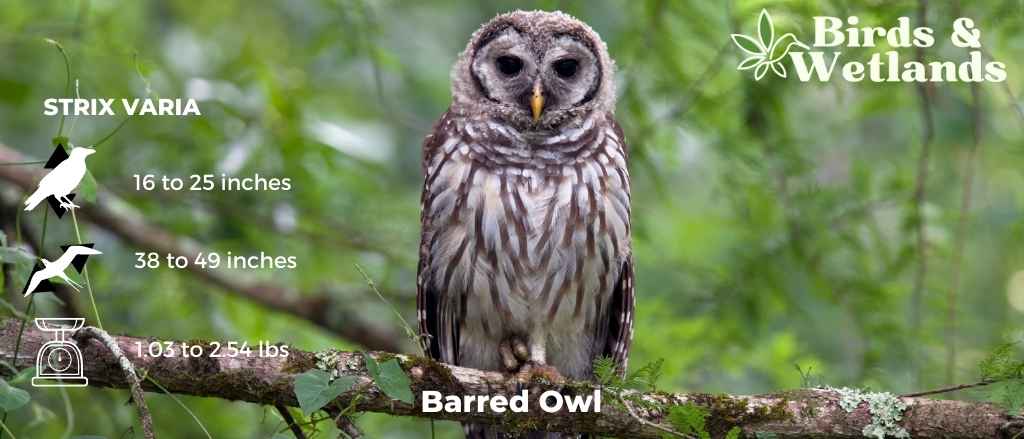
Owls almost never attack humans, but when they do it's almost always nest defence by Great Horned, Barred or Snowy Owls. Here are the species that account for the documented incidents, the locations where joggers get struck, and how to avoid being on the wrong end of an angry parent.
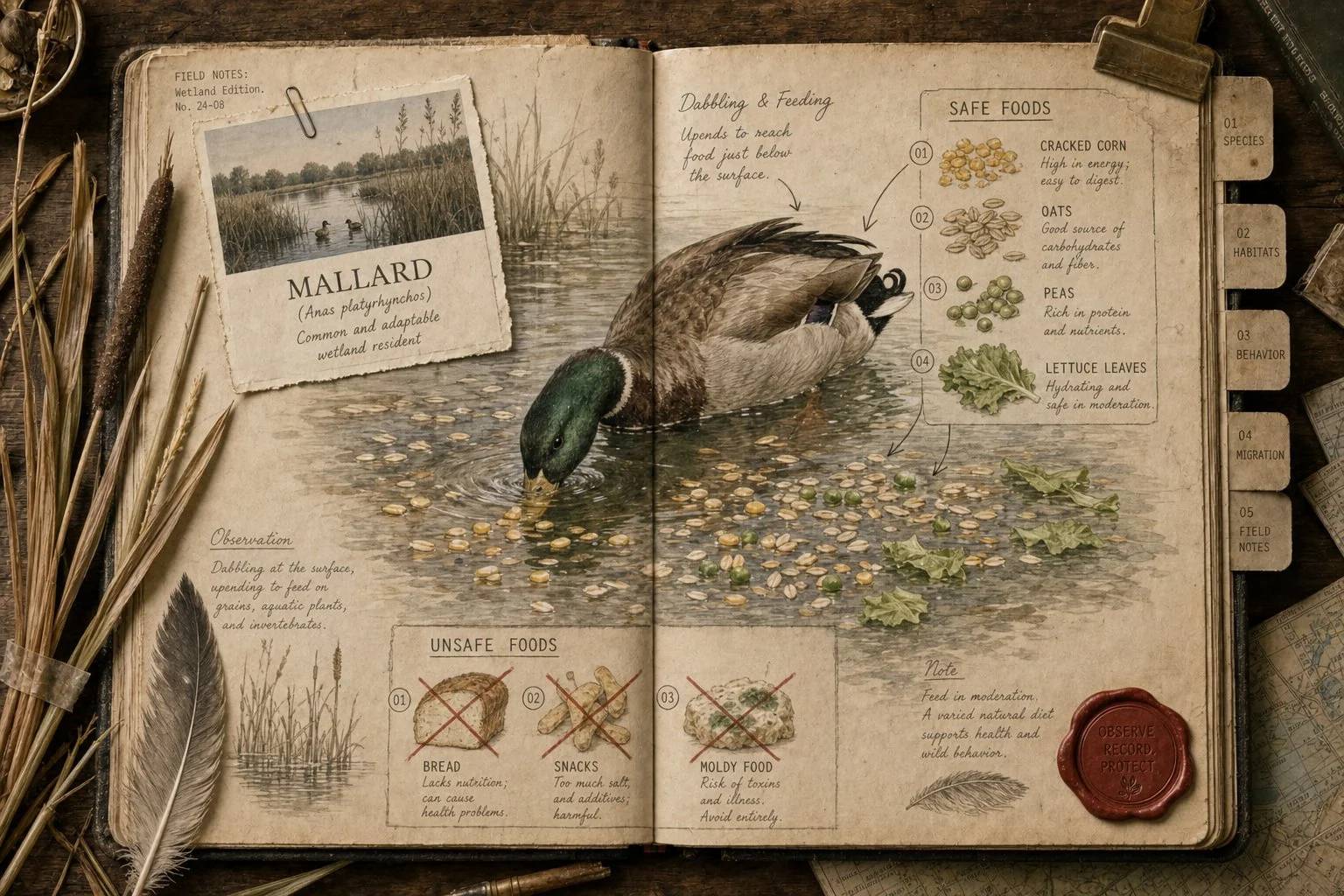
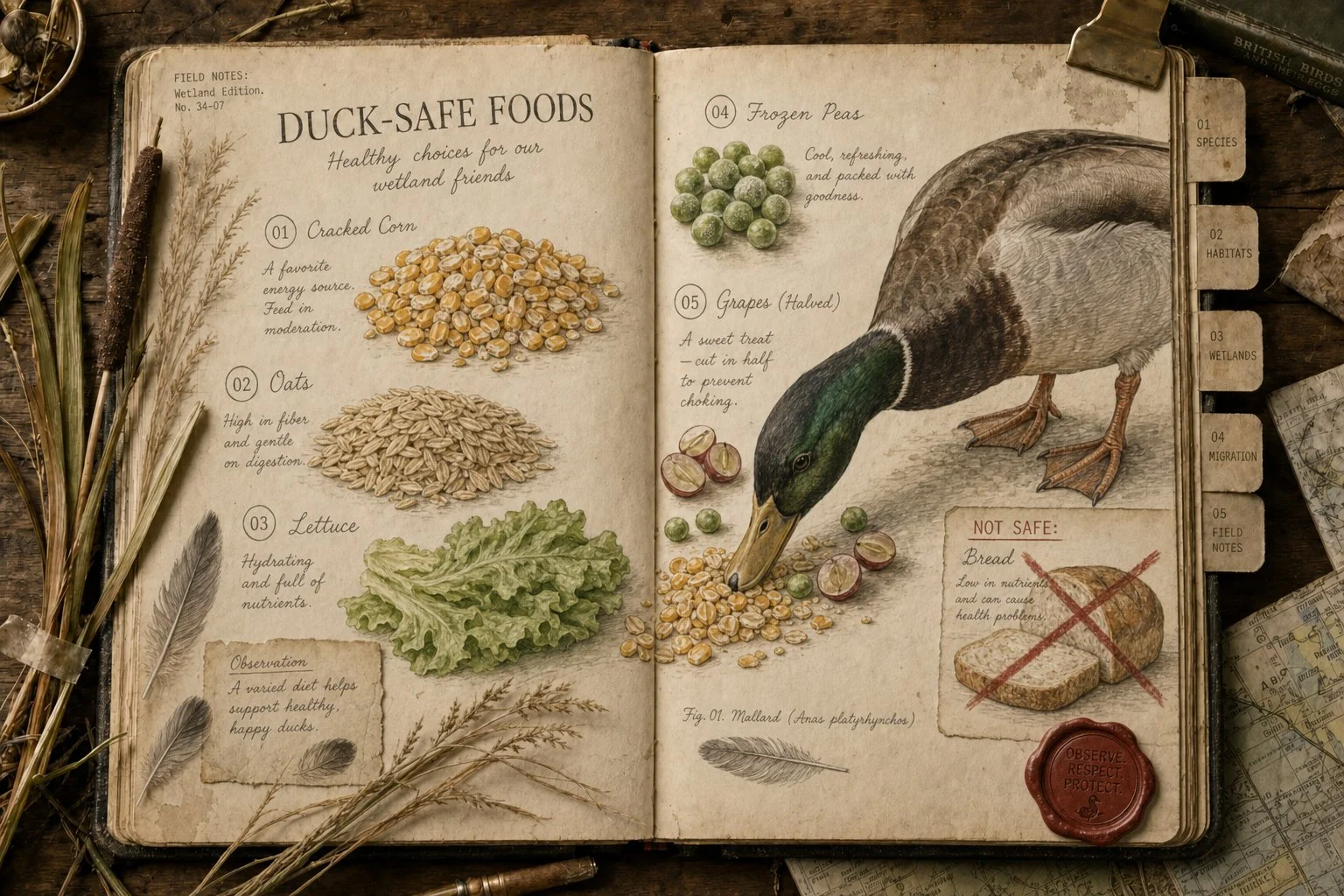
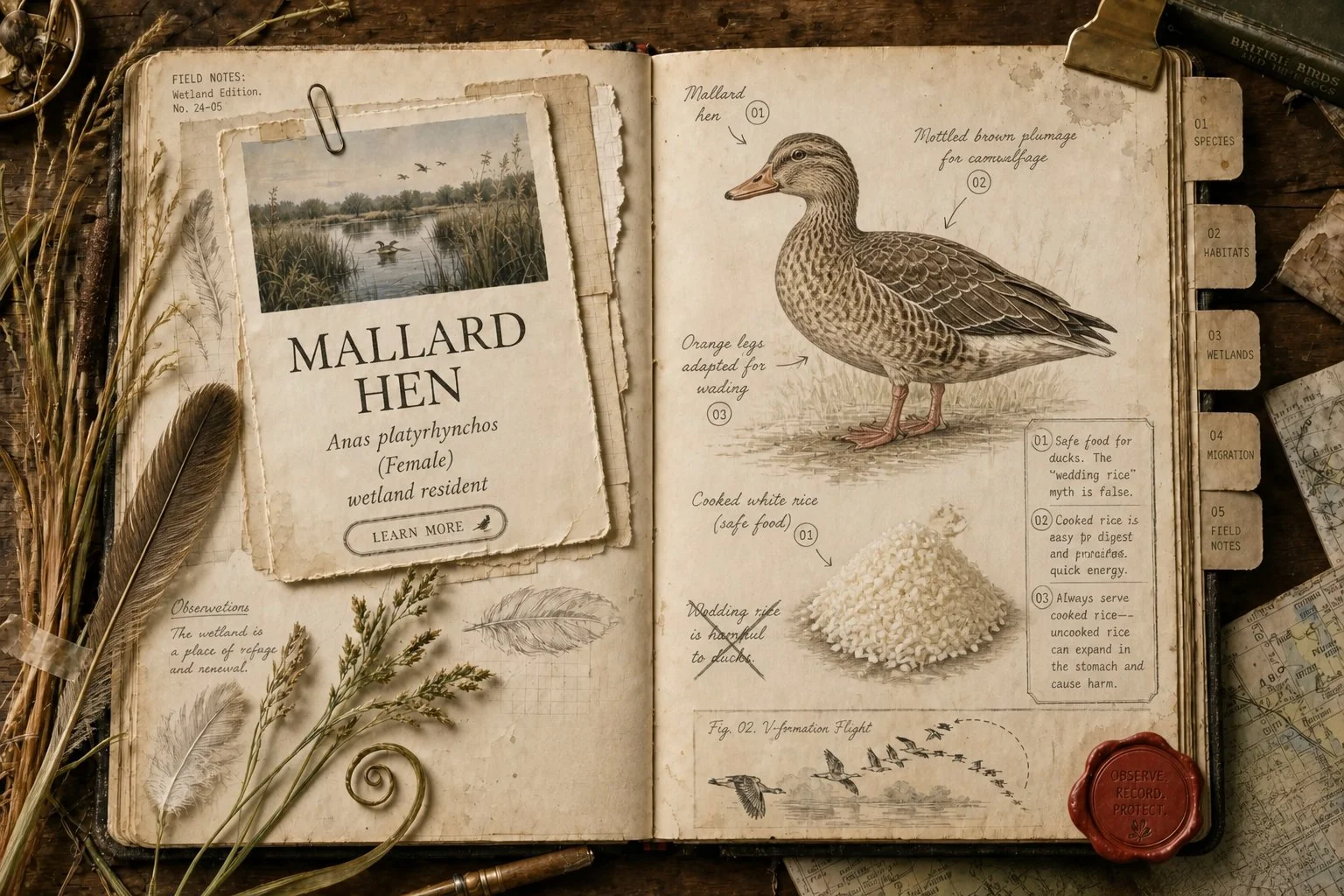
A naturalist's guide to feeding wild ducks - the eight foods that are genuinely safe and useful, the five that cause real harm, and why bread is the worst thing you can hand to a mallard.
A short, practical guide to safe and unsafe foods for pond ducks - what to bring, what to leave at home, and how to feed them properly without harming the pond.
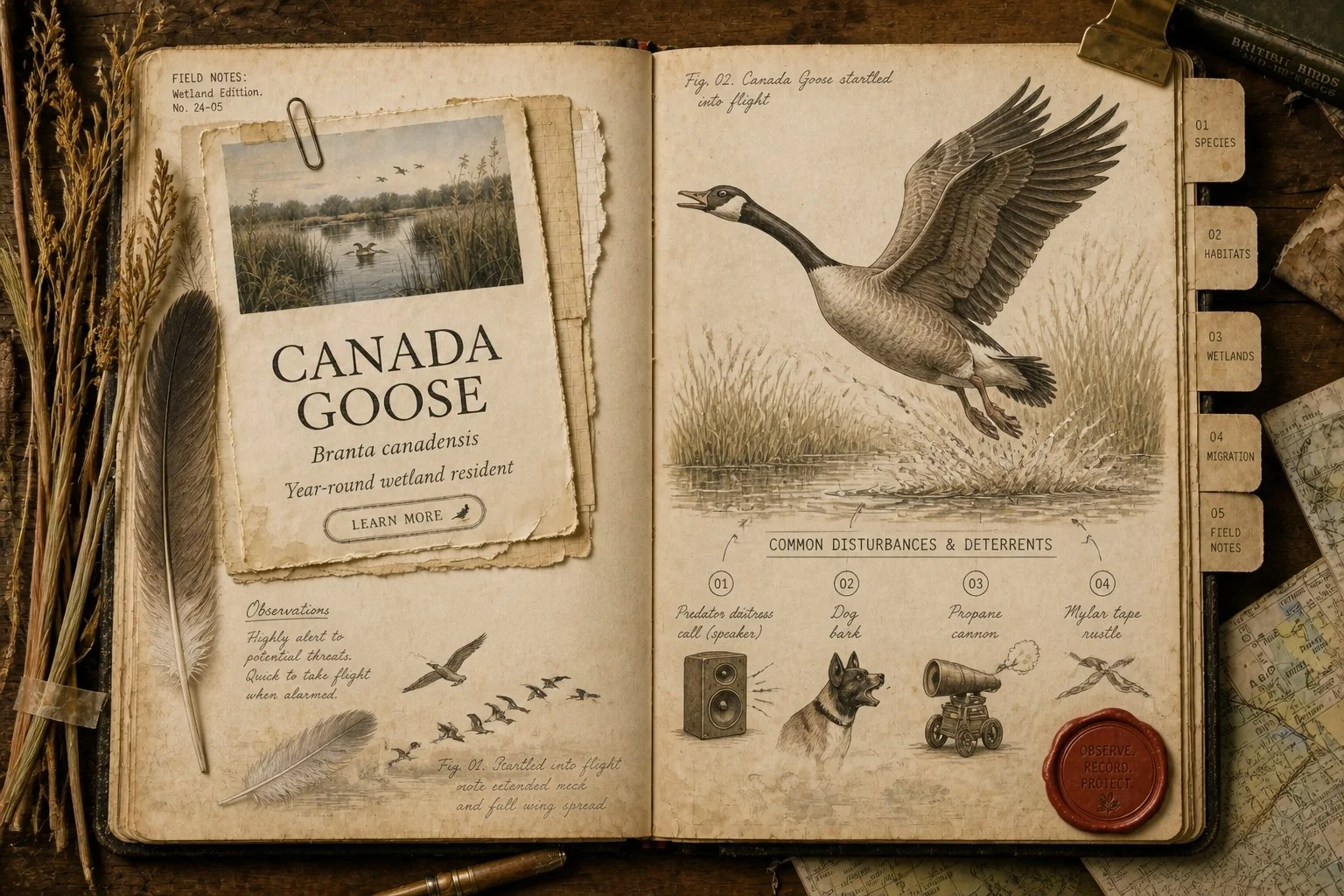
Predator distress calls and dog barks scare geese; ultrasonics and most static noises don't. A naturalist's read of the deterrents that hold up in the field.
The thirteen animals that hunt wild and domestic ducks - ranked by where they hunt (water, air, ground) - and the eight protections that actually work. A field naturalist's guide for pond owners and small-flock keepers.
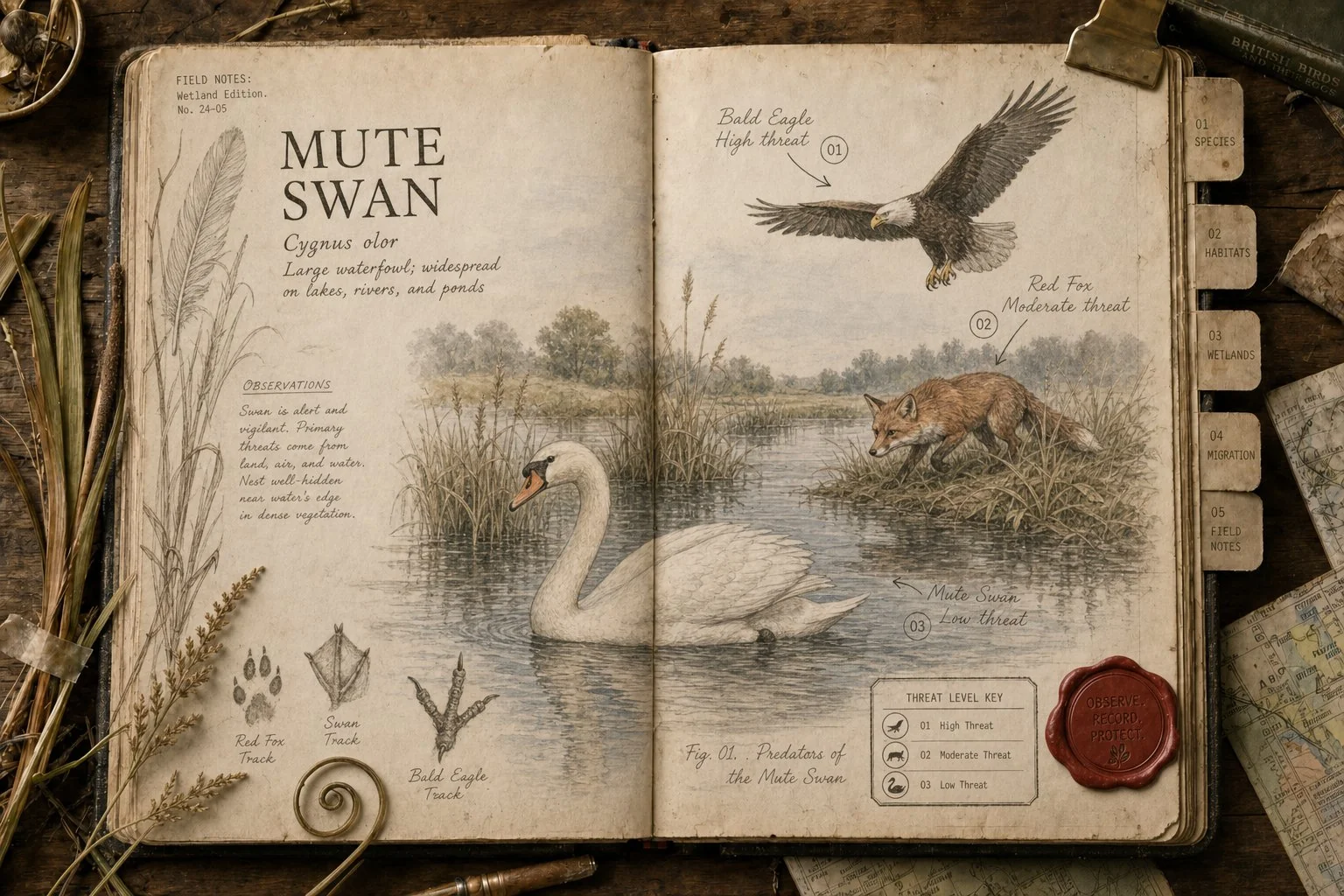
A naturalist's read on swan predation - adult swans have surprisingly few enemies, but cygnets are vulnerable to a long list of predators. Which species hunt swans and at which life stage.
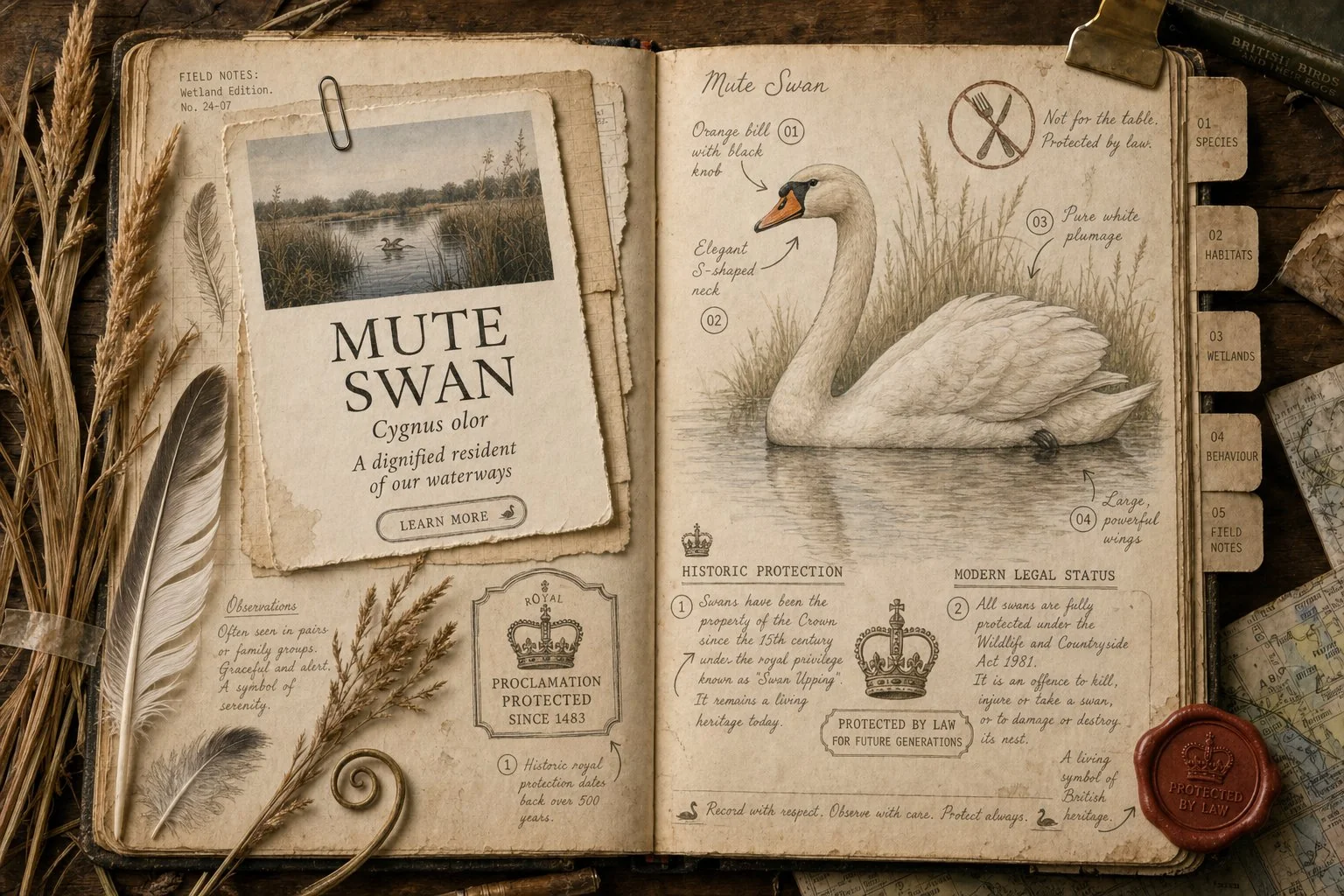
A naturalist's read on whether you can legally or sensibly eat a swan - the British royal protection rule, the modern UK and US legal status, and what swan actually tastes like historically.
If you're interested in providing a safe haven for Barred Owls to nest and raise their young, you've come to the right place. This article will guide you through the process of building a barred owl...
Soft, fluffy, and with eyes filled with wonder, baby owls — or owlets — are a heartwarming sight. While they might be born helpless, these young raptors rapidly grow into formidable predators. Ready...
Barn owls, with their iconic heart-shaped faces and ghostly calls, are revered hunters of the night sky. Yet, even these master predators aren't exempt from the circle of life. While they rule the...
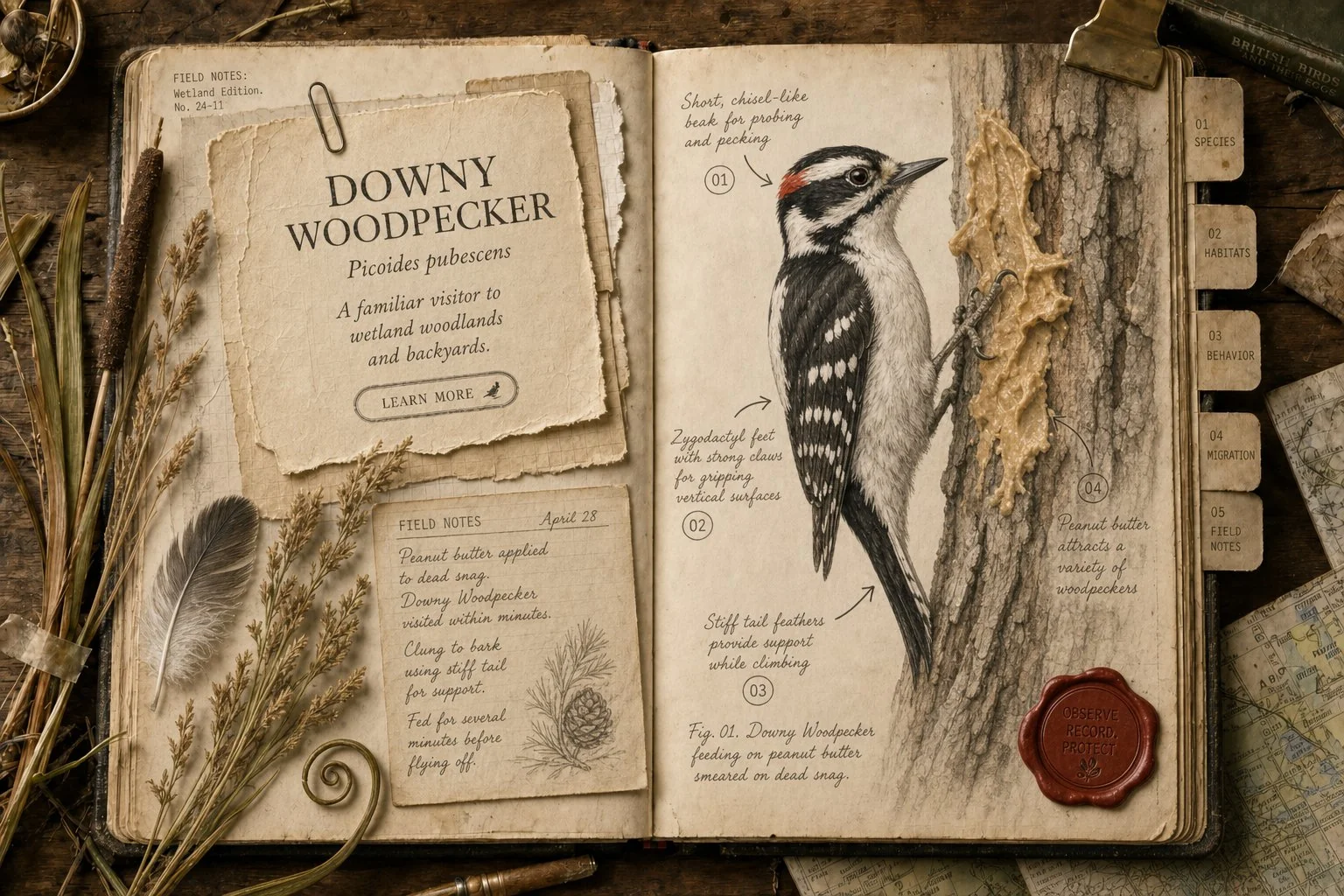
A naturalist's guide to feeding wild birds peanut butter - which species actually take it, which jars are safe, the homemade winter mix we use, and the three feeders that survive squirrels.
Birds of prey in New York encompass a diverse array of species and these magnificent birds play vital ecological roles as top predators, contributing to the balance of local ecosystems. They possess...
Birds of prey, also known as raptors, hold a unique and vital role in the rich tapestry of biodiversity found in Georgia. Renowned for their keen vision, powerful builds, and predatory lifestyles,...
Ducks love fruit, but can they safely eat fruit? Yes, ducks can eat fruit, and many fruits can be a nutritious treat for them. Offer fruits like berries, seedless grapes, chopped apples, and melons...
Ducks are foraging animals that enjoy a variety of plants as part of their natural diet. However, not all plants are safe for ducks to consume. Some common garden plants can be toxic to ducks,...
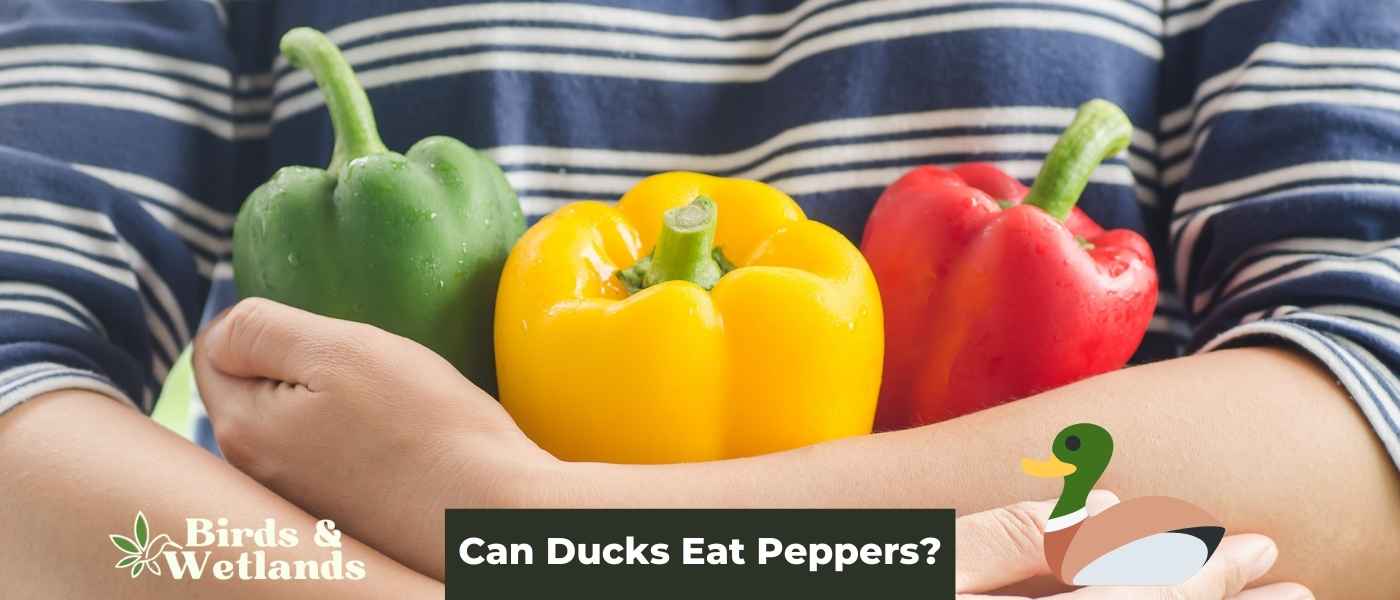
Peppers are a popular and flavorful vegetable that many of us enjoy, but can ducks safely eat them too? As a duck owner, you want to ensure that your feathered friends are receiving a healthy and...
A small-flock keeper's guide to goose housing - what geese actually need, the dimensions that work, the materials that don't rot, and the predator-proofing that matters most.
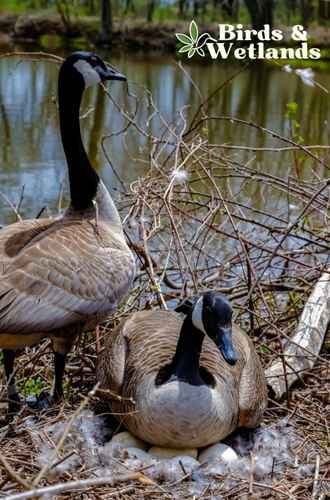
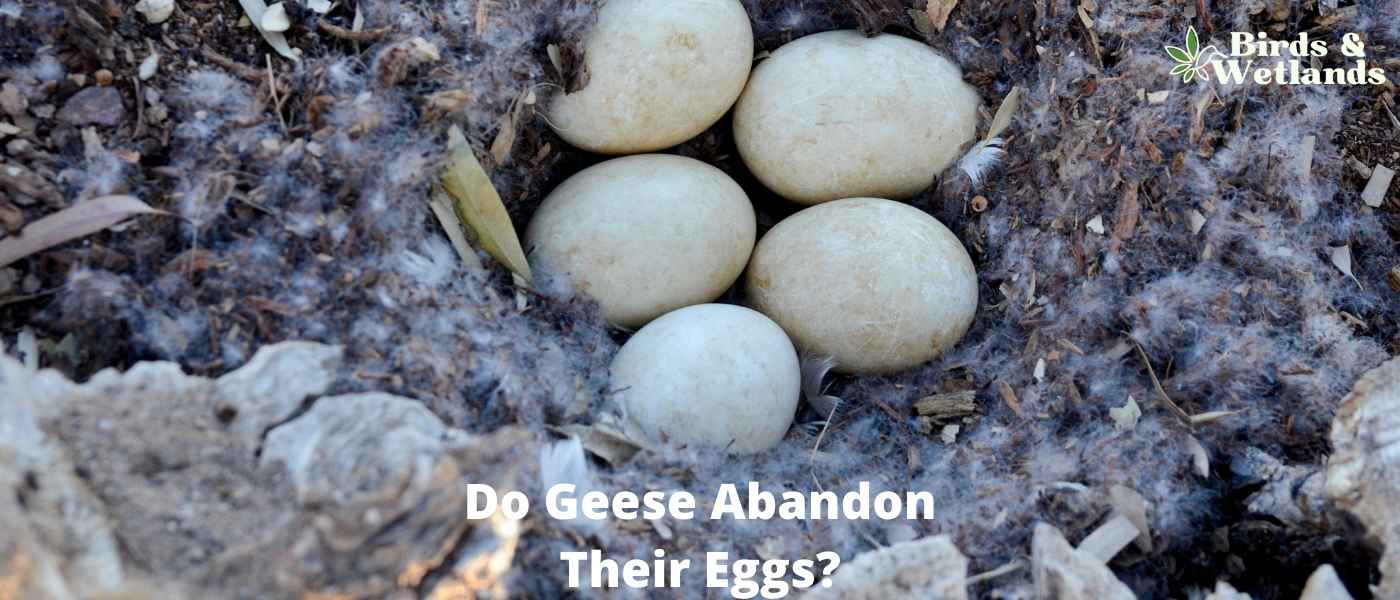
Mother geese are very protective of their eggs and it is rare for them to abandon them. In fact, most of the time mother geese will sit on their eggs until they hatch. If the mother goose does leave...
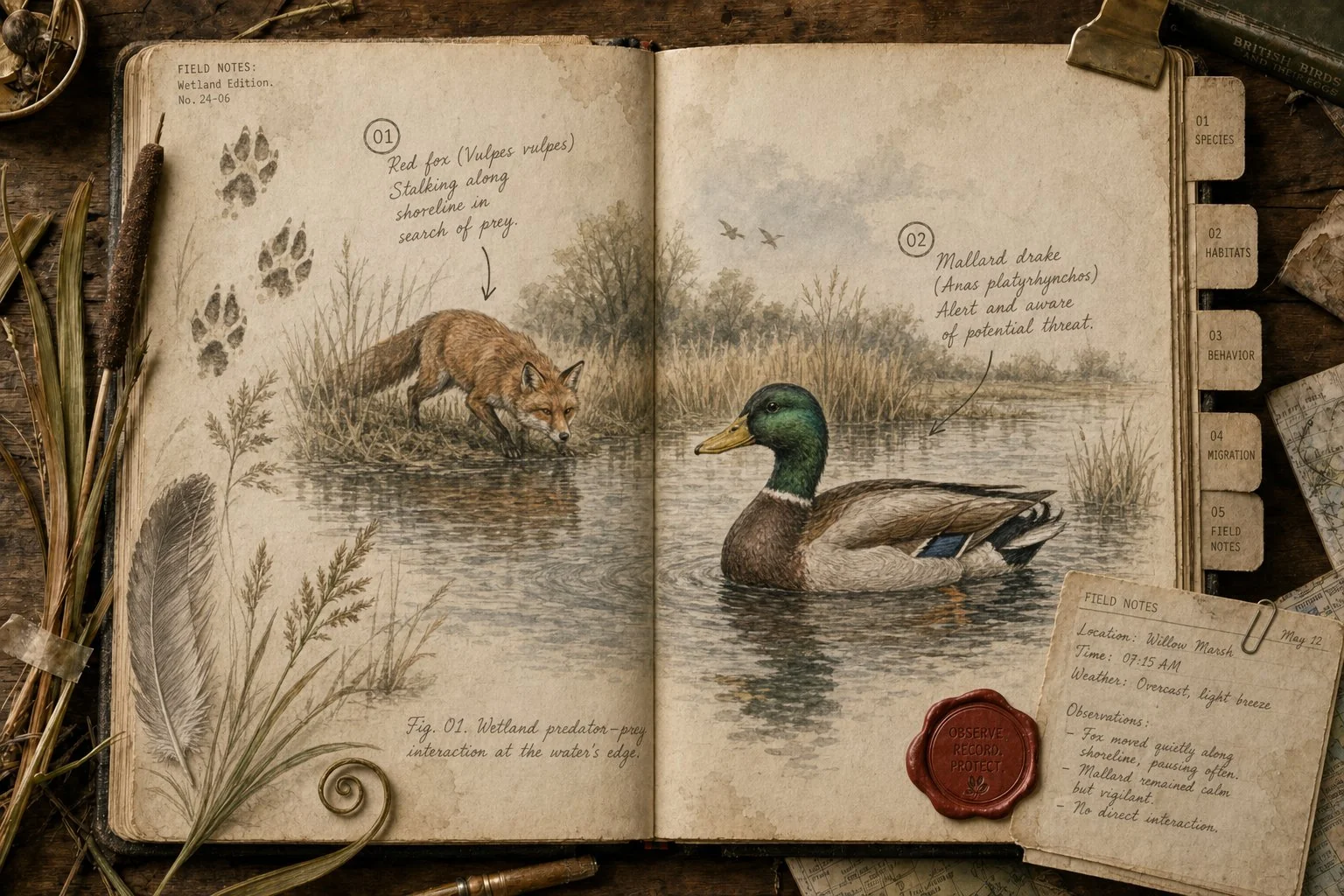
No, geese do not keep foxes away. Geese are actually prey for these predators, so if anything, they would attract this predator rather than deter them. Do Foxes Attack Geese? Foxes are opportunistic...
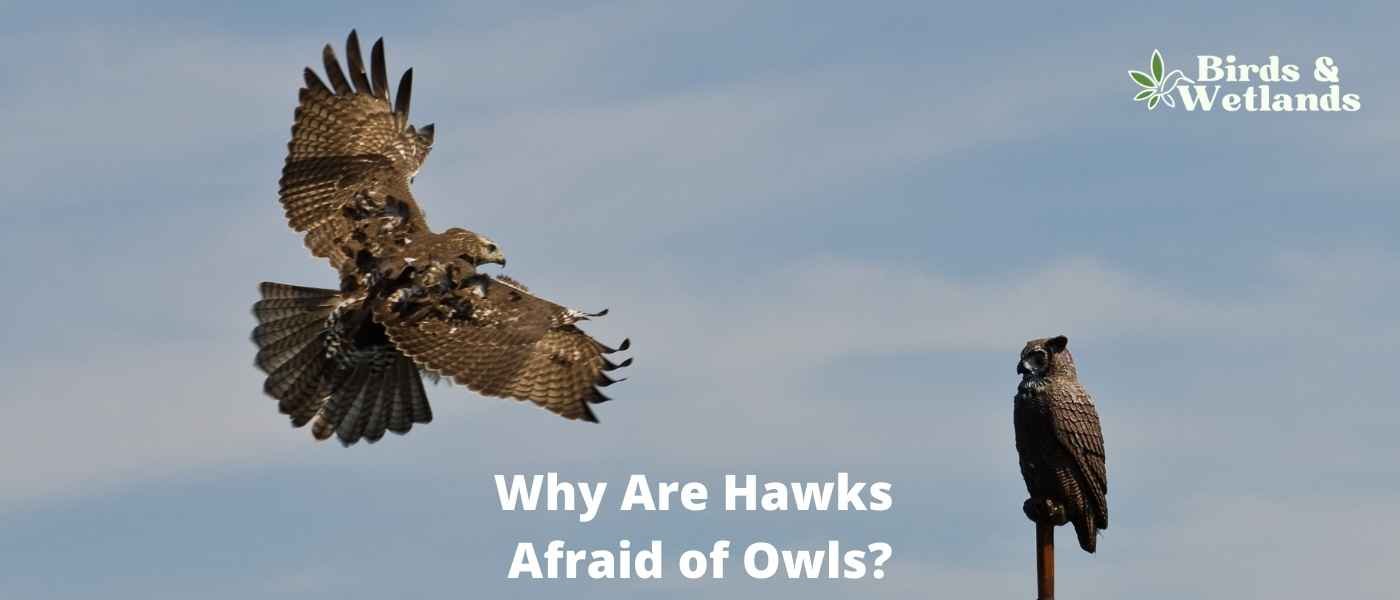
Hawks are predators, and they have many enemies. One of their most feared predators is the owl. Owls can grow to be very large, making them adept at hunting. They can easily outgrow the size of a...
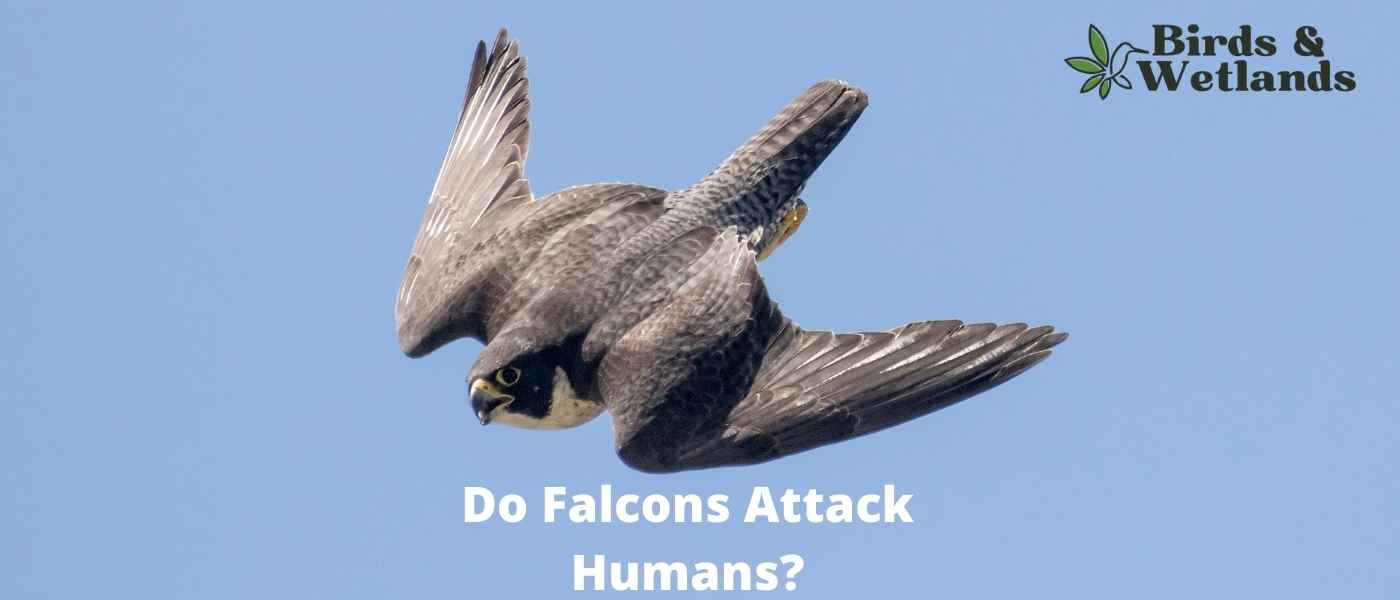
Falcons are birds of prey known for their sharp talons and hunting skills. They are also very territorial, using their talons to defend their territory from direct contact with intruders. This can...
Field noteRead →
A note about cookies
We use cookies for analytics and to display advertising via Google AdSense.
Read our Cookie Policy and
Privacy Policy.