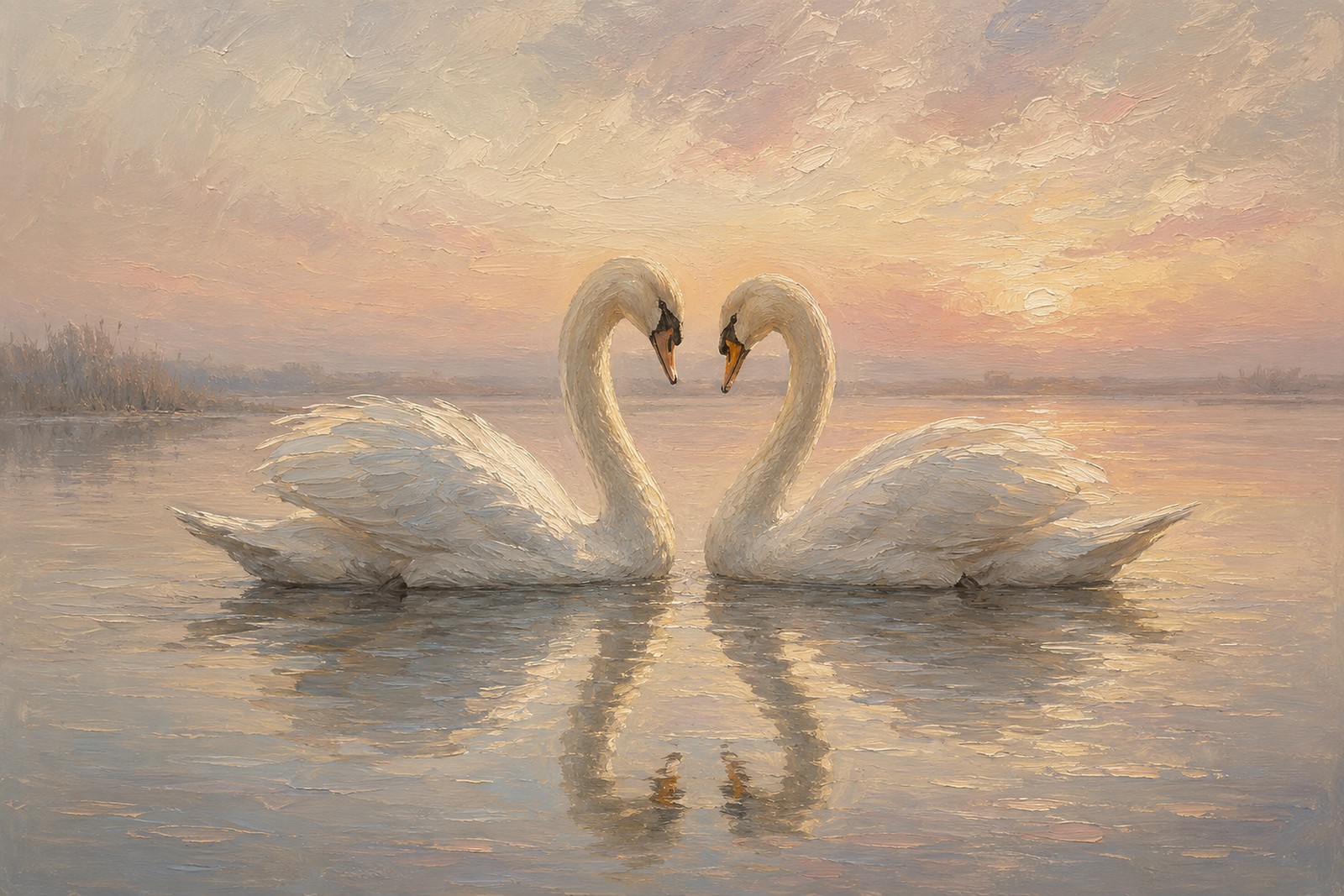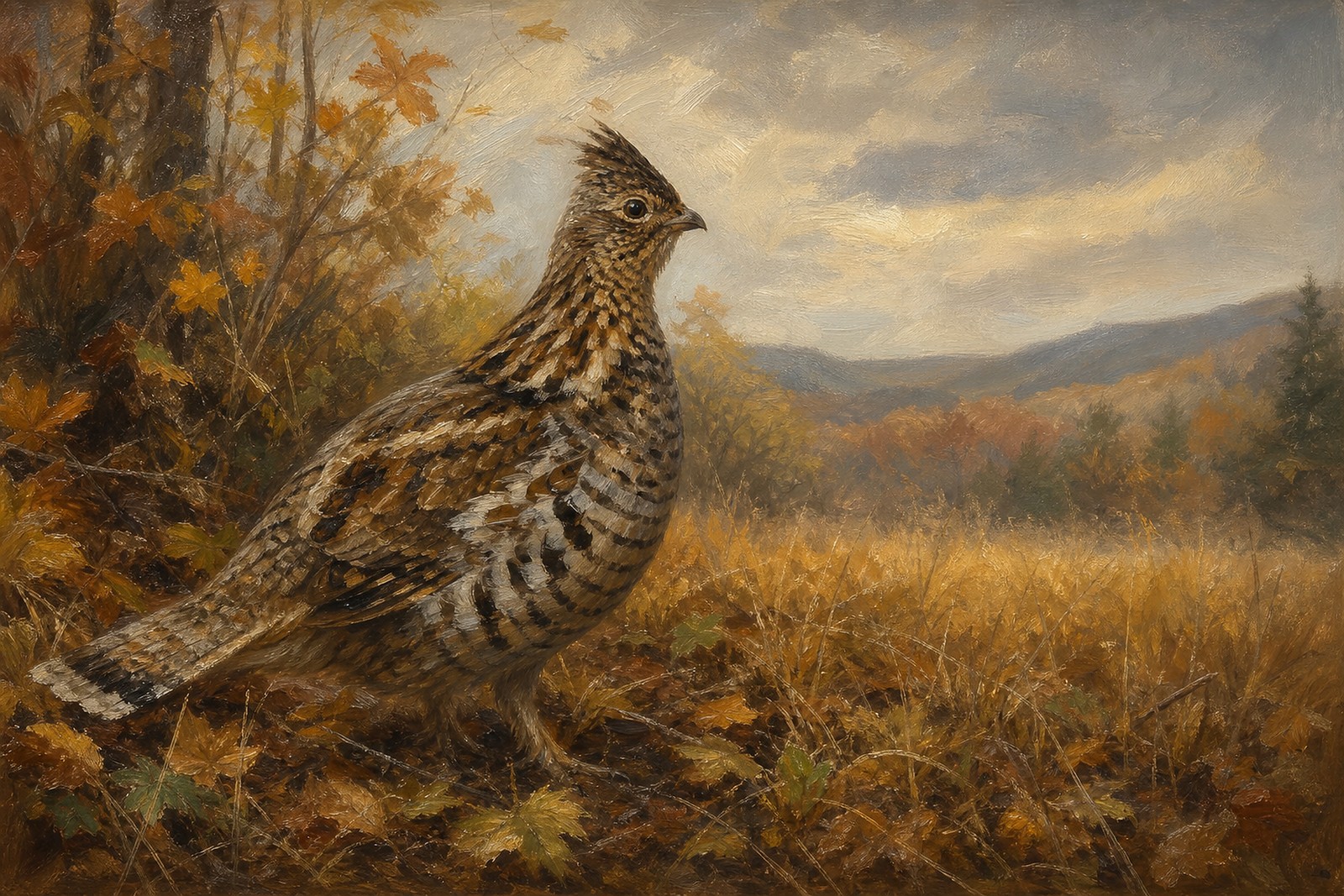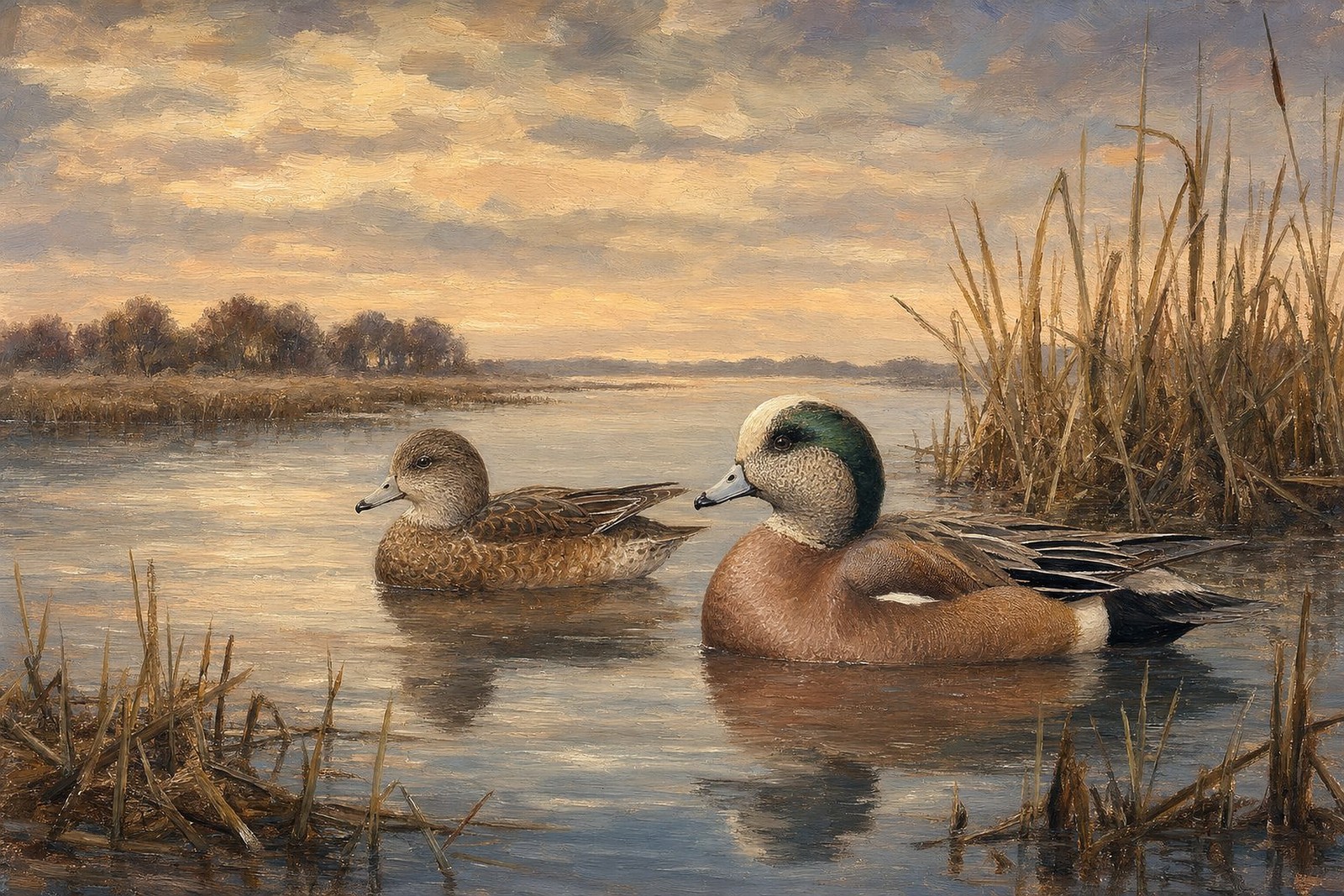
Decorating advice is written for the walls nobody actually has: long, blank, sofa-width expanses waiting for a statement piece. Real houses are full of the other kind. The stub of wall at the end of a hallway. The gap between two door casings. The space over the towel bar in the powder room, the landing halfway up the stairs, the sliver between window and corner. These walls defeat most art, and so they stay empty for years while the big walls get all the attention.
They deserve better, because small walls sit at close range, where people actually look. Here is how to dress them properly, and why the two quietest ducks in our collection, the green-winged teal and the American wigeon, happen to be the specialists for the job.
Why do small walls defeat most art?
Two failure modes, in both directions. Big art simply does not fit: a 30 inch print on a 26 inch wall is a non-starter. But small art fails more subtly. A single undersized frame hung in the middle of even a modest wall reads as timid, an apology rather than a decision. And the common workaround, a cluster of tiny frames, turns a tight sightline into visual clutter exactly where the eye has no room to sort it out.
The answer is one print, scaled to the wall, with enough depth inside the image to open the space up rather than paper it over. Which is where composition starts to matter more than size.
What makes a landscape print work like a window?
A 3:2 landscape print with a low horizon does something on a small wall that portrait-format art cannot: it manufactures distance. The eye reads the water running back to the horizon and the sky above it, and the wall borrows that depth, the way a small room borrows depth from a window. Hang a print with ten miles of sky in it and the hallway stops feeling like a dead end.
Edge-to-edge printing multiplies the effect. Our prints carry no mats and no borders, so even the 12x18 is pure image, uninterrupted by a white margin that would shrink the picture inside the frame. On a small wall, every square inch of image is doing work. And the smaller the wall, the more the horizon matters: a close-cropped portrait gives a cramped wall nothing to look through, while eighteen inches of marsh and sky give it a view.
Why teal and wigeon suit small spaces
Small walls are viewed from two to four feet, not across a room, and the subject should read truthfully at that range. The green-winged teal is the smallest dabbling duck in North America, a neat, quick, precisely marked bird, and a teal print is an intimate image by nature: it invites the close look the hallway forces anyway.
The American wigeon is the calm one. Soft grey, cinnamon and cream, a gentle round-headed duck the old market gunners nicknamed the baldpate for the drake’s pale crown. Our wigeon pair on a quiet pond is the most peaceable image in the collection, two birds on still water in low light, and it suits the small walls in private parts of the house: bedroom corners, upstairs landings, the guest room. The species has a full profile in our American wigeon guide, and its home water, the quiet ponds and potholes of the interior, is precisely the mood these rooms want.
The 12x18: the most useful size we sell
The 12x18 print, $59 unframed or $189 framed in black, brown or gold, spans 18 inches of wall, and that dimension turns out to be a skeleton key. It fits the gap between door casings in most hallways. It sits properly over a powder room fixture, 8 to 12 inches above the tank or the towel bar. It fills the end wall of a corridor without crowding the trim, and it stacks in pairs on tall narrow walls where nothing else works.
Hang it at the same height you would hang anything: centre of the image 57 to 60 inches from the floor. The most common small-wall mistake is hanging high, as though altitude could compensate for size. It cannot. Eye level, always.
Where does the 12x18 earn its keep?
The powder room. The classic overlooked wall in American homes. One quiet print above the fixture, framed, reads as genuinely finished. A paper print is happy in a powder room with normal ventilation; keep it out of full bathrooms where a daily shower steams the walls.
The end of the hallway. A corridor’s terminal wall is a view someone takes in a dozen times a day, and it deserves a destination. This is the single highest-return small wall in the house.
Stair landings. Seen close and in passing; a low-horizon landscape stops the turn feeling like a shaft.
Between windows. The pier wall wants something narrower than the windows themselves; the 12x18 obliges. If the windows’ midline sits higher than eye level, match the architecture rather than the rulebook and centre the print on the windows.
The mudroom and the back hall. The working entrances of lake houses see more family traffic than the front door ever does, and one framed teal above the coat hooks or the bench turns the most utilitarian wall in the house into a considered one.
The reading corner. Above a small chair or writing desk, where a 20x30 would loom.
Can small prints hang in pairs?
Yes, and the pair solves the tall narrow wall outright: two 12x18 prints stacked vertically with 3 inches between frames, centres balanced around eye level. Down the length of a hallway, a rhythm of prints at identical height and even spacing turns the corridor into a small gallery; keep the frames one colour and let the species vary.
Teal and wigeon are natural running mates for this, and they belong to the whole waterfowl and marsh birds range, all rendered in the same antique oil-painting style so any two prints pair cleanly. Everything is made to order, dispatched in 2 to 5 business days, with free shipping to the US, Canada, the UK, Europe, Australia and New Zealand, and larger sizes, 16x24 at $89 and 20x30 at $119 unframed, $259 and $329 framed, when a wall turns out bigger than it looked.
Frequently asked questions
Is a 12x18 print too small to hang over furniture?
Over a sofa or a bed, yes: use a 20x30 or a pair. Over small furniture, a console, a writing desk, a powder room fixture, a nightstand, the 12x18 is correctly scaled, spanning half to two thirds of the furniture’s width, which is the proportion decorators aim for at any size.
Can I hang a paper print in a bathroom?
In a powder room with ordinary ventilation, yes, framed. In a full bathroom with a shower, no; repeated steam is unkind to paper and framing alike. If a full bath truly needs art, the $19 digital download printed and framed cheaply is the pragmatic route, treating the piece as replaceable.
Should hallway prints stack or run in a row?
Follow the wall’s longest dimension. Tall and narrow: stack two prints vertically. Long corridor: run them horizontally at identical height with even spacing, 57 to 60 inches to each centre. Do not mix the two schemes in one sightline.
Are these images photographs?
No. Each is an original AI-created image in antique oil-painting style, in the tradition of classic American sporting art, printed edge to edge as a 3:2 landscape. Damaged, defective or wrong deliveries are replaced free or refunded within 30 days; we do not accept change-of-mind returns.