If your windows fog on August mornings and your crackers go soft overnight, your house has already answered the first question about art materials: humidity is not a hypothetical where you live. Coastal homes from the Chesapeake to the Gulf run damp for months at a time, and the canvas-versus-framed-paper question deserves a straighter answer there than it usually gets.
Here is that answer, including the part most shops skip: what we sell, what we deliberately do not, and why.
What does coastal humidity actually do to art?
Both of the common art supports are organic materials, and both respond to moisture. They just fail differently.
Paper is hygroscopic: it takes on moisture from damp air and releases it when the air dries, expanding and contracting slightly each time. An unframed or poorly sealed paper print in a humid room will eventually show it, first as a gentle waviness across the sheet, called cockling, then in bad cases as soft creases where the buckled paper meets the frame edge. The image itself usually survives; the flatness does not.
Canvas is woven fabric stretched over a wooden frame, and both parts move. In sustained humidity the weave relaxes and the canvas slackens, showing as a subtle belly in the middle of the piece or ripple lines radiating from the corners. When the air dries, it tightens again. Years of that cycle loosens the whole assembly, and unlike paper, a slack canvas needs physical re-stretching to fix, which is specialist work.
Above roughly 65 to 70 percent sustained relative humidity, a third problem joins in for both materials: mould, which is why conservators treat damp still air, not humidity alone, as the real enemy.
Add coastal specifics, salt in the air that settles as a fine film on exposed surfaces, and big bright windows pushing UV at the walls, and you have a genuinely demanding environment. Not a hopeless one; just one where the details matter.
The honest case for canvas
Canvas has real virtues, and pretending otherwise would make the rest of this page less trustworthy. There is no glass, so there is no glare and no reflection, which suits bright rooms. It is light for its size and simple to hang. It reads casual and contemporary, which some rooms want. And it arrives ready to go, with no framing decision to make.
In a dry, stable climate, those are good arguments. In a humid coastal one, canvas’s defining feature becomes its weakness: the printed surface is the outermost layer, with nothing between the image and the room. Salt film, cooking residue, dust and damp air all land directly on the artwork, and canvas cannot be casually wiped clean the way glass can. The stretcher moves with the seasons. And glazing a canvas after the fact is awkward enough that almost nobody does it.
Canvas, in short, is the fair-weather option. There is a reason the historic homes of the humid South put their works on paper behind glass.
Why we sell framed paper instead
We made the call at product level: every print we sell is on archival fine-art paper, and the framed versions go behind glazing. For coastal rooms, that package solves the humidity problem at each layer.
The glazing is the weather wall. Damp air, salt film and fingerprints meet glass, not artwork, and glass wipes clean in seconds. The frame and backing close the package, slowing the humidity swings that cause cockling; the sheet inside a sealed frame lives in a milder climate than the room does. The paper itself is archival fine-art stock, chosen for dimensional stability and for holding ink depth over decades rather than years. And paper has a long-term advantage canvas cannot match: if you ever want a different frame, or a frame gets damaged in a move, a paper print re-frames in an afternoon anywhere in the world.
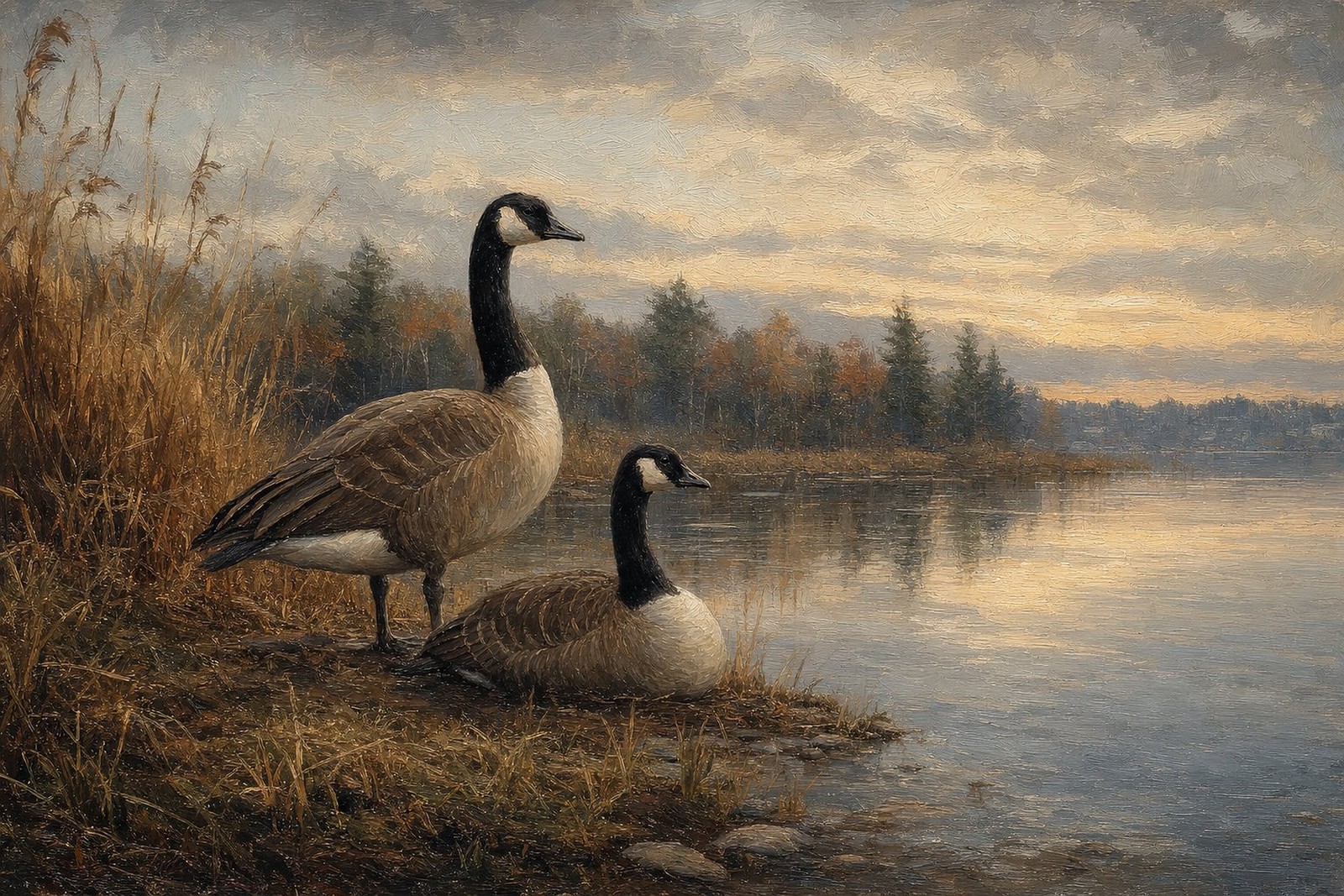
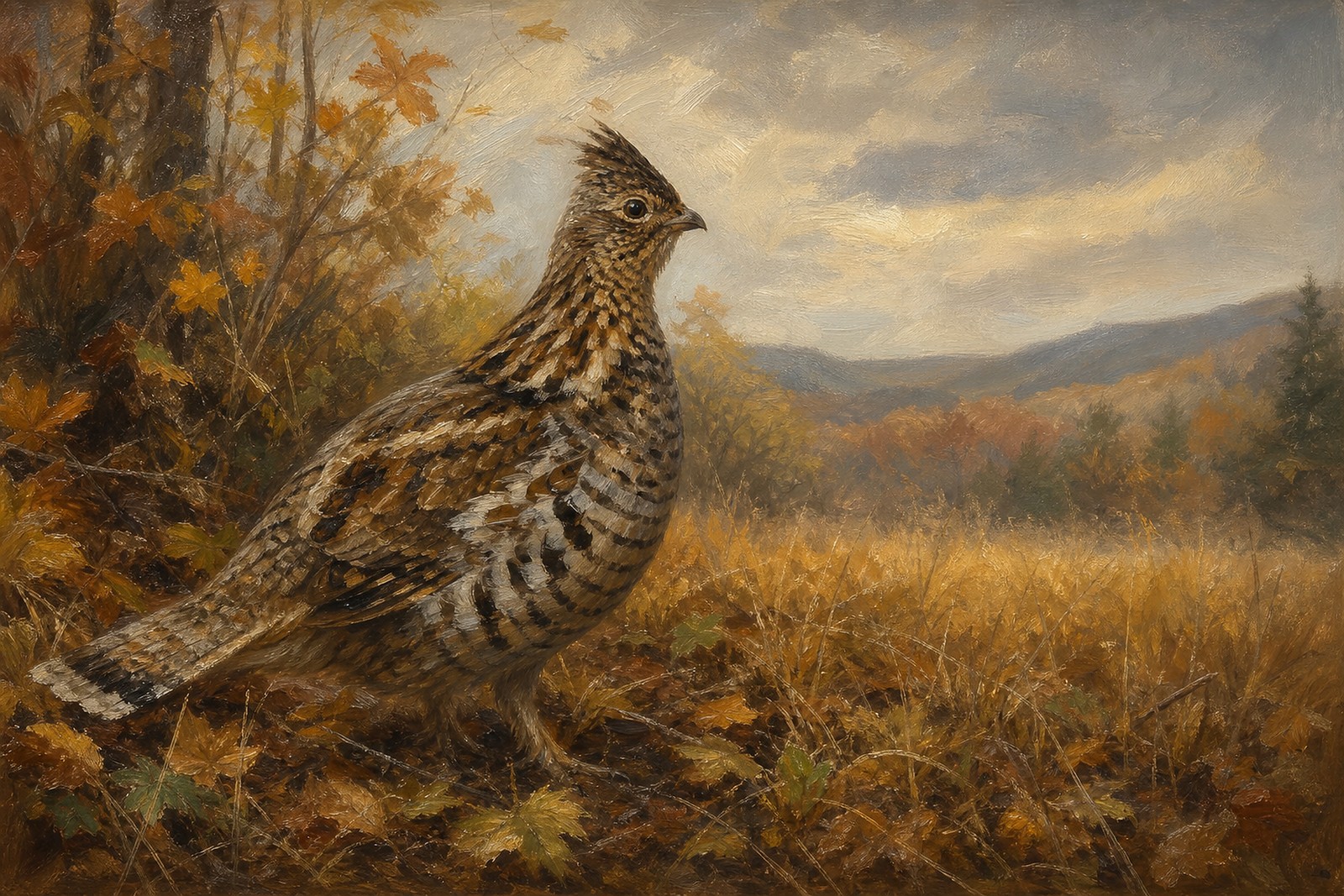
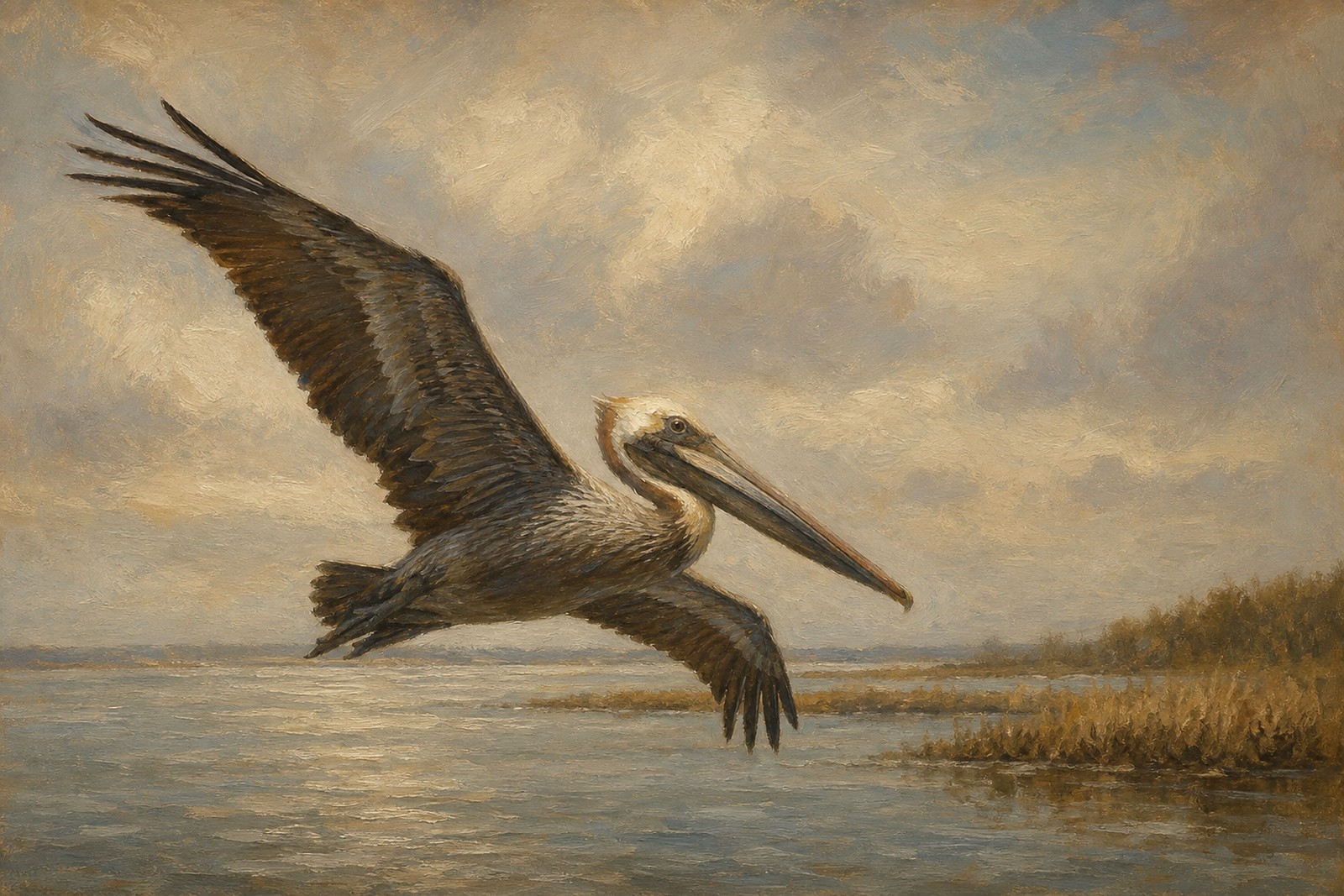
Our framed prints come in black, brown or gold at $189 for 12x18, $259 for 16x24 and $329 for 20x30. Every image is a 3:2 landscape printed edge to edge, an original AI-created artwork in the style of antique oil painting, which is worth noting in this context for a practical reason: the soft, layered rendering never depended on canvas texture in the first place. Nothing is lost by putting it on paper behind glass, and a great deal of durability is gained.
What about unframed and digital?
We sell both, with honest use cases.
Unframed prints, $59, $89 and $119 across the three sizes, are for people with a framer they already trust. If that is you, one instruction matters for a coastal house: ask for the print to be properly mounted and sealed with backing, and consider acrylic glazing in rooms that run very damp. What you should not do on the coast is pin or clip an unframed print to the wall as-is; that is how cockling stories start.
The digital download, $19, is the pragmatist’s option: print locally at any size, frame locally, and if a decade of beach-house summers eventually tires the piece, print it again. For hard-service locations, a rental property, a much-used guest room, it is the lowest-stakes way to keep good art on the walls.
Everything physical is made to order and dispatched in 2 to 5 business days, with free shipping to the US, Canada, the UK, Europe, Australia and New Zealand. If an order arrives damaged, defective or wrong, we replace or refund it within 30 days; that policy covers faults rather than change of mind, which is the honest shape of made-to-order.
Where should art not hang in a coastal home?
Even the framed-paper package has limits, and knowing them protects the purchase.
Bathrooms with showers. Steam is sustained near-100 percent humidity, beyond what any sealed frame should be asked to absorb weekly. The powder room without a shower is fine; the family bathroom is not.
Unconditioned porches and sunrooms. Screened porches live at outdoor humidity with outdoor temperature swings. Beautiful spaces, wrong spaces for fine-art paper or canvas alike.
The all-day-sun wall. Glazing helps but UV is cumulative. If a wall gets direct sun for most of the day, hang art elsewhere and give that wall a mirror.
Directly above a range. Grease fog is the one contaminant that defeats even glass, because it finds frame seams.
Interior conditioned rooms, which is to say nearly all of the house, are fine, even in the dampest Gulf towns. The same soupy air that keeps the marshes of Florida’s water birds so gloriously productive is exactly what air conditioning was invented to hold at the door.
Choosing the art once the material is settled
Material is the durability question; the art itself is the pleasure question, and the coastal canon is deep: herons, egrets, pelicans, shorebirds, all in the same 3:2 landscape format so they can be paired and grouped later as walls evolve. Our coastal wall art guide maps the species onto rooms, and every heron, egret and shorebird in the collection ships in the framed, glazed, coast-ready package this page has been describing.
Frequently asked questions
Do you sell canvas prints?
No, deliberately. Everything we make is on archival fine-art paper, unframed or framed behind glazing in black, brown or gold. For the humid coastal rooms most of our prints hang in, sealed framed paper outlasts and out-cleans an exposed canvas surface, and our oil-painting-style artwork loses nothing without canvas texture.
Will an unframed print ripple in a beach house?
Left unmounted and unglazed in a damp room, eventually yes; paper moves with moisture, and gentle cockling is the usual result. Frame it with proper backing and glazing and the problem effectively disappears in conditioned rooms. If you buy unframed, budget for real framing rather than clips.
Should I choose framed or unframed for a coastal bedroom?
Framed, unless you have a framer you already use. The framed versions arrive sealed and ready for exactly this environment at $189, $259 or $329 by size. Unframed makes sense as a $59 to $119 starting point only if professional framing is genuinely going to happen.
What if my print arrives damaged?
We replace or refund any order that arrives damaged, defective or wrong, within 30 days. Prints are made to order and dispatched in 2 to 5 business days, with free shipping to the US, Canada, the UK, Europe, Australia and New Zealand.