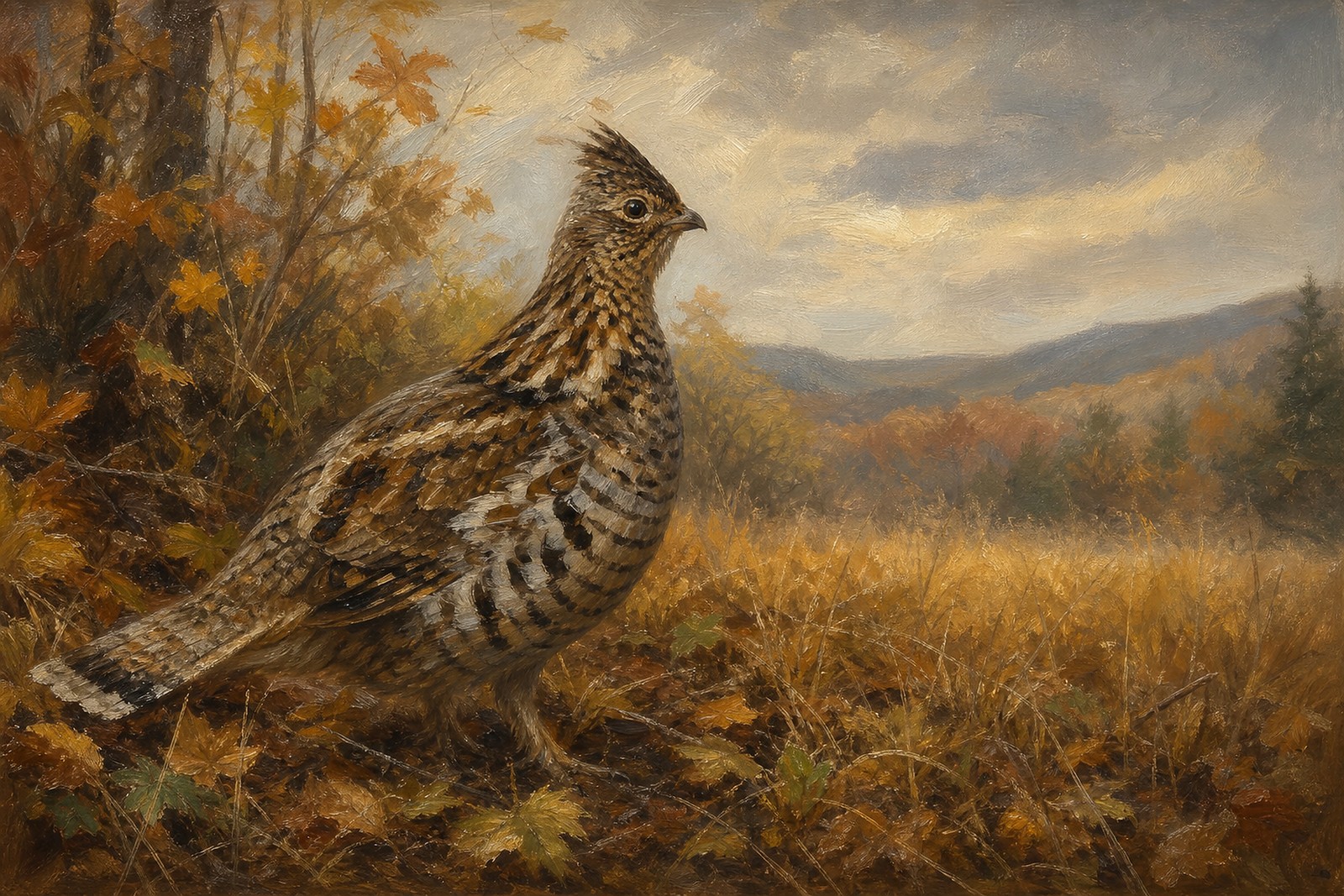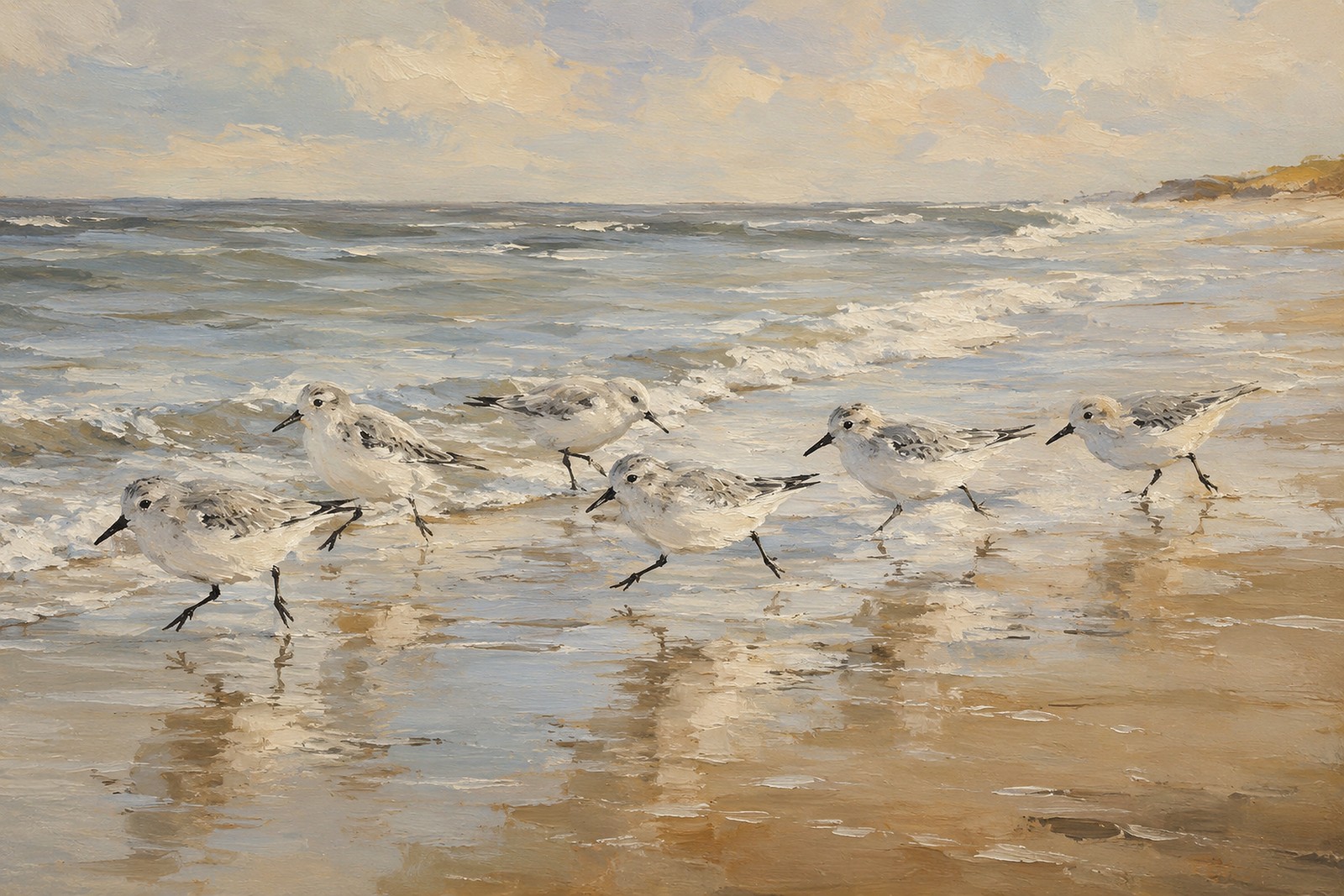
A beach house has a decorating problem most other rooms don’t: the view is already doing the work. Wide windows, bleached wood, a horizon line that changes colour four times a day. Anything you hang on the wall is competing with that, which means most conventional art loses. Bold abstracts fight the light. Framed photography flattens next to the real thing outside the glass. What actually holds its own is the thing the view is full of: the birds.
Shorebirds are the visual signature of the coast in a way almost nothing else is. A sanderling running the tideline, a heron standing motionless in the shallows, a pelican gliding a few feet off the water, these are the images that tell your eye “beach house” before you’ve even registered the sand-coloured sofa. Oil-painting-style bird prints lean into that signature rather than competing with the view, which is why they work so well in coastal interiors where photography and modern abstract pieces often feel out of place.
Why shorebirds work where other art doesn’t
Coastal light is unforgiving. It’s bright, it shifts fast, and it bleaches colour out of anything not built to hold up under it. A classic oil-painting-style print, with its deep, layered pigment and traditional composition, actually reads better in strong natural light than flat modern graphics do. The texture and depth in the brushwork catches the light instead of getting washed out by it.
There’s also a scale question. Beach houses tend to have big, plain walls, open-plan living areas, wide sofa walls, long hallways connecting bunk rooms. A single small piece disappears on a wall like that. A shorebird print, especially one composed with the same “big sky, low horizon” logic as the beach itself, fills that kind of space the way a window does.
The four birds that anchor a coastal room
Sanderlings. These are the small, quick shorebirds everyone has watched without knowing the name, running in and out with the waves like clockwork toys. A flock print reads as pure coastal atmosphere rather than a single-subject portrait, which makes it the most flexible piece in this list. It works as a wide horizontal over a sofa or a headboard, and it pairs with almost anything else in this guide without competing for attention.
Piping plover. Small, pale, and slightly comic in its stop-start walk, the piping plover is the quiet counterpoint to a bolder anchor piece. It suits a smaller wall, a bathroom, or the band of wall above a dresser where you want warmth without a large-scale statement.
Brown pelican. The pelican is the coast’s most recognisable silhouette, that heavy bill and slow, gliding flight that says “ocean” faster than almost any other bird. A pelican print works as the anchor piece in an open living area, above a sofa or a wide console, somewhere it can be seen from a distance and still read clearly.
Egrets. The great egret and the snowy egret bring pure white into a room, which is enormously useful in coastal decorating because white is often already the dominant wall and furnishing colour. An egret print doesn’t add a new colour to manage, it just adds form and quiet detail against a palette you’ve likely already built the room around.
Pairing prints with light walls
The single most common decorating mistake in a beach house is choosing a bird print exactly the same tone as the wall behind it. It looks intentional in your head and disappears in the room. The fix is contrast in value, not necessarily colour. Against a white or pale sand wall, a sanderling or plover print in soft grey and buff tones will still read as too close in value, so give it a simple frame in a deeper tone, black or a warm brown, to separate the print from the wall.
Against a slightly darker wall, a soft blue-grey or a warm putty, the white body of an egret print does the opposite job, standing out sharply without needing a heavy frame at all. A slim gold or brown frame is usually enough.
If you’re building a full wall rather than a single piece, keep to one bird family or one clear palette rather than mixing every shorebird species in this guide onto one wall. A sanderling flock plus a pelican, both in the same warm, sandy tonal range, reads as curated. Four unrelated birds in four unrelated palettes reads as leftover art nobody matched.
Where to hang shorebird prints in a beach house
Hallways. Long coastal hallways, especially the kind that run past bunk rooms in a rental or a family holiday house, are ideal for a run of smaller prints. A sanderling flock or a piping plover print at eye level, spaced evenly, turns a plain corridor into something guests actually look at on the way to the kitchen.
Bathrooms. Coastal bathrooms handle humidity well and tend to have plain, uncluttered walls, which makes them a natural home for a single striking piece. A pelican or an egret print, properly sealed behind glass in its frame, holds up fine in a bathroom with normal ventilation and adds real character to a room that’s often the last one decorated.
The main living wall. The wall above the sofa in an open-plan living area is the biggest, widest canvas most beach houses have, and the 3:2 landscape format is built for it. A pelican over coastal water or a heron in a morning marsh fills that span the way the view fills the windows, and still reads clearly from the kitchen at the other end of the room. For hanging two prints as a matched set over a long sofa or console, our heron prints guide covers building a two-bird wader pairing for symmetry.
Building a full coastal gallery wall
If one piece isn’t enough, a gallery wall built entirely from this shorebird family reads as considered rather than accumulated. Anchor it with the largest piece, typically the pelican or a wide sanderling flock, then work outward with two or three smaller prints, a plover, an egret, in the same frame finish. Keep spacing consistent, roughly two to three inches between frames, and resist the urge to fill every inch of wall. The negative space between prints is doing the same job the open sky does outside the window.
For the full run of birds that work in this setting, browse the print shop, or start with our dedicated guide to heron prints for one of the anchor birds above. If you’re building out a whole coastal-themed room rather than a single wall, our Coastal & Estuary habitat page has the full range of species that live in this world, tideline to open water. If you’re furnishing a lakehouse or hunting camp alongside the beach house, our duck hunter gift guide covers the freshwater waterfowl side of the same decorating world.
All prints are AI art rendered in the style of classic oil paintings, printed to order, from $59 unframed and $189 framed in black, brown or gold, with free shipping to the US, Canada, UK, Europe, Australia & NZ.
FAQ
What size shorebird print works best over a beach house sofa?
For a standard sofa, aim for a print (or a print plus frame) that covers roughly two-thirds of the sofa’s width. A single large piece around 20x30 works well as a sole anchor; if you’d rather use two smaller prints side by side, 12x18 each usually fills the same visual space without looking cramped.
Should shorebird prints be framed or unframed for a coastal home?
Either works, but coastal humidity makes a framed print (with glass or acrylic glazing) the safer long-term choice for bathrooms and anywhere near an open window. Unframed prints are fine for drier interior hallways and are the more budget-friendly option if you’re covering a large gallery wall.
Are these prints real photographs of the birds?
No. Every print in this collection is AI-generated art rendered in the style of a classic oil painting, not a photograph and not a historical painting. We’re upfront about that because it matters to a lot of buyers, and it’s part of why the prints hold their painterly texture and colour so well under strong coastal light.
Can I mix shorebird prints with other coastal decor like driftwood or rope accents?
Yes, and it’s a natural pairing. Keep the print frames simple, matte black or warm brown, so they sit alongside natural-material decor rather than competing with it. A heavily ornate gilt frame is the one choice that clashes with a relaxed coastal room.