Most gallery walls fail before the first nail goes in. They fail in the buying stage, when a household accumulates art in six different shapes and then tries to reconcile a square, two verticals, a panorama and a circular mirror into one arrangement. The result is the wobbly salon hang that needs a designer’s eye to pull off, and gets a shrug without one.
There is an easier road, and it is the one this guide takes: build the wall from prints that all share one aspect ratio. Every print in our shop is a 3:2 landscape, which means every layout question becomes arithmetic. Gaps line up, edges align, and the wall you sketch on paper is the wall you get. Here is the full builder’s method, with the numbers worked out.
Why one aspect ratio changes everything
A gallery wall is really a grid problem. When every piece has the same proportions, rows share a height, columns share a width, and the spacing between frames can be identical everywhere, which is the single strongest signal of a considered wall. Mixed shapes force compromise at every joint; matched shapes remove the joints entirely.
The 3:2 landscape format has a second advantage for coastal subjects specifically: it is the shape of a view. Water, marsh and shoreline are horizontal events, and a wall of landscape-format scenes reads like a bank of windows onto the same coast, which is exactly the effect a coastal gallery wall is chasing.
Our three sizes nest neatly for planning: 12x18, 16x24 and 20x30, all printed edge to edge on archival fine-art paper.
The layouts that work, with real numbers
Measure your furniture first. The working rule for a piece or grouping is roughly two-thirds the width of whatever sits below it, and the whole grouping should be treated as one artwork for placement purposes. Use a 3 inch gap between frames throughout; it is the classic spacing and it keeps the math clean.
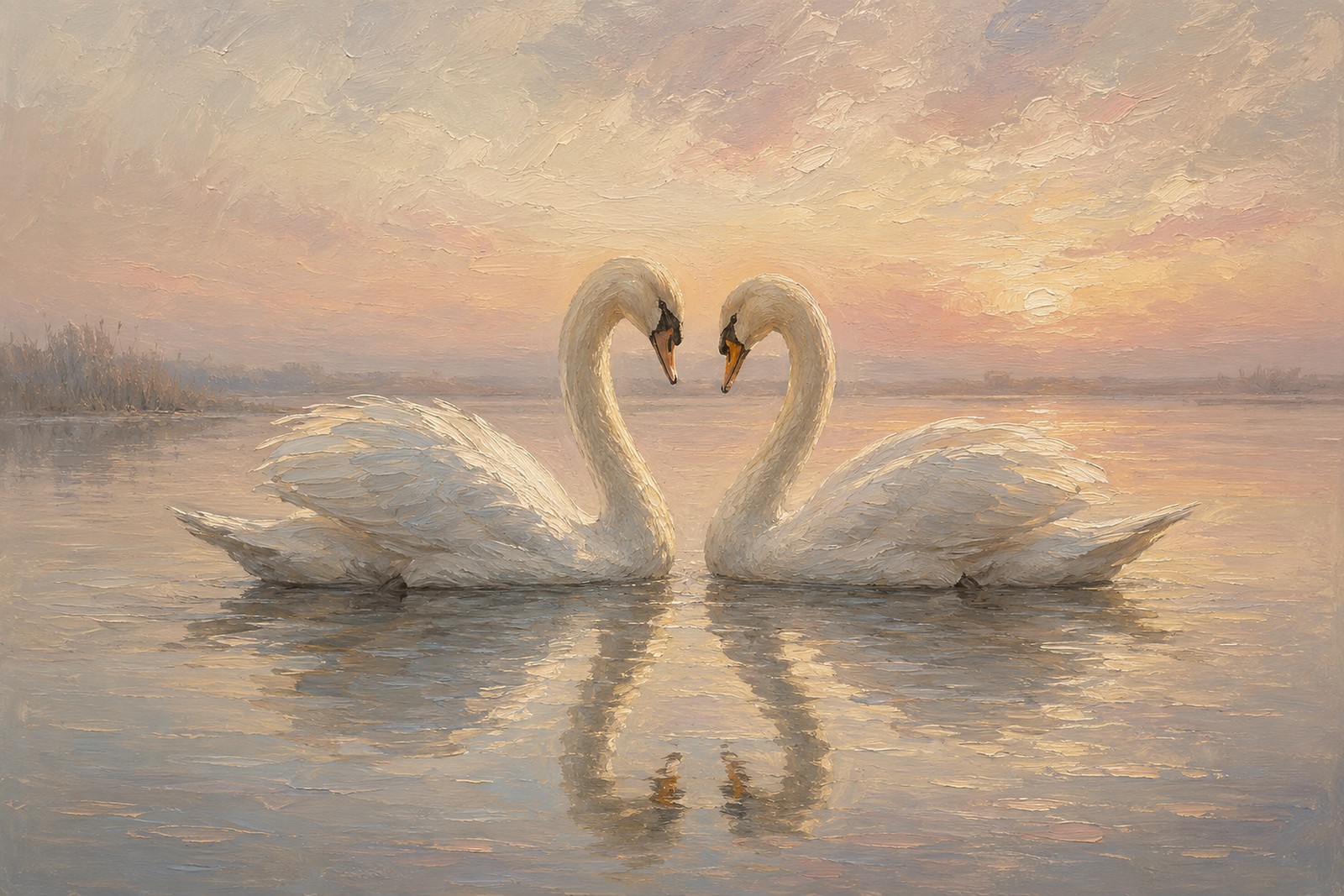
The pair. Two 16x24 prints side by side with a 3 inch gap span 51 inches. That is almost exactly two-thirds of a 76 inch king bed, and it suits standard sofas from about 72 to 80 inches. The pair is the most forgiving arrangement in decorating, and with two birds it comes with a built-in rule: face them toward each other. Our heron prints guide covers the mirrored-pair tradition in detail, and the same symmetry logic applies to any two-bird wall.
The pair, scaled up. Two 20x30 prints with a 3 inch gap span 63 inches, which is the answer for large sectionals and long media walls where a single print would look stranded.
The row of three. Three 12x18 prints with 3 inch gaps span 60 inches in a slim 12 inch band. This is the sideboard and buffet solution, and it works over a sofa in rooms with low ceilings where a tall grouping would crowd the wall.
The 2x2 grid. Four 12x18 prints in two rows make a block 39 inches wide by 27 inches tall. That is the sweet spot above a dresser, a 54 to 60 inch console, or an entry table.
The 3x2 grid. Six 12x18 prints, three across and two down, make a statement block 60 inches wide by 27 inches tall. Over a large sofa or in a dining room this reads as one major artwork at a fraction of the cost of one, and it is the arrangement that most rewards the matched-ratio system, because six mismatched frames in a grid is visibly impossible.
For height: hang the grouping so its centre lands 57 to 60 inches from the floor, the standing eye-level standard, unless furniture forces the issue, in which case keep the bottom edge of the lowest frames 6 to 10 inches above the furniture and let the centre fall where it falls.
How do you mix species without chaos?
The layout math is half the job. The other half is choosing birds that belong on one wall, and the method is to match palettes before subjects.
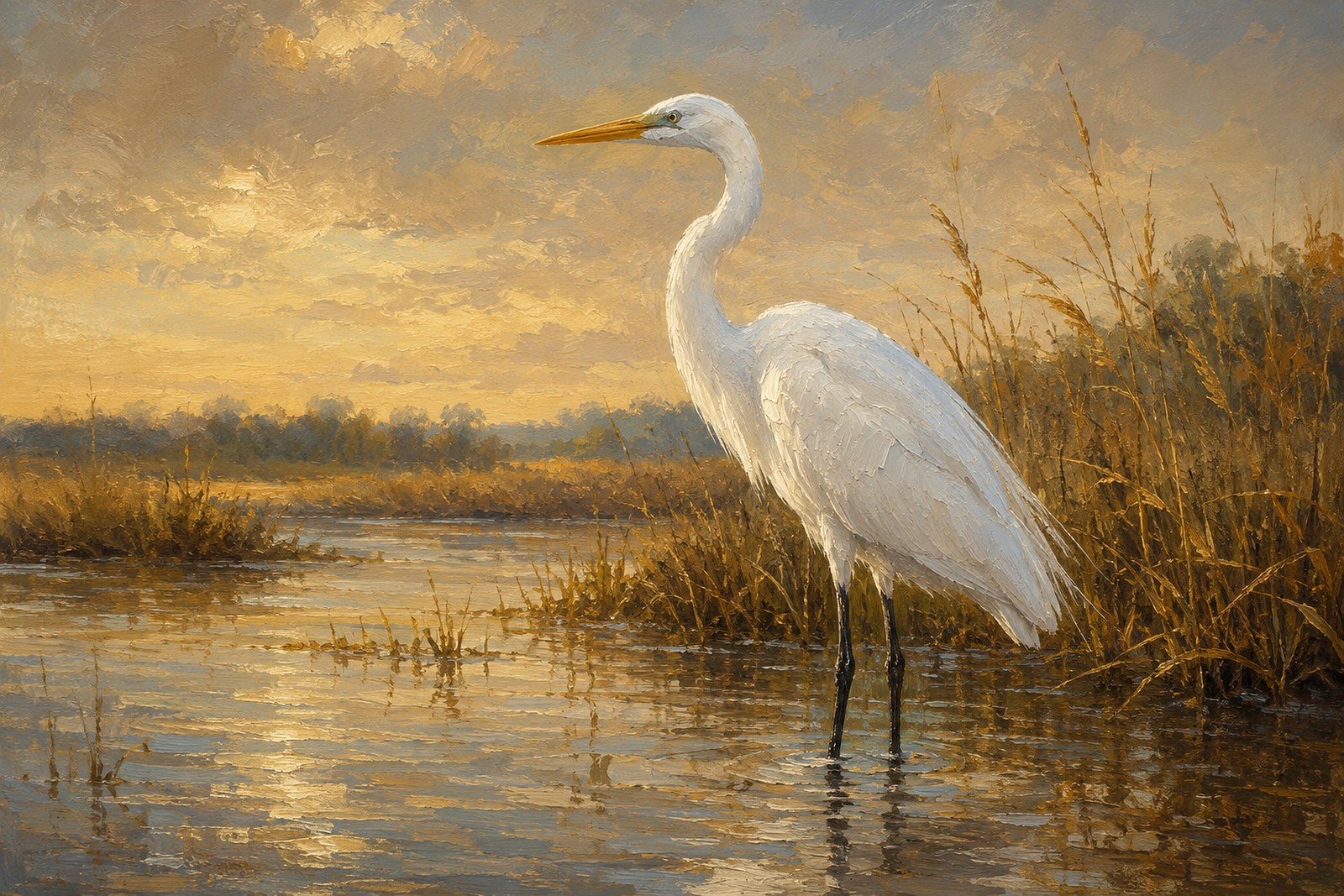
Our prints group naturally into light families. There is a golden family, scenes like the great egret in golden wetland, warm and luminous. There is a grey-morning family, mist and silvered blues, where the great blue heron in morning marsh lives. And there is a dusk family, the deep slates and last-light ambers of the night heron. A gallery wall works best drawn from one family, or from two adjacent ones anchored by the dominant family; what it cannot survive is an even split between bright noon and deep dusk, which reads as two half-walls having an argument.
Beyond palette, three casting rules:
Give the wall one lead. Choose the most formal, most arresting bird as the anchor, centre it or place it in the strongest position, and let the supporting cast vary in energy around it.
Face birds into the arrangement. Wading birds have obvious direction, and the old symmetry rule holds: birds at the edges should look toward the centre of the grouping, never off the ends of the wall.
Vary the shot, not the shape. Mix close portraits with wide scenes so the grid has rhythm, while the identical 3:2 format holds it together. Six identically-composed birds is a stamp collection; six varied scenes in one shape is a gallery.
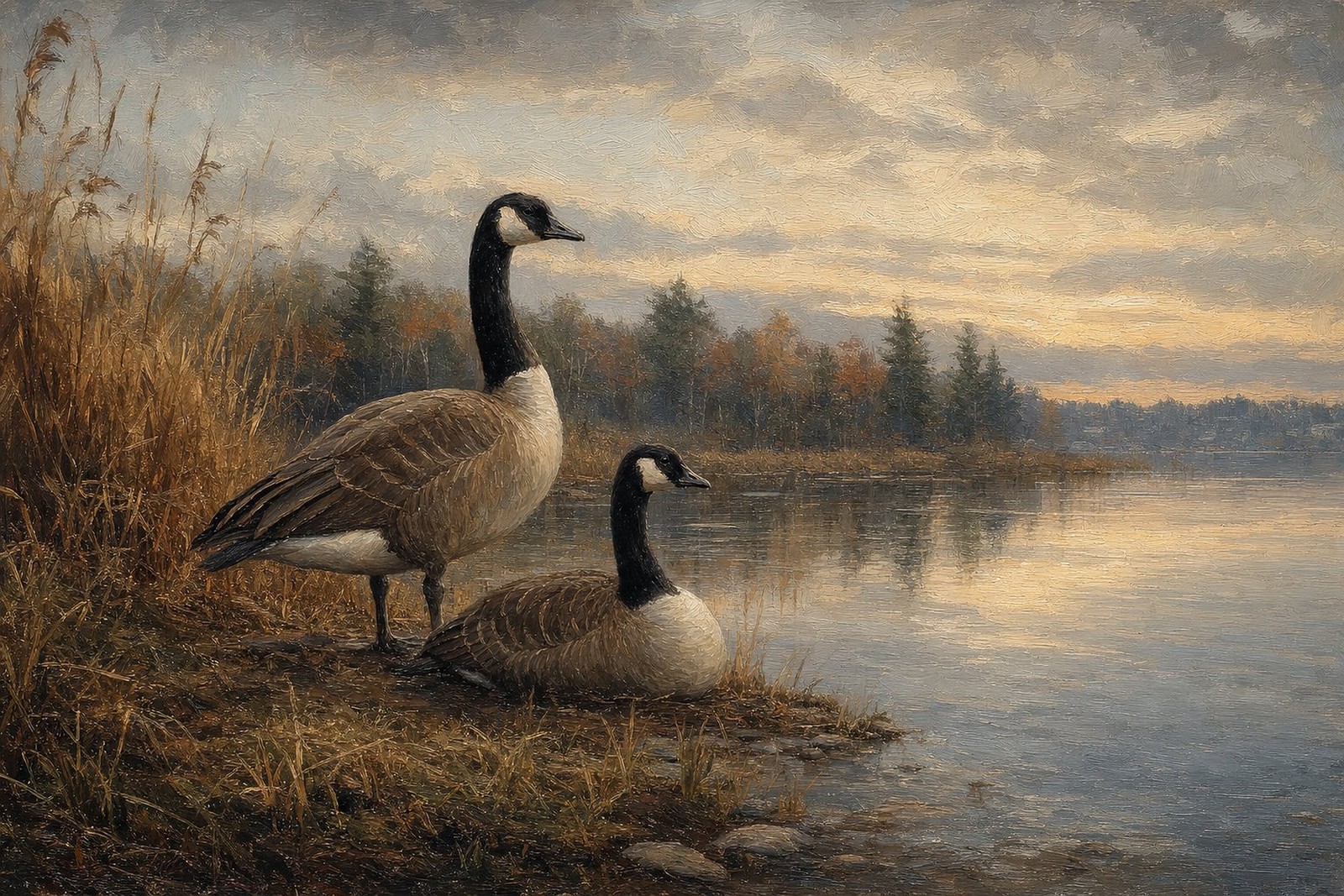
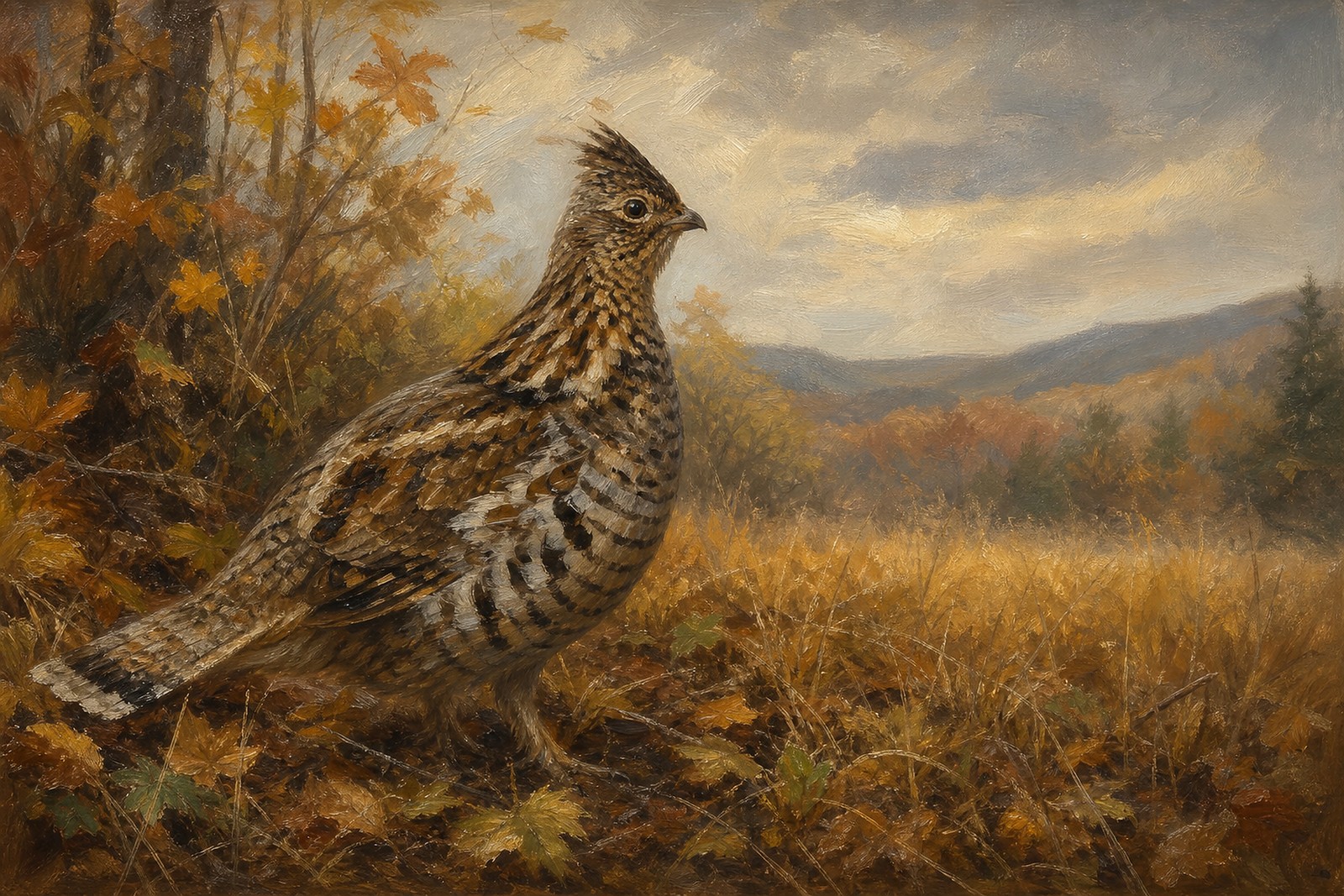
All of these species live in the same real landscape, and every print is an original AI-created artwork in the style of antique oil painting, so a wall of them shares both a world and a rendering style, which is why they hang together so easily. If you want the palette source itself, the coastal estuary habitat page is a tour of the exact greys, golds and greens the prints are built from, and a good shortcut to deciding which family your room wants. When you are ready to cast the wall, start by shortlisting from the coastal collection and sort your candidates into light families before you fall in love with individual birds.
Frames, budget and the buy list
Keep frames matched across the wall: one colour, all six, no exceptions on a grid. Black reads modern and crisp, brown suits wood-heavy and relaxed rooms, gold leans traditional. Framed prints are $189 at 12x18, $259 at 16x24 and $329 at 20x30; unframed, $59, $89 and $119, if you already have a framer you trust. A full 3x2 statement grid of framed 12x18s, for reference, comes to $1,134, which is respectable-art money but a fraction of what one gallery piece at 60 inches would cost.
Everything is made to order and dispatched in 2 to 5 business days, with free shipping to the US, Canada, the UK, Europe, Australia and New Zealand, and a 30-day replacement or refund policy if anything arrives damaged, defective or wrong. Order the whole wall at once so the batch arrives together.
Hanging day: the order of operations
Cut paper templates to your framed sizes, tape the full arrangement to the wall with painter’s tape, and live with it for a day. Check your 3 inch gaps with a cut cardboard spacer rather than a ruler; a jig never misreads. Then hang from the centre outward: anchor print first, then its immediate neighbours, checking level as you go. On a grid, small errors compound toward the edges, so the centre-out order is not optional. Two picture hooks per frame stops the slow clockwise drift that plagues single-hook hangs.
Frequently asked questions
How much space should be between frames on a gallery wall?
Two to three inches, kept identical everywhere, is the standard for grids and pairs. Wider than four inches and the grouping stops reading as one artwork; narrower than two and the frames start to crowd. Cut a spacer block and use it at every joint.
Should all the frames on a coastal gallery wall match?
On a grid or pair, yes, one colour throughout. Matched frames are what let six prints read as a single composition. The relaxed exception is an organic, grown-over-time wall, but for the planned layouts in this guide, uniformity wins.
Can I mix portrait and landscape prints in one grid?
Not in a true grid; mixed orientations are what force the salon-style hang and its difficulty. Our prints are all 3:2 landscape precisely so grids stay effortless. If you crave variation, vary size between rows rather than orientation within one.
What height should a gallery wall be hung at?
Aim the centre of the whole arrangement at 57 to 60 inches from the floor. Over furniture, priority shifts: keep 6 to 10 inches of clear wall between the furniture top and the lowest frames, then let the centre land naturally.