If you have shopped for wall art for more than ten minutes, you have met the word giclee, pronounced zhee-CLAY, attached to everything from museum reproductions to the cheapest listings on a marketplace. Sellers lean on it because it sounds like a standard. It is not one. Here is what the word actually means, which parts of it deserve your attention, and which specifics to check instead of trusting the label.
Where does the word giclee come from?
The term was coined in 1991 by an American printmaker, Jack Duganne, from the French verb gicler, to spray, because he wanted a name for high-end inkjet printing that did not sound like office equipment. That origin tells you the two things worth knowing.
First, a giclee print is an inkjet print. There is no separate machine, no secret process. The intended difference is entirely in the inputs: better inks, better paper, better files, run through printers built for accuracy rather than speed.
Second, and more important for a buyer: no body governs the term. There is no certification, no inspection, no minimum standard. Anyone can print anything on anything and call it giclee, and plenty of sellers do. The word signals an intention, not a guarantee, which means the substance lives in three specifics you can actually ask about.
The three things the word is supposed to promise
Pigment inks. Ordinary inkjet printing uses dye inks, colourants dissolved in liquid. They are bright and cheap, and they fade, noticeably, when a print hangs in daylight for a few years. Pigment inks suspend solid particles of colour instead, and on the right paper they are rated by independent testing in decades of normal indoor display, not years. For art that hangs on a wall rather than living in a drawer, lightfastness is most of the game, and pigment inks are where it comes from.
Archival paper. Archival means the sheet itself will not self-destruct: acid-free, lignin-free stock, usually cotton rag or purified alpha-cellulose, which does not yellow and embrittle the way ordinary poster stock does. One clarification worth having: paper weight, the gsm number sellers love to quote, describes heft and handling, not longevity. A heavy acidic sheet still yellows. Chemistry, not thickness, is what archival means.
Resolution discipline. The master file sets the ceiling on everything. A superb printer fed a small, over-enlarged file produces a soft print on beautiful paper, and no ink chemistry can fix that.
Does DPI matter?
Yes, but only when the number is attached to a size. 300 DPI at the printed dimensions is the working standard for art viewed at arm’s length, and it is the number our own digital masters are built to: 300 DPI at widths up to 24 inches.
Two honest wrinkles keep the number from being a religion. The first is viewing distance. A print over a sofa is read from several feet away, where the eye cannot resolve 300 DPI anyway, which is why very large prints tolerate lower true resolution than small pieces hung in a hallway you pass at close range. The second is that DPI means nothing without size attached: a file that is 300 DPI at 12 inches wide is only 150 DPI once stretched to 24. So the one useful question to ask any seller is not “is this giclee” but “at what size does this file print at 300 DPI”.
What matters versus what is marketing
Worth your attention: pigment inks, named archival stock, resolution stated at size, and printing designed for the full sheet, a composition made edge to edge rather than cropped to fit a format it was never built for.
Mostly marketing: the word giclee itself, for the reasons above. “Museum-grade” with no materials named, which is a mood rather than a specification. And limited editions of digital artwork deserve a clear-eyed look: a file can be reproduced identically forever, so a numbered edition of one is a pricing decision, not a physical fact. None of this makes a print bad. It just means the label is doing the selling, and the materials should be doing it instead.
Why the paper changes how the picture looks
Longevity is only half of what the sheet decides. The other half is how the image reads on the wall, and it is the difference you notice first in person.
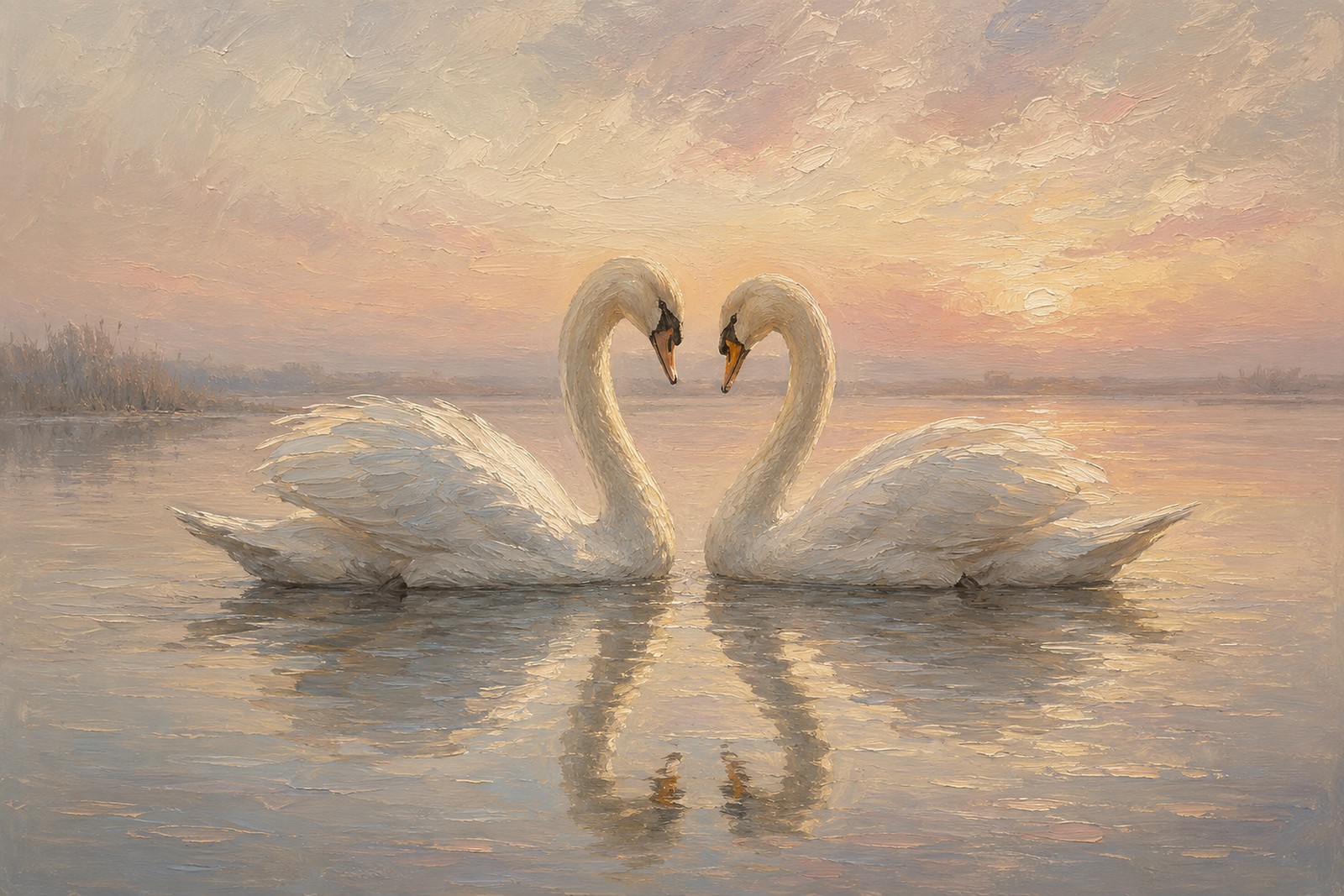
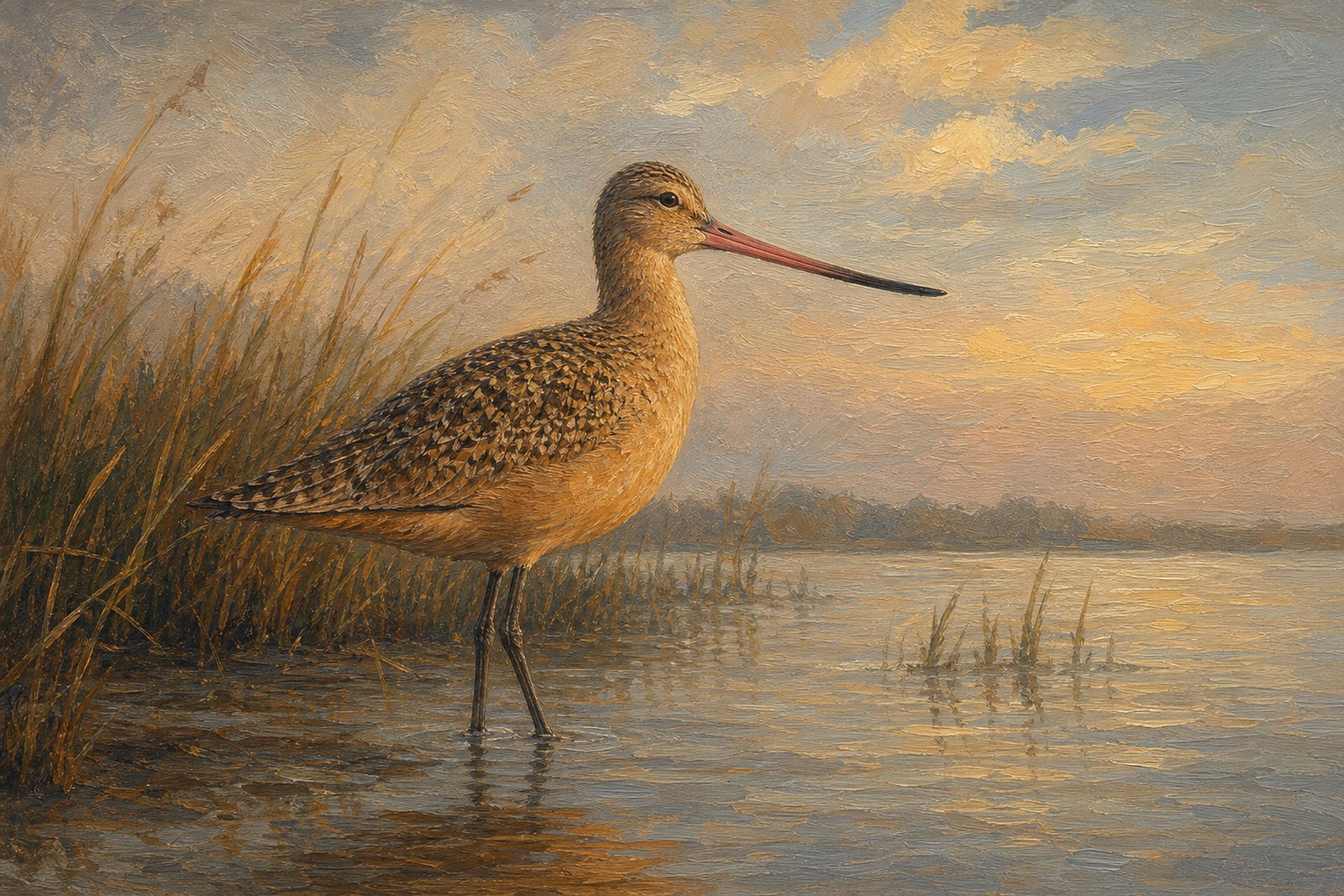
Fine-art stocks are matte or softly textured, and they hold ink differently from the glossy photo papers most people know from framed snapshots. On a matte archival sheet, dark tones stay deep without turning into a mirror, which means the print reads cleanly from an angle and under lamplight instead of throwing reflections back at the room. For tonal, layered artwork, shadowed water, a pale sky graded into haze, the plumage of a godwit in low sun, that even, glare-free surface is what lets the depth register.
Gloss does the opposite: it punches up contrast and then charges for it in reflections, which is why it suits snapshots behind glass better than pictures meant to be lived with. If you have ever tilted a framed photo back and forth to see it past the shine, you have met the problem matte fine-art paper exists to solve.
How our prints are made
The Print Room prints to order with pigment inks on archival fine-art paper, in a 3:2 landscape format, edge to edge with no border or mat line. Unframed prints are $59 for 12x18, $89 for 16x24 and $119 for 20x30; framed prints in black, brown or gold are $189, $259 and $329; the $19 digital download supplies the 300 DPI masters described above, printing up to 24 inches wide. Everything dispatches in 2 to 5 business days, ships free to the US, Canada, the UK, Europe, Australia and New Zealand, and carries a 30-day replacement or refund policy for anything that arrives damaged, defective or wrong.
Every image is an original AI-created artwork in the style of antique oil painting, and we say so on every listing, because provenance deserves the same plain answers as materials. The style is also why the materials matter so much here: the deep tonal layering that makes an oil-painting-style print read well flattens visibly on thin stock with dye inks. You can see the result across the shorebird and beach house collection, or in the two subject guides where we go deepest on hanging and pairing, our heron prints guide and our swan prints guide.
Frequently asked questions
Is a giclee print better than a poster?
If the giclee label is backed by real materials, yes, and the difference compounds over time. A poster is dye ink on thin stock: bright on day one, faded and yellowing within a few years by a window. Pigment ink on archival paper holds its colour and stays flat and white for decades. For anything you intend to frame and keep, the materials are worth the difference.
How long does a giclee print last?
Pigment inks on archival paper are rated in decades of normal indoor display. The honest caveat is that conditions matter: direct sunlight accelerates fading of any print, and chronic damp attacks the sheet. Hung on an ordinary interior wall out of direct sun, decades is the realistic expectation.
Is a giclee print a one-of-a-kind artwork?
No, and be wary of listings that blur this. A giclee print is a reproduction, one copy of a master, made on demand. In our case the master is an original AI-created artwork in the style of antique oil painting, and the print you receive is a pigment-ink copy of it on archival paper. That is exactly what you are buying, stated plainly.
What should I ask a seller instead of “is it giclee”?
Three questions: what ink (pigment or dye), what paper (named archival stock or unnamed), and at what size the file prints at 300 DPI. Any seller doing this properly can answer all three without hesitation.