Most wall art is bought with a budget closer to $100 than $1,000, and there is nothing apologetic about that. It is the realistic price band for a piece you like rather than a piece you insure. The trouble is that at this price the market sells wildly different objects under the same vocabulary: “fine art print”, “gallery quality”, “archival” all appear on listings whose actual materials range from excellent to disposable. This is the map of what $100 genuinely buys, with our own prices used as worked examples rather than the punchline.
What does $100 actually buy?
Four tiers, from the bottom up.
The poster tier. Thin stock, dye inks, usually shipped rolled tight in a light tube. This is most of what a general marketplace shows you first, and it can cost anywhere from very little to a surprising amount, because nothing stops a poster from wearing a fine-art price tag.
The open-edition fine-art tier. Pigment inks on archival paper, printed to order. This is where under $100 gets genuinely good, and it is the tier this guide is really about. Unframed sizes up to roughly 16x24 sit comfortably inside the budget here.
The framed small-format tier. Under $100 with a frame included usually means the frame has eaten half the budget, so either the print or the frame is smaller or simpler than you hoped. Possible, but it involves compromise, and it is worth knowing which compromise you are making.
Hand-made and limited work. Etchings, screen prints, small editioned work by living printmakers occasionally dips under $100 at small sizes, and it is a lovely category. For wall-sized pieces, it mostly lives above this budget.
The poster tier, and how to recognise it
The tells are consistent. Paper you can see light through. Colour that leans bright and thin rather than deep. And above all, a listing that names no ink and no paper, because listings go quiet about materials exactly when the materials are nothing to mention.
The failure mode is not day one, when a poster can look perfectly cheerful. It is year two or three, when dye inks by a bright window have visibly faded and the thin sheet has rippled inside its frame. A poster is a fine object for a pinboard. It disappoints in a frame because framing promises permanence that the materials cannot keep.
The fine-art tier: where under $100 gets good
What changes at this tier is everything the poster tier went quiet about: an archival sheet that stays flat and white, pigment inks rated in decades rather than years, and a master file with enough resolution to be printed at size without softening.
Our own shelf makes the worked example. The 12x18 unframed print is $59 and the 16x24 is $89, both under the line. The 20x30 at $119 sits just over it. All three are printed from the same 300 DPI masters, with the same pigment inks, on the same archival fine-art paper, in the same 3:2 edge-to-edge landscape format. That last sentence is the one worth internalising: under $100 at this tier you are not buying a lesser object, only a smaller one. The materials do not thin out as the sheet shrinks.
Where does the money go?
An honest cost anatomy, because “why does a sheet of paper cost $89” is a fair question.
The sheet and the ink come first: archival stock and pigment ink sets are the expensive end of the printing world, which is exactly why the poster tier avoids them. Then the production model: each print is made to order and dispatched in 2 to 5 business days, which means no warehouse of pre-printed stock and no waste, but also no economies of a thousand identical copies. Packaging is engineered to get a large paper object across an ocean without a crease, and shipping itself, free to the US, Canada, the UK, Europe, Australia and New Zealand, is priced into the ticket rather than added at checkout. So is the 30-day replacement or refund promise for anything arriving damaged, defective or wrong, which is a real cost some seller has to carry, and at this tier it is the seller.
Frames explain the jump past $100 honestly. The framed versions run $189, $259 and $329 in black, brown or gold, because a frame adds materials, glazing, assembly and a heavier, bulkier parcel. Nobody’s framed 16x24 arrives at your door under $100 without something in that chain being trimmed.
How do you spend under $100 well?
Three routes, depending on how the budget wants to stretch.
Route one: the $89 anchor. One 16x24 unframed print now, one ready-made frame from a local framer or home store later. This spreads the spend and puts the whole art budget into the part that is actually art.
Route two: the $59 starter. The 12x18 print with change left for the frame, the right call for hallways, bathrooms with sense (framed, ventilated, away from steam) and smaller rooms. Two of them make a pair over time.
Route three: the $19 digital. The download supplies 300 DPI master files printing up to 24 inches wide; a local print shop does the rest at their prices. The honest trade-off is that the result now depends on the shop’s paper and inks, which is the whole materials lesson of this guide handed over to you. Choose the shop the way this guide chooses a listing: ask what ink and what stock.
Choosing the subject once the budget is set
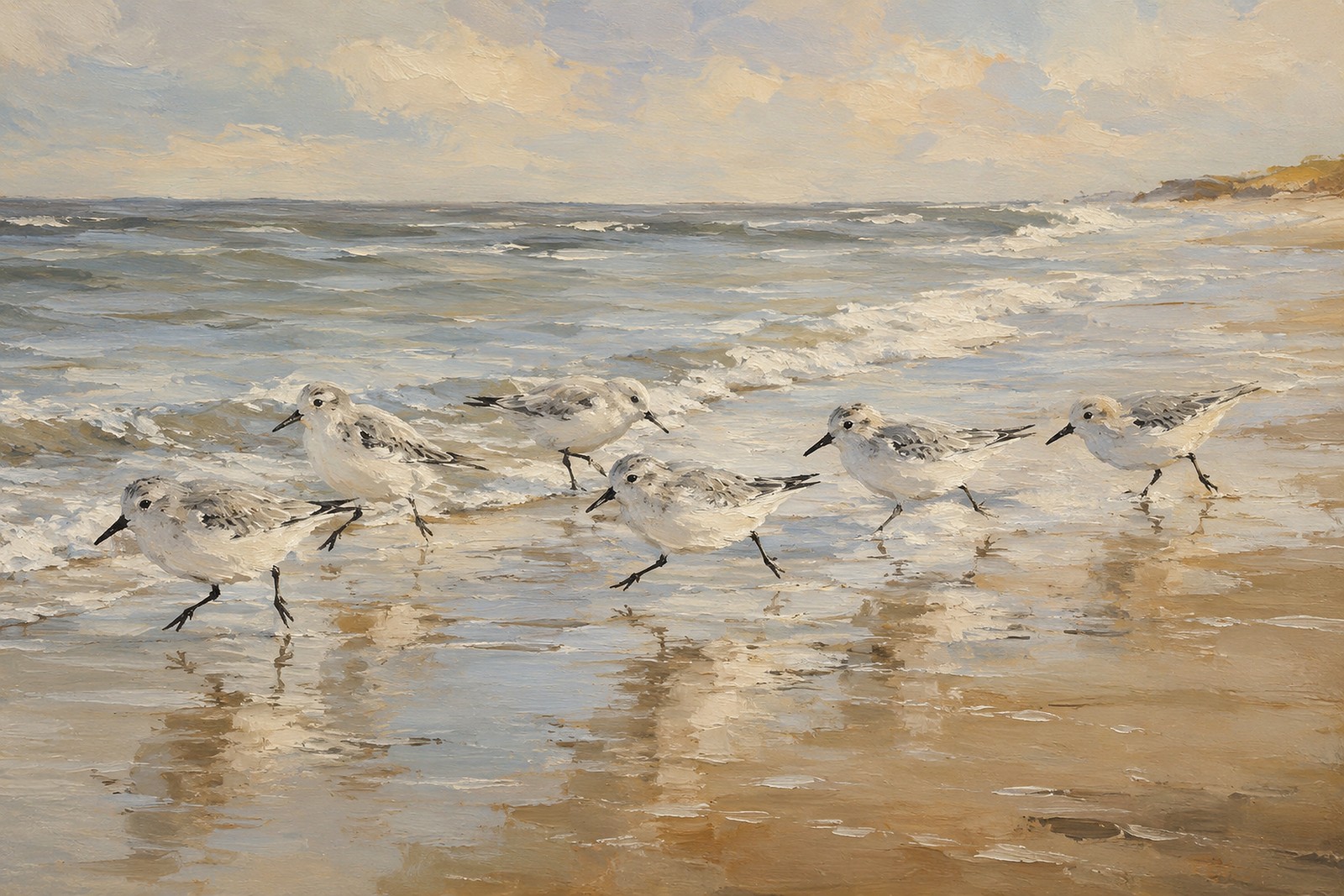
Spend the last of your attention on palette, not species. A print that agrees with the room’s existing colours gets hung; one that fights them gets stored. The sanderling flock along the tideline, all sand, silver and foam white, is the flexible default that fits the widest range of rooms, which is why it features at the top of this guide. For traditional and layered interiors, our grandmillennial bird prints guide covers that register, and for a single commanding statement piece, the heron prints guide makes the case for the tall bird. All of it, sanderlings to curlews, sits in our shorebird prints for beach houses, with the two under-$100 sizes on every listing.
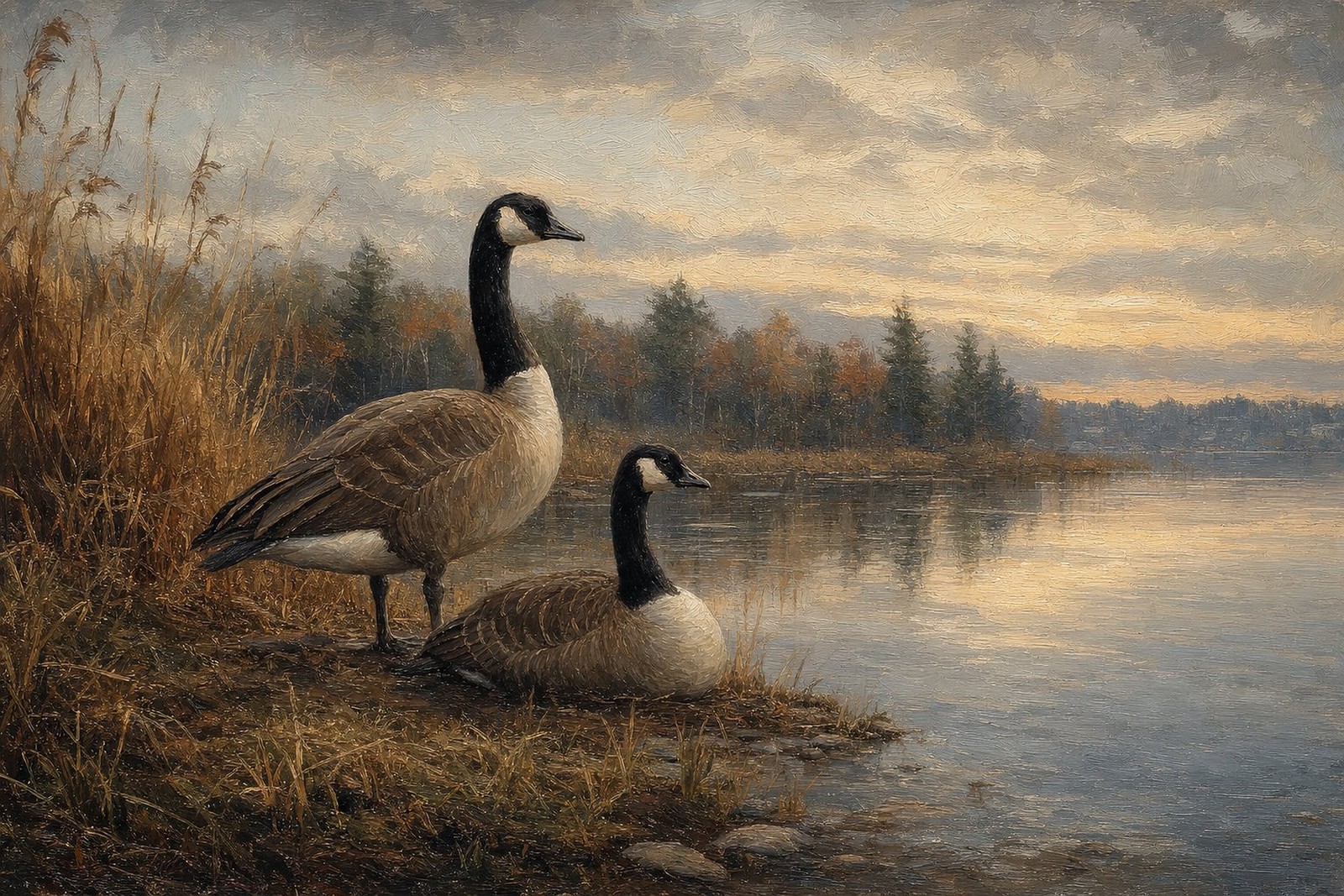
Every print is an original AI-created artwork in the style of antique oil painting, stated plainly on every product page, printed edge to edge on archival fine-art paper in 3:2 landscape.
Frequently asked questions
Can I get a framed bird print under $100?
Not from us: framed prints start at $189, because the frame, glazing and heavier shipping are real costs. The realistic under-$100 route is the $89 unframed print plus a ready-made frame bought locally, or the $19 digital file printed and framed at your own pace.
Why is the digital download only $19?
Because you are buying the master file and nothing physical: no paper, no ink, no packaging, no shipping. The files are 300 DPI at widths up to 24 inches, and the printing costs and quality control become yours, via whichever local print shop you choose.
Is the $59 print lower quality than the $119 one?
No. Same master file, same pigment inks, same archival paper, same edge-to-edge 3:2 format. The only difference between the $59, $89 and $119 prints is the size of the sheet: 12x18, 16x24 and 20x30 respectively.
What if my print arrives damaged?
There is a 30-day replacement or refund policy covering prints that arrive damaged, defective or wrong. It applies to those cases specifically, not change of mind, so choose palette and size carefully up front and the policy is there for the rest.