A hunting lodge has a look before it has any decor at all: dark wood, leather, low light, a fireplace doing most of the work. The mistake is filling that room with generic wildlife art, the kind sold in bulk at big-box stores, when the room is already asking for something with more weight to it. Oil-painting-style waterfowl prints do the job that room needs done: they read as old and considered rather than new and generic, and they hold up under the same low, warm light that makes everything else in a lodge feel right.
This is a guide to choosing them properly, which birds suit which corner of the room, how pairs and symmetry work on a lodge wall, and what size actually fills the space you have rather than leaving it looking unfinished. Most of the birds below come from the same still, inland water covered in our pond and pothole habitat guide, the small lakes and backwaters that produced the sporting tradition this whole style of art grew out of.
Which birds suit a lodge, den, or cabin wall
Not every bird reads the same in a dark-wood room. Some carry the weight a lodge wall demands; others get lost in it.
Mallard. The reliable choice for any lodge. That bottle-green head and hard white collar hold their own against dark panelling, and the bird is universally recognised, which makes it the safest single print for a room used by guests as much as family.
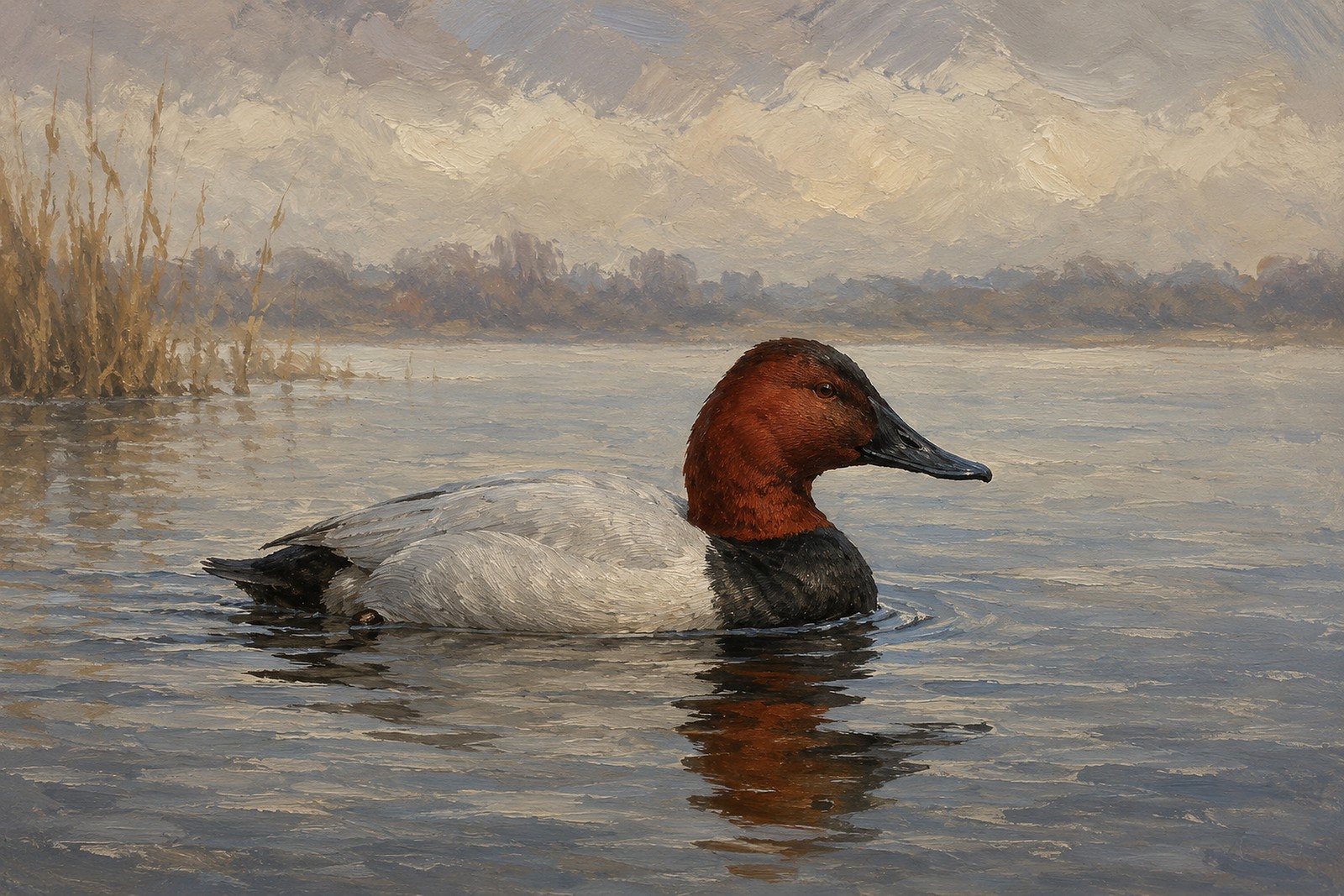
Canvasback. Called the aristocrat of ducks for its chestnut head and pale sloping back, the canvasback carries genuine sporting history, it was the prize bird of the old market hunters, and that history sits well in a room built around the same tradition. It’s a stronger choice than mallard for a den meant to feel serious rather than merely decorative.
Redhead. A close cousin of the canvasback in both range and reputation, with a rounder head and a deeper rust colour. Where a canvasback print reads refined, a redhead reads a little wilder, which suits a lodge with a rougher, more working-camp character.
Goldeneye. The common goldeneye’s sharp black-and-white pattern and that namesake bright eye give it a graphic quality the softer-toned ducks don’t have. It works well as a smaller accent piece, especially in a hallway or landing off the main room where a full-size canvasback would be too much.
Loon. For a lodge on or near water, the common loon is close to obligatory. The low, misty, first-light treatment these prints use matches the mood of an early morning on the lake almost exactly, and the bird’s call is inseparable from the idea of a northern cabin for most people who’ve spent a summer at one.
Teal. Smaller and quieter than the birds above, teal prints work in tighter spaces, a bathroom, a bunkroom, a narrow hallway, where a large mallard or canvasback piece would overwhelm the wall.
See the full range at /shop/ to compare all of these side by side before deciding what the room needs.
Dark-wood pairings
The reason these prints suit a lodge specifically, more than a coastal cottage or a modern apartment, comes down to how they sit against dark wood. The style of antique oil painting these prints draw on was built around deep, warm palettes, umbers, bottle greens, rust, dull gold, and those colours don’t fight with stained pine, walnut panelling, or a leather chesterfield the way a bright, flat photograph would. A canvasback or mallard print against a dark-wood wall reads as if it’s always belonged there, which is exactly the effect a good lodge room is going for.
Frame choice matters here too. A brown wood or gold frame keeps the print in register with the room; a stark, thin modern frame will look imported from somewhere else entirely. If you’re framing for a lodge, match the frame to the room’s existing wood tone rather than to the print itself.
Pairs and symmetry: the lodge wall’s best trick
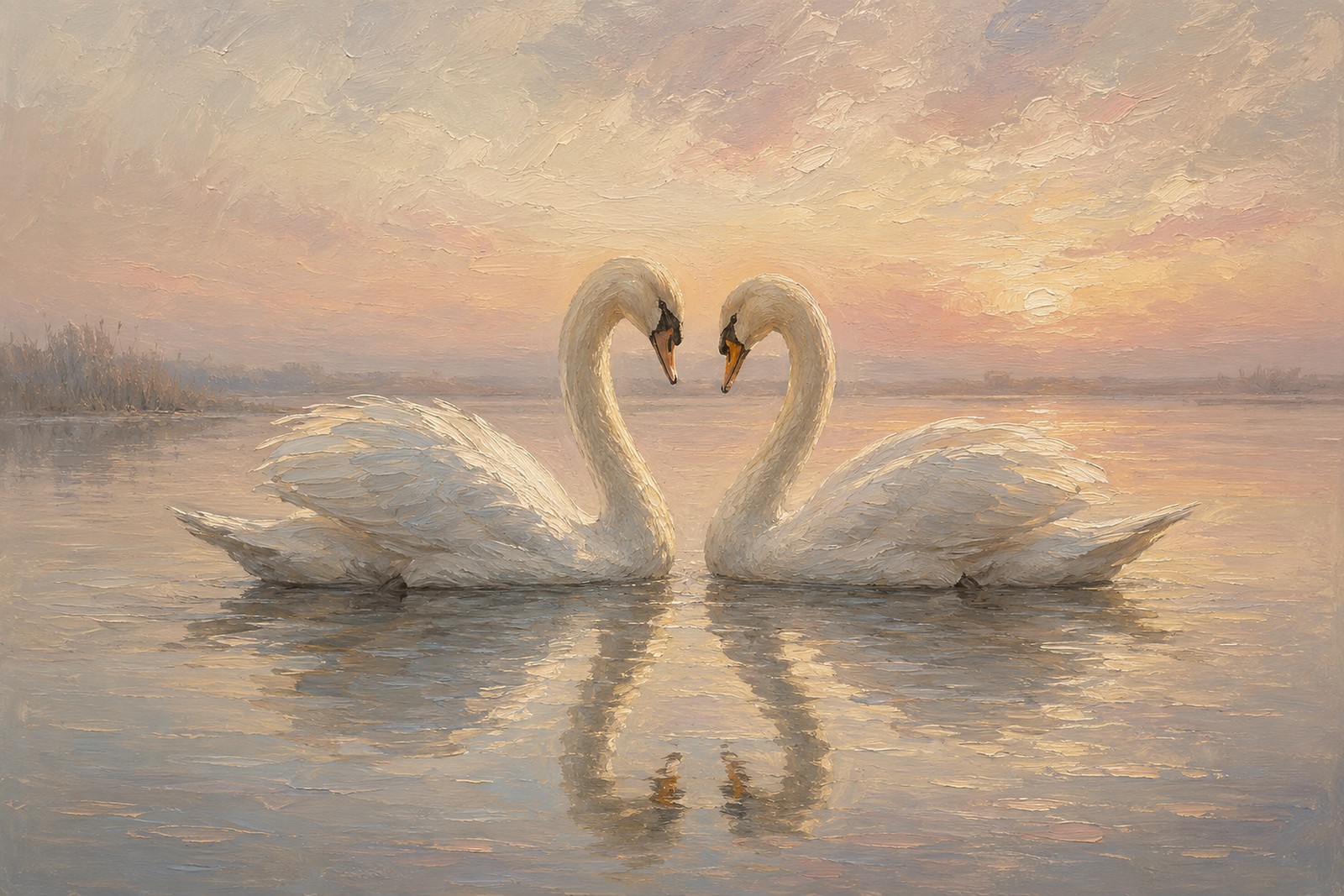
A single print on a large lodge wall often looks stranded, too small for the space around it. The fix most interior designers reach for is a matched pair: two prints of complementary birds in the same style, hung with a gap between them so the pairing flanks a fireplace or window, or sits balanced over a sideboard.
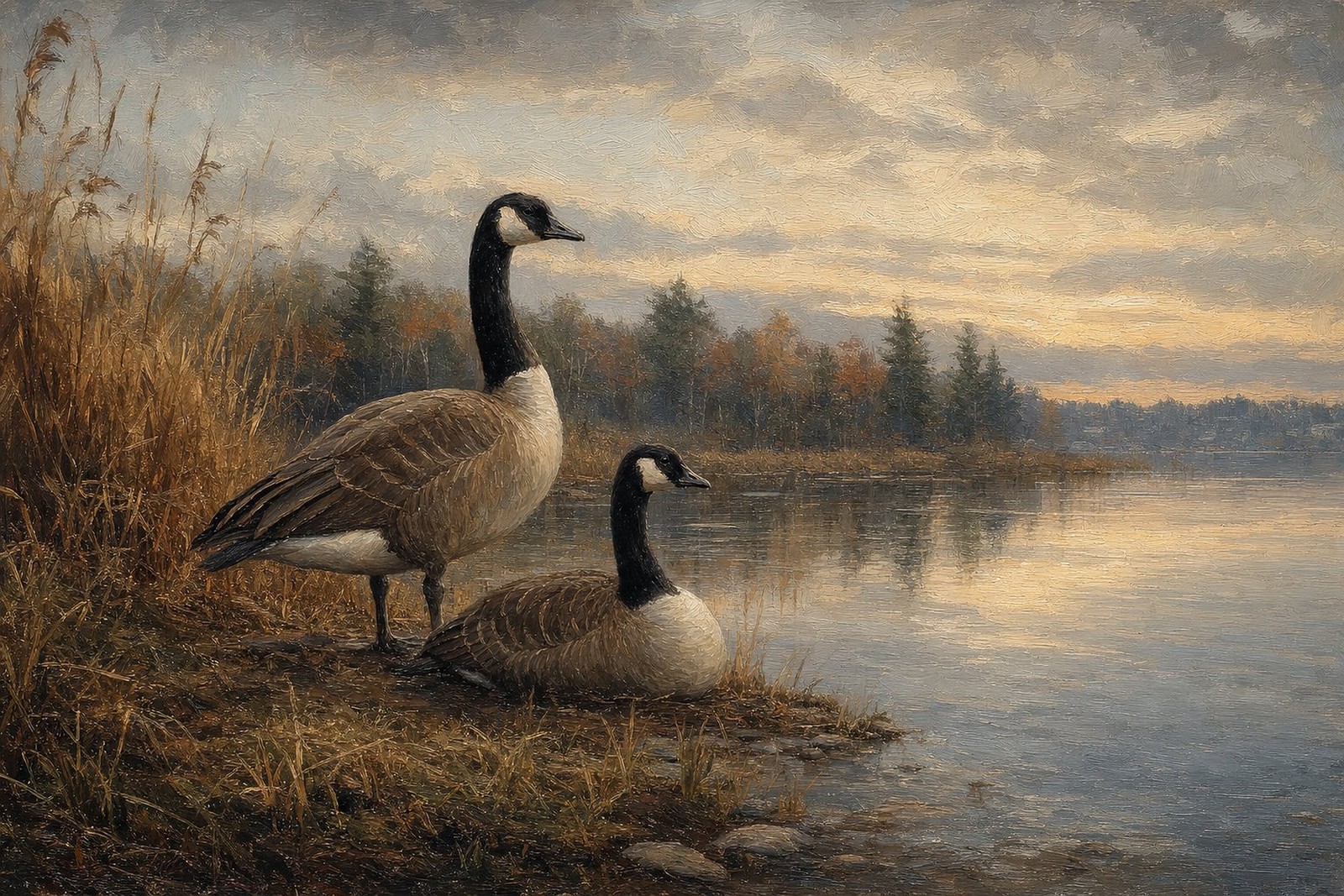
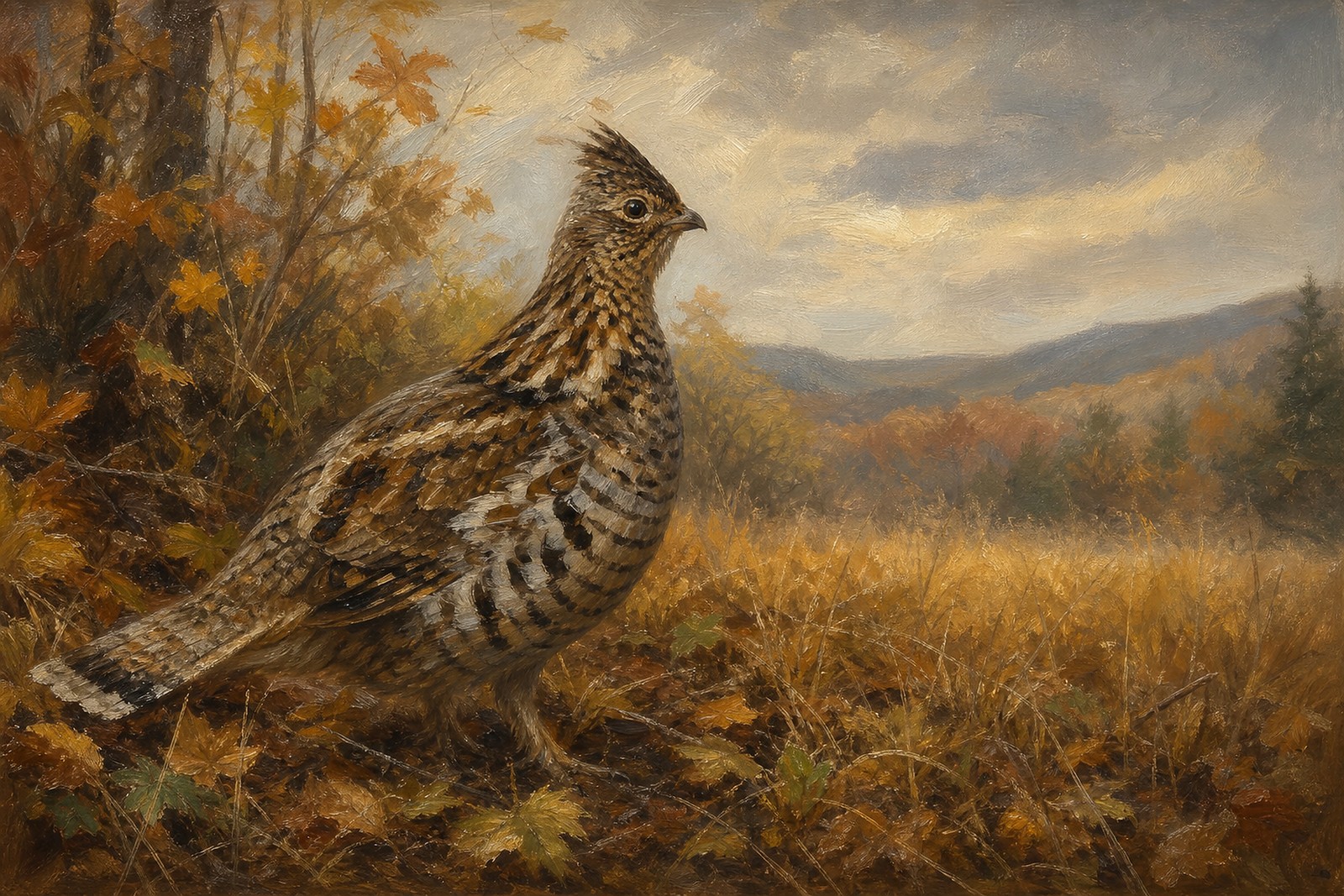
Our shop is built for exactly this, every print shares the same wide 3:2 landscape format and the same oil-painting style, so any two birds from the same water hang together as a deliberate set. For a lodge specifically, two mallard scenes flanking a fireplace or a canvasback and redhead hung as a diving-duck pair over a sideboard both use the same trick: the symmetry does the visual work that a single oversized print can’t, and the room reads as furnished rather than decorated.
This same principle, matched pairs used for visual weight and balance, is one worth applying room by room rather than guessing, and the shop page shows the full collection side by side.
What size print do you actually need?
Lodge rooms tend to have big, plain walls, which makes undersized prints one of the most common mistakes. As a rough guide:
- 12x18 suits a hallway, a bathroom, a bunkroom, or as one piece within a larger gallery wall of several prints grouped together.
- 16x24 is the workhorse size for a den or study wall, large enough to read from across the room without dominating a smaller space.
- 20x30 suits a genuinely large lodge wall, especially above a fireplace, a long sofa, or as the anchor piece in a great room with high ceilings.
A useful rule of thumb: a single print or a pair should occupy roughly two-thirds the width of the furniture beneath it, a sofa, a mantel, a sideboard. Undersized art is the single most common reason a well-furnished room still looks unfinished. Every size from 12x18 to 20x30 is listed on each product page in the shop, so you can check exact dimensions against your own wall before ordering.
Bringing it together
A lodge or den doesn’t need many prints to feel complete. One strong single piece over the main seating area, a matched pair flanking a fireplace, and one smaller accent print in a hallway or bunkroom will usually do more for the room than a dozen scattered pieces. Choose birds that mean something to whoever uses the room, mallard for the generalist, canvasback or redhead for the hunter who knows the history, loon for anyone who’s spent a summer on northern water, and let the size and framing follow the wall rather than the other way around.
If you’re shopping for the hunter who’ll actually use this room rather than decorating it yourself, our Duck Hunter Gift Guide covers the same prints from a gift-giving angle, including pairing them with more practical camp gear.
FAQ
What’s the single best waterfowl print for a hunting lodge if I can only buy one?
A mallard, in a 16x24 frame with a brown wood finish. It’s universally recognised, carries enough visual weight for a large room, and pairs easily with other prints later if you decide to expand the wall.
Should hunting lodge prints be framed or unframed?
Framed, for a lodge specifically. The room’s whole character depends on materials, wood, leather, brass, and an unframed print loses that context. Choose a frame that matches the room’s existing wood tone rather than a stark modern frame that will look out of place.
How do I decide between a single large print and a matched pair for a lodge wall?
Measure the wall first. A single 16x24 or 20x30 print suits a smaller wall or one with furniture directly beneath it. A matched pair of complementary birds works better on a wide, plain wall, especially flanking a fireplace, window, or piece of furniture, since the symmetry fills the space more convincingly than one oversized print would.
Do these prints work in a modern cabin, or only a traditional wood-panelled lodge?
They work in both, though the effect differs. In a traditional lodge they blend in with the existing materials. In a more modern cabin with white walls and clean lines, the same print becomes a deliberate contrast, an oil-painting-style piece against a contemporary room, which a lot of owners prefer for exactly that tension.