Flowers are the right first gift. They arrive within days, they fill a hushed house with colour and scent, and they say the essential thing, which is simply: I heard, and I am thinking of you. Nobody should skip the flowers.
But flowers are a first-week gift, and grief is not a first-week event. Ten days on, the lilies go to the compost, the cards stop arriving, the freezer is still full of other people’s casseroles, and the house goes quiet in a way it was not quiet before. This guide is about the second gift, the one that arrives after all that, and stays. Bird art happens to be unusually good at being that gift. Here is why, how to choose a piece well, and how to give it without putting any weight on the person receiving it.
Why quiet art comforts when flowers fade
A print asks nothing. That sounds like faint praise until you have been on the receiving end of condolence logistics. Flowers must be watered, arranged, and eventually thrown away, which is its own small sad chore. A casserole dish has to be returned. Even kind letters ask to be answered. A quiet picture on a wall is one of the very few gifts that only gives: a still place for the eye to rest, in a season when rest is scarce.
Birds and water carry a particular kind of comfort here, and it is not mystical. It is continuity. The lake is still there. The birds still cross it in the evening. The world that the person loved has not stopped, and a painting-style image of that world says so without saying anything at all. The comfort of good sympathy art is presence, not message. It does not tell the grieving person how to feel. It just keeps them company.
Choosing the piece: still, not sad
The instinct is to look for art about grief. Resist it. What helps is not sadness rendered beautifully; it is calm. Choose still water, soft light, and unhurried birds. Nothing stormy, nothing bleak, nothing that dramatises loss.
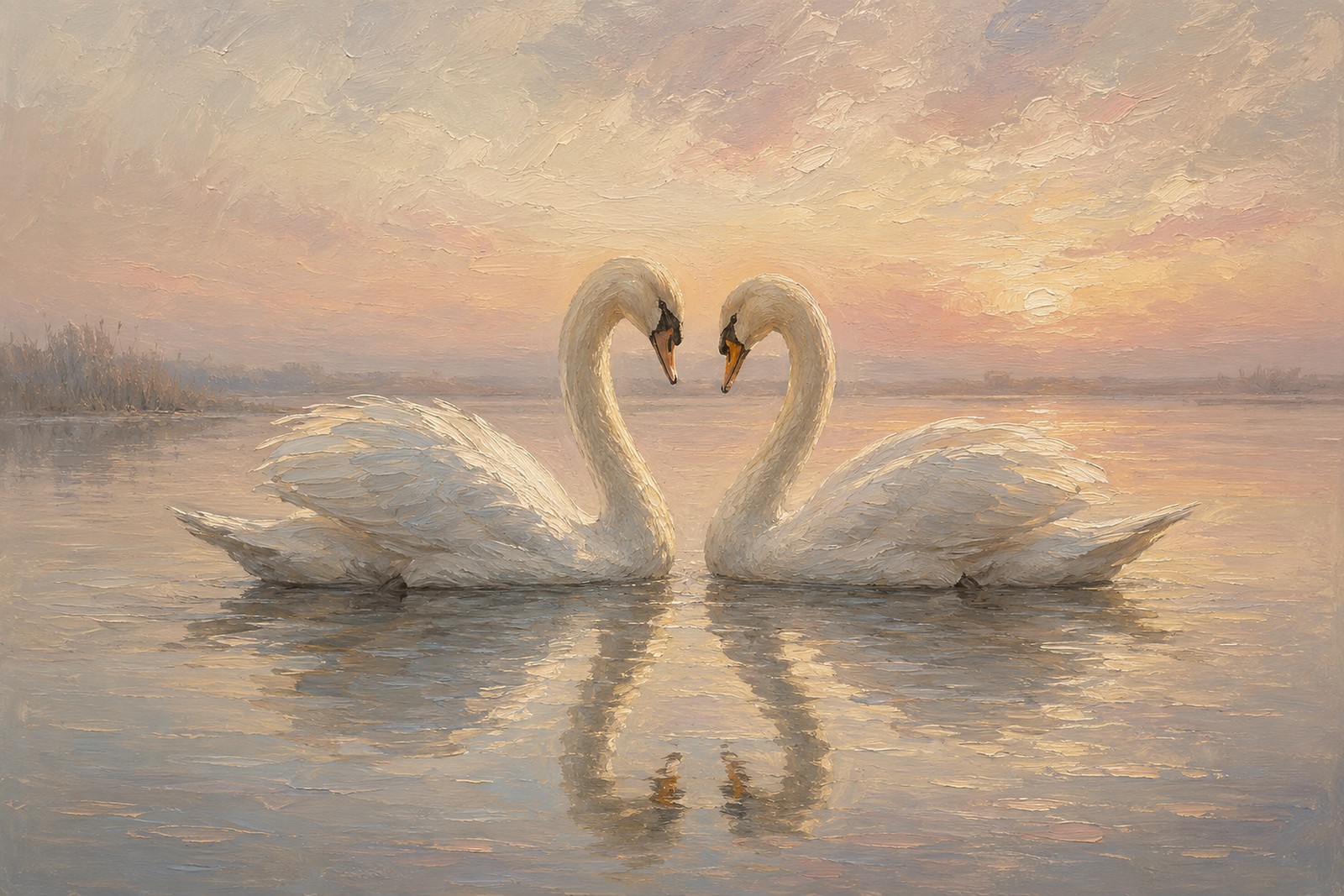
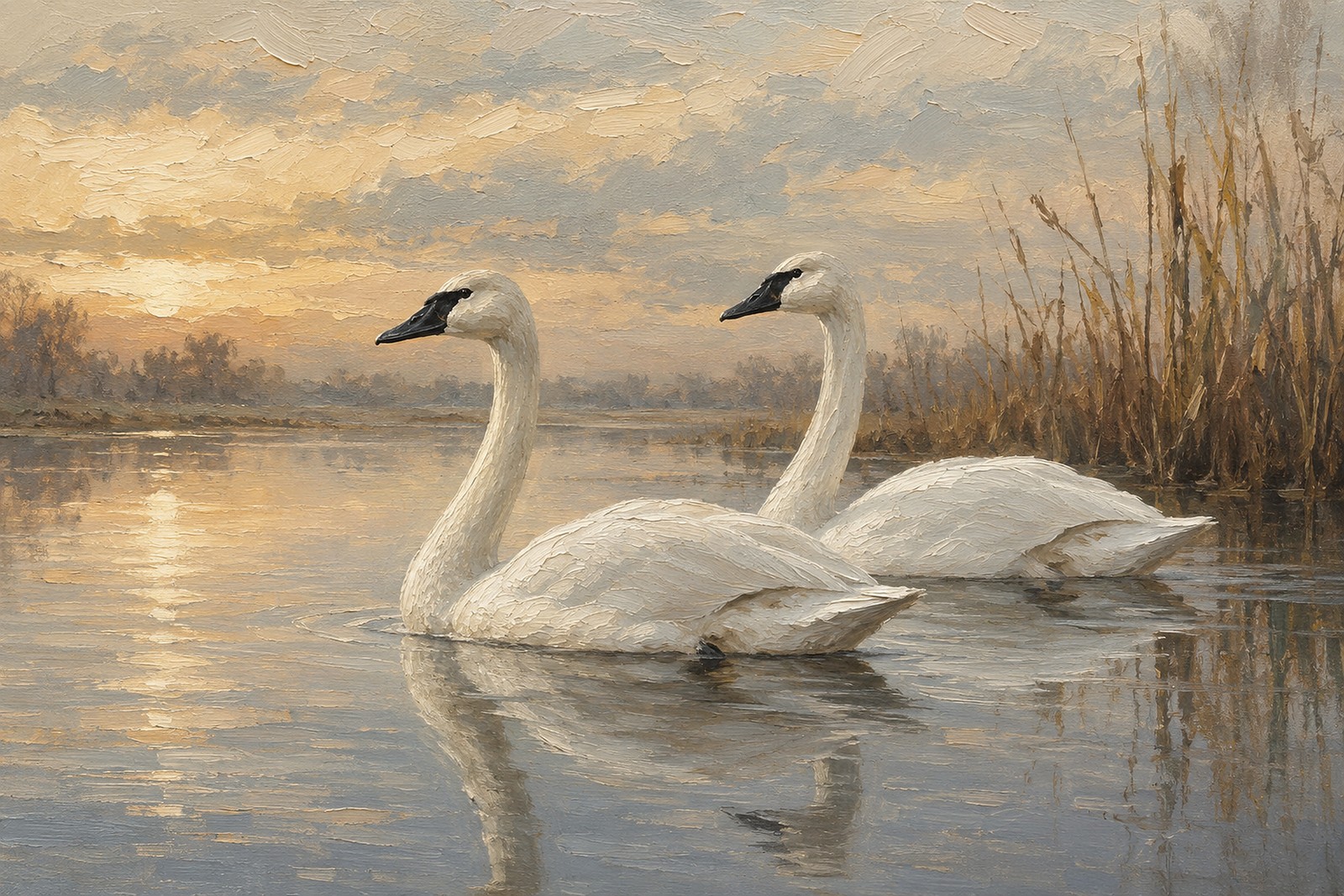
Pairs are worth a special mention. Our trumpeter swan pair on still water is the piece we would reach for first, and the reason is quiet biology rather than sentiment: swans form famously long pair bonds, staying together across many years, a fact explored in our piece on whether swans pair for life. Two swans on flat water reads as companionship without a caption, and it lets the person receiving it find their own meaning, or none, which is exactly the freedom a sympathy gift should give. Trumpeters carry a second quiet note besides: nearly lost a century ago, the species was brought back, and it is now doing well. Nothing about the image insists on any of this. It is simply there if wanted.
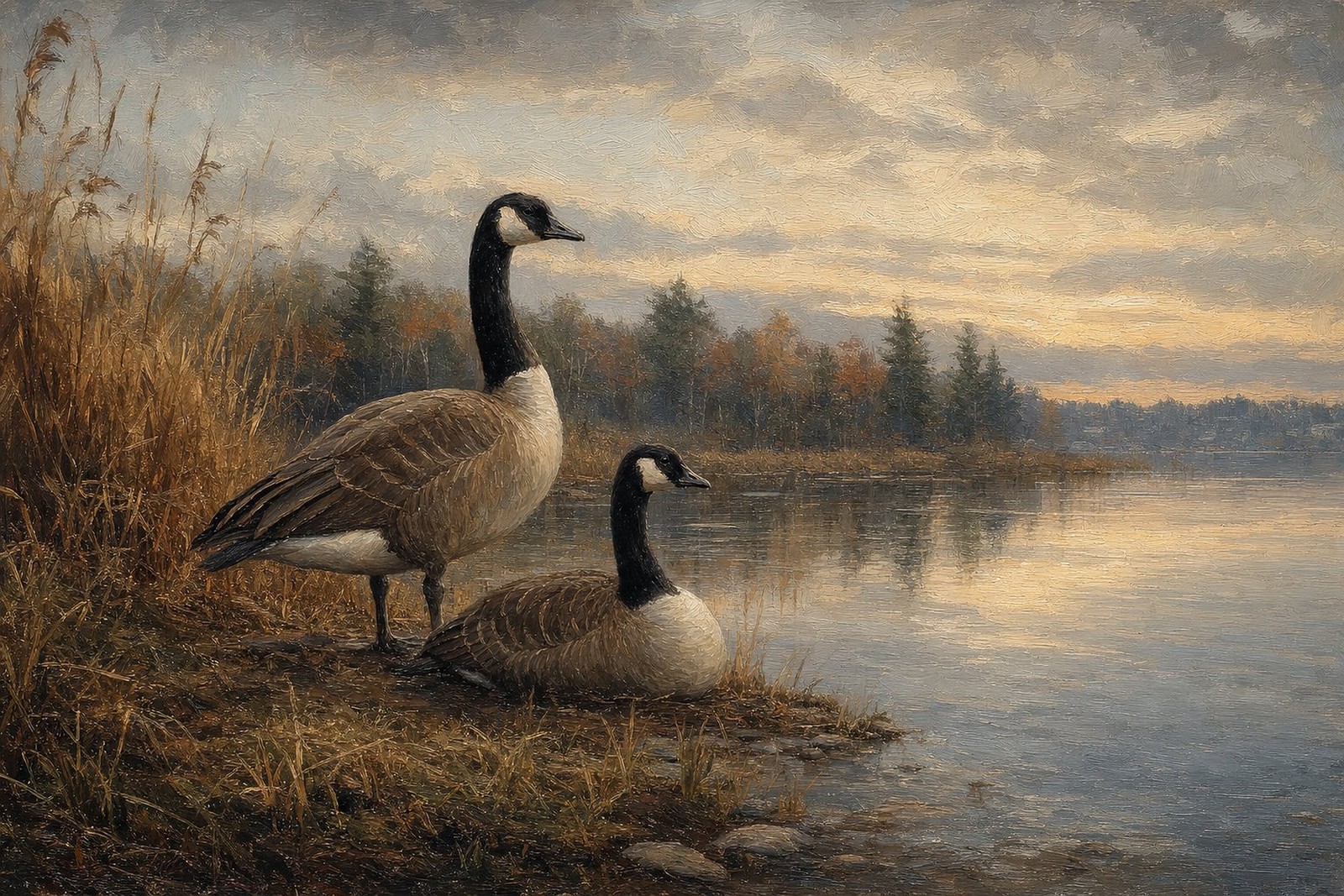
The other reliable approach is to choose their landscape rather than a symbol. The lake they kept a cottage on. The marsh they walked on Sunday mornings. The porch birds they fed for thirty years. A print of the right place, or the right species, says I know what you love better than any inscription could. Loons, grebes, herons, and the quieter marsh birds all live in our still-water bird prints, and the calmest compositions in the shop tend to gather there.
When should you give a sympathy gift like this?
Later than you think, and that is its advantage. In the first week the house is full: people, flowers, arrangements, paperwork. A wall print arriving into that crowd is one more thing to manage.
The natural windows come after. Four to six weeks on, when the visits thin out and the quiet sets in, a package from someone still thinking of them lands very differently. Some people wait for the first difficult marker instead: the birthday, the wedding anniversary, the first anniversary of the loss itself. There is no wrong choice among these, and later is never too late. A sympathy gift that arrives months on says the one thing everyone grieving most wants to hear: you are not the only one who still remembers.
Practically, there is no rush built into ordering either. Each print is made to order and dispatched within 2 to 5 business days, so the sensible approach is simply to order when the time feels right.
How to give it well
The difference between a comforting gift and a burdensome one is almost entirely in the handling. A few practical rules:
Have it sent to yourself first. Add a handwritten note and pass it on personally or repack it. A gift like this should not arrive looking like an order.
Keep the note short and specific. One remembered detail beats a paragraph of comfort: a line about the person and the water, the birds, the place. Do not explain the art or its symbolism. If the image needs a caption, it is the wrong image.
Give permission not to hang it. A sentence like “no need to find a wall for this now” is one of the kindest things you can write. It converts the gift from a task into an option, and most people use the permission for a while and then hang the print anyway, in their own time.
Consider giving it framed. A framed print arrives ready to hang, which means the gift carries no errand with it. For someone worn thin, that matters more than it sounds. Unframed is the better choice only when you know they have a framer they like using.
Choose a modest size. The 12x18 or 16x24 is right. A 20x30 statement piece, however beautiful, quietly asks the recipient to redesign a wall around it, and this is not the moment.
For the birder who lost their birding partner
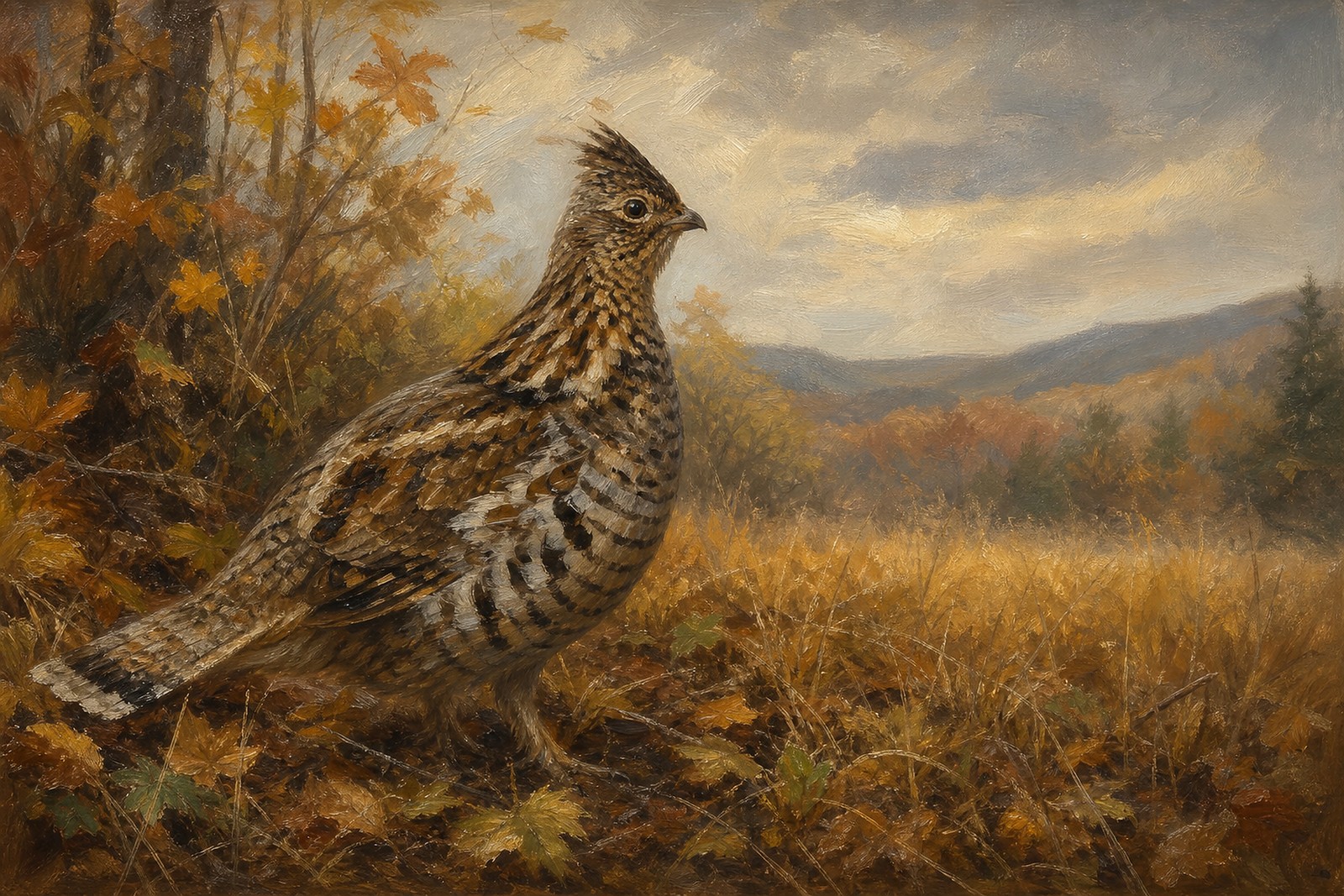
One situation deserves its own note. When the person grieving is a birder, and the person they lost was the one who stood beside them at dawn with the other pair of binoculars, a species-specific print can be the most precise gift there is. The bird they drove three states for. The one that took eleven tries. Choosing it requires nothing more than asking someone close to them which bird mattered, and the result is a gift that proves someone was listening all those years. Our broader guide to gifts for bird lovers covers this ground in less tender circumstances too.
What these prints are, plainly
Honesty matters more in a sympathy gift than in any other purchase, so: every piece in the shop is an original AI-created artwork in the style of antique oil painting. Not a photograph, not a historical piece, and we never present them otherwise. The style was chosen because it carries the warmth and stillness of traditional wildlife art, which is exactly the register this occasion calls for.
The practical details, briefly. Unframed prints are $59, $89, and $119 for the 12x18, 16x24, and 20x30. Framed, in black, brown, or gold, they are $189, $259, and $329. All are 3:2 landscapes printed edge to edge, made to order, dispatched in 2 to 5 business days, with free shipping to the US, Canada, the UK, Europe, Australia, and New Zealand. If anything arrives damaged, defective, or wrong, we replace or refund it within 30 days, which matters here, because nobody giving a gift like this should ever have to pass a problem on to the person receiving it.
Frequently asked questions
Is bird art an appropriate sympathy gift?
Yes, when it is chosen for the person rather than for the occasion. A calm print of a landscape or species they genuinely loved reads as thoughtful and personal. The pieces to avoid are anything dramatic, anything with text or verses on it, and anything chosen mainly because it looks sorrowful. Calm beats sad, every time.
Should I give the print framed or unframed?
Framed, in most cases. It arrives ready to hang, so the gift carries no errand. Black suits modern homes, brown suits timber and traditional rooms, and gold suits formal spaces. Choose unframed only if you know the recipient enjoys choosing frames or has a framer they trust.
What should I write in the card?
One or two sentences, specific and unforced. Name a memory that connects the person to the image, and give permission for the print to wait: “whenever, and wherever, feels right.” Avoid explaining what the birds symbolise. The gift works precisely because it does not insist on a meaning.
When is it too late to send something?
It is not. After the first month, most support quietly falls away, so a gift arriving at six weeks, six months, or on the first anniversary often means more than anything that came in the crowded first days. Late is not a failure of etiquette. It is evidence of remembering.