Field notes from a July week on the Lake Michigan dunes and the inland lakes north of Cadillac.
The short version: Michigan sits at the meeting of three major waterfowl flyways. Twelve water bird species cover most field sightings - Common Loon (the state bird emblem of the northern lakes), Mute Swan (introduced but established on Great Lakes shores), Mallard, Wood Duck, Hooded Merganser, Great Blue Heron, Common Tern, Ring-billed Gull, Caspian Tern, Belted Kingfisher, American Bittern, and Sandhill Crane. The state also gets significant migration flow on the Great Lakes coasts.
The 12 reliable Michigan water birds
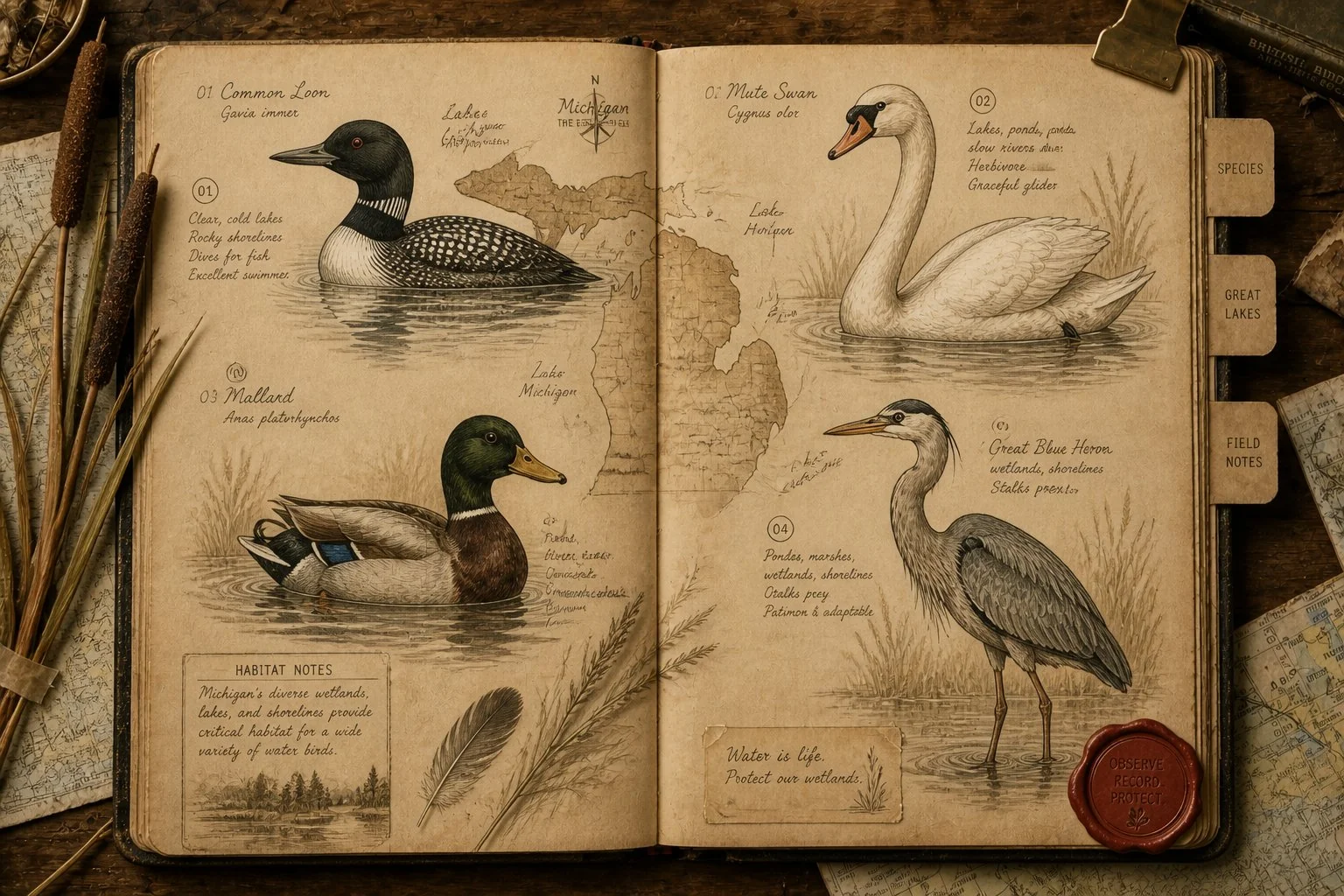
1. Common Loon (Gavia immer)
The signature bird of Michigan’s northern lakes. Black-and-white spotted plumage in breeding, grey winter. Haunting yodel call. Year-round resident on remote northern lakes; migrates through the state.
Michigan has loon-monitoring programs for nesting pairs on dozens of lakes. The Michigan Loon Preservation Association is the citizen-science arm.
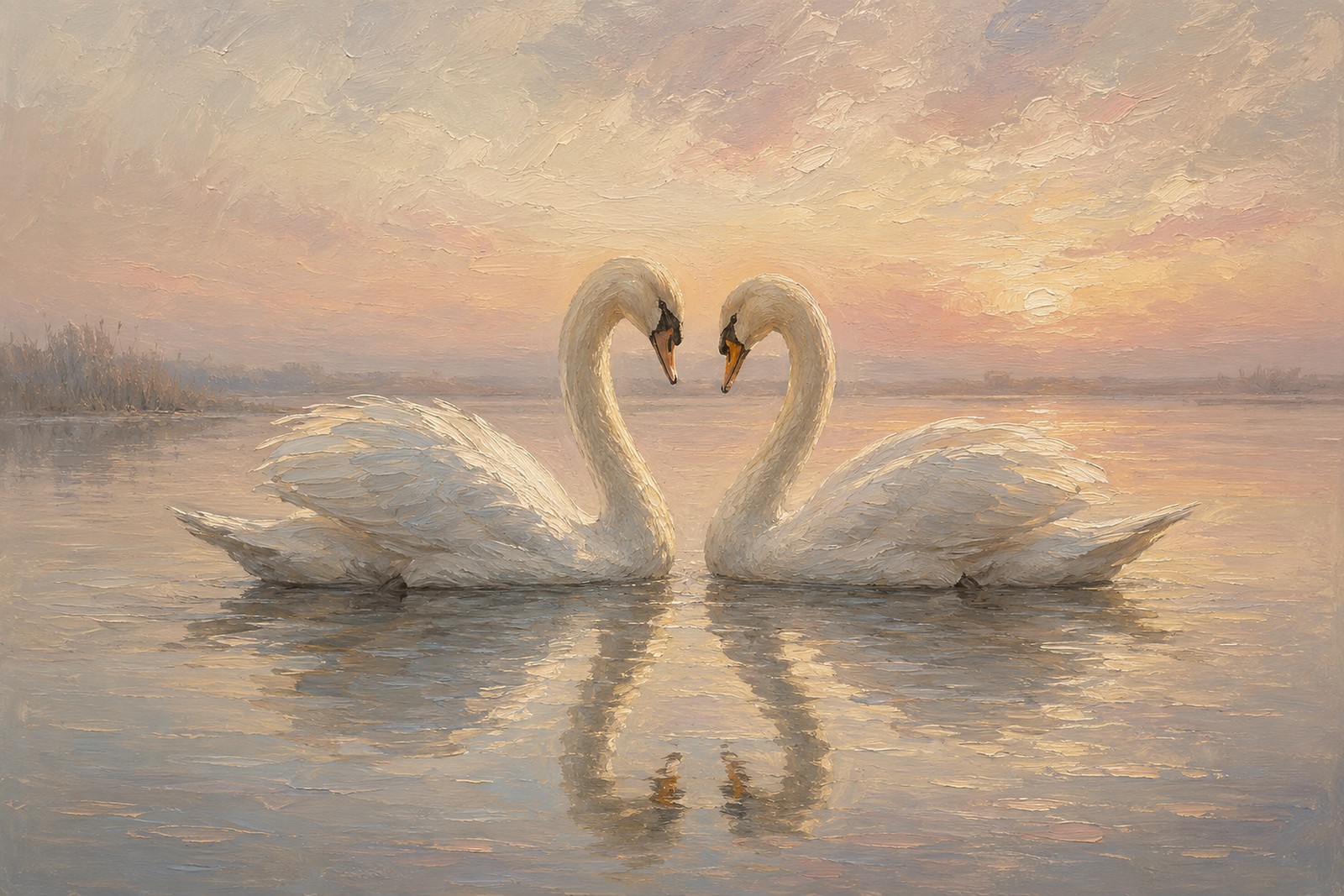
2. Mute Swan (Cygnus olor)
Introduced from Europe but well-established on Great Lakes shores and inland lakes. Aggressive toward native waterfowl during breeding - the Michigan DNR has had a controversial control program for years. See north america swans for the species-level breakdown.
3. Mallard (Anas platyrhynchos)
Year-round, everywhere. The default duck across Michigan.
4. Wood Duck (Aix sponsa)
Striking, common in forested ponds and slow rivers. Cavity-nester; takes well to boxes on the bank. Year-round in southern Michigan; mostly summer breeder in the north.
5. Hooded Merganser (Lophodytes cucullatus)
Drake has a fan-shaped white-and-black hood that he can erect. Forested ponds, slow rivers, beaver swamps. Year-round in lower Michigan; mostly summer in the UP.
6. Great Blue Heron (Ardea herodias)
Year-round, statewide. Stalking hunter of fish, frogs, and small mammals. Nests in colonies (rookeries) - the Tawas Bay rookery is famous.
7. Common Tern (Sterna hirundo)
Breeding colonies on isolated Great Lakes islands. Smaller, slimmer than gulls; pointed wings, deeply forked tail. Plunge-dives for fish.
8. Caspian Tern (Hydroprogne caspia)
Largest tern in North America. Black crown, massive red-orange bill. Breeds on isolated Great Lakes islands; common foraging the open water.
9. Ring-billed Gull (Larus delawarensis)
The default “gull” in the Great Lakes. Yellow bill with a black ring near the tip. Common parking lots, beaches, landfills.
10. Belted Kingfisher (Megaceryle alcyon)
Slate-blue with dagger bill. Hovers and dives. Year-round on clean streams and rivers across the state.
11. American Bittern (Botaurus lentiginosus)
Cryptic streaky brown heron of cattail marsh. Famous for the “pump-er-lunk” call. Hard to see; easier to hear. Summer breeder in upper marshes.
12. Sandhill Crane (Antigone canadensis)
Tall grey crane with red forehead patch. Spectacular spring and autumn migration concentrations - the Phyllis Haehnle Memorial Sanctuary near Jackson hosts thousands during fall migration.
The Great Lakes specialties
The lakes themselves bring species not seen on inland waters:
- Common Goldeneye, Long-tailed Duck, scaup, scoters - winter Great Lakes flocks.
- Caspian and Common Terns - breeding island colonies.
- Bonaparte’s Gull - small migrant gull, common on coast in autumn.
- Bald Eagle - now common on every major Michigan waterway after recovery.
- Osprey - migrating spring and autumn; some breeding pairs.
- Red-breasted Merganser - common winter, salt-water style on lake.
- Common Merganser - winter, on big rivers and lakes.
Inland marsh specialists
Michigan has extensive cattail marsh on its inland lakes, which brings:
- American Bittern - summer.
- Least Bittern - smaller, scarcer, summer.
- Pied-billed Grebe - small grebe, common breeder.
- Sora and Virginia Rail - cryptic marsh birds, summer.
- Yellow-headed Blackbird - breeds in deeper cattail.
- Marsh Wren - dense cattail, summer.
Where to look, by region
Southern Michigan (Detroit, Ann Arbor, Jackson):
- Phyllis Haehnle Sanctuary for Sandhill Crane migration (Sept-Nov).
- Lake Erie marshes for spring migration.
- Belle Isle (Detroit) for urban gulls and waterfowl.
Northern Lower Michigan:
- Tawas Bay heron rookery.
- Lake Huron coast for winter waterfowl.
- Inland lakes (Houghton, Higgins) for Common Loon.
Upper Peninsula:
- Whitefish Point for migration concentrations.
- Seney NWR for breeding waterfowl and Sandhill Crane.
- Lake Superior coast for scoters, Long-tailed Duck in autumn/winter.
Lake Michigan shore:
- Sleeping Bear Dunes for migrant raptors and waterfowl.
- Holland Harbor and South Haven for gulls.
Field guide for the region
Michigan sits in the Sibley Eastern guide’s range - the eastern guide covers every species you’ll find in the state.
Sibley Field Guide to Birds of Eastern North America
The right pocket guide for Michigan's water birds.
David Sibley's Eastern guide covers every Michigan water bird with adult, winter, and immature plumages. The Great Lakes winter waterfowl coverage is particularly useful - the sea-duck plumages confuse beginners and the Sibley plates sort them.
- All Eastern North American species
- Multiple plumages per species (breeding, winter, immature)
- Flight silhouettes for distant lake-water ID
- Pocket-sized softcover
 Sibley · Eastern

As an Amazon Associate we earn from qualifying purchases. Linked products are ones we actually use.
The bottom line
Michigan’s twelve common water birds are findable across a single summer of casual birding, with the Great Lakes coast adding the sea-duck and tern flavour. The loon and Sandhill Crane experiences are signature Michigan moments - find a loon pair on a northern lake at dawn, and the Phyllis Haehnle crane migration in October, and you’ve seen the state at its best.
For other state breakdowns, see water birds in Texas and water birds in Colorado; for the duck-keeping side, are ducks a good pet.