People shop for “a duck print” the way they shop for “a lamp,” as though the category were one thing. It is not. A mallard and a pintail hang differently, the way a club chair and a wing chair sit differently: same family, different manners. Each species carries its own palette, its own posture and its own set of associations, and matching those to the room is most of the skill in buying waterfowl art.
This is the guide we wish more buyers had before they ordered. Species by species, room by room: which duck goes where, and why.
Does the species really matter?
More than size, and nearly as much as framing. Three things change from duck to duck. Palette: a wood duck brings six colours to a wall, a canvasback brings three. Posture: dabbling ducks sit high and companionable on the water, diving ducks ride low and alert. And association: some species read as familiar and welcoming, others as connoisseur’s choices that quietly signal the owner knows waterfowl.
A room says something before anyone speaks in it. The species you hang should agree with what the room is trying to say.
Mallard: the den, the office, the first duck
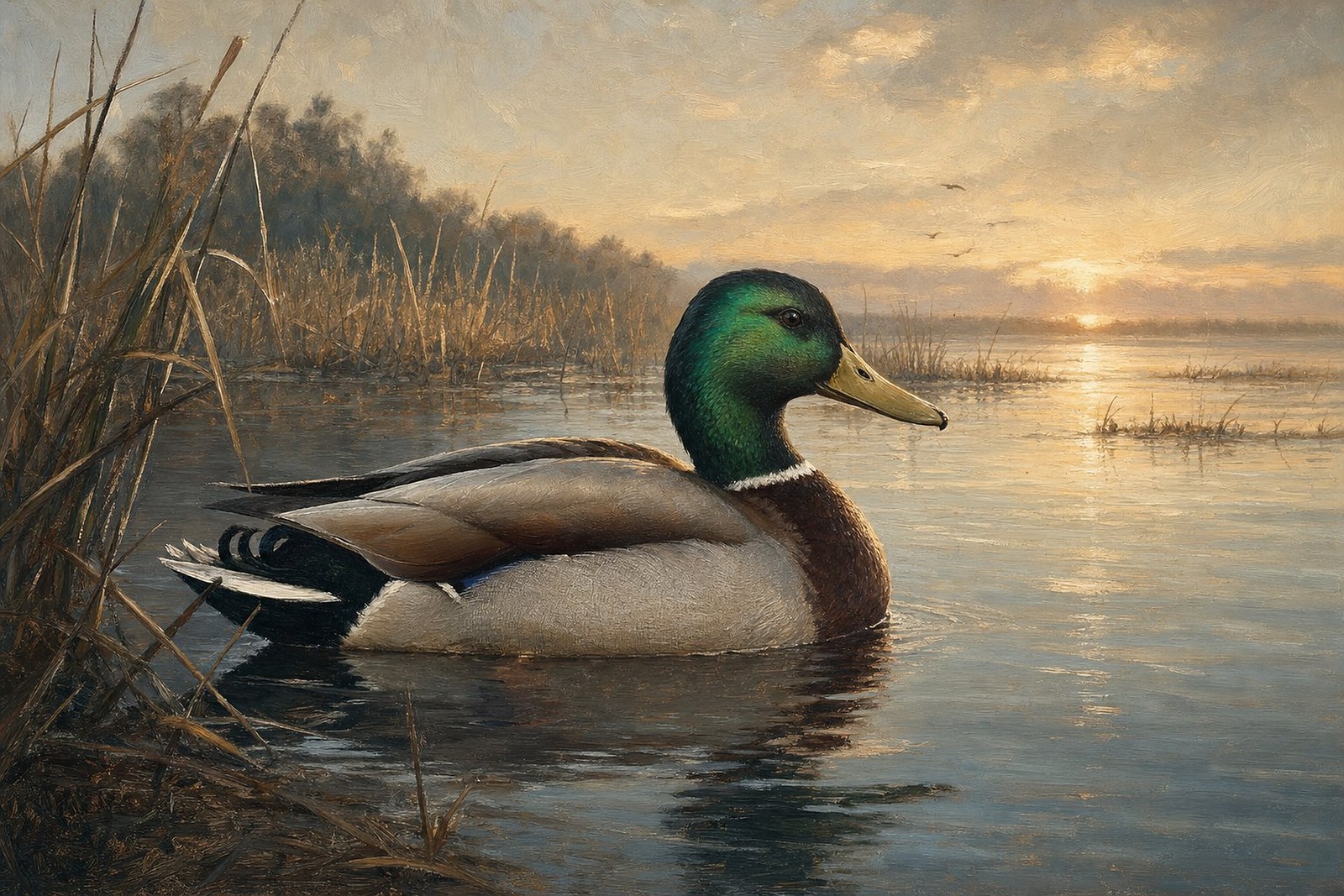
The mallard is the default for good reason: it is the duck everyone recognises, the anchor species of American sporting art since the first federal duck stamp in 1934. The drake’s deep green head and chestnut breast repeat the standing palette of dens and libraries, forest green, oxblood, tan, and the image reads instantly across a room.
Hang a mallard where recognition matters: the den, the office, the cabin’s main room, the entry. If you are buying your first duck print, buy this one; every other species in this guide pairs happily with it later.
Wood duck: the room that needs one moment of colour
The wood duck is the most ornate duck on the continent, iridescent crest, red eye, pinstriped flanks, and the most collected duck in American art. In antique oil-painting style the colours settle into rich, lacquered tones rather than anything loud, but it remains the boldest print in the series.
Give it a quiet background and a room with deep colour on the walls: a study in green or navy, a dining room in dark timber, a hallway that needs a single deliberate flourish. One wood duck per wall is the rule. It is the face card of the collection, and face cards are not dealt in pairs.
Teal: the small wall specialist
The green-winged teal is the smallest dabbling duck in North America, a compact, quick, neatly marked bird, and its prints inherit that intimacy. On the short wall at the end of a hall, in a powder room, on the pier between two windows, a teal print at 12x18 reads truthfully at close range, where a grand statement piece would feel oversized and shouty.
Choose teal when the wall is small, the viewing distance is short, or the room is one people pass through rather than sit in. It is the species that makes tight spaces feel considered rather than leftover.
Canvasback and goldeneye: the study
Diving ducks are the grown-up choice. Where dabblers paddle the park pond, divers ride open, cold water, and their prints carry that austerity: lower profiles, colder light, sparer palettes. The canvasback, the aristocrat of North American ducks, brings a russet head against grey winter water. The common goldeneye, the duck old gunners called the whistler for the sound of its wings, brings crisp black and white and a bright amber eye.
These are the species for the study, the office of someone who actually reads the spines on their shelves, the leather-chaired corner where a mallard would feel a touch obvious. They flatter dark wood, deep wall colours and brass light.
Wigeon and pintail: bedrooms and formal rooms
The American wigeon is the gentlest print in the series: soft grey, cinnamon and cream, a round-headed dabbler the old market gunners nicknamed the baldpate for the drake’s pale crown. A wigeon pair on quiet water is the right duck for a bedroom, a guest room or any room where calm outranks drama; there is a full species profile in our American wigeon guide.
The northern pintail is the formal one: a long-necked, sharp-tailed duck so elegant in flight that hunters called it the greyhound of the air. Its lines read as tailored rather than rustic, which makes it the rare duck print that suits a dining room or a formal hall. Our northern pintail profile covers the bird itself; on a wall, think of it as the species wearing the dinner jacket.
Can you mix species on one wall?
Yes, and a mixed wall is usually better than repetition, provided the prints agree on light and treatment. Species from different sources rarely mix well: the light clashes, the water clashes, the styles argue. Because every species in the waterfowl collection is rendered as one series, the same oil-painting-style treatment, the same unhurried light, a mallard, a goldeneye and a wigeon hang together like chapters of one book.
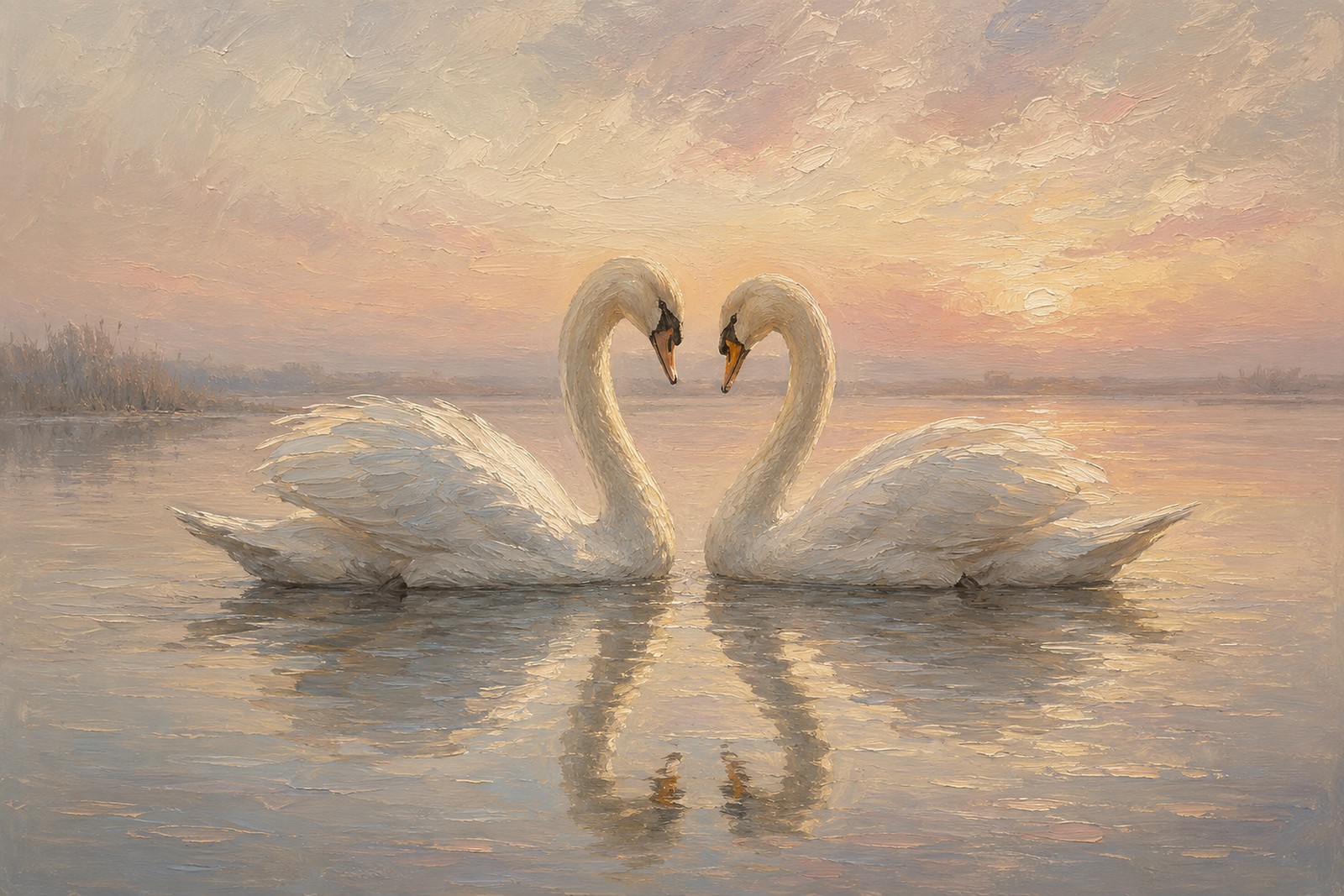
For a three-print run, put the boldest species in the centre and the calmest at the ends. For a pair, choose two birds angled toward each other, the old decorator’s rule that paired subjects should face inward.
Sizes, prices and the practical details
Every print is a 3:2 landscape, printed edge to edge with no mats or borders, in three sizes: 12x18 at $59, 16x24 at $89 and 20x30 at $119 unframed. Framed in black, brown or gold, the sizes run $189, $259 and $329, and a digital download is $19. Rough guide: 12x18 for halls and small walls, 16x24 above desks and chairs, 20x30 above sofas and beds or anywhere the wall is the room’s main event.
Prints are made to order and dispatched in 2 to 5 business days, with free shipping to the US, Canada, the UK, Europe, Australia and New Zealand.
Frequently asked questions
Which duck print should a first-time buyer choose?
The mallard, almost without exception. It reads instantly, suits the widest range of rooms, and anchors any species you add later. If the room already owns a strong personality, quiet and formal, say, start instead with the species that matches it: wigeon for calm, pintail for formality.
What size duck print for above furniture?
Above a desk or reading chair, 16x24. Above a full sofa or a bed, a 20x30, or better, a pair of prints spanning about two thirds of the furniture’s width. On small walls and in halls, the 12x18 does more than its size suggests, because the low horizon in each composition lends the wall depth.
Should I buy framed or unframed?
Framed if you want the parcel to be the finished article: black, brown or gold, glazed and ready to hang. Unframed if you have a framer you trust or frames you love. The image is identical either way, and the unframed print’s edge-to-edge composition gives a framer full freedom.
Are these prints photographs or paintings?
Neither. Each is an original AI-created image in the style of classic American sporting art, printed to order on archival paper, and every listing says so plainly. Damaged, defective or wrong deliveries are replaced free or refunded within 30 days; we do not take change-of-mind returns.