 № 252
№ 252 № 25212 Jul 2026
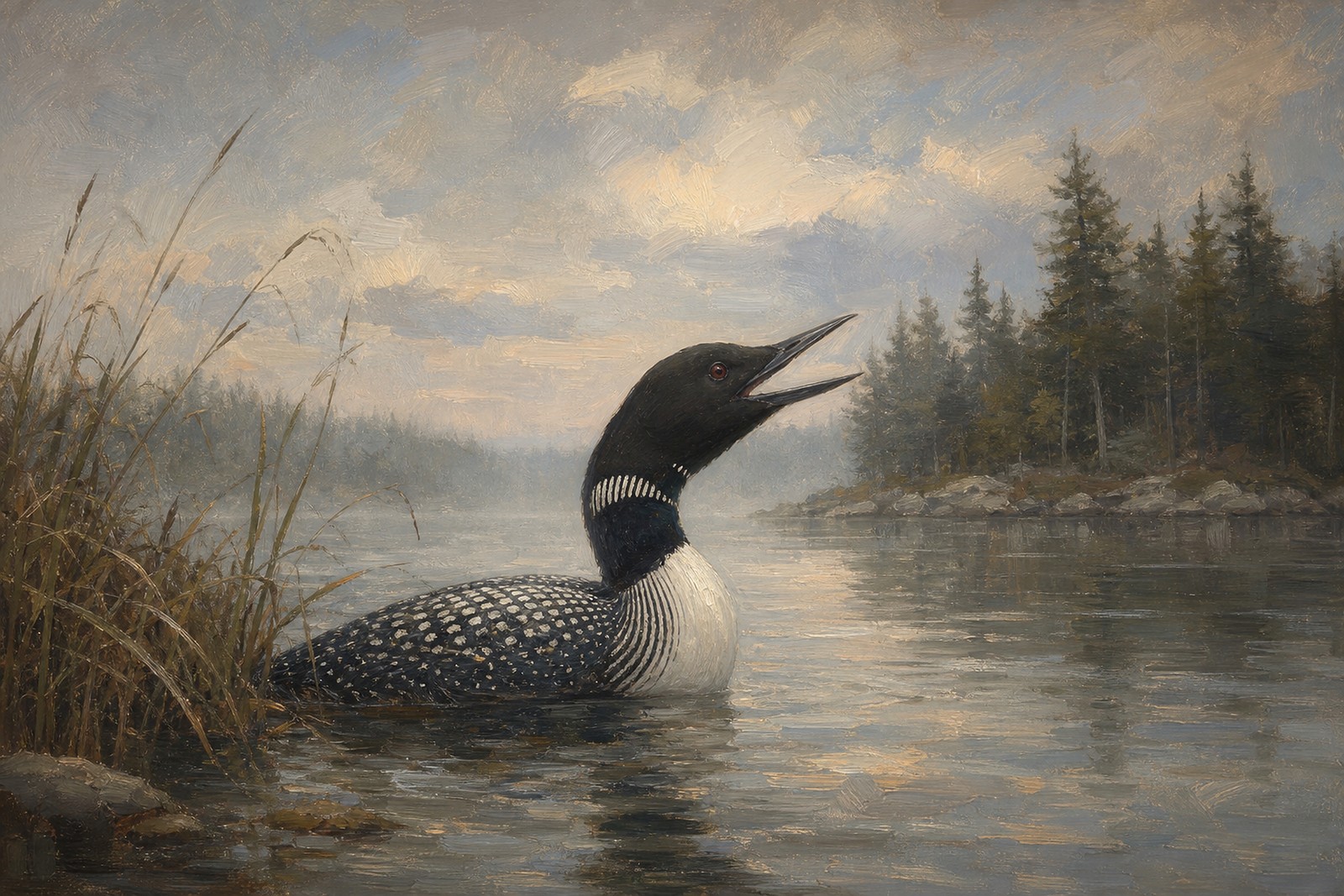
Northwoods Cabin Decor: The Loon, the Lake, the Light
Pine, mist, granite, and one loon: how to decorate a northwoods cabin with art that belongs to the lake instead of performing for it.
Continuing the archive: slow essays and observations from marshes, mangroves, and pondsides around the world.
№ 252 Pine, mist, granite, and one loon: how to decorate a northwoods cabin with art that belongs to the lake instead of performing for it.
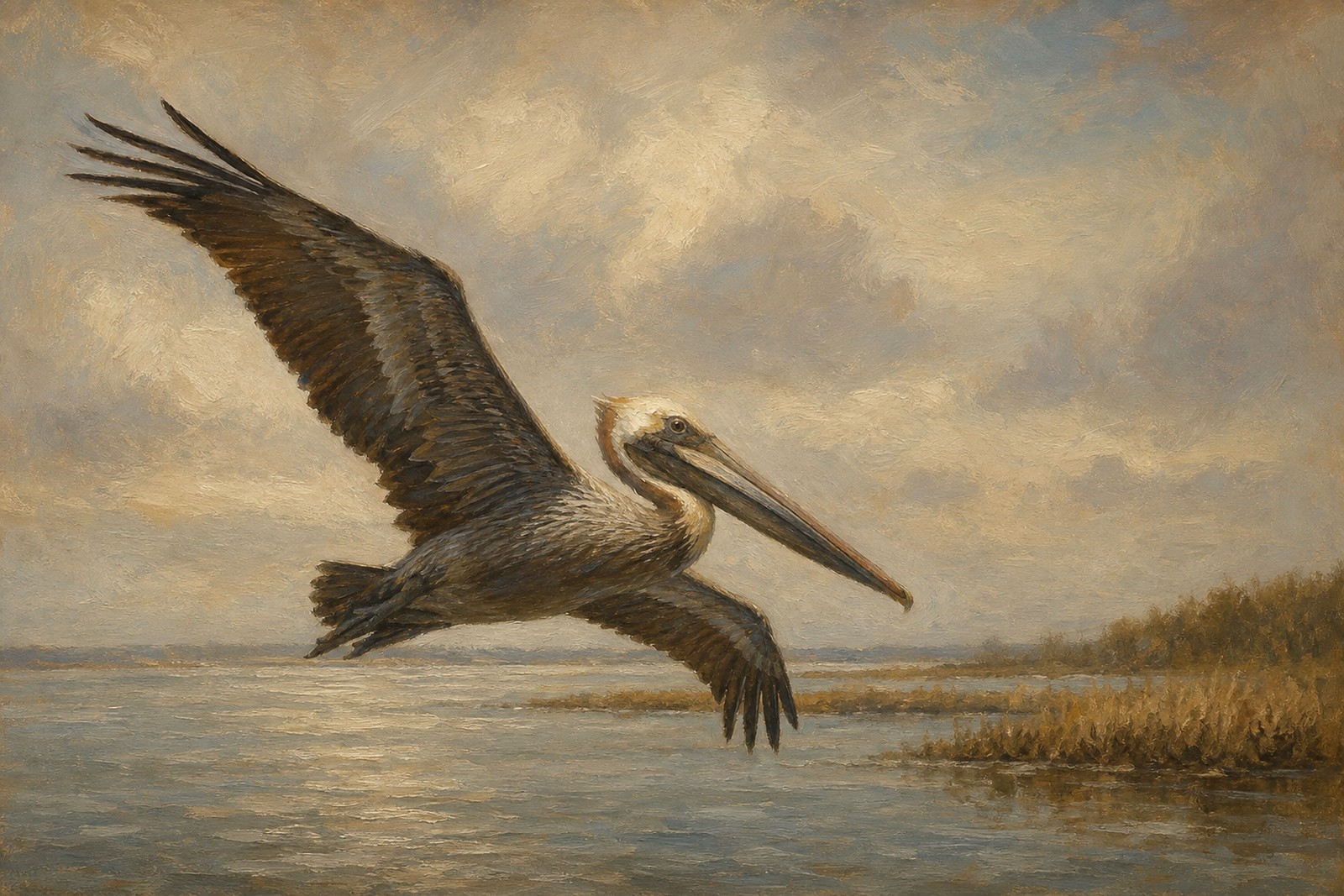
The brown pelican has more presence in one low glide than a whole wall of cartoon beach decor, and it deserves to be taken seriously in a coastal room.
 № 251
№ 251 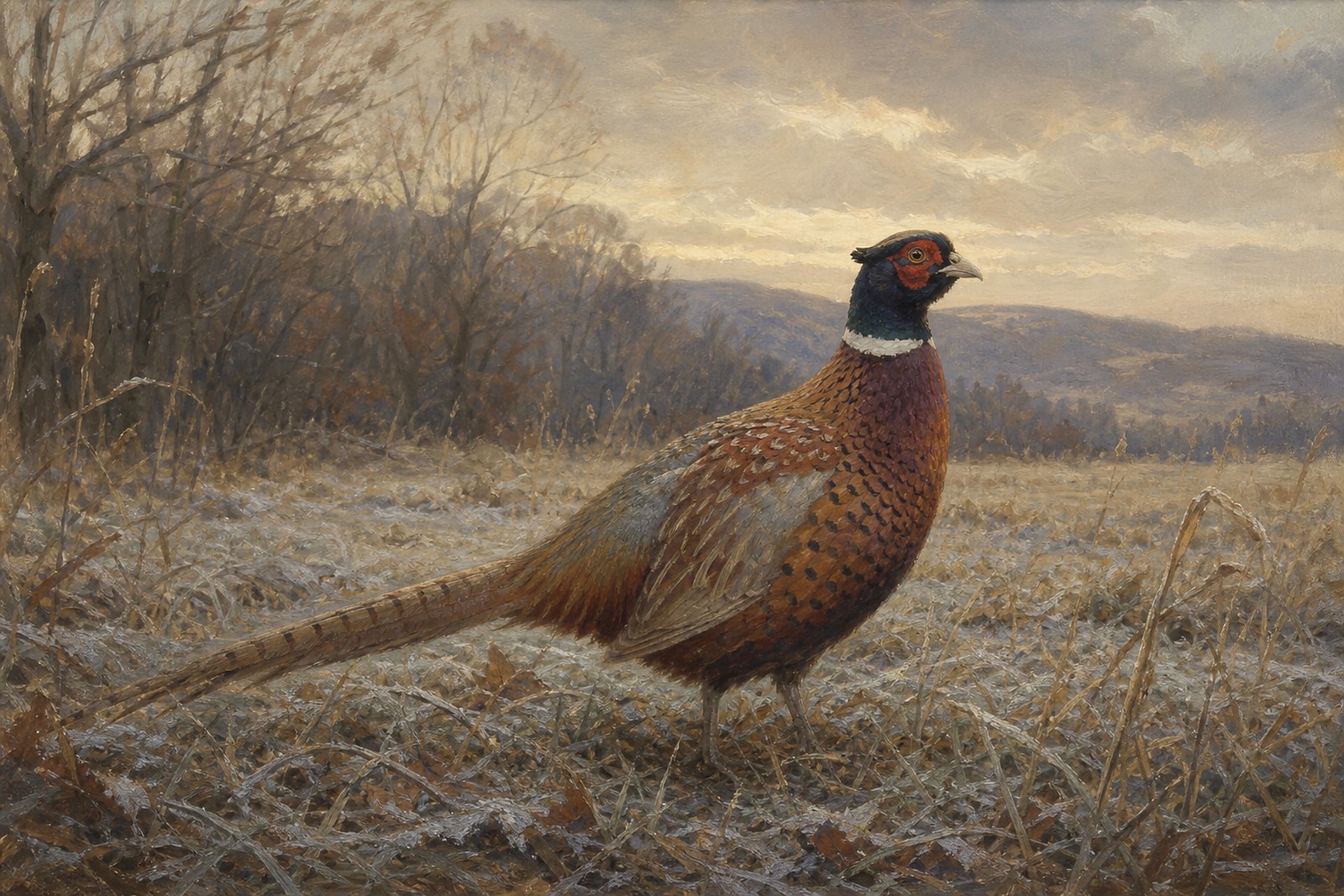 № 250
№ 250 Why the ring-necked pheasant owns the upland wall, how a frosted-field palette warms a study or dining room, and where grouse, bobwhite, and woodcock fit alongside it.
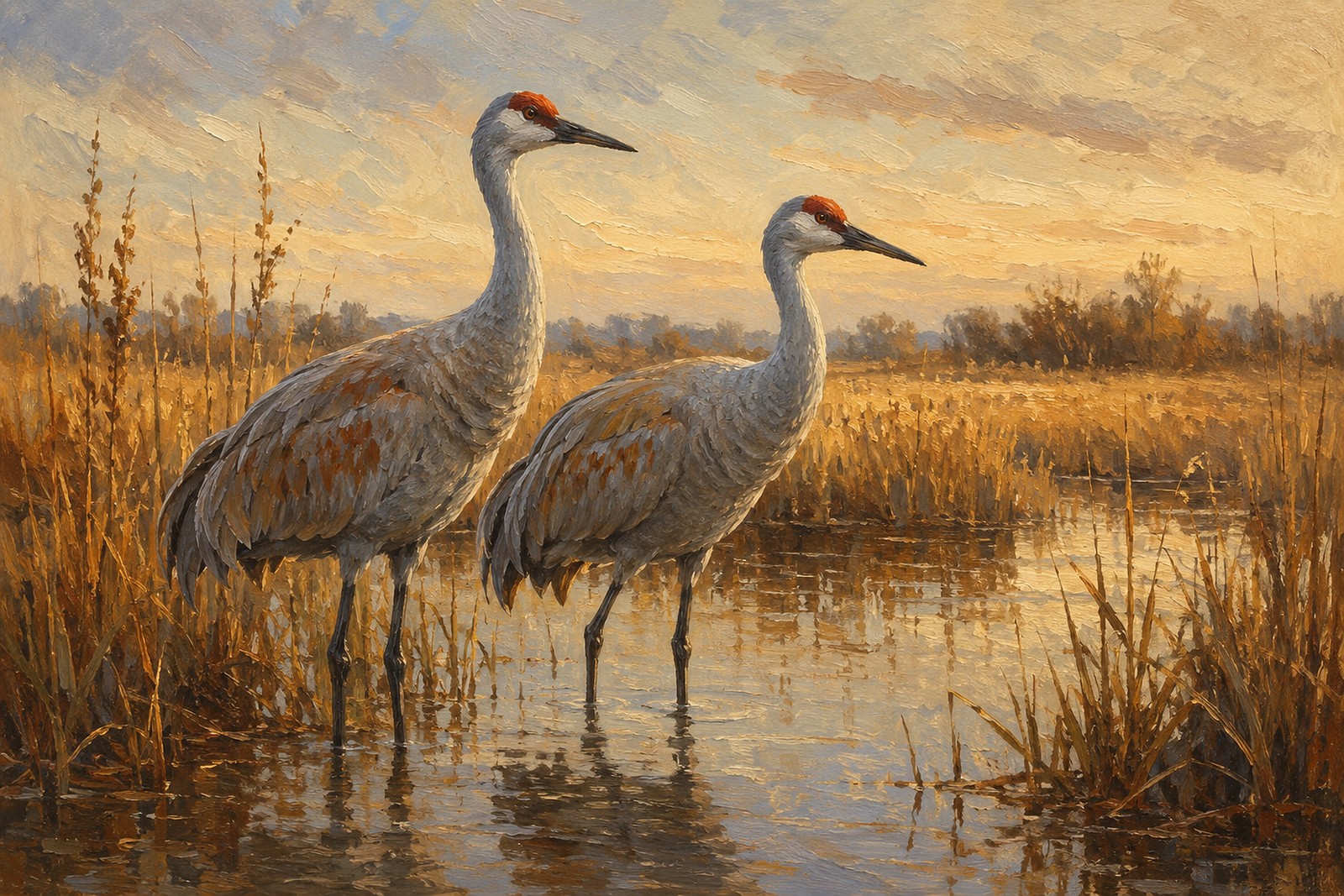
Four feet of grey and rust standing in golden marsh light, the sandhill crane is the rare bird that can anchor a dining room the way it anchors a wetland.
 № 249
№ 249 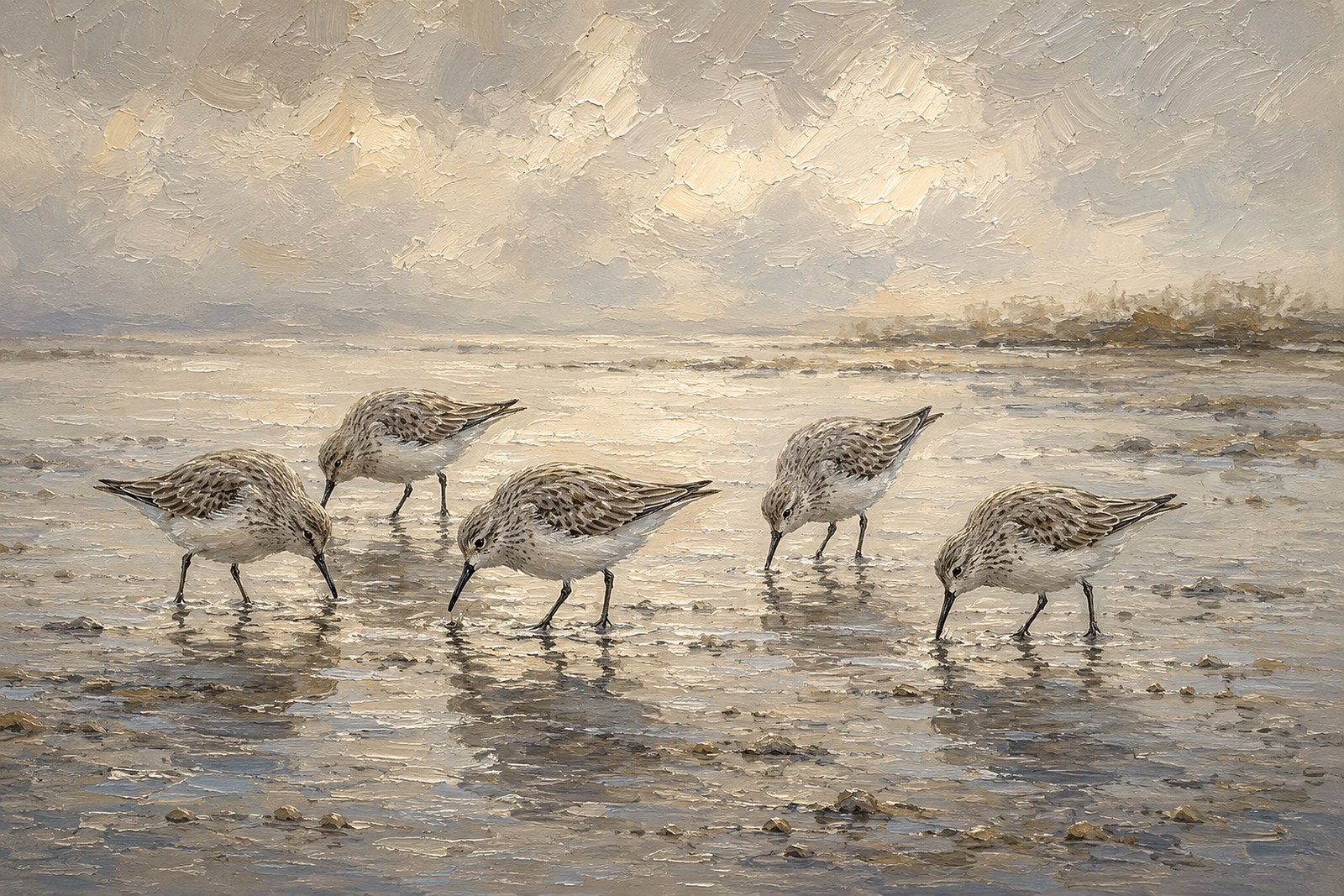 № 248
№ 248 Why flock compositions in silver light are the right art for hallways, landings and bathrooms, the walls you pass twenty times a day.
Real houses are full of small walls that defeat big art and swallow tiny frames, and the answer is one properly scaled print with a horizon in it.
 № 247
№ 247 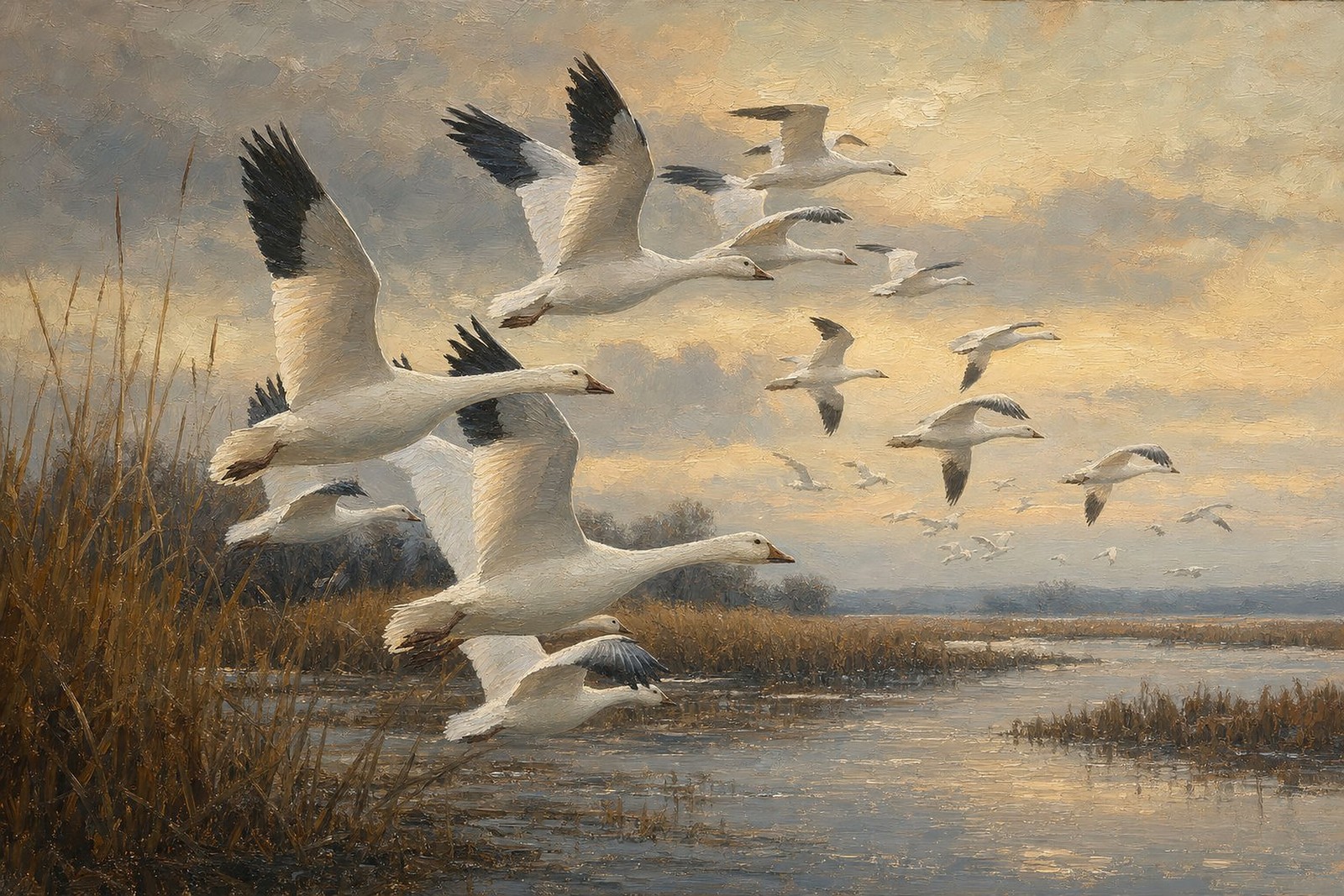 № 246
№ 246 How a rising flock of white geese brings true winter light into a room, and why the slate-bodied blue morph is the pick for people who know their geese.
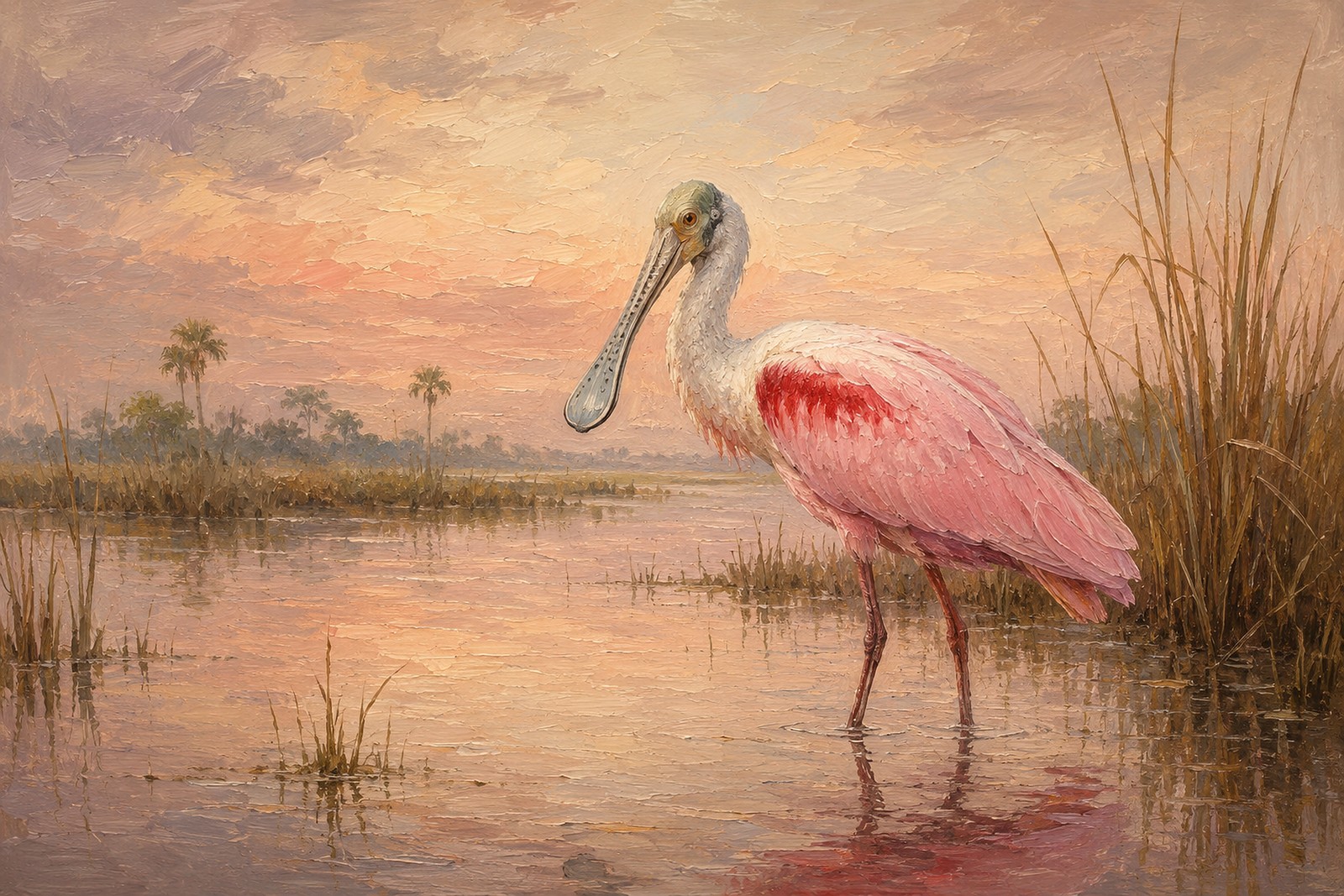
The roseate spoonbill carries the only pink that can walk into a serious room and stay elegant, which is why it has become the statement bird of the coastal South.
 № 245
№ 245 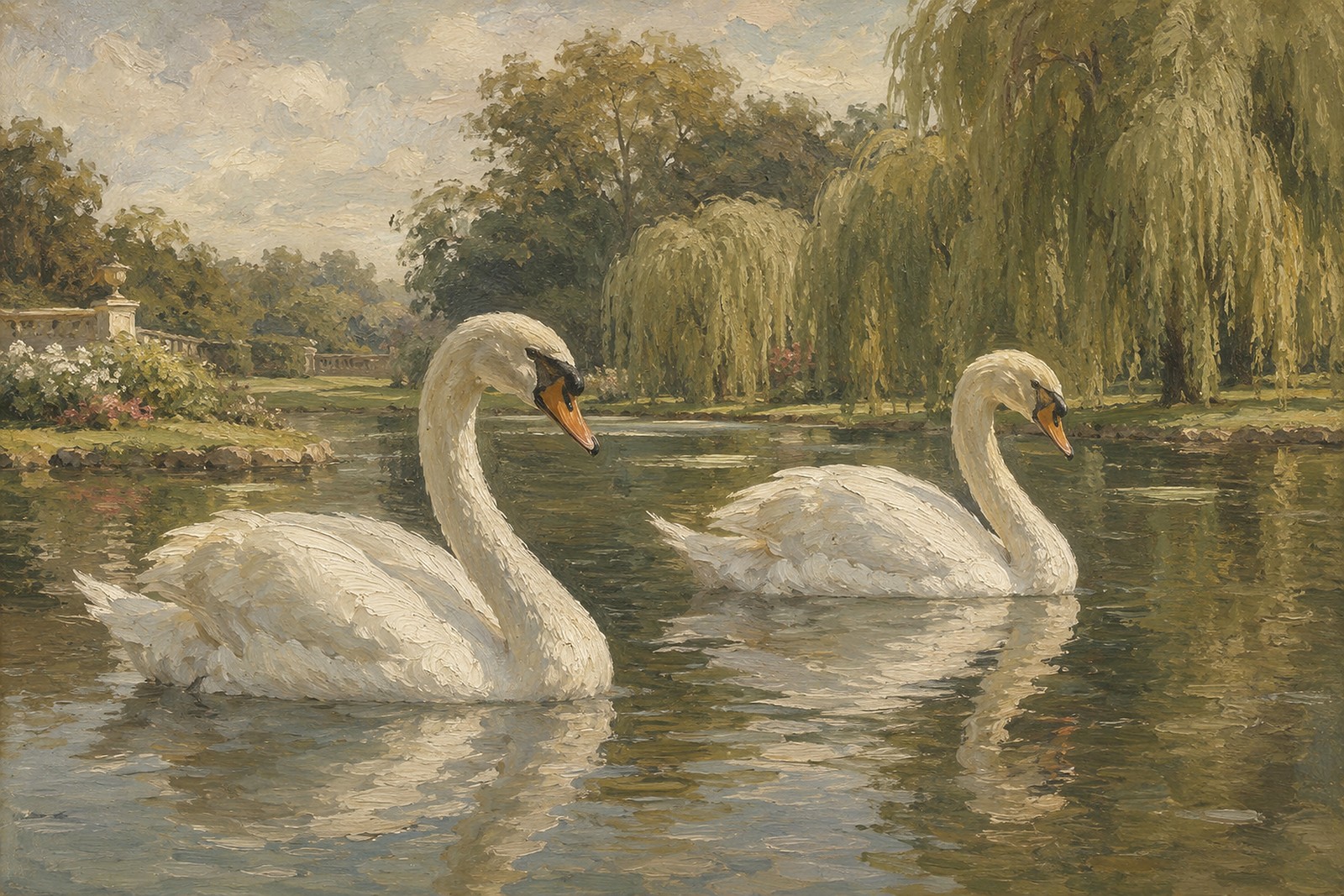 № 244
№ 244 Most swan pairs stay together year after year, and that quiet, well-documented loyalty is what makes a swan pair print an anniversary gift with real meaning behind it.
A gentle, practical guide to giving bird art as a sympathy gift, written for the weeks after the flowers have gone.
 № 243 № 242
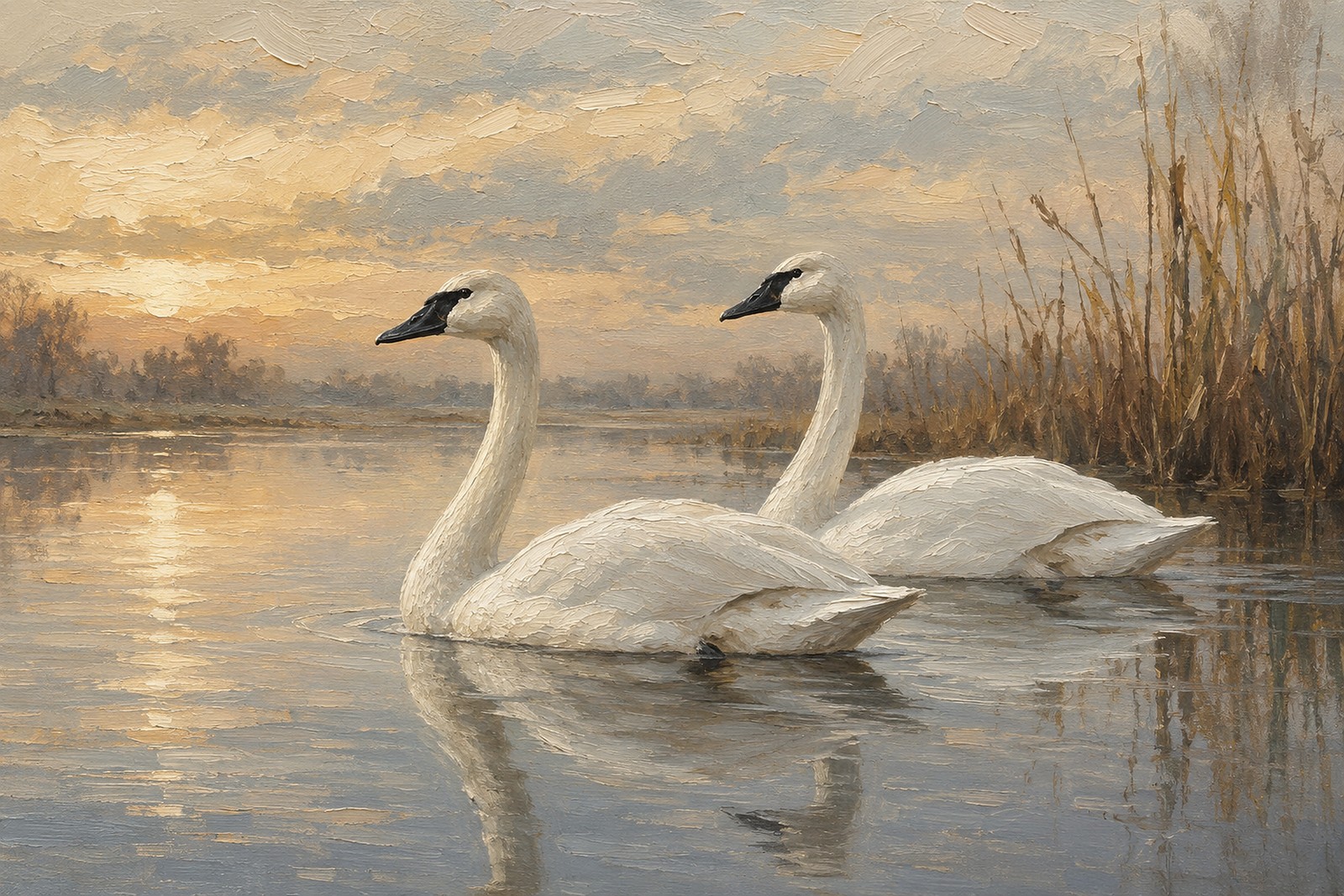
 A guide to nursery art that skips the cartoon phase entirely, built around gentle swan prints, calm water palettes and pieces a child can grow up alongside.
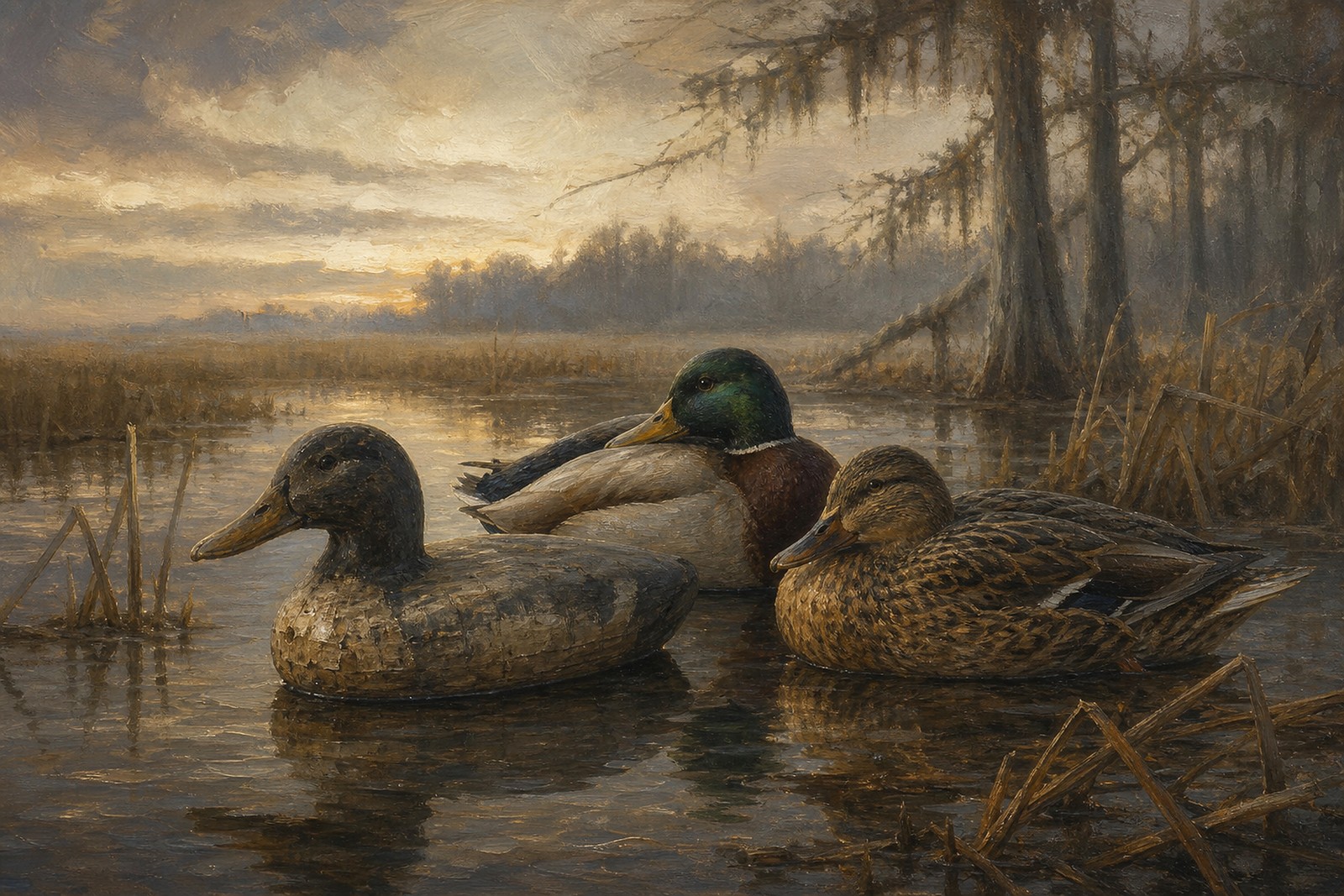
The working decoy became America's accidental folk art and the Duck Stamp turned art into wetlands, which is why the vintage waterfowl look still holds a wall better than anything newer.
 № 241
№ 241